














Invasive species and why some newcomers take over ecosystems
Invasive species, in the IPBES definition, are aliens carried by people that establish, spread and harm ecosystems, and they tend to succeed after escaping natural enemies or arriving in large numbers (IPBES, 2023; Mitchell and Power, 2003; Lockwood et al., 2005). They are a small share of introductions: more than 3,500 of over 37,000 established alien species have documented negative impacts (IPBES, 2023).
Definitions from international assessments open the article, followed by the mechanisms that help some newcomers spread and the stages every invasion passes through. Field experiments, long road surveys, global databases of first records and reviews in ecology journals supply the evidence. Three well-documented invaders and the measured damage to native species and farming come next, and a closing section separates findings from estimates.
What an invasive species is
Human transport is the defining step. IPBES (2023) uses that term for every species introduced to new regions through human activities. The Convention on Biological Diversity (2002) treats introduction as movement by human agency, direct or indirect, outside the natural range.
Invasive is a narrower label. In the IPBES (2023) assessment it covers only those aliens known to have established and spread with negative effects on biodiversity, ecosystems and species. The CBD (2002) wording is broader: an alien whose introduction or spread threatens biological diversity.
Introduced, naturalised and invasive species
Most introduced species never cross the line. Of more than 37,000 established alien species, studies with evidence of negative impacts exist for more than 3,500 (IPBES, 2023). The share differs by group, from 6 per cent of alien plants to 22 per cent of alien invertebrates (IPBES, 2023).
An established alien, in the IPBES (2023) scheme, is one that has produced a viable, self-sustaining population and may have spread. Many introductions are deliberate and useful. Some 128 crop species have been introduced intentionally, wheat, barley, rice, oats and corn among them, a USDA Forest Service report notes (Miller et al., 2013).
Ecologists also use invasive without any reference to damage. The framework of invasion stages published by Blackburn et al. (2011) is one example, and it says nothing about the economic or environmental pest status of an alien.
Why some newcomers take over
Escape from natural enemies
Missing enemies are one explanation. The enemy release hypothesis holds that invaders do damage because natural enemies attack them less (Mitchell and Power, 2003). Only a few naturalised plant species become pests, the same authors note.
Mitchell and Power (2003) tested the idea on 473 plant species that reached the United States from Europe. On average, 84% fewer fungi and 24% fewer virus species infected each plant in its new range than in its native range, a gap measured by counting recorded pathogen species rather than infection rates in the field. Viruses dropped far less than fungi. Plants released more completely from pathogens were more widely reported as harmful invaders of farms and natural ecosystems (Mitchell and Power, 2003).
The release is rarely total. The same study concluded that impacts may depend on both release from natural enemies and their accumulation in the new range (Mitchell and Power, 2003).
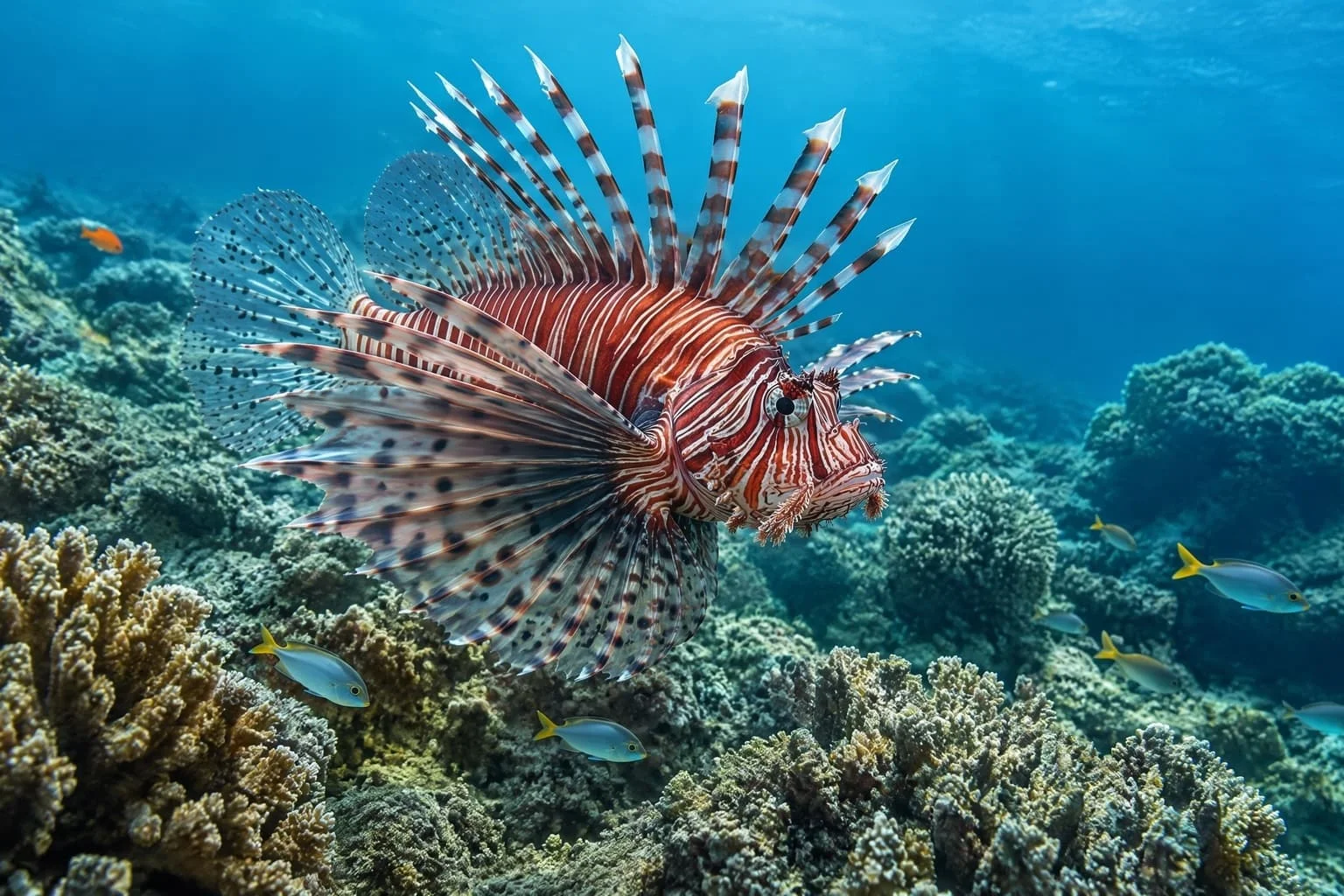
Animals show a similar pattern. Lionfish have few documented natural predators even in their native range, apart from possible cannibalism (Albins and Hixon, 2008). In the Atlantic, prey that has never met this hunting style may make them unusually efficient predators, the authors suggest.
Numbers of arrivals and disturbed habitats
How many individuals arrive also matters. Lockwood and colleagues (2005) proposed propagule pressure as a key element in explaining why some introduced populations fail to establish while others succeed. In the later framework, propagule pressure means the number of individuals released (Blackburn et al., 2011).
Establishment can fail for reasons tied to the species, the place or the release itself. The list in Blackburn et al. (2011) runs from reproductive rate and the presence of enemies or mutualists to propagule pressure, and these factors often interact. Species traits and local conditions also meet in [acacia invasion in Algerian cork oak forests](/environment/acacia-invasion-cork-oak-algeria-environment/).
A rough rule of thumb puts numbers on the filter. The tens rule says that about 10% of introduced species establish and about 10% of those spread or become pests (Jeschke and Strayer, 2005).
Vertebrates break it. Among fish, mammals and birds moved between Europe and North America, Jeschke and Strayer (2005) found a success of about 50% at each step. The rule seems to hold for plants, the same authors add.
Once established, some invaders crowd out everything else. A USDA Forest Service report describes invasive plants that outcompete native species and form dense infestations without predators from their native lands (Miller et al., 2013).
How an introduction becomes an invasion
Stages from transport to spread
Invasions follow a common sequence of stages. IPBES (2023) names the stages as transport, introduction, establishment and spread. A barrier separates each stage from the next, and a species must overcome it to move on, according to the unified framework of Blackburn et al. (2011), which combined earlier stage-based and barrier models into a single scheme. Each stage is a filter.
Human barriers count too. Many animals and plants live in captivity or cultivation far beyond their native ranges yet never cross a fence or hedge (Blackburn et al., 2011).
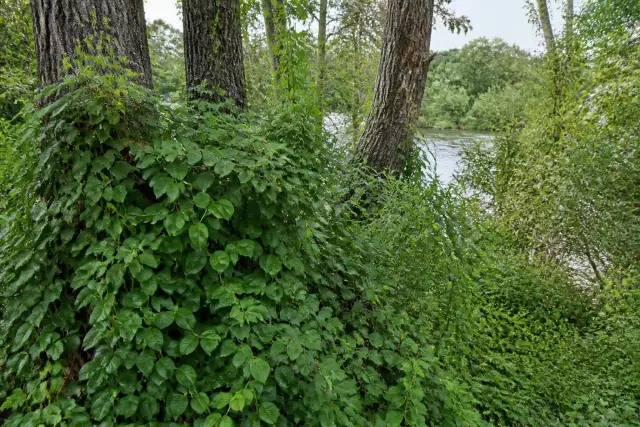
Spread is not the end point either. Invasions can still fail after the alien has spread (Blackburn et al., 2011). Cutting does not always stop an invasive vine, the question tested in [the Lleida trial on silkvine stems](/environment/silkvine-invasive-vine-riverside-forests-environment/).
Time lags and rising numbers
Damage often appears long after arrival. IPBES (2023) warns of a considerable time lag, spanning decades in some cases, before impact becomes apparent, as with many invasive trees. Today's counts of alien species reflect the drivers of decades ago, a backlog the assessment calls invasion debt (IPBES, 2023).
Seebens and colleagues (2017) compiled 45,813 first records of 16,926 established alien species. The annual rate of first records rose during the last 200 years, and 37% of all first records date from 1970–2014. Records peaked at 585 in 1996 (Seebens et al., 2017).
The rise shows no sign of saturation in any taxonomic group, the same team reports. Mammals and fishes differ only in pace. Their rates of first records have declined in recent decades (Seebens et al., 2017). IPBES (2023) expects the total number of alien species in 2050 to be about one third higher than in 2005, and warns that the real increase is expected to be faster than this business-as-usual projection.
Three well-studied invaders
Burmese pythons in Florida
Burmese pythons are constrictors from Southeast Asia that grow up to 5.5 metres long and are now established across thousands of square kilometres of southern Florida (Dorcas et al., 2012). Detection was slow. Pythons were sighted for about 20 years before they were recognised as established in 2000 (Dorcas et al., 2012).
Dorcas and colleagues (2012) compared night road surveys in Everglades National Park before and after the snakes became common. Baseline surveys covered 6,599 km over 51 nights in 1996–1997. Surveys totalling 56,971 km in 2003–2011 recorded a 99.3% fall in raccoon observations, falls of 98.9% for opossums and 87.5% for bobcats, and no rabbits at all (Dorcas et al., 2012).
These are counts of sightings per distance driven, not a census. The authors call the patterns correlative but say the preponderance of evidence supports the hypothesis that pythons severely reduced mammal populations (Dorcas et al., 2012). For at least 16 million years Florida had no snakes large enough to eat medium-sized mammals, they note.
Kudzu in the southeastern United States
Kudzu is a vine that people spread on purpose. It was promoted as forage and as a soil stabiliser in the early 20th century, which helped it establish across the southeastern United States (Hickman et al., 2010). A review cited by Hickman and colleagues (2010) put its distribution at more than 3 million hectares, expanding by 50,000 hectares a year.
Its effects reach the soil and the air. At three sites in Madison County, Georgia, studied in 2007, net nitrogen mineralisation rose by up to 1,000% and net nitrification by up to 500% in invaded soils (Hickman et al., 2010). Most plants escaping into southern forests were first planted for gardens, soil stabilisation, wildlife habitat or livestock, a USDA Forest Service report found (Miller et al., 2013).
Lionfish in the western Atlantic
Lionfish were first reported off southeast Florida in the 1980s and have since established across the Caribbean through larval drift (Green et al., 2012). Albins and Hixon (2008) discuss aquarium releases as a possible introduction pathway, but their study does not establish a single release event as the origin of the Atlantic invasion.
Albins and Hixon (2008) ran a controlled experiment in the Bahamas on twenty patch reefs, translocated and artificial, paired by proximity. Over five weeks, lionfish reduced the recruitment of young native fish by an average of 79% (Albins and Hixon, 2008). In each pair, one reef received a single transplanted lionfish and the other served as a control (Albins and Hixon, 2008).
Field surveys tell a related story at a larger scale. Green and colleagues (2012) followed nine sites along 15 km of reef off New Providence in the Bahamas. By 2010 lionfish made up nearly 40% of predator biomass, and the biomass of their 42 prey species fell by 65% in two years (Green et al., 2012). Complete eradication from the Atlantic appears unlikely, the authors conclude.
Damage to native species and agriculture
Extinctions and native species
Invasive species appear in a large share of extinction records. IPBES (2023) finds that they contributed, alone or alongside other drivers, to 60 per cent of recorded global extinctions and were the only driver in 16 per cent. Islands carry most of the loss. Of extinctions attributed mainly to invasive species, 90 per cent occurred on islands (IPBES, 2023).
Bellard and colleagues (2016) reached a similar picture with different data. They analysed 247 species with threat information from the 2015 IUCN Red List, 215 of them classified as extinct and the rest as extinct in the wild.
Alien species were listed as a cause for 58% of the species classified as extinct, often alongside other threats (Bellard et al., 2016). That ranked aliens second, behind overexploitation of biological resources, by 125 species to 124 (Bellard et al., 2016). Island endemics made up 86% of the alien-linked extinctions.
Local losses are more common still. At least 218 invasive species have caused 1,215 documented local extinctions of native species (IPBES, 2023). Snails moved between continents can damage plants too, as described in [introduced camaenid snails in Florida](/animals/florida-camaenid-snails-introduced-species-and-plant-damage/).
Costs to farming and economies
Among impacts on people, reduced food supply is by far the most frequently reported, at more than 66 per cent of reports, according to IPBES (2023). The assessment puts global annual costs of invasions above US$423 billion in 2019 and calls this likely a gross underestimate. Ninety-two per cent of that cost is damage and only 8 per cent is management (IPBES, 2023).
Diagne and colleagues (2021) built a database of reported costs. Reported costs reached a minimum of US$1.288 trillion over 1970–2017, with an annual mean of US$26.8 billion in 2017 dollars. The authors describe a threefold increase per decade and stress that the figures remain strongly underestimated (Diagne et al., 2021).
Future threats to crops were modelled by Paini and colleagues (2016). They estimated the potential cost of almost 1,300 invasive insect pests and pathogens reaching each of 124 countries. China and the United States could face the largest absolute costs, while developing countries, especially in Sub-Saharan Africa, appear most vulnerable relative to their economies (Paini et al., 2016). The six countries most at risk relative to GDP were all in Sub-Saharan Africa.
Study | Data and scale | What was measured | Main finding |
Mitchell and Power (2003) | 473 plant species naturalised in the United States | Pathogen species per plant, new versus native range | 84% fewer fungi, 24% fewer viruses |
Dorcas et al. (2012) | Road surveys of 56,971 km, 2003–2011 | Mammal sightings per distance driven | Raccoon observations down 99.3% |
Albins and Hixon (2008) | Twenty patch reefs over five weeks | Recruitment of young native fish | 79% lower on lionfish reefs |
Green et al. (2012) | Nine reef sites, 2008 and 2010 surveys | Biomass of 42 prey species | 65% decline |
Bellard et al. (2016) | 247 species, 215 of them extinct, IUCN Red List | Listed causes of extinction | Aliens listed for 58% of extinct species |
Diagne et al. (2021) | Global database of reported costs | Economic costs, 1970–2017 | At least US$1.288 trillion |
Note: each row measures a different quantity in a different place or dataset, so the percentages cannot be added or compared directly. Sightings, recruitment, biomass and listed causes are indicators of impact, not counts of individuals lost.
What is known about invasive species and what is not
Only a small fraction of introductions turn invasive, yet that fraction is linked to large and measurable losses. How big those losses are depends on what each study counted.
Of more than 37,000 established alien species, more than 3,500 have documented negative impacts, and the reported economic costs are likely a gross underestimate (IPBES, 2023).
Several findings are well established. Invasions move through transport, introduction, establishment and spread (IPBES, 2023). A lionfish field experiment recorded a steep fall in the recruitment of native fish, and long road surveys in the Everglades recorded sharp falls in mammal sightings (Albins and Hixon, 2008; Dorcas et al., 2012).
Other results depend on conditions. The magnitude of impact depends on context, and the factors behind the largest impacts are not well understood (IPBES, 2023). Most impacts are reported from the Americas, Europe and Central Asia and Asia-Pacific, with only 7 per cent from Africa (IPBES, 2023). Cost information shows an actual or potential deficiency for plants and for Africa (Diagne et al., 2021).
Some questions remain open. The Red List may overestimate the role of aliens where they are symptoms of other causes such as habitat destruction (Bellard et al., 2016). Global databases of first records underestimate how fast aliens arrive (Seebens et al., 2017). Whether Everglades mammals will rebound is unknown (Dorcas et al., 2012).
Frequently asked questions
Are all non-native species invasive?
No. Most introduced species never cause documented harm. IPBES (2023) counts more than 37,000 established alien species, of which more than 3,500 have evidence of negative impacts. Many introductions are useful: some 128 crop species, including wheat, rice and corn, have been introduced on purpose (Miller et al., 2013).
How do invasive species reach new places?
People move them, deliberately or by accident. Introduction means transport by human agency outside the natural range (CBD, 2002). Kudzu was planted as forage and to hold soil (Hickman et al., 2010). Among first records worldwide, rising rates are typical of stowaways such as insects and molluscs, while mammal and fish rates have declined (Seebens et al., 2017).
Can an invasive species be eradicated?
Sometimes, but rarely once it has spread widely. Lionfish now occur across the Caribbean, and Green and colleagues (2012) judge complete eradication from the Atlantic unlikely. Long time lags make early action harder, because impacts can appear decades after arrival, as with many invasive trees (IPBES, 2023).
Why are islands so vulnerable to invasions?
Islands account for most of the recorded losses. Of extinctions attributed mainly to invasive species, 90 per cent occurred on islands (IPBES, 2023). Bellard and colleagues (2016) found that island endemics made up 86% of extinctions in which alien species were a listed driver.
Can an invasive species ever be useful?
Some were introduced for a purpose before they spread. Kudzu was promoted as forage and a soil stabiliser in the early 20th century (Hickman et al., 2010). Most plants escaping into southern forests were first planted for gardens, soil control, wildlife or livestock (Miller et al., 2013). Usefulness at introduction does not prevent later harm.
Sources
- IPBES. Summary for Policymakers of the Thematic Assessment Report on Invasive Alien Species and their Control of the Intergovernmental Science-Policy Platform on Biodiversity and Ecosystem Services. Roy HE, Pauchard A, Stoett P, et al. (eds). Bonn: IPBES Secretariat; 2023. DOI 10.5281/zenodo.7430692.
- Convention on Biological Diversity. Decision VI/23: Alien species that threaten ecosystems, habitats or species. Sixth meeting of the Conference of the Parties, The Hague; 2002. https://www.cbd.int/decision/cop?id=7197
- Mitchell CE, Power AG. Release of invasive plants from fungal and viral pathogens. Nature. 2003;421(6923):625–627. DOI 10.1038/nature01317.
- Lockwood JL, Cassey P, Blackburn T. The role of propagule pressure in explaining species invasions. Trends in Ecology & Evolution. 2005;20(5):223–228. DOI 10.1016/j.tree.2005.02.004.
- Jeschke JM, Strayer DL. Invasion success of vertebrates in Europe and North America. Proceedings of the National Academy of Sciences of the United States of America. 2005;102(20):7198–7202. DOI 10.1073/pnas.0501271102.
- Blackburn TM, Pyšek P, Bacher S, et al. A proposed unified framework for biological invasions. Trends in Ecology & Evolution. 2011;26(7):333–339. DOI 10.1016/j.tree.2011.03.023.
- Seebens H, Blackburn TM, Dyer EE, et al. No saturation in the accumulation of alien species worldwide. Nature Communications. 2017;8:14435. DOI 10.1038/ncomms14435.
- Dorcas ME, Willson JD, Reed RN, et al. Severe mammal declines coincide with proliferation of invasive Burmese pythons in Everglades National Park. Proceedings of the National Academy of Sciences of the United States of America. 2012;109(7):2418–2422. DOI 10.1073/pnas.1115226109.
- Hickman JE, Wu S, Mickley LJ, Lerdau MT. Kudzu (Pueraria montana) invasion doubles emissions of nitric oxide and increases ozone pollution. Proceedings of the National Academy of Sciences of the United States of America. 2010;107(22):10115–10119. DOI 10.1073/pnas.0912279107.
- Miller JH, Lemke D, Coulston J. The invasion of southern forests by nonnative plants: current and future occupation, with impacts, management strategies, and mitigation approaches. In: Wear DN, Greis JG (eds). The Southern Forest Futures Project: Technical Report. Gen. Tech. Rep. SRS-GTR-178. Asheville, NC: USDA Forest Service; 2013:397–456.
- Albins MA, Hixon MA. Invasive Indo-Pacific lionfish Pterois volitans reduce recruitment of Atlantic coral-reef fishes. Marine Ecology Progress Series. 2008;367:233–238. DOI 10.3354/meps07620.
- Green SJ, Akins JL, Maljković A, Côté IM. Invasive lionfish drive Atlantic coral reef fish declines. PLoS ONE. 2012;7(3):e32596. DOI 10.1371/journal.pone.0032596.
- Diagne C, Leroy B, Vaissière AC, et al. High and rising economic costs of biological invasions worldwide. Nature. 2021;592(7855):571–576. DOI 10.1038/s41586-021-03405-6.
- Bellard C, Cassey P, Blackburn TM. Alien species as a driver of recent extinctions. Biology Letters. 2016;12(2):20150623. DOI 10.1098/rsbl.2015.0623.
- Paini DR, Sheppard AW, Cook DC, et al. Global threat to agriculture from invasive species. Proceedings of the National Academy of Sciences of the United States of America. 2016;113(27):7575–7579. DOI 10.1073/pnas.1602205113.

Maya Ellison — author
Maya Ellison is an environmental science writer for Cabdirect's Environment & Climate section. She holds an MSc in Environmental Science and a BSc in Geography. Her coverage includes climate change, biodiversity, conservation, pollution, land use, sustainable...
Related
Can Cut Silkvine Stems Sprout? The 2007 Lleida Trial
Florida Camaenid Snails: Introduced Species and Plant Damage
Acacia Invasion and Cork Oaks in Algeria: Evidence from El Kala
What is biodiversity and why it matters for food and farming
Keystone species and how one animal can hold an ecosystem together

How consumerism affects the pursuit of sustainable tourism
How wind-driven lobster traps damage Florida Keys coral reefs