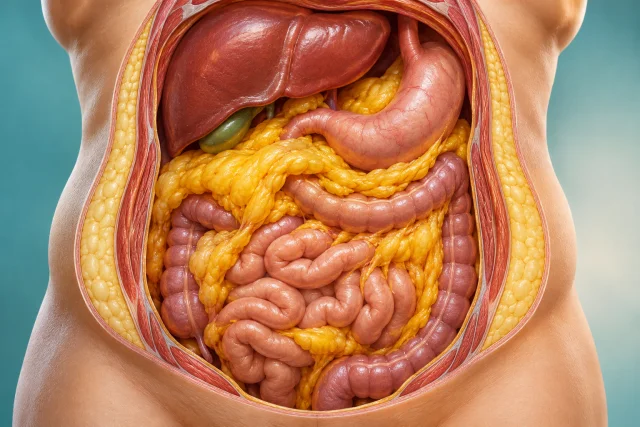
















Heat stroke symptoms and how exercise in the heat overwhelms the body
Exertional heat stroke can cause confusion and collapse when exercise generates more heat than the body can release. During exercise, symptoms can include confusion, altered behaviour, slurred speech, loss of coordination, collapse, seizure or coma, together with very high body temperature, hot skin, rapid breathing, rapid heartbeat, and either profuse sweating or dry skin.
This explainer focuses on exertional heat stroke in sport and outdoor work. It shows how heat stroke differs from heat exhaustion, why exercise in hot or humid conditions can overwhelm thermoregulation, and what current evidence says about diagnosis, organ injury and recovery.

Evidence last checked 23 Nov 2026 · 10 min

What heat stroke symptoms look like during exercise
Bridwell et al. (2026) describe exertional heat stroke as severe hyperthermia with central nervous system dysfunction, so symptoms affecting awareness, behaviour and coordination are the most important clues. Brain signs come first.
In exertional heat stroke, the decisive sign is a failing brain in an overheating body.
Changes in consciousness and coordination
Bridwell et al. (2026) list behavioural change, confusion, irritability, impaired consciousness, delirium, ataxia, convulsions and coma among the central nervous system findings of heat stroke. In practice, a person who becomes disorientated, unsteady or unresponsive during heavy exertion fits that neurological picture.
Casa et al. (2015) add dizziness, confusion, behavioural change, coordination difficulty, reduced cognitive function, reduced physical performance and collapse to the clinical picture of dangerous hyperthermia. Those observations help explain why collapse in the heat is treated as a warning sign and not as a routine end-point of hard effort.
Body temperature, breathing and skin signs
The National Institute for Occupational Safety and Health lists confusion, altered mental status, slurred speech, loss of consciousness, seizures, very high body temperature, and hot dry skin or profuse sweating among the symptoms of heat stroke. NHS Wales lists a very high temperature, hot skin, fast heartbeat, fast breathing or shortness of breath, confusion, lack of coordination, seizure and loss of consciousness.
Those official descriptions show that sweating does not rule out heat stroke. The National Institute for Occupational Safety and Health includes profuse sweating in the symptom list.
How heat stroke differs from heat exhaustion
NHS Wales, the National Institute for Occupational Safety and Health, and Casa et al. (2015) all describe overlap between heat exhaustion and heat stroke, while Casa et al. also note that heat stroke includes marked neurological dysfunction and risk of organ injury. Overlap is common.
Symptoms shared by heat illnesses
The National Institute for Occupational Safety and Health describes heat exhaustion as the body’s response to excessive loss of water and salt, usually through excessive sweating. NHS Wales lists tiredness, dizziness, headache, feeling sick or being sick, weakness, thirst, cramps, a fast heartbeat, fast breathing and excessive sweating among its features.
Those symptoms do not automatically separate mild from severe heat illness. NHS Wales and the National Institute for Occupational Safety and Health both show that early symptoms can overlap.
Neurological signs that distinguish severe illness
Casa et al. (2015) state that heat exhaustion lacks end-organ damage and lacks the marked central nervous system dysfunction with temperature above about 40.5°C that suggests exertional heat stroke. In the same statement, rectal core temperature in heat exhaustion is usually below 40.5°C.
Casa et al. (2015) also warn that a delayed assessment can miss the highest temperature. Passive cooling can mislead. According to Casa et al. (2015), a person who collapses with central nervous system dysfunction may still fit the clinical picture of suspected exertional heat stroke after passive cooling has lowered the measured rectal temperature towards 40°C.
Why exercise in the heat can cause heat stroke
Casa et al. (2015) and Garcia et al. (2022) both describe exertional heat stroke as a failure of thermoregulation caused by the combination of high metabolic heat production and impaired heat loss. Internal heat rises fast.
Heat produced by working muscles
Casa et al. (2015) describe exertional heat stroke as a product of both metabolic heat production and environmental heat load. The same statement notes that intense exercise can generate close to 1000 kcal per hour, with more than 90% of that heat coming from muscle metabolism.
Garcia et al. (2022) summarise the downstream result as thermoregulatory and cardiovascular overload followed by systemic inflammatory injury and coagulopathy. Casa et al. (2015) and Garcia et al. (2022) therefore help explain why racing, military drills and physically demanding work can trigger heat stroke even when outdoor temperature alone does not look extreme.
Sweat evaporation and circulatory strain
Casa et al. (2015) describe evaporation of sweat as the most efficient route of heat transfer from the body. Humidity reduces cooling. The same source states that evaporation depends on humidity and moving air, and becomes much less effective when humidity is high.
Casa et al. (2015) therefore support the broad rule that humidity, low airflow, heavy clothing and protective equipment make heat loss harder. The interaction between temperature, humidity and air movement is discussed more broadly in thermal comfort, temperature, humidity, airflow and clothing.
Water balance adds another layer of strain during hard exercise. Casa et al. (2015) and Bridwell et al. (2026) both place dehydration within the risk profile, as discussed more broadly in dehydration symptoms during exercise.
Risk factors for heat stroke during sport and outdoor work
Casa et al. (2015), Bridwell et al. (2026), the National Institute for Occupational Safety and Health, and Garcia et al. (2022) all identify a mix of environmental and individual risk factors. Adaptation changes risk. The main pattern is consistent across those sources: risk rises when exertion is hard, heat loss is limited and the person is not well adapted.
Heat acclimatisation and exertion intensity
Casa et al. (2015) recommend building heat acclimatisation gradually over 7 to 14 days. The same statement says acclimatisation benefits can decay within 3 weeks, and that the first 2 to 3 weeks of preseason practice usually carry the highest risk of exertional heat illness.
Casa et al. (2015) also state that exercise intensity has the greatest influence on the rate of core temperature rise, which is why high-intensity work can overwhelm thermoregulation quickly. The National Institute for Occupational Safety and Health adds that both outdoor and indoor workers in hot environments can be at risk of heat-related illness.
Environmental and individual susceptibility
Casa et al. (2015) list high ambient temperature, solar radiation, high humidity, high exercise intensity, poor conditioning, dehydration and some medications among documented risk factors. Bridwell et al. (2026) add dehydration, infection, obesity, hot or humid exposure and prolonged exertion to the modifiable side of the risk profile.
NHS Wales notes that children, older adults and people with long-term health conditions are more at risk of heat exhaustion or heatstroke. Garcia et al. (2022) add that research on some individual risk factors remains limited, although dehydration, sex differences, ageing, body composition and previous illness are plausible contributors.
How clinicians diagnose heat stroke and assess organ damage
Bridwell et al. (2026) describe diagnosis as a clinical judgement that combines neurological findings with core temperature and then moves rapidly to evaluation of complications. Bridwell et al. (2026) and Casa et al. (2015) both show that rectal temperature matters. In parallel, heat-stroke care has to assume that organ injury may already be under way.
Core temperature and neurological examination
Bridwell et al. (2026) define heat stroke as core temperature above 40°C together with clinical manifestations of central nervous system derangement. Casa et al. (2015) support the same principle for exertional heat stroke and emphasise that passive cooling after collapse can lower the measured temperature before assessment.
Bridwell et al. (2026) state that rectal temperature is more accurate than axillary, temporal, oral and aural measurements in the field. Casa et al. (2015) call rectal assessment the clinical gold standard for core temperature in exertional heat stroke.
Laboratory findings and organ involvement
Bridwell et al. (2026) recommend laboratory evaluation for electrolyte disturbance, acute hepatic injury, acute renal injury, high creatine kinase, coagulopathy, haemolysis, urinalysis and other possible causes where relevant. The same review says laboratory evaluation should not delay cooling.
DeGroot et al. (2026) report that acute kidney injury occurred in 73 to 86% of exertional heat illness admissions in their military cohort, and liver damage occurred in 59 to 73%. That study involved active-duty service members, but it still shows that organ injury is common enough to look for explicitly.
How heat stroke is treated and what affects recovery
Roberts et al. (2023), Filep et al. (2020) and Casa et al. (2015) all point towards the same practical conclusion: rapid cooling is central to survival and to the risk of complications. Delay worsens outcome.
Emergency cooling in clinical care
Roberts et al. (2023) describe exertional heat stroke as a true medical emergency in which early recognition, stopping activity and rapid total-body cooling are essential for survival. Bridwell et al. (2026) identify cold-water immersion and continued monitoring of core temperature as central elements of emergency clinical management.
Filep et al. (2020) pooled 521 exertional heat stroke patients from multiple case reports and case series. In that review, no deaths occurred when treatment included adequately rapid cooling, whereas 23 deaths occurred with insufficient cooling, and the paper reports complications in 117 patients (116 in its Table 3) after insufficient cooling compared with four after adequate cooling.
Complications and recovery after hyperthermia
Casa et al. (2015) cite reports of 100% survival with limited or no sequelae when rapid whole-body cooling normalises core temperature within 30 minutes of collapse. Roberts et al. (2023) add that outcomes are likely related to the duration of severe hyperthermia.
Garcia et al. (2022) report that survivors can have long-term neurological or cardiovascular consequences. DeGroot et al. (2026), by contrast, reported no organ failure and no transfer to a higher level of care in their younger military cohort.
What is proven about heat stroke symptoms and what remains uncertain
Bridwell et al. (2026), Roberts et al. (2023) and Filep et al. (2020) support a stable core message: central nervous system dysfunction during hyperthermia defines the syndrome, and rapid cooling is closely linked to better outcomes. Thresholds still vary. Prediction before collapse also remains uncertain, as Bridwell et al. (2026), Garcia et al. (2022) and Casa et al. (2015) note.
Selected clinical research findings
The table below summarises several findings that appear repeatedly in the clinical literature. Filep et al. (2020), Casa et al. (2015) and DeGroot et al. (2026) provide the numeric findings shown below.
Evidence source | Main result | Why it matters |
Filep et al., 2020 | In 521 pooled cases, no deaths were reported with adequate cooling, while 23 deaths occurred with insufficient cooling | Cooling speed is closely tied to survival |
Filep et al., 2020 | The paper reports complications in 117 patients with insufficient cooling (116 in Table 3), compared with 4 after adequate cooling. | Insufficient cooling was associated with more reported complications |
Casa et al., 2015 | Rapid whole-body cooling within 30 minutes has been associated with 100% survival and limited or no sequelae | Time at high core temperature affects recovery |
DeGroot et al., 2026 | Across heat-illness categories in a military cohort (heat exhaustion, heat injury and heat stroke), kidney injury occurred in 73–86% and liver damage in 59–73%. | Organ injury is common enough to check actively |
Garcia et al. (2022) describe exertional heat stroke as a whole-body injury involving systemic inflammatory and multiorgan effects. DeGroot et al. (2026) add concrete evidence that kidney and liver injury are common end-organ findings in at least one young adult military population.
Limits of symptom and temperature thresholds
Bridwell et al. (2026) note that heat stroke is most commonly defined as core temperature above 40°C with central nervous system dysfunction, but they also note that temperature criteria vary across the literature. That is why a rigid threshold is less informative than the full clinical picture.
The National Institute for Occupational Safety and Health shows that sweating can still be present, while Casa et al. (2015) show that symptoms can overlap with heat exhaustion and that temperature can fall below 40.5°C after passive cooling. Taken together, those sources explain why an apparently imperfect textbook picture does not rule out exertional heat stroke.
Frequently asked questions
Can heat stroke happen while a person is still sweating?
Yes. The National Institute for Occupational Safety and Health includes “hot, dry skin or profuse sweating” in the symptom list for heat stroke. Bridwell et al. (2026) describe the same illness as a syndrome of dangerous hyperthermia with central nervous system dysfunction.
How quickly can exertional heat stroke develop?
Casa et al. (2015) state that exercise intensity has the greatest influence on the rate of core temperature rise. When hard exertion produces heat faster than the body can lose it, collapse can follow over a short period during training, competition or physically demanding outdoor work.
Can heat stroke occur when the air is not extremely hot?
Yes. Casa et al. (2015) show that exertional heat stroke depends on both metabolic heat production and environmental heat load, and Garcia et al. (2022) describe the result as thermoregulatory overload. Hard effort, humidity, low airflow and impaired evaporation can therefore make only moderately hot conditions dangerous.
Does a lower body temperature rule out heat stroke?
No. Casa et al. (2015) note that a collapsed person may cool passively before assessment, which can bring the measured temperature below the usual threshold. If central nervous system dysfunction is present, exertional heat stroke can still be the right diagnosis even when the temperature is nearer 40°C than 40.5°C.
Can heat stroke affect the kidneys and liver after body temperature falls?
Yes. Bridwell et al. (2026) recommend kidney and liver testing because organ injury is part of the clinical picture, and DeGroot et al. (2026) found acute kidney injury and liver damage to be common in exertional heat illness admissions. Garcia et al. (2022) and DeGroot et al. (2026) therefore support evaluating heat stroke as a whole-body injury with organ involvement.
Sources
- Garcia CK, Renteria LI, Leite-Santos G, et al. Exertional heat stroke: pathophysiology and risk factors. BMJ Medicine. 2022;1(1):e000239. DOI 10.1136/bmjmed-2022-000239.
- Roberts WO, Armstrong LE, Sawka MN, et al. ACSM Expert Consensus Statement on Exertional Heat Illness: Recognition, Management, and Return to Activity. Current Sports Medicine Reports. 2023;22(4):134–149. DOI 10.1249/JSR.0000000000001058.
- Casa DJ, DeMartini JK, Bergeron MF, et al. National Athletic Trainers' Association Position Statement: Exertional Heat Illnesses. Journal of Athletic Training. 2015;50(9):986–1000. DOI 10.4085/1062-6050-50.9.07.
- Bridwell RE, Long B, Koyfman A, et al. Heat-Related Illness and Heatstroke: A Narrative and Clinical Review for Emergency Clinicians. Cureus. 2026;18(4):e107294. DOI 10.7759/cureus.107294.
- National Institute for Occupational Safety and Health. Heat-related Illnesses. CDC, 3 March 2026. https://www.cdc.gov/niosh/heat-stress/about/illnesses.html
- NHS 111 Wales. Heat exhaustion and heatstroke. 22 June 2026. https://111.wales.nhs.uk/Heatexhaustionandheatstroke
- Filep EM, Murata Y, Endres BD, et al. Exertional Heat Stroke, Modality Cooling Rate, and Survival Outcomes: A Systematic Review. Medicina. 2020;56(11):589. DOI 10.3390/medicina56110589.
- DeGroot DW, Goodwin KC, Giersch GEW, Charkoudian N. Acute kidney injury and liver damage are the most common forms of end organ damage in exertional heat illness in otherwise healthy young adults. Temperature (Austin). 2026;13(3):264–274. DOI 10.1080/23328940.2026.2680846.

Tomas Verren — author
Tomas Verren has a background in biomedical sciences and population health, with academic training in human biology, epidemiology, study design and the interpretation of health data. After completing his postgraduate training, he moved into research communicat...
This article is for general information and is not medical advice. It was reviewed for accuracy by a qualified clinician; decisions about your health should be made with your own doctor.
Related

Thermal comfort: temperature, humidity, airflow and clothing

Dehydration symptoms and how fluid loss during exercise affects the body

Sport Nutrition: Energy, Fuel and Athletic Performance
Heart rate variability and what HRV says about stress and recovery
What a normal resting heart rate is and what fitness does to it

Rotator cuff tears and why shoulder tendons fail with age and overuse
How ligaments tear in a sprained ankle and why ankles re-injure