Alopecia areata and why the immune system attacks hair follicles
The leading theory treats alopecia areata as autoimmune: immune cells, chiefly CD8 T cells, go after hair follicles during their growth phase once the follicle's usual immune shelter has failed, and the loss can stay limited to small round bald spots or extend to every hair on the body (Rajabi et al., 2018; Żeberkiewicz et al., 2020; Lepe et al., 2024). In one US county, 2.1% of residents were estimated to be diagnosed with it over a lifetime, while far fewer live with it at any given moment (Mirzoyev et al., 2014; Benigno et al., 2020). The follicles survive, so hair can return (Petukhova et al., 2010).
The article first describes the condition, its forms and how often it occurs. Signs and the usual course come next, followed by the central question of why immune cells single out the follicle and what genetic studies have added to that picture. Diagnosis, trials and open questions close it, and the account draws on population studies, laboratory work on the immune mechanism, randomised trials and systematic reviews.

Evidence last checked 19 de nov. 2026 · 13 min
What alopecia areata is
This long-lasting, immune-mediated condition mainly affects hair follicles, though it can reach the nails and, now and then, the retinal pigment layer (Lepe et al., 2024). The hair loss leaves no scar (Rajabi et al., 2018; Lepe et al., 2024). A 2013 expert debate counted it among the commonest forms of autoimmune disease, and a problem that clinicians had yet to solve (McElwee et al., 2013).
Patchy, total and universal forms
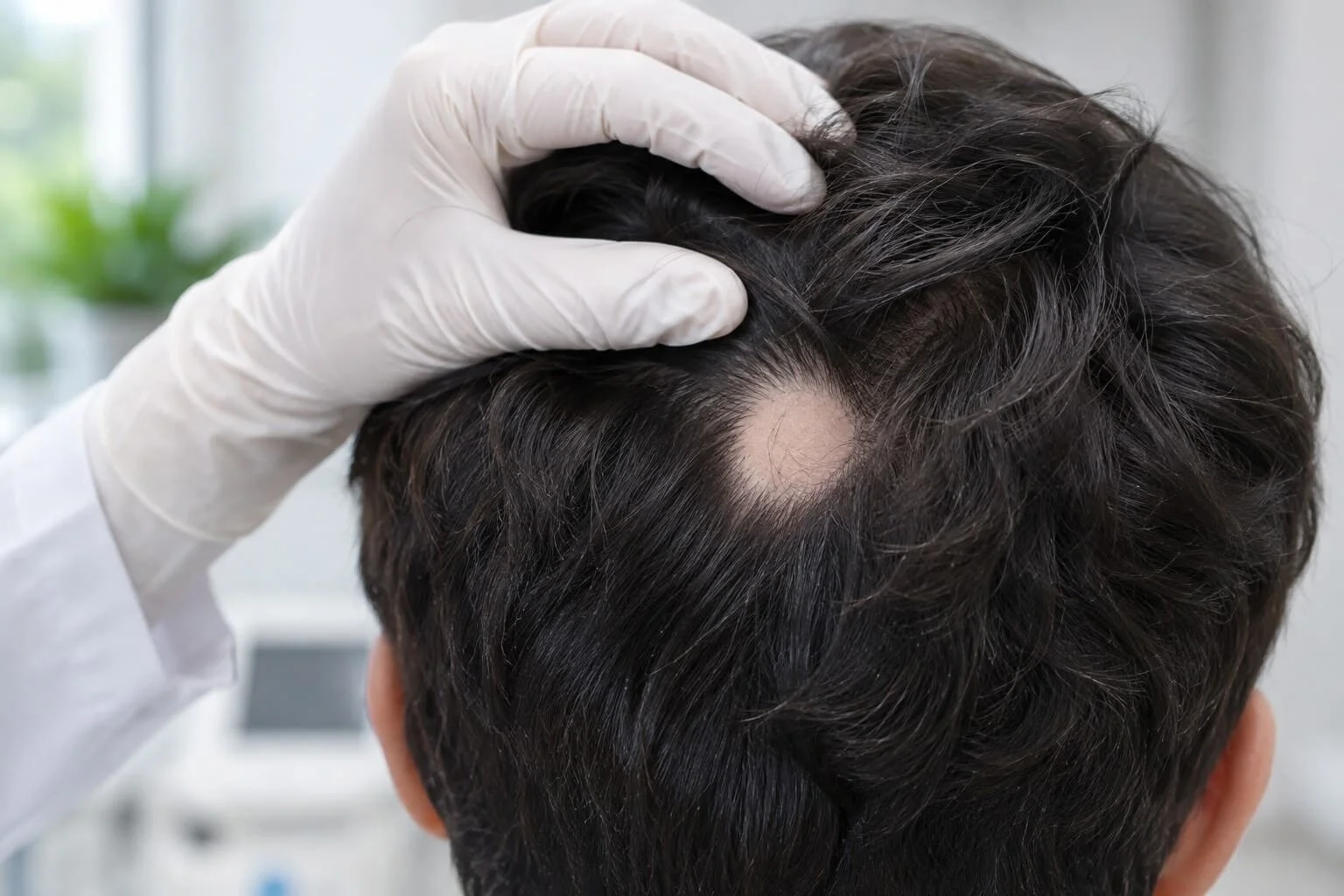
Most cases begin with bald spots. People typically notice one or several sharply outlined bald areas, and the scalp is involved in about 90% of cases (Żeberkiewicz et al., 2020). Some lose all scalp hair, a form named alopecia totalis, or all body hair, named alopecia universalis, and around 10% of people with patchy disease reach one of these extensive forms (Żeberkiewicz et al., 2020; Lepe et al., 2024). An ophiasis distribution and a childhood start both signal a less favourable outlook (Lepe et al., 2024).
The extensive forms are rare in the population. A 2020 meta-analysis estimated that 0.08% of people have alopecia totalis, 0.03% universalis and 0.02% ophiasis (Lee et al., 2020).
How common alopecia areata is
Frequency depends on what is being measured. In Olmsted, a county in Minnesota, 530 residents were newly diagnosed between 1990 and 2009, and the lifetime incidence was put at 2.1% (Mirzoyev et al., 2014). That figure is the chance of a diagnosis during one's lifetime, not the share currently affected. A US survey of 45,016 people estimated a point prevalence of 0.21%, scaled up from just 19 cases that clinicians confirmed among 104 submitted photographs (Benigno et al., 2020).
Self-reports run higher. In the same survey, 1.14% said they currently had alopecia areata (Benigno et al., 2020). The survey was funded by Pfizer, which had a drug for the condition in development (Benigno et al., 2020). A meta-analysis of ninety-four studies gave a pooled prevalence of 2.11%, but population-based studies alone gave 0.75%, and statistical heterogeneity between the studies was extreme (Lee et al., 2020).
In the Olmsted records, people were 33.6 years old on average when diagnosed, 31.5 for men and 36.2 for women, and incidence did not differ significantly by sex (Mirzoyev et al., 2014). The meta-analysis found higher prevalence in children than in adults (Lee et al., 2020).
Signs of alopecia areata and how it progresses
Its typical mark is a well-demarcated bald spot, and in some people the loss reaches other hairy areas and the nails (Żeberkiewicz et al., 2020; Lepe et al., 2024). Pigmented hairs are preferentially lost during active disease, and regrowing hair is often white (McElwee et al., 2013).
Patches, exclamation-mark hairs and nail changes
Around the rim of a spreading patch, doctors often find stubby exclamation-mark hairs, thinner at the root than at the tip, a sign StatPearls treats as pathognomonic (Lepe et al., 2024; Żeberkiewicz et al., 2020). Trichoscopy may also show black dots, the stumps of hairs snapped at skin level (Żeberkiewicz et al., 2020). Nails can show pitting and other changes, but estimates vary widely: 3–30% in one review, 10–15% in a clinical reference, while an expert debate put it as high as 66% (Żeberkiewicz et al., 2020; Lepe et al., 2024; McElwee et al., 2013).
Regrowth and relapse over time
The course varies a great deal. According to StatPearls, between 34% and 50% of those with patchy alopecia areata experience spontaneous hair regrowth within a year, although relapses are common (Lepe et al., 2024). Complete recovery is much less common in extensive alopecia totalis or universalis (Lepe et al., 2024; Mateos-Haro et al., 2023).
A 2023 Cochrane review likewise notes that almost half of patients regrow hair untreated, while regrowth without treatment seldom happens in severe disease (Mateos-Haro et al., 2023). The attack leaves the follicle's stem cells untouched, which is why regrowth stays possible (Petukhova et al., 2010).
Effects on mood and quality of life
Hair loss can weigh on mood. A 2018 review describes people feeling depressed and socially isolated (Rajabi et al., 2018). A 2023 meta-analysis of 37 articles found diagnosed depressive disorders in 9% of patients and specifically studied anxiety disorders in 7–17%, well below the 37% and 34% who reported symptoms on questionnaires (Lauron et al., 2023). These figures come from observational studies, and the spread between studies was mainly associated with differences in method (Lauron et al., 2023).
Why the immune system attacks hair follicles
The leading explanation treats the condition as autoimmune, starting when the follicle loses its immune privilege, though the trigger for that breakdown is still debated (Rajabi et al., 2018). The 2013 expert debate set opposing views side by side: one viewpoint called the evidence merely consistent with autoimmunity, another argued that the disease never appears without the follicle's privilege first collapsing (McElwee et al., 2013).
Loss of immune privilege in the hair follicle
A few body sites, such as the brain, the front chamber of the eye and the bulb of a growing hair, hold immune attack at bay, a protected state known as immune privilege (McElwee et al., 2013). The bulb of a healthy growing follicle carries little or no MHC class I, the molecule T cells need in order to see concealed antigens (Żeberkiewicz et al., 2020; Lepe et al., 2024). The follicle also releases calming signals, including IGF-1, TGF-beta1 and alpha-MSH (McElwee et al., 2013). This protection lasts only through the growth phase and is rebuilt in each new cycle (McElwee et al., 2013; Żeberkiewicz et al., 2020).
In this condition the protection breaks down. Inflammatory signals, among them interferon gamma and substance P, raise MHC class I inside the follicle and expose antigens that were previously hidden (Żeberkiewicz et al., 2020; Lepe et al., 2024). Diseased follicles also overproduce MICA, which activates the NKG2D receptor of immune cells, and NKG2D-positive cells increase both in circulating blood and in skin surrounding the follicles (McElwee et al., 2013).
The target itself remains unknown. No particular antigen in the follicle has been pinned down, which leaves the autoimmune idea formally a hypothesis (Żeberkiewicz et al., 2020).
T cells, interferon gamma and JAK signalling
Under the microscope, lymphocytes gather around the follicle, sometimes in a pattern likened to a swarm of bees (Żeberkiewicz et al., 2020). CD8 T cells sit within the follicle lining, while CD4 T cells cluster around it (Lepe et al., 2024). A 2014 study, mostly in mice, found that NKG2D-bearing CD8 T cells were required for the disease and could trigger it by themselves in those models (Xing et al., 2014). Skin from mice and from 5 patients, compared with 5 unaffected people, showed gene-expression signatures of an interferon gamma response and of cytokines known to keep these T cells active (Xing et al., 2014).
These signals act through the JAK-STAT pathway, by which interferon gamma and IL-15 switch on target immune cells (Lepe et al., 2024). Blocking interferon gamma or IL-15 signalling prevented disease in mice, although none of the blocking antibodies reversed established hair loss when given alone (Xing et al., 2014). In the same paper, 3 patients given a JAK inhibitor regrew nearly all their hair within 5 months, an uncontrolled observation that led the authors to call for formal trials (Xing et al., 2014).
Genes and other factors linked to alopecia areata
StatPearls reads current evidence as pointing to an autoimmune cause with a substantial genetic share, plus environmental influences that remain unidentified (Lepe et al., 2024). When one identical twin has the condition, the other may not, so heredity cannot be the whole story (Żeberkiewicz et al., 2020).
What genetic studies found
Scanning the genomes of 1,054 affected people and 3,278 controls, one study pinpointed 139 variants with a significant statistical link to it (Petukhova et al., 2010). Linked regions included IL-2RA, IL-2/IL-21, CTLA4, HLA and a ULBP gene cluster coding for NKG2D ligands, and several overlap with psoriasis, lupus, coeliac disease, type I diabetes, multiple sclerosis and rheumatoid arthritis (Petukhova et al., 2010). All participants were of European ancestry (Petukhova et al., 2010). The authors said the results still needed checking in an independent replication sample (Petukhova et al., 2010).
Reported family history varies widely between studies, anywhere between 3% and 42% of patients (Żeberkiewicz et al., 2020). In families of 348 people with severe disease, studied by van der Steen and colleagues, a parent was affected for 7% of patients, while 3% of siblings and 2% of children had it themselves (McElwee et al., 2013). Sporadic cases, without affected relatives, are the majority (Żeberkiewicz et al., 2020).
Associated conditions and stress
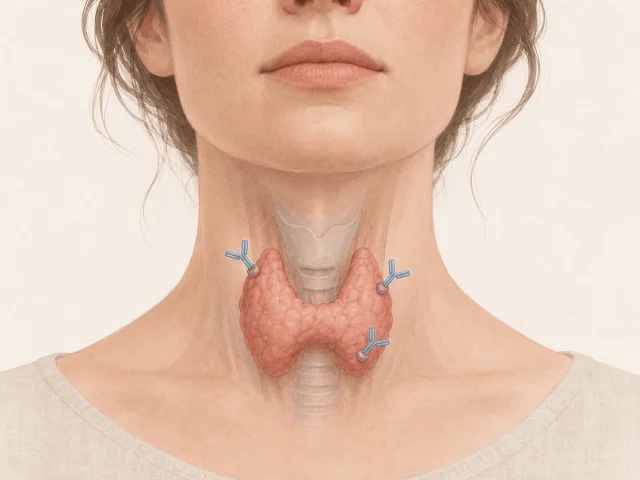
Allergic rhinitis, vitiligo, lupus, psoriasis, atopic dermatitis and thyroid disease turn up more often in people with the condition (Lepe et al., 2024). Thyroid autoimmunity provides one related example, explained in how antibodies overstimulate the thyroid in Graves' disease.
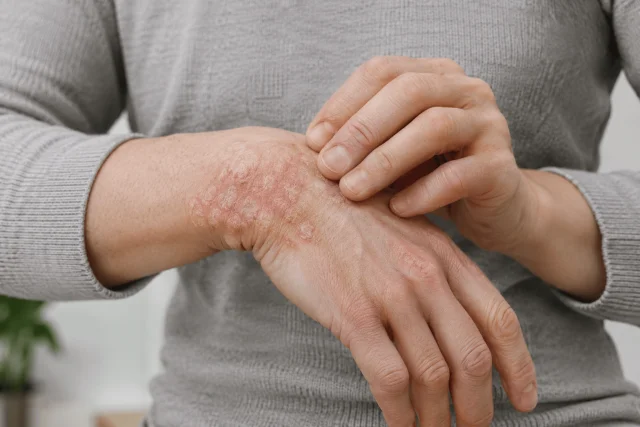
One review estimates that 12–16% acquire a further autoimmune disease, whereas a series of 300 patients in Israel found no increase (Żeberkiewicz et al., 2020; McElwee et al., 2013). Another immune-mediated condition involving the skin and joints is discussed in why psoriatic arthritis links skin and joints.
Reported triggers listed by StatPearls include medicines, vaccinations, viral infections and stress, whether physical or emotional (Lepe et al., 2024). The Pfizer-funded survey mentioned that stress has been associated with onset and persistence in some populations, which describes a link, not a demonstrated effect (Benigno et al., 2020). One expert viewpoint adds that substance P, a neuropeptide linked to stress, can strip the follicle of its protected status and switch on follicle-attacking CD8 T cells in laboratory models, which is no evidence that stress brings on the disease in people (McElwee et al., 2013).
How alopecia areata is diagnosed and graded
Diagnosis is usually clinical, resting on the history and an examination of the scalp (Lepe et al., 2024). Dermoscopy, a magnified view of the skin surface, helps to confirm it (Lepe et al., 2024).
Clinical and dermoscopic signs
Black dots and exclamation-mark hairs signal that the disease is active, and finding exclamation-mark hairs along a patch's border is considered highly characteristic (Żeberkiewicz et al., 2020; Lepe et al., 2024). The typical tissue finding is a cluster of lymphocytes next to the follicle (Żeberkiewicz et al., 2020). This infiltrate, however, appears in only about a third of people who first present with patches (Żeberkiewicz et al., 2020).
Not all forms of hair loss result from an autoimmune attack on follicles. Iron deficiency and its symptoms can also include hair loss, but this does not mean that iron deficiency causes alopecia areata. The distinction matters when interpreting different patterns and potential causes of hair loss.
The SALT score
Severity is measured with the Severity of Alopecia Tool, or SALT, which estimates the percentage of scalp hair lost on a scale from 0 to 100 (Benigno et al., 2020; King et al., 2022). Scorers rate loss quadrant by quadrant, with a separate weight for each (Benigno et al., 2020). In the US survey, 0.12% had milder disease scoring 50 or lower on SALT, and 0.09% had more extensive disease scoring above 50 (Benigno et al., 2020). Drug trials use the score both to select participants and to define a response (King et al., 2022).
What treatment trials have measured
This section reports trial results as research findings, not as guidance on treatment. A 2018 review described the options then available as helpful at best for milder cases, with a high rate of relapse (Rajabi et al., 2018). Baricitinib, a JAK inhibitor, gained US approval for adults with severe disease on 13 June 2022 (U.S. Food and Drug Administration, 2022).
JAK inhibitor trials
Baricitinib was tested in two phase 3 trials, BRAVE-AA1 and BRAVE-AA2, which enrolled 654 and 546 adults whose SALT score was 50 or higher (King et al., 2022). Success meant reaching SALT 20 or lower when assessed at week 36, meaning that no more than a fifth of the scalp remained bald (King et al., 2022). In the higher-dose groups, 38.8% and 35.9% reached that target, against 6.2% and 3.3% on placebo (King et al., 2022). Acne, raised creatine kinase and higher cholesterol levels occurred more often with the drug than with placebo (King et al., 2022).
The ALLEGRO trial of ritlecitinib randomised 718 patients from age 12 upwards and measured response at week 24, when 14–31% of the four ritlecitinib groups in the main efficacy comparison and 2% of the placebo group crossed the same SALT threshold (King et al., 2023). In the THRIVE-AA1 trial of deuruxolitinib in adults aged 18 to 65, 29.6% and 41.5% of the two active groups met the same target after 24 weeks, against 0.8% on placebo (King et al., 2024). The trials differ in timing, age range and design, so their percentages are not directly comparable.
Measure | Group studied | Result |
Lifetime incidence | 530 diagnosed residents of one US county | 2.1% |
Point prevalence | US survey of 45,016 people | 0.21% |
Regrowth within a year without treatment | Patchy hair loss | 34% to 50% |
Diagnosed depressive disorders | Pooled observational studies | 9% |
SALT 20 or less at week 36 | Baricitinib trials, higher dose vs placebo | 38.8% and 35.9% vs 6.2% and 3.3% |
SALT 20 or less at week 24 | Ritlecitinib trial, groups in the main comparison vs placebo | 14–31% vs 2% |
Note: the rows draw on different sources and designs, from population records and surveys to observational studies and industry-funded trials (Mirzoyev et al., 2014; Benigno et al., 2020; Lepe et al., 2024; Lauron et al., 2023; King et al., 2022; King et al., 2023). Their populations and outcomes differ, so the figures cannot forecast the course for any one person.
Each of these trials was funded by, or closely tied to, the companies developing the drugs: Eli Lilly with Incyte, Pfizer, and Sun Pharmaceutical Industries (King et al., 2022; King et al., 2023; King et al., 2024). The FDA attaches a boxed warning to JAK inhibitors warning of serious infections, cancer, blood clots, death and major heart and vessel events (Lepe et al., 2024).
What the Cochrane review concluded
A 2023 Cochrane review included 63 randomised trials of 47 treatments in 4,817 participants, averaging 78 participants per trial, but a planned network comparison proved impossible because few trials tested the same treatments (Mateos-Haro et al., 2023). Its conclusions were cautious. The authors had high confidence in just one comparison, baricitinib against placebo, where the drug raised the chance of at least 75% regrowth in both the short and the longer term (Mateos-Haro et al., 2023). For other treatments the effect on regrowth was very uncertain, and evidence about effects on daily well-being remained scant (Mateos-Haro et al., 2023).
That high-certainty finding rests on the same two industry-funded BRAVE trials, so it is not independent confirmation (Mateos-Haro et al., 2023; King et al., 2022). What happens after treatment stops remains an open question, and StatPearls notes that the benefit probably depends on continued use (King et al., 2024; Lepe et al., 2024).
What is established about alopecia areata and what remains uncertain
Some points are well supported. Alopecia areata targets growing follicles without destroying them, and human tissue shows immune cells and an interferon gamma signature around affected follicles, while proof that these signals drive the disease comes from mice (Lepe et al., 2024; Petukhova et al., 2010; Xing et al., 2014). In two large trials, a JAK inhibitor produced more regrowth than placebo at 36 weeks (King et al., 2022).
The best-supported explanation is that growing hair follicles lose their protected immune status and come under attack from immune cells, but what triggers this and which antigen is targeted are still unknown (Rajabi et al., 2018; Żeberkiewicz et al., 2020).
Much remains uncertain. The antigen targeted by the immune response is still unknown (Żeberkiewicz et al., 2020). The link with emotional stress rests on reports and associations rather than controlled evidence (Lepe et al., 2024; Benigno et al., 2020). The best-supported cellular mechanism, NKG2D-bearing CD8 T cells, proved essential and sufficient for disease only in mouse models, and frequency estimates still vary with the method used (Xing et al., 2014; Lee et al., 2020).
Frequently asked questions
Is alopecia areata contagious?
No source reviewed here describes spread from person to person. The condition is described as an immune-mediated disorder in which the body's own immune cells attack hair follicles, with a substantial genetic contribution (Lepe et al., 2024). Infectious agents appear only as one of many proposed contributing factors, alongside genetics, hormones and diet (McElwee et al., 2013).
Does stress cause alopecia areata?
That has not been shown. StatPearls lists stress among reported triggers, together with vaccinations, viral infections and medicines (Lepe et al., 2024). A survey paper links stress with onset in some groups (Benigno et al., 2020). The stress-induced molecules in genetic research are immune danger signals, not emotional stress (Petukhova et al., 2010).
Can hair grow back without treatment?
Yes. Spontaneous regrowth is possible, especially in patchy alopecia areata. StatPearls reports that 34%–50% of people with patchy hair loss experience regrowth within one year without treatment (Lepe et al., 2024). However, relapses are common, and complete recovery is much less likely in severe alopecia totalis or universalis (Mateos-Haro et al., 2023).
Is alopecia areata inherited?
Genes play a part. A genome-wide study linked 139 variants to the condition in people of European ancestry (Petukhova et al., 2010). In families of 348 severely affected people, 7% had an affected parent and 3% of siblings had it (McElwee et al., 2013). Identical twins can differ, which points to other factors (Żeberkiewicz et al., 2020).
Can children develop alopecia areata?
Yes. A meta-analysis found higher prevalence in children than in adults (Lee et al., 2020). One review reports that 44% of patients develop the condition before their 20s (Żeberkiewicz et al., 2020). Onset in childhood is linked with a less favourable outlook (Lepe et al., 2024).
Sources
- Żeberkiewicz M, Rudnicka L, Malejczyk J. Immunology of alopecia areata. Central-European Journal of Immunology. 2020;45(3):325–333. DOI 10.5114/ceji.2020.101264.
- McElwee KJ, Gilhar A, Tobin DJ, Ramot Y, Sundberg JP, Nakamura M, Bertolini M, Inui S, Tokura Y, King LE Jr, Duque-Estrada B, Tosti A, Keren A, Itami S, Shoenfeld Y, Zlotogorski A, Paus R. What causes alopecia areata? Experimental Dermatology. 2013;22(9):609–626. DOI 10.1111/exd.12209.
- Rajabi F, Drake LA, Senna MM, Rezaei N. Alopecia areata: a review of disease pathogenesis. British Journal of Dermatology. 2018;179(5):1033–1048. DOI 10.1111/bjd.16808.
- Lepe K, Syed HA, Zito PM. Alopecia Areata. In: StatPearls. Treasure Island (FL): StatPearls Publishing; 2024 (updated 8 February 2024). NCBI Bookshelf NBK537000.
- Mirzoyev SA, Schrum AG, Davis MDP, Torgerson RR. Lifetime incidence risk of alopecia areata estimated at 2.1 percent by Rochester Epidemiology Project, 1990–2009. Journal of Investigative Dermatology. 2014;134(4):1141–1142. DOI 10.1038/jid.2013.464.
- Lee HH, Gwillim E, Patel KR, Hua T, Rastogi S, Ibler E, Silverberg JI. Epidemiology of alopecia areata, ophiasis, totalis, and universalis: a systematic review and meta-analysis. Journal of the American Academy of Dermatology. 2020;82(3):675–682. DOI 10.1016/j.jaad.2019.08.032.
- Benigno M, Anastassopoulos KP, Mostaghimi A, Udall M, Daniel SR, Cappelleri JC, Chander P, Wahl PM, Lapthorn J, Kauffman L, Chen L, Peeva E. A large cross-sectional survey study of the prevalence of alopecia areata in the United States. Clinical, Cosmetic and Investigational Dermatology. 2020;13:259–266. DOI 10.2147/CCID.S245649.
- Xing L, Dai Z, Jabbari A, Cerise JE, Higgins CA, Gong W, de Jong A, Harel S, DeStefano GM, Rothman L, Singh P, Petukhova L, Mackay-Wiggan J, Christiano AM, Clynes R. Alopecia areata is driven by cytotoxic T lymphocytes and is reversed by JAK inhibition. Nature Medicine. 2014;20(9):1043–1049. DOI 10.1038/nm.3645.
- Petukhova L, Duvic M, Hordinsky M, Norris D, Price V, Shimomura Y, Kim H, Singh P, Lee A, Chen WV, Meyer KC, Paus R, Jahoda CAB, Amos CI, Gregersen PK, Christiano AM. Genome-wide association study in alopecia areata implicates both innate and adaptive immunity. Nature. 2010;466(7302):113–117. DOI 10.1038/nature09114.
- King B, Ohyama M, Kwon O, Zlotogorski A, Ko J, Mesinkovska NA, Hordinsky M, Dutronc Y, Wu WS, McCollam J, Chiasserini C, Yu G, Stanley S, Holzwarth K, DeLozier AM, Sinclair R. Two phase 3 trials of baricitinib for alopecia areata. New England Journal of Medicine. 2022;386(18):1687–1699. DOI 10.1056/NEJMoa2110343.
- King B, Zhang X, Harcha WG, Szepietowski JC, Shapiro J, Lynde C, Mesinkovska NA, Zwillich SH, Napatalung L, Wajsbrot D, Fayyad R, Freyman A, Mitra D, Purohit V, Sinclair R, Wolk R. Efficacy and safety of ritlecitinib in adults and adolescents with alopecia areata: a randomised, double-blind, multicentre, phase 2b–3 trial. The Lancet. 2023;401(10387):1518–1529. DOI 10.1016/S0140-6736(23)00222-2.
- King B, Senna MM, Mesinkovska NA, Lynde C, Zirwas M, Maari C, Prajapati VH, Sapra S, Brzewski P, Osman L, Hanna S, Wiseman MC, Hamilton C, Cassella J. Efficacy and safety of deuruxolitinib, an oral selective Janus kinase inhibitor, in adults with alopecia areata: results from the Phase 3 randomized, controlled trial (THRIVE-AA1). Journal of the American Academy of Dermatology. 2024;91(5):880–888. DOI 10.1016/j.jaad.2024.06.097.
- Mateos-Haro M, Novoa-Candia M, Sánchez Vanegas G, Correa-Pérez A, Gaetano Gil A, Fernández-García S, Ortega-Quijano D, Urueña Rodriguez MG, Saceda-Corralo D, Bennouna-Dalero T, Giraldo L, Tomlinson J, Vaño-Galván S, Zamora J. Treatments for alopecia areata: a network meta-analysis. Cochrane Database of Systematic Reviews. 2023;(10):CD013719. DOI 10.1002/14651858.CD013719.pub2.
- Lauron S, Plasse C, Vaysset M, Pereira B, D'Incan M, Rondepierre F, Jalenques I. Prevalence and odds of depressive and anxiety disorders and symptoms in children and adults with alopecia areata: a systematic review and meta-analysis. JAMA Dermatology. 2023;159(3):281–288. DOI 10.1001/jamadermatol.2022.6085.
- U.S. Food and Drug Administration. Supplement approval letter, NDA 207924/S-007, Olumiant (baricitinib), 13 June 2022. www.accessdata.fda.gov/drugsatfda_docs/appletter/2022/207924Orig1s007ltr.pdf

Ellen Marsh — author
Ellen writes Health & Medicine explainers for Cabdirect, with a focus on public health, disease prevention and the interpretation of medical research for general readers. Her academic background combines biomedical sciences with postgraduate study in populatio...
This article is for general information and is not medical advice. It was reviewed for accuracy by a qualified clinician; decisions about your health should be made with your own doctor.
Related

What autoimmune disease is and why the immune system attacks the body
How Graves’ disease antibodies push the thyroid into overdrive
Psoriatic arthritis and why a skin condition affects the joints
Iron deficiency and how it affects your health

Polymyalgia rheumatica and why shoulders and hips stiffen after 50
How the lymphatic system drains fluid and helps fight infection
How the HPV vaccine works and what studies show about its effect