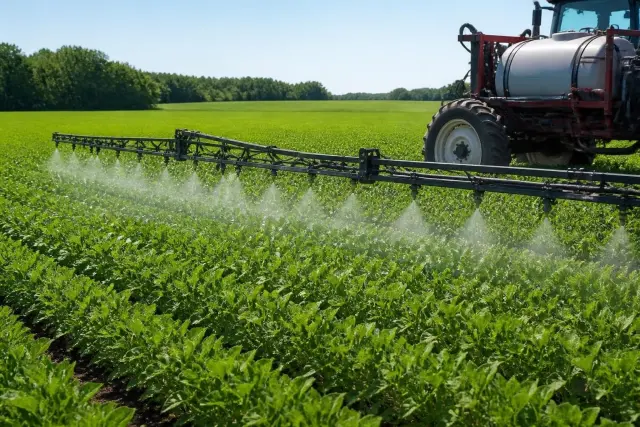
















What crop rotation is, from the three-field system to today
Crop rotation is a planned sequence of crops grown on the same ground over a rotation cycle (USDA NRCS, 2024), arranged so that no single crop, pest or nutrient demand holds the land for long. Farmers have relied on versions of it for more than two thousand years, long before anyone could explain why it worked.
This explainer follows the idea from Roman fallow and the medieval three-field system through the four-course rotations of the agricultural revolution to the corn and soybean fields of today. It draws on economic history, the world's oldest field experiments and recent meta-analyses, and separates what the evidence shows from what is still argued over. Further coverage of farming sits in the [agriculture section](/agriculture/).
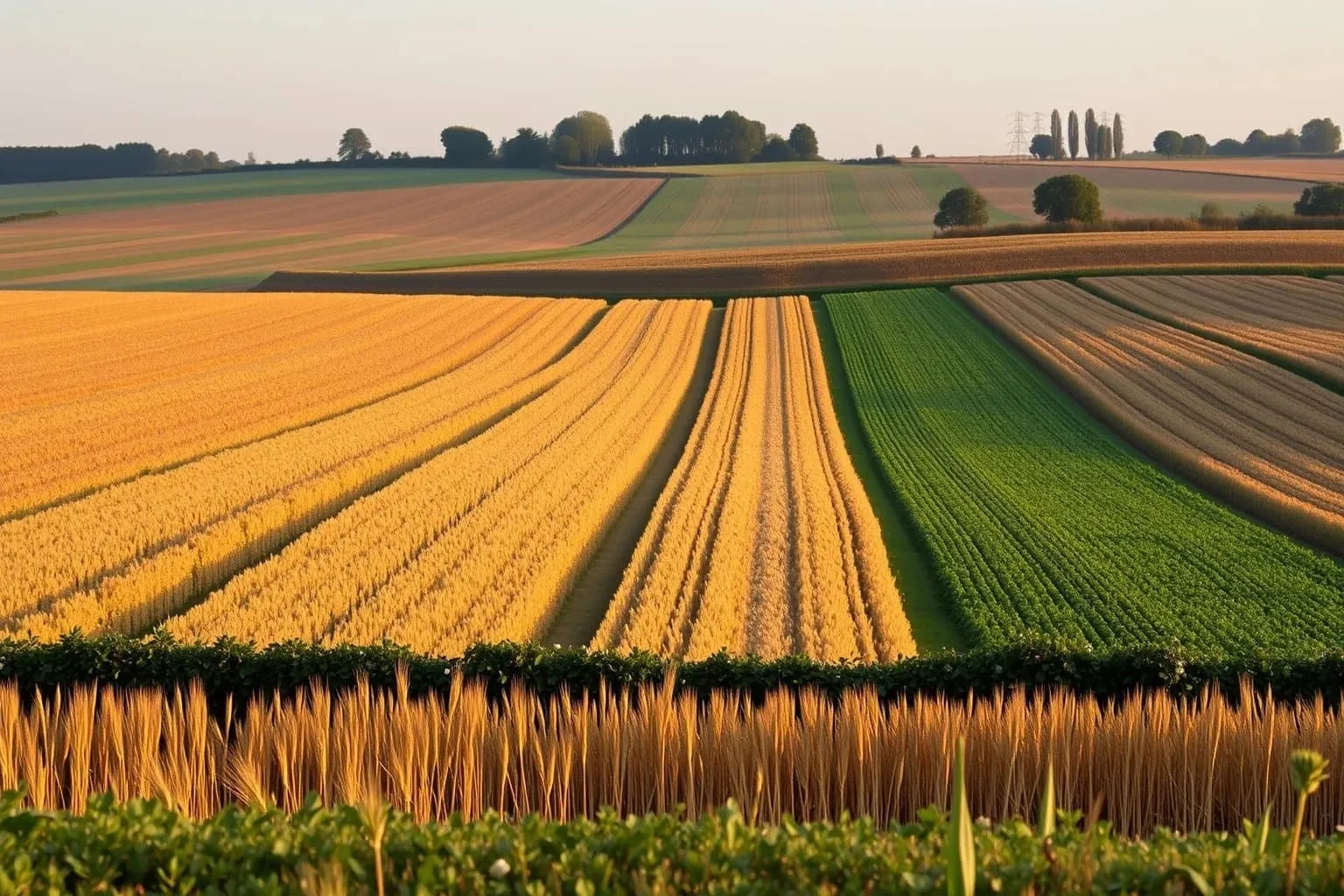
What is crop rotation and how does it work?
In its simplest form, crop rotation means not planting the same crop in the same place year after year. The US Natural Resources Conservation Service defines it as a planned sequence of crops grown on the same ground over a period called the rotation cycle (USDA NRCS, 2024). A cycle can last two years, as in the common corn and soybean sequence, or five or more when grains, legumes and grass leys follow one another.
The practice works through several overlapping effects rather than one. Each crop takes different amounts of nutrients from different depths, leaves different residues and supports a different community of pests, weeds and soil organisms. Changing the crop changes all of these at once, which is why rotation is described as a system rather than a single input.
Four mechanisms account for most of the benefit that researchers measure:
- Nitrogen supply: peas, beans and clover host root bacteria that fix nitrogen from the air, leaving some of it for the next crop (Böhm & Wissemeier, 2025).
- Broken pest and disease cycles: insects and fungi that specialise on one host decline when that host disappears for a season (Wallander, 2013).
- Weed control: different sowing dates and canopies stop any single weed community from settling in (Weisberger et al., 2019).
- Soil organic matter: more varied roots and residues feed soil microbes and raise soil carbon (McDaniel et al., 2014).
Planning a rotation also involves local knowledge of pest cycles and of which crops can actually be sold in the region, a reminder that the practice has always been economic as well as agronomic (USDA NRCS, 2024). A sequence that improves soil conditions may still be impractical if its crops do not fit local markets or growing seasons.
Where did crop rotation come from?
Farmers noticed long before modern science that some crops seemed to restore land while others exhausted it. Roman agricultural writers already treated beans, vetch and lupins as soil improvers, knowledge that was empirical rather than explained (Böhm & Wissemeier, 2025). What changed over the following centuries was how much land could be kept in production at once.
Fallow and the two-field system
Across the Mediterranean and early medieval Europe, arable land was normally left fallow half of the time (White, 1967). One half of the fields carried a cereal such as wheat, barley or rye sown in autumn, while the other half rested, was grazed and was ploughed to control weeds (White, 1967). The fallow year restored some fertility, but it meant that half of the cultivated land produced no grain in any year.
The medieval three-field system
The next step was to split the land into three parts instead of two. In the classic account by the historian Lynn White Jr., farmers between the Loire and the Rhine, the heart of the Carolingian empire, moved to a three-field system by the later 8th century (White, 1967). One third was sown in autumn with winter grain, one third was sown in early spring with oats, barley, peas and beans, and only one third lay fallow (White, 1967).
The arithmetic explains its appeal: the cropped share rose from half to two thirds of the arable land. White argued that farmers could raise output by a third to a half, and stressed the value of the spring peas and beans for both soil and diet (White, 1967). He also noted that the system needed summer rain, so it suited the north of the Alps and the Loire far better than the dry Mediterranean (White, 1967).
Historians do not fully agree on the timing. Adriaan Verhulst places the development of the three-course rotation in the 9th century and separates it from the later three-field layout of whole villages, noting that the spring grain was mainly barley and oats used largely as animal feed (Verhulst, 2002). Both accounts agree on the principle: cutting the fallow share was the first great gain from rotation.
How did crop rotation increase production in the agricultural revolution?
From the 17th to the 19th century, farmers in England and neighbouring regions replaced the fallow year with fodder crops and legumes. The best-known result is the four-course rotation associated with Norfolk, in which wheat, a root crop such as turnips, barley and a clover or legume year follow one another, so that no field lies bare and livestock have feed through the winter.
Legumes and the nitrogen hypothesis
Economic historians have tried to measure how much of the period's yield growth came from these rotations. Robert Allen estimated that nitrogen-fixing plants such as clover accounted for about half of the rise in English yields between the Middle Ages and the industrial revolution, with the rest from better cultivation, seed and drainage (Allen, 2008). Because nitrogen built up slowly in the soil, he concluded that this revolution was far more gradual than the Green Revolution of the 20th century (Allen, 2008).
Rothamsted Research tested such sequences directly. Its Agdell experiment compared four-course rotations from 1848 that differed only in their third course, a legume or a bare fallow, under different manures (Rothamsted Research, n.d.). From 1920 club-root disease became progressively more damaging to the root course, worst on the plots where fertiliser had acidified the soil, and the four-course rotation was abandoned in 1951 (Rothamsted Research, n.d.).
From farm experience to scientific explanation
The reason legumes enrich soil was not understood until the 1880s. Hermann Hellriegel announced in 1886, and published in detail with Hermann Wilfarth in 1888, that legumes fix atmospheric nitrogen with the help of bacteria in their root nodules (Böhm & Wissemeier, 2025). That finding gave a scientific basis to a practice farmers and Roman authors had followed for centuries (Böhm & Wissemeier, 2025).
The same decades produced the long-term trials that still anchor rotation research. Broadbalk at Rothamsted, started in 1843, is the longest-running field experiment in the world and since 1968 has compared wheat grown continuously with wheat grown in rotation (Rothamsted Research, n.d.). In the United States, the Morrow Plots at the University of Illinois have tested rotations on corn since 1876 (University of Illinois, n.d.).
Do farmers still practise crop rotation?
They do, but in simpler forms than in the 19th century. The turning point was industrial nitrogen. Fritz Haber filed his patent on ammonia synthesis on 13 October 1908, and by 2008 nitrogen fertilisers made from that process were estimated to feed 48% of the world's population (Erisman et al., 2008). Once nitrogen could be bought by the tonne, legume years were no longer essential for fertility.
The result was a narrowing rather than an end of rotation. A meta-analysis of weed studies notes that over the past half-century whole regions have come to grow only one or two crops in succession (Weisberger et al., 2019). In the United States, 82–94% of most field crops were grown in some kind of rotation in surveys up to 2010, and only about 18% of corn land planted in 2010 had carried corn for the three previous years (Wallander, 2013).
The two-year corn and soybean sequence is now one of the most widely adopted rotations in the United States, and it covers most corn and soybean land there (Wallander, 2013). Cover crops, which add living plant cover between main crops, remain far rarer: an estimated 3–7% of farms used them, on about 1% of cropland, in the surveys reported in 2013 (Wallander, 2013).
Longer rotations remain important in organic systems, where certified growers use crop sequences, cover crops and manures to manage soil fertility. A [comparison of organic and conventional farming](/agriculture/organic-vs-conventional-farming-economics-ecology-agriculture/) explains how crop diversification, including rotation, can affect yields and environmental outcomes.
Rotation in gardens and allotments
The same logic applies on a small scale. The Royal Horticultural Society advises growing specific groups of vegetables on a different part of the plot each year to limit the build-up of crop-specific pests and diseases (RHS, n.d.). Its main groups are legumes, brassicas, onions, the potato family and roots, arranged in a three- or four-year plan, while perennials such as rhubarb and asparagus stay outside the rotation (RHS, n.d.).
What are the benefits of crop rotation?
Modern research has moved from single trials to syntheses of hundreds of experiments, and the results are broadly consistent. The clearest effect is on yield. In the study “Global systematic review with meta-analysis reveals yield advantage of legume-based rotations and its drivers” (2022), Zhao and colleagues pooled 11,768 yield observations from 462 field experiments and found that a legume pre-crop raised the yield of the following main crop by 20% on average (Zhao et al., 2022).
Rotation also makes yields more stable. In the study “Long-term evidence shows that crop-rotation diversification increases agricultural resilience to adverse growing conditions in North America” (2020), Bowles and colleagues analysed 347 site-years from 11 long-term experiments in the US and Canada. More diverse rotations raised maize yields by 28.1% on average, including by 22.6% in favourable weather (Bowles et al., 2020). In drought years, diverse rotations reduced yield losses by between 14.0% and 89.9%, depending on the site and rotation (Bowles et al., 2020).
Below ground, the changes are smaller but consistent. In the study “Does agricultural crop diversity enhance soil microbial biomass and organic matter dynamics?” (2014), McDaniel and colleagues combined 122 studies and found that adding one or more crops to a monoculture raised total soil carbon by 3.6% and total nitrogen by 5.3%, and microbial biomass carbon by 20.7% (McDaniel et al., 2014).
With a cover crop in the rotation, soil carbon rose by 8.5% and nitrogen by 12.8% (McDaniel et al., 2014). What nutrients do to soil properties over a run of seasons is measured in [fertiliser type and rice yield](/agriculture/fertilizer-types-rice-yield-soil-properties-sri-agriculture/).
Weeds respond as well. Across 54 studies on six continents, diversifying rotations reduced weed density by 49%, though it did not significantly change total weed biomass (Weisberger et al., 2019). The authors found that varying sowing dates mattered more than simply adding crop species (Weisberger et al., 2019).
Evidence | Scope | Main result |
Zhao et al. (2022) | 462 field experiments, 11,768 observations | Legume pre-crops raised the next crop's yield by 20%; 32% in low-yield and 7% in high-yield settings |
Bowles et al. (2020) | 11 long-term trials, 347 site-years, US and Canada | Diverse rotations raised maize yield by 28.1%; drought losses cut by 14.0–89.9% |
McDaniel et al. (2014) | 122 studies | Soil carbon +3.6%, nitrogen +5.3%, microbial biomass carbon +20.7% |
Weisberger et al. (2019) | 54 studies, 298 paired observations | Weed density −49%; no significant change in weed biomass |
Morrow Plots, 1997 | Unfertilised plots since 1876 | Corn yields of 54, 94 and 110 bushels per acre in continuous, two-crop and three-crop sequences |
Note: these are meta-analysis and long-term trial results, not yields to expect from any single field. They describe measured differences between rotation systems, not a recommendation for a particular sequence.
The longest experiments show the same pattern in real fields. In 1997, unfertilised plots of the Morrow trial produced 54 bushels of corn per acre under continuous corn, 94 after soybeans and 110 in a corn, oats and hay rotation (University of Illinois, n.d.). With recommended fertiliser the figures were 151, 191 and 200 bushels per acre, so rotation added yield even when nitrogen was not limiting (University of Illinois, n.d.).
Rotation is one of farming's oldest tools, and modern trials confirm its core promise: varied sequences raise yields and steady them in bad years, but the size of the gain depends on soil, inputs and the pests a field carries.
What are the disadvantages of crop rotation?
Rotation is not a universal fix, and the same studies that show its benefits also mark its limits. The yield gain from legumes was 32% in low-yielding environments but only 7% in high-yielding ones, and it fell as nitrogen fertiliser rates rose (Zhao et al., 2022). On farms that already use heavy inputs, the extra harvest from a legume year may be modest.
Pests can also adapt. The corn and soybean rotation controlled the western corn rootworm in the US Corn Belt until the mid-1990s (Gray et al., 2009). In 1995, severe root damage appeared in rotated fields of east-central Illinois and northern Indiana, caused by a variant of the beetle that had begun laying eggs in soybean fields (Gray et al., 2009). A two-year rotation had selected for exactly the behaviour that defeated it.
Other drawbacks are practical rather than biological:
- Market limits: a rotation only works if each crop in it can be sold or fed, which is why planners look at regional market viability (USDA NRCS, 2024).
- Diseases of the rotation itself: club-root in the Agdell root course shows that a sequence can host its own pathogens, there alongside soil acidified by fertiliser (Rothamsted Research, n.d.).
- Uneven effects: weed density fell with rotation, but weed biomass did not change significantly (Weisberger et al., 2019).
- Soil treatment can matter more than sequence: in the Morrow Plots, fertility treatments caused larger differences in corn yield than the choice of rotation (University of Illinois, n.d.).
Some limits can be eased by changing the crops within a rotation rather than abandoning it. For example, [a study of calendula, crotalaria and oats](/agriculture/calendula-crotalaria-oats-root-knot-nematodes-naranjilla-agriculture/) examines the use of cover crops against root-knot nematodes in naranjilla. However, the effectiveness of crop sequences depends on the pest and local conditions (Gray et al., 2009).
What is proven about crop rotation and what is not
Several conclusions rest on strong and consistent evidence. Rotations that include legumes or a wider range of crops raise the yield of the main crop on average, with large syntheses reporting gains of 20% and more (Zhao et al., 2022; Bowles et al., 2020). Diverse rotations also cushion yields in drought years and build modest amounts of soil carbon and nitrogen (Bowles et al., 2020; McDaniel et al., 2014).
The historical picture is also clear in outline. Each major change, from the two-field system to three fields and then to four-course rotations with clover, raised the share of land in production and the nitrogen available to crops (White, 1967; Allen, 2008). Synthetic fertiliser later replaced much of that biological nitrogen and allowed rotations to shrink (Erisman et al., 2008).
Less settled is how large the benefit is on a given farm. Average gains from meta-analyses cannot be transferred directly to a field with high fertiliser use, a particular pest or a narrow market, and the exact dating of the medieval three-field system is still debated (Zhao et al., 2022; Verhulst, 2002). The rootworm case also shows that a rotation can lose its pest-control value once a pest adapts (Gray et al., 2009).
For readers, the evidence supports a clear but bounded answer. Crop rotation is a well-tested way to keep land productive, reduce some pests and weeds and add resilience, and it is no longer the only route to soil nitrogen. Its value depends on the crops chosen, the inputs used and the local pests, which is why rotations are still designed field by field.
Frequently asked questions
What are the different types of crop rotation?
Historians and agronomists usually describe the two-field system with alternate fallow, the medieval three-field system, the four-course rotation of the agricultural revolution and today's short sequences such as corn and soybean. Gardeners use three- or four-year plans that move groups of vegetables around the plot each year.
What is the four-crop rotation system?
It is a four-year sequence in which a cereal, a root crop, a second cereal and a legume or clover year follow each other on the same field. It replaced the bare fallow, fed livestock through winter and added nitrogen, and it became closely associated with Norfolk farming in England.
What is the best order for crop rotation?
There is no single best order, because it depends on climate, soil, markets and local pests. The Royal Horticultural Society suggests a three- or four-year plan for vegetable groups (RHS, n.d.). Crop sequences vary according to the crops grown and the pests and diseases present in each region.
What is the difference between crop rotation and monoculture?
Monoculture repeats one crop on the same field, while rotation changes crops in a planned sequence. In the Morrow Plots, continuous corn yielded less than rotated corn under comparable conditions. A comparison of organic and conventional farming discusses wider economic and ecological differences between farming systems.
How long is a crop rotation cycle?
A cycle can be as short as two years, as in the corn and soybean sequence, or last five years or more when grass and clover leys are included. Vegetable gardeners usually work with three- or four-year cycles, while perennial crops such as asparagus and rhubarb stay outside the rotation.
Sources
- United States Department of Agriculture, Natural Resources Conservation Service, Minnesota. Conservation Crop Rotation (328): Ecological Science Job Approval Authority Fact Sheet. April 2024. https://efotg.sc.egov.usda.gov/references/public/MN/328ESJAAConservationCropRotation2024.pdf
- White L Jr. Technology in the Middle Ages. In: Kranzberg M, Pursell CW, eds. Technology in Western Civilization, Vol. 1. Oxford University Press; 1967.
- Verhulst A. Agricultural technique. In: The Carolingian Economy. Cambridge University Press; 2002:61–71. DOI 10.1017/CBO9780511817083.005.
- Allen RC. The nitrogen hypothesis and the English agricultural revolution: a biological analysis. Journal of Economic History. 2008;68(1):182–210. DOI 10.1017/S0022050708000065.
- Rothamsted Research. Electronic Rothamsted Archive: Broadbalk (R/BK/1) and Agdell (R/AG/6) experiments. www.era.rothamsted.ac.uk/experiment/rbk1 and www.era.rothamsted.ac.uk/experiment/rag6. Accessed 30 October 2026.
- Böhm W, Wissemeier AH. Contribution to the HiStory series in plant nutrition: Nitrogen issues in the 19th century: II. What is special about legumes in terms of their nitrogen nutrition? Journal of Plant Nutrition and Soil Science. 2025;188(4):585–592. DOI 10.1002/jpln.12019.
- University of Illinois, College of Agricultural, Consumer and Environmental Sciences. The Morrow Plots: a landmark for agriculture. https://morrow.aces.illinois.edu/the-morrow-plots-a-landmark-for-agriculture/. Accessed 30 October 2026.
- Erisman JW, Sutton MA, Galloway J, Klimont Z, Winiwarter W. How a century of ammonia synthesis changed the world. Nature Geoscience. 2008;1(10):636–639. DOI 10.1038/ngeo325.
- Wallander S. While crop rotations are common, cover crops remain rare. Amber Waves, USDA Economic Research Service. 4 March 2013. www.ers.usda.gov/amber-waves/2013/march/while-crop-rotations-are-common-cover-crops-remain-rare
- Zhao J, Chen J, Beillouin D, et al. Global systematic review with meta-analysis reveals yield advantage of legume-based rotations and its drivers. Nature Communications. 2022;13:4926. DOI 10.1038/s41467-022-32464-0.
- Bowles TM, Mooshammer M, Socolar Y, et al. Long-term evidence shows that crop-rotation diversification increases agricultural resilience to adverse growing conditions in North America. One Earth. 2020;2(3):284–293. DOI 10.1016/j.oneear.2020.02.007.
- McDaniel MD, Tiemann LK, Grandy AS. Does agricultural crop diversity enhance soil microbial biomass and organic matter dynamics? A meta-analysis. Ecological Applications. 2014;24(3):560–570. DOI 10.1890/13-0616.1.
- Weisberger D, Nichols V, Liebman M. Does diversifying crop rotations suppress weeds? A meta-analysis. PLoS ONE. 2019;14(7):e0219847. DOI 10.1371/journal.pone.0219847.
- Gray ME, Sappington TW, Miller NJ, Moeser J, Bohn MO. Adaptation and invasiveness of western corn rootworm: intensifying research on a worsening pest. Annual Review of Entomology. 2009;54:303–321. DOI 10.1146/annurev.ento.54.110807.090434.
- Royal Horticultural Society. Crop rotation. www.rhs.org.uk/vegetables/crop-rotation. Accessed 30 October 2026.
Harriet Colbeck — author
Harriet Colbeck is an agriculture writer with a background in agricultural science and a master’s-level focus on soil science. Her earlier work involved preparing field-trial summaries and farmer-facing guidance on soil management, translating research finding...
Related
Organic vs Conventional Farming: Economics and Ecology
How fertiliser types affect rice yield and soil under SRI
Calendula, crotalaria and oats for root-knot nematodes in naranjilla
How crop rotation works and why it improves soil fertility
Why breadfruit mealybug control failed to last on Pacific atolls
How Orchard Age and Herbicides Shift Soil Nitrogen and N2O
What precision agriculture is and what field data actually change