














Mosquito life cycle from egg to adult and why water matters
The mosquito life cycle always follows four stages - egg, larva, pupa and adult - but the time required to move through them depends on species and environmental conditions. Water is essential because larvae and pupae are aquatic, and many eggs hatch only after direct contact with water or flooding.
This article compares official mosquito-biology guidance with laboratory and meta-analytic research on egg hatching, immature development and temperature. It separates the fixed sequence of the life cycle from the variable timing produced by water availability, temperature, food, crowding and mosquito group.
The four stages of the mosquito life cycle
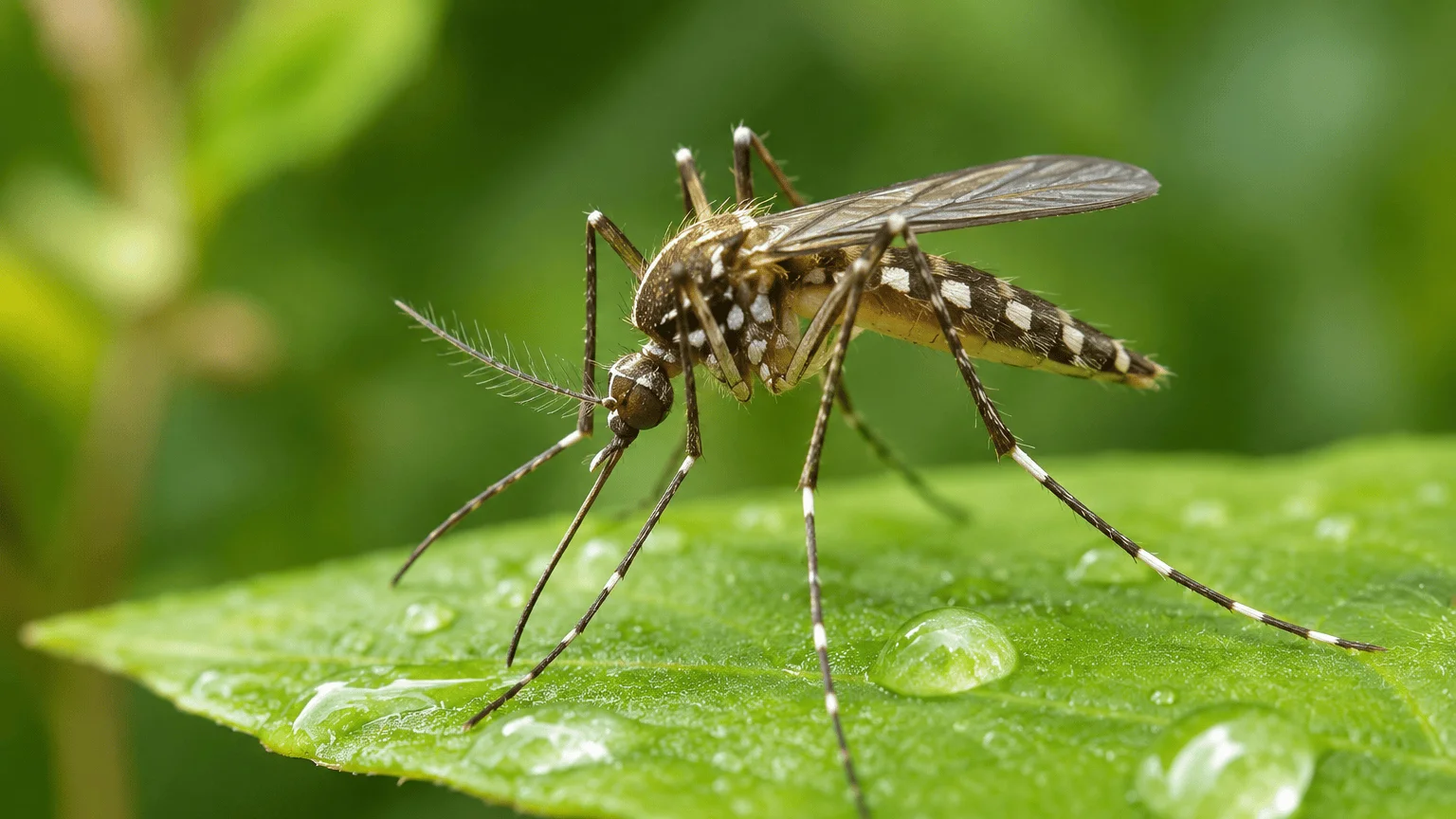
Mosquitoes undergo complete metamorphosis, passing through egg, larva, pupa and adult stages rather than growing as small versions of the adult. The US Environmental Protection Agency (EPA, 2026) describes the first three stages as tied to water, while the adult is the mobile flying stage. That sequence is shared across mosquitoes, but the way each stage is placed in the environment differs among genera and species.
- Egg: the embryo develops inside the egg, but hatching is tied to water or flooding. Depending on the species, eggs may float on water, sit in rafts or remain attached to a damp surface until inundation.
- Larva: the feeding stage remains in water and grows through four instars. Larvae use the aquatic habitat for food and respiration, and their development rate responds strongly to temperature and resource conditions.
- Pupa: the aquatic pupa does not feed, but it is an active transitional stage rather than a dormant one. Metamorphosis continues inside the pupal case before the adult emerges at the surface.
- Adult: the winged stage leaves the water, mates and, in blood-feeding species, females obtain blood associated with egg production. The adult stage restarts the cycle by selecting a suitable place for the next eggs.
Egg placement shows why the phrase "mosquitoes breed in water" is useful but incomplete. Culex females commonly place egg rafts on the water surface, Anopheles females lay separate eggs directly on water, and many Aedes females attach individual eggs to damp container walls or other substrates that may later be flooded (AMCA, 2026; CDC, 2024). In each case, water is central to the transition into the larval stage even when the egg itself spends time above the waterline.
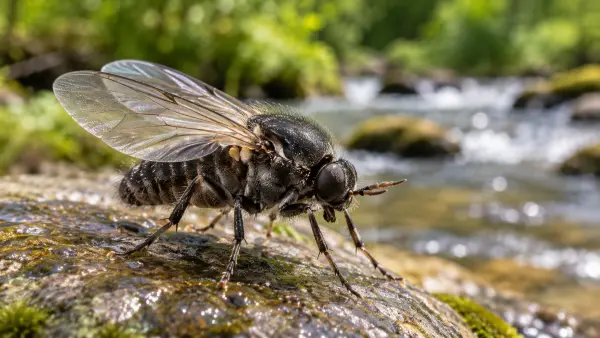
After hatching, the larva is an actively feeding aquatic stage that grows through four larval instars before becoming a pupa. The pupa also remains in water but does not feed; internal reorganisation culminates in the adult splitting the pupal case at the surface and taking flight after its body hardens (Penn State Extension, 2026; AMCA, 2026). A useful comparison is the aquatic immature biology described for blackflies and their life cycle, another group of flies whose juvenile habitat is very different from the flying adult.
Why water is essential before the adult stage
Water is not simply a place where mosquito eggs happen to be found. Larvae use an aquatic habitat for feeding, movement and gas exchange, while pupae depend on the water surface as the platform from which the adult emerges. EPA (2026) and CDC (2024) both emphasise that larvae and pupae are aquatic, so a dry environment interrupts those stages even though some eggs can remain viable while dry.
The exact relation between eggs and water depends on the mosquito. CDC (2024) reports that Aedes eggs can remain attached above the waterline and hatch when rising water covers them, whereas Anopheles eggs are laid directly on water and do not tolerate drying in the same way. AMCA (2026) likewise distinguishes floodwater Aedes and Ochlerotatus eggs from the more desiccation-sensitive eggs of groups such as Anopheles and Culex, showing that "needs water" does not mean every egg must remain submerged from the moment it is laid.
These differences also affect when a new generation appears after rain. Water rising inside a container can flood Aedes eggs laid days or weeks earlier, allowing larvae to emerge even when no adults are currently laying eggs there. In contrast, Anopheles eggs are laid on water and are less tolerant of drying. This means that counting visible larvae at one moment may underestimate the potential for hatching after the next rise in water level (CDC, 2024; AMCA, 2026).
The water habitat also provides the microbial and organic food on which most mosquito larvae depend. Penn State Extension (2026) describes larvae feeding through four instars on organic material and microorganisms, while AMCA (2026) notes algae, plankton, fungi and bacteria among common larval foods. This wet-habitat dependence is part of a wider pattern in small biting flies, although biting midges and disease transmission involve a different family and a broader range of larval habitats.
Why Aedes, Culex and Anopheles do not follow the same schedule
Different mosquito groups share the same four-stage plan but use different egg-laying habitats and have different development schedules. CDC (2024) describes Aedes aegypti and Aedes albopictus as container-associated mosquitoes whose females often place eggs just above the waterline, while Anopheles females lay floating eggs directly on water. CDC (2025) describes Culex females placing egg rafts on permanent or temporary standing water, so the same rainfall event can affect the three groups in different ways.
The public-health timing ranges also differ. CDC (2024) gives about 7–10 days from egg to adult for Aedes species and 10–14 days for Anopheles species under suitable conditions, while CDC (2025) gives about 7–10 days for Culex in its general overview. These figures are not contradictions because they summarise different taxa and habitat patterns rather than a controlled comparison performed under identical temperatures, diets and densities.
Experimental work reinforces that species identity matters alongside temperature. Grech et al. (2015) reared Aedes aegypti and Culex quinquefasciatus under comparable fluctuating conditions and found different thermal-development parameters even though both species developed faster as conditions warmed. The shared direction of the response is therefore more general than any one numerical threshold, and species-specific biology remains necessary when interpreting how quickly a local mosquito population can complete its immature stages.
Egg survival, hatching cues and the start of development
Egg development is strongly species-specific, so a single hatching time cannot describe all mosquitoes. Some eggs hatch soon after embryonic development is complete and water is available, whereas others can remain quiescent until flooding provides the appropriate cue. Penn State Extension (2026) gives a broad public-health summary in which hatching can occur within days or, for resistant eggs, after much longer dry periods; that range reflects different mosquito ecologies rather than a single clock running at different speeds.
Laboratory studies show that temperature affects the egg stage itself, not only the later larval period. Farnesi et al. (2009) exposed Aedes aegypti eggs to constant temperatures from 12 to 36 °C and reported egg viability above 80% between 16 and 31 °C, with development constrained toward the thermal extremes. The experiment helps define a physiological range for one species and colony, but it should not be treated as a universal threshold for every mosquito population.
Short-term heat experiments also show that rapid development at warm temperatures has limits. Mohammed and Chadee (2011) reported 98% Aedes aegypti hatching after 48 hours at 24–25 °C but only 1.6% at 34–35 °C under their laboratory conditions, while Anee et al. (2021) found full viability after selected heat exposures at 27 and 32 °C but declining viability at higher temperatures and no egg hatching at 42 °C. These studies used different temperature regimes and protocols, so their numbers should be read as experimental results rather than combined into one temperature rule.
How temperature changes larval and pupal development
Temperature is the most consistently demonstrated environmental driver of mosquito development rate, especially in Aedes aegypti. Couret and Benedict (2014) analysed development-rate data from 49 studies and found that temperature explained much of the variation across the compiled evidence, although the size and shape of the effect were heterogeneous. Their analysis also cautioned that rearing methods were reported inconsistently, which limits how precisely results from different experiments can be compared.
Individual experiments illustrate the scale of that effect. Tun-Lin et al. (2000) found that development from first-instar hatching to adult emergence in Aedes aegypti averaged 39.7 days at 15 °C but 7.2 days at 35 °C, while survival was highest, at 88–93%, between 20 and 30 °C. Faster development at the warm end therefore did not mean that every warmer condition was biologically better.
Fluctuating-temperature experiments reach the same broad conclusion while producing different absolute timings. Grech et al. (2015) recorded mean larval-plus-pupal development in Aedes aegypti falling from 21.9 days at 15.2 °C to 8.6 days at 25.3 °C; Culex quinquefasciatus fell from 23.5 days at 16.6 °C to 9.2 days at 25.2 °C. The values apply to the studied populations and temperature schedules, but they show why a fixed statement such as "a mosquito always develops in ten days" is biologically misleading.
Study | Species and exposure | Measured stage | Reported result |
Tun-Lin et al. (2000) | Aedes aegypti; constant 15–35 °C | Hatch to adult | 39.7 days at 15 °C and 7.2 days at 35 °C; highest survival, 88–93%, at 20–30 °C. |
Farnesi et al. (2009) | Aedes aegypti eggs; constant 12–36 °C | Embryonic development | Viability exceeded 80% from 16 to 31 °C, with thermal limits toward the extremes. |
Mohammed & Chadee (2011) | Aedes aegypti; 24–35 °C regimens | Hatching and pupation | 98% hatch at 24–25 °C after 48 h versus 1.6% at 34–35 °C in the reported constant-temperature test. |
Anee et al. (2021) | Aedes aegypti; short heat shocks at 27–42 °C | Egg, larval and pupal viability | Viability remained high at 27–32 °C but fell at higher exposures; no eggs hatched at 42 °C. |
Grech et al. (2015) | Aedes aegypti and Culex quinquefasciatus; fluctuating temperatures | Larva plus pupa | Aedes fell from 21.9 to 8.6 days and Culex from 23.5 to 9.2 days across lower-to-higher tested conditions. |
Water defines the habitat of the immature mosquito, but temperature helps define the speed of development. The life cycle is fixed in sequence, not fixed in duration.
Food, crowding and local conditions change the timetable
Temperature does not act alone. Couret and Benedict (2014) found temperature to be the dominant determinant of Aedes aegypti development rate across their dataset, but they also noted that diet and larval density can affect other developmental traits and may interact with temperature. A larva developing in a nutrient-rich container with low competition is not experiencing the same biological environment as a larva in crowded, food-poor water even when the thermometer reads the same value.
- Temperature changes biochemical rates and therefore the time required to pass through larval instars and pupation, but very high or very low temperatures can also reduce survival.
- Food availability changes how much energy larvae can allocate to growth, while the microbial community in the water affects what food is available.
- Larval density alters competition for food and space, so containers with the same temperature can produce different growth and survival patterns.
- Daily temperature fluctuation can produce outcomes that differ from a laboratory held at one constant temperature for the entire immature period.
- Species and population history influence egg desiccation tolerance, habitat choice and thermal performance, limiting the value of a single universal life-cycle duration.
Laboratory design matters because natural water temperatures rise and fall rather than staying perfectly constant. Mohammed and Chadee (2011) compared constant and diurnally changing water-temperature regimens and found differences in pupation and emergence patterns, while Grech et al. (2015) deliberately used small temperature fluctuations when estimating development and survival. Anee et al. (2021), by contrast, tested acute heat shocks, so those results address thermal stress rather than the ordinary day-to-day development of larvae in a field habitat.
Species, local population and egg-laying strategy add further variation. EPA (2026) gives a broad life-cycle range from about four days to as long as a month under different conditions, while CDC (2024) gives 7–10 days for Aedes and 10–14 days for Anopheles in its public-health summaries. Those ranges are useful orientation points, not universal biological constants; the broader entomology collection places other insect life cycles in their own ecological context.
What is established and what remains variable
Several conclusions are secure across official guidance and experimental research. Mosquitoes pass through egg, larva, pupa and adult stages; larvae and pupae are aquatic; water is required for hatching or continued development in the immature stages; and temperature can strongly alter how quickly development proceeds. The agreement among EPA (2026), CDC (2024), Penn State Extension (2026), AMCA (2026) and multiple laboratory studies is much stronger on these points than on any single timetable.
What remains variable is the duration and success of each stage under particular conditions. Eggs of different genera differ in desiccation tolerance and placement, larval food and crowding can alter performance, and the same nominal temperature can produce different outcomes under constant, fluctuating or short heat-shock exposure (Farnesi et al., 2009; Mohammed and Chadee, 2011; Anee et al., 2021). Results from one laboratory colony therefore cannot define the complete life history of all mosquito species in all habitats.
Life-cycle evidence also answers a different question from studies of adult repellency or mosquito-control devices. For example, Cabdirect's metofluthrin mosquito repellent field trials examine changes in adult landing rates, not the timing of egg, larval or pupal development. Keeping these evidence types separate prevents a finding about one stage or intervention from being misread as a general claim about the entire mosquito life cycle.
Frequently asked questions
How long does a mosquito stay in the larval stage?
Larval duration varies with species, temperature, food and crowding. AMCA (2026) gives a broad public-facing range of about 4 to 14 days, while laboratory studies show much longer development at cool temperatures. The key point is that larvae pass through four instars before pupating, not that every mosquito follows one fixed number of days.
Can mosquito eggs survive without water?
Some can, but the answer depends strongly on the mosquito group. CDC (2024) notes that Aedes eggs can survive drying for extended periods and hatch when they are later flooded. Anopheles eggs are laid directly on water and are much less tolerant of drying, so egg survival outside water cannot be generalised across all mosquitoes.
Do mosquito pupae eat?
No. The pupal stage remains aquatic but does not feed, according to EPA (2026), CDC (2024) and AMCA (2026). The pupa is nevertheless active and can move through the water when disturbed. Metamorphosis continues inside the pupal case until the adult emerges at the water surface and its body hardens for flight.
Does warmer water always make mosquitoes develop faster?
Within a suitable range, warmer conditions often accelerate immature development, but the relationship is not unlimited. Tun-Lin et al. (2000) found faster Aedes aegypti development at warmer temperatures while survival peaked at intermediate temperatures. Mohammed and Chadee (2011) also showed that very warm conditions could sharply reduce egg hatching in their laboratory experiment.
Do all mosquitoes lay their eggs directly on water?
No. Anopheles and many Culex species place eggs on the water surface, although Culex often forms floating rafts. Many Aedes species place individual eggs on damp surfaces or container walls above the waterline, and hatching follows later flooding. These differences are one reason water availability affects mosquito species in different ways.
Sources
- US Environmental Protection Agency. Mosquito Life Cycle. January 23, 2026. https://www.epa.gov/mosquitocontrol/mosquito-life-cycle
- Centers for Disease Control and Prevention. Life Cycle of Aedes Mosquitoes. April 16, 2024. https://www.cdc.gov/mosquitoes/about/life-cycle-of-aedes-mosquitoes.html
- Centers for Disease Control and Prevention. Life Cycle of Anopheles Mosquitoes. May 14, 2024. https://www.cdc.gov/mosquitoes/about/life-cycle-of-anopheles-mosquitoes.html
- Centers for Disease Control and Prevention. About Culex Mosquitoes. September 3, 2025. https://www.cdc.gov/mosquitoes/about/culex-mosquitoes.html
- Penn State Extension. The Life Cycle of a Mosquito. Accessed November 5, 2026. https://extension.psu.edu/the-life-cycle-of-a-mosquito
- American Mosquito Control Association. Life Cycle. Accessed November 5, 2026. https://www.mosquito.org/life-cycle/
- Anee HK, Ferdous Z, Khandaker AM, Alam MS, Shahjahan RM. Effect of temperature on life cycle and behaviour of Aedes aegypti (Diptera: Culicidae). Bangladesh Journal of Zoology. 2021;49(3):369–379. DOI 10.3329/bjz.v49i3.58511
- Tun-Lin W, Burkot TR, Kay BH. Effects of temperature and larval diet on development rates and survival of the dengue vector Aedes aegypti in north Queensland, Australia. Medical and Veterinary Entomology. 2000;14(1):31–37. DOI 10.1046/j.1365-2915.2000.00207.x
- Farnesi LC, Martins AJ, Valle D, Rezende GL. Embryonic development of Aedes aegypti (Diptera: Culicidae): influence of different constant temperatures. Memórias do Instituto Oswaldo Cruz. 2009;104(1):124–126. DOI 10.1590/S0074-02762009000100020
- Mohammed A, Chadee DD. Effects of different temperature regimens on the development of Aedes aegypti (L.) (Diptera: Culicidae) mosquitoes. Acta Tropica. 2011;119(1):38–43. DOI 10.1016/j.actatropica.2011.04.004
- Couret J, Benedict MQ. A meta-analysis of the factors influencing development rate variation in Aedes aegypti (Diptera: Culicidae). BMC Ecology. 2014;14:3. DOI 10.1186/1472-6785-14-3
- Grech MG, Sartor PD, Almirón WR, Ludueña-Almeida FF. Effect of temperature on life history traits during immature development of Aedes aegypti and Culex quinquefasciatus (Diptera: Culicidae) from Córdoba city, Argentina. Acta Tropica. 2015;146:1–6. DOI 10.1016/j.actatropica.2015.02.010

Rhys Penwarden — author
Rhys Penwarden is an Animal Science graduate with postgraduate training in Livestock Production. His previous work focused on preparing technical materials on feeding and herd management for dairy and beef farming operations. At Cabdirect, Rhys covers dairy an...
Related
Blackflies: biology, life cycle, ecology and disease-vector roles
Biting midges: biology, disease transmission and control
Metofluthrin Mosquito Repellent: Field Efficacy in Outdoor Trials
Monarch butterfly migration and how monarchs find their way
How long do bees live: workers, drones and queens compared
How do bees make honey from nectar inside the hive
Mites That Ride Bark Beetles: Four Species Described in 2000