What lactose is and why most adults lose the ability to digest it
Lactose is the main sugar in milk, a molecule of glucose and galactose joined together, and most adults digest it poorly because production of the enzyme lactase normally declines after weaning (Anguita-Ruiz et al., 2020). Reviews put the share of adults with this decline at roughly two-thirds of the world's population, although the figure is a round estimate rather than a single measurement (Anguita-Ruiz et al., 2020; Deng et al., 2015). Low lactase does not always mean symptoms, and the share of people with true lactose intolerance is unknown (Misselwitz et al., 2019).
The article explains what lactose is, whether it counts as a sugar and how lactase breaks it down. It then separates lactose malabsorption from intolerance, describes how digestion is tested and traces why lactase persistence varies so widely between populations. The evidence comes from systematic and narrative reviews, genetic studies, trials with placebo comparisons and a government food database.

Evidence last checked 19 Nov 2026 · 10 min
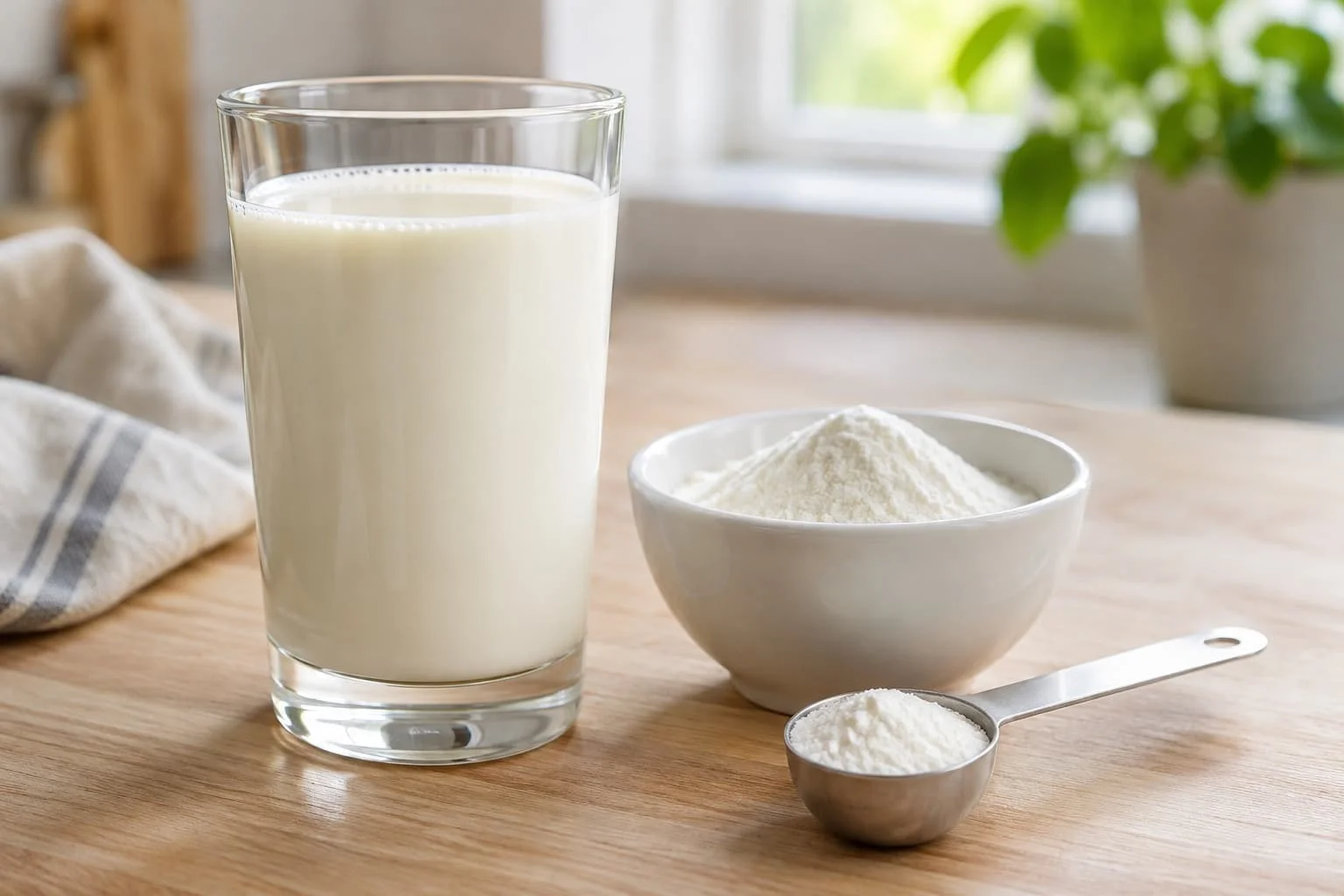
What is lactose and where it occurs
Lactose is a disaccharide, a sugar built from two smaller sugar units (Forsgård, 2019). Those units are glucose and galactose, and the body has to separate them before they can be absorbed (Anguita-Ruiz et al., 2020). Lactose is the main carbohydrate in the milk of almost all mammals (Misselwitz et al., 2019). One review names the sea lion as the exception, and another adds the walrus (Deng et al., 2015; Misselwitz et al., 2019).
Glucose and galactose joined in one molecule
The chemical name of lactose, beta-D-galactopyranosyl-(1→4)-D-glucose, identifies the galactose unit, the glucose unit and the bond linking them (Anguita-Ruiz et al., 2020). That bond is the reason lactose cannot pass into the blood directly. Once split, glucose and galactose are taken up by intestinal cells and used for energy or as building material (Anguita-Ruiz et al., 2020).
Lactose in human and animal milk
Lactose occurs naturally in mammalian milk, in amounts that differ by species (Anguita-Ruiz et al., 2020). The level is about 7 g in every 100 mL of human milk; for cows, goats and sheep the figures are about 4.8 g, 4.1 g and 4.8 g in each 100 mL (Anguita-Ruiz et al., 2020). Sea lions and walruses make a small volume of thick, fatty milk that contains no lactose (Misselwitz et al., 2019). How dairy herds produce milk is covered in an article on cow milk production.
Lactose in dairy foods and processed products
Dairy foods differ widely. One review notes that yoghurt keeps roughly half as much lactose as raw milk, while cheese aged for a long time keeps very little (Misselwitz et al., 2019). The bacteria behind fermented foods are described in an article on probiotic foods and live cultures. Manufacturers also put powdered lactose into sausages, gravy, margarine, bread, sauces and ready meals for texture and flavour (Misselwitz et al., 2019).
Food | Lactose content |
Whole milk, 3.25% fat | 5.05 g |
Low-fat milk, 1% fat | 5.2 g |
Greek yoghurt, plain, nonfat | 2.54 g |
Cheddar cheese, sharp | 0.18 g |
Parmesan cheese, grated | 0 g |
Note: these are analytical values from one government database for US products, measured per 100 g of food (USDA, 2019). They describe food composition only and are not thresholds for how much lactose any person tolerates (Shaukat et al., 2010).
Is lactose a sugar and how it compares with other sugars
Yes, it is a sugar. Scientists often call it milk sugar (Misselwitz et al., 2019; Itan et al., 2010). In plain whole milk, the database lists 5.05 g of total sugars per 100 g, all of it lactose (USDA, 2019). The same record shows 0 g of sucrose, free glucose and free galactose, so all the sugar in plain milk is lactose (USDA, 2019).
In milk, lactose is a natural component, not a sugar added during processing, although powdered lactose can itself be added to foods (Misselwitz et al., 2019). It differs from glucose in one practical way. Glucose is a single sugar unit that the intestine absorbs as it is, whereas lactose is a pair of units that must first be split by an enzyme (Anguita-Ruiz et al., 2020).
What is lactase and how it breaks down lactose
Lactase is the enzyme that cuts lactose into its two units, glucose and galactose (Enattah et al., 2002). Its full name is lactase-phlorizin hydrolase, and its instructions are carried by the LCT gene on chromosome 2q21 (Anguita-Ruiz et al., 2020). Without enough of it, lactose stays undigested.
Where lactase works in the gut
The enzyme acts mainly in the small intestine, freeing glucose and galactose, which are readily absorbed into the blood (Tishkoff et al., 2007). The enzyme is already measurable in the foetal gut by week 8 of pregnancy; its activity climbs through week 34 and peaks around birth (Deng et al., 2015). In most people it later falls. The decline is part of normal maturation and can reach undetectable levels after weaning (Deng et al., 2015).
What happens to lactose that is not digested
Lactose that is not split moves on to the colon, where gut bacteria ferment it into short-chain fatty acids plus gas, chiefly hydrogen (Itan et al., 2010). The unabsorbed sugar also draws water into the intestine, and fermentation produces carbon dioxide and methane as well (Deng et al., 2015). According to one review, fermentation multiplies the osmotic pull inside the colon about eightfold (Misselwitz et al., 2019). Bloating, flatulence and cramps can follow (Itan et al., 2010).
Lactose intolerance and how it differs from malabsorption
Three terms are often confused. Lactase deficiency means the intestine does not express enough lactase, lactose malabsorption means lactose is neither broken down nor taken up, and lactose intolerance means symptoms such as abdominal pain, bloating or diarrhoea that appear in someone with malabsorption (Misselwitz et al., 2019). Malabsorption has to be present for intolerance to occur, yet the terms describe different things (Misselwitz et al., 2019). Worldwide, low lactase and malabsorption are ordinary variations of human metabolism, not diseases (Misselwitz et al., 2019).
Symptoms reported in studies
Studies list stomach pain, bloating, wind and diarrhoea, and severity differs a great deal from person to person and from one occasion to the next (Di Rienzo et al., 2013). One review links symptoms to lactase activity below 50% (Deng et al., 2015). When methane-producing microbes dominate the colon, constipation can replace diarrhoea, which a 2020 review reports for 30% of people with intolerance (Anguita-Ruiz et al., 2020).
Self-assessment is unreliable. Among 910 Chinese gastroenterology clinic patients with functional abdominal symptoms, 411 (45%) reported lactose intolerance, yet that report did not predict findings on a 20 g lactose breath test taken by 492 of them (Zheng et al., 2015). Some people who believe they are lactose intolerant cannot distinguish lactose from a placebo when tested under controlled conditions (Forsgård, 2019).
How lactose digestion is tested
The breath hydrogen test is used most often (Di Rienzo et al., 2013). When breath hydrogen climbs by 20 ppm over baseline, the result is taken as evidence of low lactase activity (Forsgård, 2019). The test can miss malabsorption in people whose colon bacteria produce no hydrogen, a group put at 2% to 43% (Deng et al., 2015). The lactose tolerance test instead measures blood glucose, and a level that fails to climb by 20 mg/dL over baseline points to lactase deficiency (Forsgård, 2019).
Defining intolerance itself is stricter. A National Institutes of Health consensus conference required symptoms after a blinded lactose challenge that do not occur after an indistinguishable placebo (Misselwitz et al., 2019). Among people referred for breath testing, about half of those who digest lactose normally describe abdominal discomfort after an unblinded challenge (Misselwitz et al., 2019).
Amounts tolerated in controlled trials
A meta-analysis of 21 blinded crossover trials, in which maldigesters without gastrointestinal problems took 7 g to 25 g of lactose or a placebo, found no significant difference in bloating or abdominal pain (Savaiano et al., 2006). Diarrhoea was significantly more common after lactose, although the effect was small (Savaiano et al., 2006). A systematic review of 36 randomised studies concluded, on moderate-quality evidence, that most adults in those trials handled 12 to 15 g of lactose without trouble (Shaukat et al., 2010). Most of the trials studied people with malabsorption, not confirmed intolerance (Shaukat et al., 2010).
People living with irritable bowel syndrome form a separate group. A 2019 meta-analysis pooling 14 case-control studies found that they reported lactose intolerance more often, with an odds ratio of 3.499 from only four studies (Varjú et al., 2019). Maldigesters with the condition also had more symptoms during testing, with an odds ratio of 2.521, although the studies behind both results were heterogeneous (Varjú et al., 2019). Across all studies, malabsorption itself was no more common in them than in healthy controls (Varjú et al., 2019).
Why most adults lose lactase activity
In most mammals, lactase activity falls after weaning to less than 10% of the newborn level, and the same happens in most humans (Anguita-Ruiz et al., 2020). The decline is genetically programmed. Loss of lactase in adulthood is the ancestral state, and persistence is the newer variant (Deng et al., 2015).
The decline after weaning
The age at which lactase falls varies widely, and some children already show low levels at 2 years of age (Forsgård, 2019). Diet appears to make no difference. Human studies that fed extra lactose found no rise in lactase, and taking lactose out of the diet did not lower it (Forsgård, 2019). In the first such study, 11 people were given 150 g of lactose each day for 45 days, and their intestinal lactase activity did not change (Forsgård, 2019).
Lactase persistence variants
In Europeans, persistence passes down as a dominant trait, so one copy of a persistence variant usually suffices (Tishkoff et al., 2007). In 2002, Finnish researchers found that a DNA change called C/T-13910, located about 14 kb before the start of the LCT gene, matched biochemically confirmed lactase status in 236 people from four populations (Enattah et al., 2002). The variant sits inside a non-coding stretch of the neighbouring MCM6 gene, which probably explains why earlier searches of LCT itself found nothing (Itan et al., 2010; Anguita-Ruiz et al., 2020).
The European variant is not the whole story. Among 470 people from Tanzania, Kenya and Sudan, the T-13910 allele was absent, and three other variants were linked to persistence (Tishkoff et al., 2007). Those variants raised gene activity in cell experiments, not in human intestines (Tishkoff et al., 2007).
Model estimates suggest they spread within the past 3,000 to 7,000 years, with a wide confidence interval of 1,200 to 23,200 years (Tishkoff et al., 2007). By 2020, researchers had linked twenty-three genetic variants to persistence (Anguita-Ruiz et al., 2020).
How common lactase persistence is worldwide
Persistence ranges from 0% to almost 100% between populations, highest among people with northern European ancestry and in some African and Middle Eastern groups (Anguita-Ruiz et al., 2020). Earlier studies cited by one research team put it above 90% in Swedes and Danes, around 50% in Spanish and French populations and around 1% in Chinese populations (Tishkoff et al., 2007). Population genetics more broadly is discussed in an article on human blood group distribution.
Natural selection probably explains the pattern. A 2020 review ranks lactase persistence as one of the clearest cases of positive selection found in human DNA, ahead of malaria resistance (Anguita-Ruiz et al., 2020). Ancient DNA studies report the earliest carriers of the European variant in Spain about 5,000 years ago from PCR data, and in Germany and Sweden about 4,000 years ago from sequencing data (Anguita-Ruiz et al., 2020).
What is established about lactose and what remains uncertain
Several points are well supported. Lactose consists of glucose and galactose, lactase splits it in the upper gut, and most adults produce far less lactase than infants do (Anguita-Ruiz et al., 2020; Forsgård, 2019). Persistence variants are known in Europe and Africa, and they arose independently (Tishkoff et al., 2007).
Lactose is milk's own sugar, and a fall in lactase after childhood is an ordinary variation of human metabolism, not a disease, even though malabsorption does not always cause symptoms (Misselwitz et al., 2019).
Other questions remain open. How many people have true intolerance is unknown, because finding out would take standardised breath tests across big, carefully chosen groups (Misselwitz et al., 2019). Not all persistence variants are known, so gene tests built on what is known today would undercount persistence in most populations (Itan et al., 2010). Differences in enrolment, outcome reporting and dosing across trials ruled out pooling their results (Shaukat et al., 2010).
Funding also deserves notice. Authors of two of the reviews received Nestlé International grants for their lactose research (Misselwitz et al., 2019; Deng et al., 2015). The human feeding studies on lactase are few and small, a limitation their reviewer acknowledges (Forsgård, 2019).
Frequently asked questions
Do all dairy foods contain the same amount of lactose?
No. The government database lists 5.05 g of lactose per 100 g of whole milk, 2.54 g in plain nonfat Greek yoghurt, 0.18 g in sharp cheddar and 0 g in grated parmesan (USDA, 2019). One review notes that yoghurt keeps roughly half the lactose of raw milk and that long-ripened cheese is low in lactose (Misselwitz et al., 2019).
Can lactose intolerance appear later in life?
Lactase decline does not follow one timetable. Some children already have low lactase at 2 years of age, while in others the fall comes later (Forsgård, 2019). Lactase can also be lost after gut damage, for example from coeliac disease, giardiasis or enteritis, and this secondary form has no genetic basis (Anguita-Ruiz et al., 2020).
Does self-reported lactose intolerance match test results?
Often it does not. In a Chinese clinic cohort, self-reported intolerance did not predict symptoms during a 20 g lactose breath test (Zheng et al., 2015). Double-blind trials have also found a very poor link between self-reported intolerance and symptoms after lactose, which is why a diagnosis cannot rest on symptoms alone (Deng et al., 2015).
Does drinking milk regularly increase lactase?
Studies in humans suggest it does not. Feeding protocols have consistently failed to induce lactase, and withdrawing lactose did not reduce it (Forsgård, 2019). Lactose absorption capacity also shows no correlation with daily milk intake in several populations, although colonic bacteria may adapt to regular lactose intake (Forsgård, 2019).
Do babies digest lactose differently from adults?
Yes. Lactase activity rises before birth and peaks around birth, matching a diet of milk that contains about 7 g of lactose per 100 mL (Deng et al., 2015; Anguita-Ruiz et al., 2020). Congenital lactase deficiency, an inability to digest lactose from birth, is extremely rare, with about 40 cases reported (Deng et al., 2015).
Sources
- Anguita-Ruiz A, Aguilera CM, Gil Á. Genetics of lactose intolerance: an updated review and online interactive world maps of phenotype and genotype frequencies. Nutrients. 2020;12(9):2689. DOI 10.3390/nu12092689.
- Di Rienzo T, D'Angelo G, D'Aversa F, Campanale MC, Cesario V, Montalto M, Gasbarrini A, Ojetti V. Lactose intolerance: from diagnosis to correct management. European Review for Medical and Pharmacological Sciences. 2013;17(Suppl 2):18–25. PMID 24443063.
- Misselwitz B, Butter M, Verbeke K, Fox MR. Update on lactose malabsorption and intolerance: pathogenesis, diagnosis and clinical management. Gut. 2019;68(11):2080–2091. DOI 10.1136/gutjnl-2019-318404.
- Deng Y, Misselwitz B, Dai N, Fox M. Lactose intolerance in adults: biological mechanism and dietary management. Nutrients. 2015;7(9):8020–8035. DOI 10.3390/nu7095380.
- Forsgård RA. Lactose digestion in humans: intestinal lactase appears to be constitutive whereas the colonic microbiome is adaptable. American Journal of Clinical Nutrition. 2019;110(2):273–279. DOI 10.1093/ajcn/nqz104.
- Enattah NS, Sahi T, Savilahti E, Terwilliger JD, Peltonen L, Järvelä I. Identification of a variant associated with adult-type hypolactasia. Nature Genetics. 2002;30(2):233–237. DOI 10.1038/ng826.
- Tishkoff SA, Reed FA, Ranciaro A, Voight BF, Babbitt CC, Silverman JS, et al. Convergent adaptation of human lactase persistence in Africa and Europe. Nature Genetics. 2007;39(1):31–40. DOI 10.1038/ng1946.
- Itan Y, Jones BL, Ingram CJE, Swallow DM, Thomas MG. A worldwide correlation of lactase persistence phenotype and genotypes. BMC Evolutionary Biology. 2010;10:36. DOI 10.1186/1471-2148-10-36.
- Savaiano DA, Boushey CJ, McCabe GP. Lactose intolerance symptoms assessed by meta-analysis: a grain of truth that leads to exaggeration. Journal of Nutrition. 2006;136(4):1107–1113. DOI 10.1093/jn/136.4.1107.
- Shaukat A, Levitt MD, Taylor BC, MacDonald R, Shamliyan TA, Kane RL, Wilt TJ. Systematic review: effective management strategies for lactose intolerance. Annals of Internal Medicine. 2010;152(12):797–803. DOI 10.7326/0003-4819-152-12-201006150-00241.
- Zheng X, Chu H, Cong Y, Deng Y, Long Y, Zhu Y, Pohl D, Fried M, Dai N, Fox M. Self-reported lactose intolerance in clinic patients with functional gastrointestinal symptoms: prevalence, risk factors, and impact on food choices. Neurogastroenterology and Motility. 2015;27(8):1138–1146. DOI 10.1111/nmo.12602.
- Varjú P, Gede N, Szakács Z, Hegyi P, Cazacu IM, Pécsi D, et al. Lactose intolerance but not lactose maldigestion is more frequent in patients with irritable bowel syndrome than in healthy controls: a meta-analysis. Neurogastroenterology and Motility. 2019;31(5):e13527. DOI 10.1111/nmo.13527.
- USDA (U.S. Department of Agriculture), Agricultural Research Service. FoodData Central, SR Legacy, 2019: records 171265 (Milk, whole, 3.25% milkfat, with added vitamin D), 170872 (Milk, lowfat, fluid, 1% milkfat, with added vitamin A and vitamin D), 170894 (Yogurt, Greek, plain, nonfat (Includes foods for USDA's Food Distribution Program)), 170899 (Cheese, cheddar, sharp, sliced) and 171247 (Cheese, parmesan, grated). https://fdc.nal.usda.gov

Sophia L. Mitchell — author
Sophia L. Mitchell is a nutrition writer with a background in nutrition science and biochemistry. Her work focuses on translating research about dietary assessment, food composition and nutrient intake into clear information for general readers, with particula...
This article is for general information and is not medical advice. It was reviewed for accuracy by a qualified clinician; decisions about your health should be made with your own doctor.
Related

Probiotic foods and which fermented foods still carry live cultures
Can Pistachios Help With Diabetes? What a 2009 Rat Study Found

How much milk does a cow produce a day and what affects yield

What studies say about whether aspartame is bad for you

What erythritol is and what studies say about its effect on blood clots

What research shows about whether creatine is bad for your kidneys

Magnesium for anxiety and what the clinical trials actually found