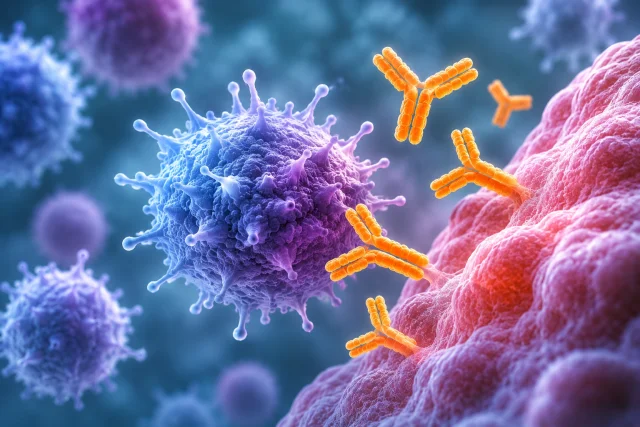
How the HPV vaccine works and what studies show about its effect
The HPV vaccine uses noninfectious virus-like particles to prompt antibodies; trials show fewer cervical precancers (CDC, 2024; Bergman et al., 2025). Certain types cause anogenital warts, whereas persistent infection with high-risk types can lead to cervical cancer (CDC, 2024; WHO, 2024). The HPV vaccine is designed to prevent new infections with the specific viral types included in its formulation.
Evidence for its effects comes from randomised vaccine trials, national cancer registries and long-term safety monitoring; those sources measure different outcomes: infection, precancerous cell changes, invasive cancer and adverse events. Comparing them shows why protection appears strongest before HPV exposure and why disease prevention cannot be inferred from an antibody test alone.

Evidence last checked 17 Nov 2026 · 15 min
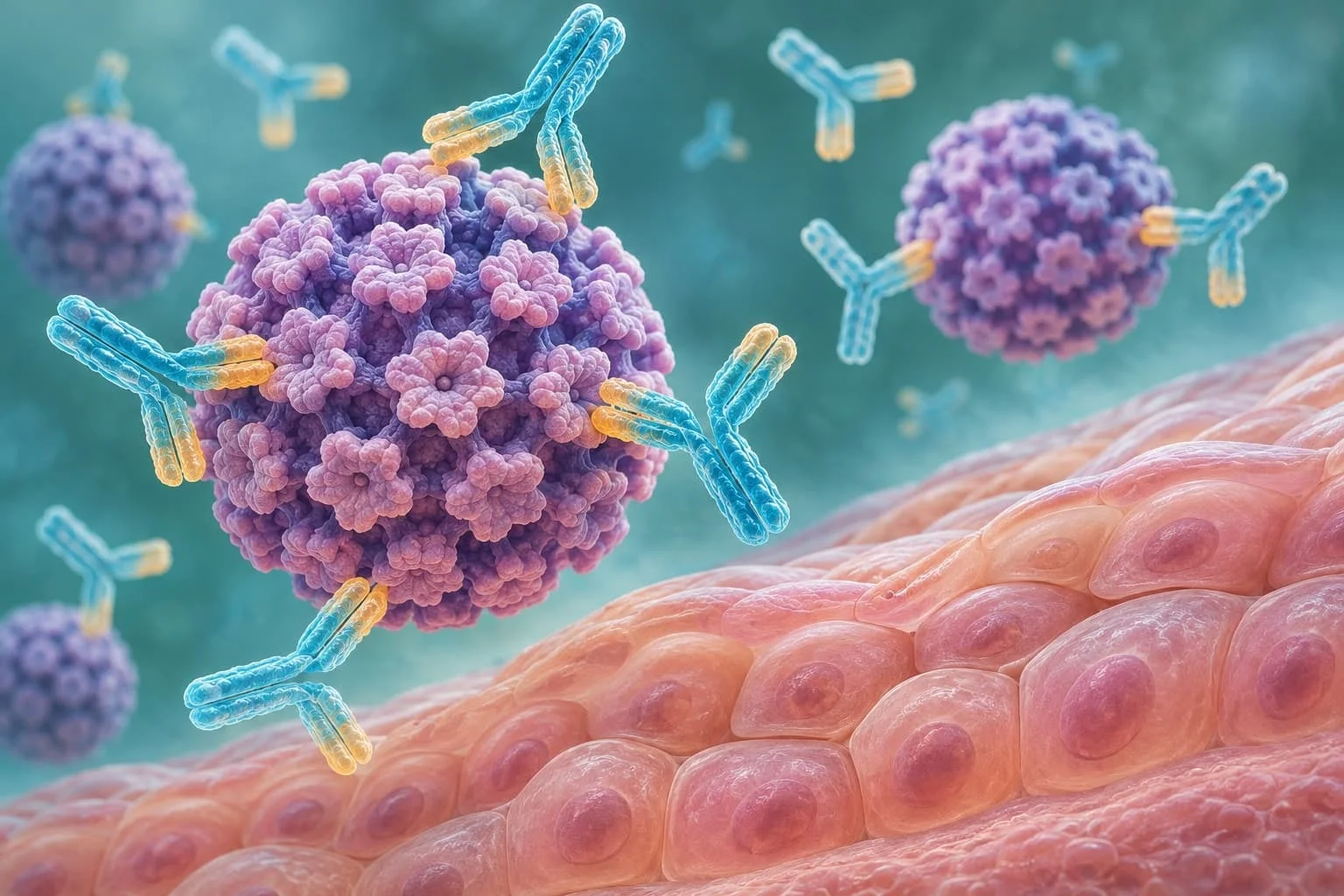
What the HPV vaccine is and how it works
The HPV vaccine is designed to prevent infection by selected human papillomaviruses, a group transmitted through intimate skin contact, most commonly during sexual activity (CDC, 2024). Some HPV types cause anogenital warts (CDC, 2024). Persistent infection with high-risk HPV types is a cause of cervical cancer (WHO, 2024). The vaccine acts before that sequence begins.
Its structure explains the difference between immunisation and infection. The vaccine contains no HPV DNA (WHO, 2024). Its virus-like particles resemble the viral exterior and are recognised without exposing the immune system to a replicating HPV virus (CDC, 2024). It therefore provides an antigen for immune recognition without delivering a replicating virus.
Virus-like particles and the immune response
The vaccine antigen is the HPV L1 capsid protein, produced through recombinant technology; those proteins assemble into virus-like particles, usually abbreviated VLPs (CDC, 2024). These units are noninfectious and nononcogenic and contain no HPV DNA (CDC, 2024; WHO, 2024).
The resemblance to HPV's surface allows immune recognition of the types represented in the preparation. In the CDC's technical account, more than 98% of recipients produced antibodies to each covered type within one month after finishing the studied vaccine series (CDC, 2024). That measurement describes an immune response, while the minimum antibody concentration needed for protection has not been established.
An antibody result cannot be read as a direct measurement of future cancer risk. Trials establish effects on HPV infection and precancerous lesions, while national registers provide the evidence for invasive cervical cancer (Bergman et al., 2025; Henschke et al., 2025). The interval between these outcomes also affects how studies can be designed.
Antibodies that block HPV infection
HPV vaccination is intended to prevent a new infection with the types it covers (CDC, 2024). The protective antibody threshold remains unknown (CDC, 2024). This matters when interpreting experiments that measure immune markers instead of infection.
The history of polio vaccine research offers another example of why vaccine mechanisms and observed clinical outcomes are separate subjects. For HPV, the distinction is explicit in the trial literature: antibody production alone cannot specify the magnitude of protection against cancers that develop much later (Bergman et al., 2025).
Which HPV types and diseases the vaccine protects against
HPV is not one genetically uniform agent. The disease risk depends on the type involved and whether infection persists (WHO, 2024). Preventive vaccines target specified types; consequently, a result involving one group of HPV viruses does not establish protection against every type (CDC, 2024).
High-risk HPV types and cancer
The nine-valent HPV vaccine includes L1 virus-like particles representing HPV types 16, 18, 31, 33, 45, 52 and 58, all described as cancer-associated types in CDC guidance (CDC, 2024). The older bivalent and quadrivalent vaccines cover types 16 and 18, with the nine-valent product extending coverage to other high-risk types.
Persistent infection with high-risk HPV is the cause of cervical cancer. The WHO also associates it with cancers of the vulva, vagina, anus, penis and mouth or throat (WHO, 2024). The strength of direct evidence for reducing those different cancers is uneven, because several non-cervical outcomes are uncommon or develop after extended follow-up (Henschke et al., 2025).
Cervical intraepithelial neoplasia denotes abnormal changes in cervical cells. Trials commonly report CIN2+, meaning grade 2 or more severe changes, while population studies also track CIN3+ and invasive cancer (Bergman et al., 2025; Henschke et al., 2025). Those labels identify different events, so their risk estimates cannot be exchanged.
Low-risk HPV types and genital warts
HPV types 6 and 11 cause anogenital warts (CDC, 2024). They are included in quadrivalent and nine-valent vaccines but not in bivalent vaccines (CDC, 2024). Warts can appear without the precancerous changes measured in cervical disease studies (WHO, 2024).
In the randomised-trial synthesis by Bergman and colleagues (2025), anogenital warts irrespective of HPV type were less frequent after vaccination. Three studies with 21,271 participants gave a risk ratio of 0.38, with a 95% confidence interval from 0.32 to 0.46, at follow-up of up to 48 months. The analysis counted clinical warts rather than cervical cancer.
A comparison between vaccine products requires attention to the targeted types. Coverage against high-risk cervical types and coverage against wart-associated types are separate properties of a formulation (CDC, 2024). The absence of a targeted type from an older formulation limits what its trial outcomes can establish for that infection.
Why age and previous HPV exposure affect vaccine protection
The vaccine's preventive action operates before infection with a particular HPV type. Prior exposure reduces the range of infections it can prevent, while an earlier vaccination opportunity generally precedes exposure to more of those types (CDC, 2024). Both the English programme and Swedish cohort recorded stronger cervical cancer associations with vaccination at younger ages (Falcaro et al., 2021; Lei et al., 2020).
Protection before first HPV exposure
In England, Falcaro and colleagues (2021) compared national cervical cancer registrations among birth cohorts offered HPV immunisation at different school ages. The estimated reduction in cervical cancer rates was 87%, with a 95% confidence interval of 72% to 94%, for the cohort offered vaccination at ages 12–13 compared with the reference unvaccinated cohort. A smaller reduction was reported where the vaccine was offered later.
These figures measure a national programme's association with cancer incidence according to age at vaccine offer; they are not a randomised comparison between individual recipients at each age (Falcaro et al., 2021). The CDC similarly describes maximum vaccine efficacy among people without prior infection with the covered HPV type (CDC, 2024).
In a Swedish register cohort, Lei and colleagues (2020) compared cervical cancer risk after vaccination at different ages with the risk among unvaccinated women. The fully adjusted incidence rate ratio was 0.12, with a 95% confidence interval from 0.00 to 0.34, for vaccination before age 17; the estimate for vaccination at ages 17–30 was 0.47, with an interval from 0.27 to 0.75. The measures are associations from population records, with adjustment for measured characteristics.
Vaccination after previous infection
HPV infection with one type does not mean that every vaccine-covered type has already been acquired; CDC guidance states that people previously exposed to some types may still be protected against others represented in the vaccine (CDC, 2024). That potential is limited to new infections with types for which protection remains possible.
The vaccine is preventive (CDC, 2024). It does not clear existing HPV infection, accelerate its clearance or treat lesions caused by that infection (CDC, 2024). The timing condition applies to the infecting type, rather than to an unspecified history of any HPV exposure.
This distinction prevents an apparent contradiction between favourable vaccine studies and continuing HPV diagnoses among vaccinated people; the outcome depends on which viral type is detected and whether exposure preceded vaccination (CDC, 2024). A cervical lesion linked to an existing infection does not demonstrate that a vaccine treated that infection unsuccessfully.
How effective the HPV vaccine is against infection and precancer
HPV vaccine effectiveness depends on the endpoint used. Persistent detection of vaccine-type virus indicates an infection that remains detectable over time, whereas cervical intraepithelial neoplasia records tissue changes associated with a later stage of disease (CDC, 2024; Sauvageau et al., 2025). Trials can measure these events before invasive cancer cases accumulate in sufficient numbers for direct analysis (Bergman et al., 2025).
Persistent infection and precancer in trials
Bergman and colleagues (2025) assembled a network meta-analysis of randomised HPV vaccine trials; the synthesis included 60 studies and 157,414 participants, with follow-up ranging from seven months to 11 years. Participants' ages and the duration of observation determined which clinical endpoints could be evaluated.
Among females aged 15–25 years, the pooled risk ratio for CIN2+ caused by any HPV type after six years was 0.70, with a 95% confidence interval of 0.56 to 0.88. For CIN2+ involving vaccine-matched HPV types, it was 0.40, with a 95% confidence interval of 0.30 to 0.54 (Bergman et al., 2025). Both estimates were rated moderate certainty.
The difference between those estimates reflects the study's disease definition. A vaccine may prevent disease linked to covered types while cervical abnormalities associated with other types remain part of an all-type outcome (Bergman et al., 2025; CDC, 2024). A claim about vaccine-matched disease therefore cannot be substituted for a claim about every cervical lesion.
Persistent infection has also been tracked for substantially longer than the initial trial period. In Québec, Sauvageau and colleagues (2025) followed 3,356 participants who had previously received a quadrivalent vaccine as preadolescent girls, comparing the established vaccination course with a group receiving a later booster. Few HPV-16 or HPV-18 infections were found in either arm over follow-up extending to 13 years.
Neither group included never-vaccinated adolescents. Persistent vaccine-type infection remained uncommon during follow-up. The intended noninferiority comparison between the vaccinated schedules was unresolved because so few persistent infections occurred (Sauvageau et al., 2025).
HPV vaccine research findings at a glance
The following results retain each study's own outcome and comparison. A risk ratio for precancer in a randomised trial answers a different question from a population-level association with invasive cancer. Trial safety outcomes describe an unrelated endpoint and cannot be treated as a disease-prevention estimate (Bergman et al., 2025; Henschke et al., 2025).
Study | Population or evidence | Outcome measured | Reported result |
Bergman et al., 2025 | Randomised studies; females aged 15–25 | CIN2+ from vaccine-matched HPV types after six years | RR 0.40, 95% confidence interval 0.30–0.54. |
Bergman et al., 2025 | Three trials; 21,271 participants | Anogenital warts irrespective of HPV type | RR 0.38, 95% confidence interval 0.32–0.46, at up to 48 months. |
Henschke et al., 2025 | Population studies; vaccination at or before age 16 | Invasive cervical cancer | RR 0.20, 95% confidence interval 0.09–0.44. |
Falcaro et al., 2021 | English cohort offered vaccine at ages 12–13 | Cervical cancer registrations | Estimated reduction 87%, 95% confidence interval 72–94%, versus reference unvaccinated cohort. |
Bergman et al., 2025 | 39 trials; 97,272 participants | Serious adverse events | No statistically significant difference: RR 0.99, 95% confidence interval 0.94–1.04. |
There is no universal vaccine-effectiveness percentage across these outcomes. Different vaccine formulations, age groups and exposure histories enter the analyses, while infection, precancer and diagnosed cancer are measured at different times (CDC, 2024; Bergman et al., 2025). The trials and population reviews estimate separate endpoints (Bergman et al., 2025; Henschke et al., 2025).
What studies show about HPV vaccination and cervical cancer
These cohorts compare outcomes among people vaccinated under real programmes and those unvaccinated or not offered vaccination; such comparisons can account for recorded characteristics, but their estimates remain observational rather than randomly assigned effects (Lei et al., 2020; Falcaro et al., 2021). Their breadth also makes invasive cancers observable in numbers that short trials cannot supply (Bergman et al., 2025; Henschke et al., 2025).
Cervical cancer in national cohort studies
Lei and colleagues (2020) used Swedish demographic and health registers to follow 1,672,983 girls and women aged 10–30 years during 2006–2017; the study compared invasive cervical cancer incidence according to quadrivalent HPV vaccination history. Cervical cancer was diagnosed in 19 vaccinated women and 538 unvaccinated women, although those groups had different sizes and follow-up contributions.
The Swedish analysis estimated adjusted incidence rate ratios by age at vaccination. For vaccination before age 17, the figure was 0.12 with a 95% confidence interval of 0.00–0.34; for vaccination at ages 17–30, it was 0.47 with an interval of 0.27–0.75 (Lei et al., 2020). These ratios compare rates after adjustment for measured characteristics and cannot be interpreted as identical individual probabilities.
England provided a separate national comparison. Falcaro and colleagues (2021) examined cervical cancer and CIN3 registrations after the national immunisation programme was introduced, estimating outcomes in birth cohorts offered vaccination at different school ages. The cohort offered vaccination at ages 12–13 had an estimated 87% reduction in cervical cancer rates, with a 95% confidence interval from 72% to 94%, relative to an earlier unvaccinated cohort.
The investigators also estimated 448 fewer cervical cancers than expected by June 2019 in England's vaccinated cohorts, within their population model (Falcaro et al., 2021). This is a model-based comparison with expected cases, rather than a count of cancers individually proved to have been prevented. It therefore describes the population programme in its particular screening and historical context.
Population evidence from systematic reviews
Henschke and colleagues (2025) reviewed population-level HPV vaccination studies and distinguished cancer outcomes from earlier infection and precancer results. Five cohorts containing 4,390,243 females contributed adjusted long-term estimates for cervical cancer, giving a pooled risk ratio of 0.37 with a 95% confidence interval of 0.25–0.56. Heterogeneity between those studies was substantial, with I² reported as 88%.
Among people vaccinated at or before age 16, the review reported an 80% lower risk of cervical cancer, with a pooled risk ratio of 0.20 and a 95% confidence interval from 0.09 to 0.44. The evidence was rated moderate certainty for cervical cancer (Henschke et al., 2025). It reflects an association across observational designs, including differences in age and programme setting.
The distinction between intermediate and final endpoints also appears in selenium and cancer prevention research. A cancer-prevention claim must be evaluated against cancer incidence, although HPV infection and cervical precancer remain relevant measurable stages in this case (Bergman et al., 2025; Henschke et al., 2025). The HPV evidence now includes both kinds of endpoint.
For cancers other than cervical cancer, direct population evidence is less developed. Henschke and colleagues (2025) rated evidence for invasive vulval cancer as very low certainty. They also rated evidence for cervical adenocarcinoma in situ, a preinvasive cervical lesion rather than a non-cervical cancer, as very low certainty. A favourable estimate for cervical cancer does not supply a measured risk ratio for every other HPV-associated cancer (Henschke et al., 2025; WHO, 2024).
What HPV vaccine safety research and follow-up have found
Safety assessment separates frequent reactions after vaccination from serious diagnoses occurring during follow-up. Randomised comparisons examined serious adverse events in vaccine and control arms (Bergman et al., 2025). The two systems measure different outcomes. Health registers record diagnosed events, while spontaneous reporting tracks submitted events without a comparison group for testing causality (Arnheim-Dahlström et al., 2013; Shimabukuro et al., 2019).
Common reactions and serious adverse events
The CDC's vaccine reference identifies pain, redness and swelling at the injection site as the most frequent reactions reported in trials (CDC, 2024). These are local reactions, not the serious outcomes evaluated in randomised studies (Bergman et al., 2025).
In Bergman and colleagues' (2025) synthesis, 39 randomised studies with 97,272 participants provided no statistically significant difference in serious adverse events between groups. The pooled risk ratio was 0.99, with a 95% confidence interval of 0.94–1.04, against control groups, with follow-up of up to 72 months; the difference was not statistically significant. The high-certainty review found no statistically significant difference between groups (Bergman et al., 2025).
Serious adverse events in trials include events that follow vaccination without necessarily being caused by it; spontaneous reporting does not supply a control group for assessing causal associations (Shimabukuro et al., 2019). The trial synthesis covers participants observed for periods ranging from seven months to 11 years (Bergman et al., 2025).
Safety evidence and long-term monitoring
Arnheim-Dahlström and colleagues (2013) examined linked national registers in Denmark and Sweden; their cohort included 997,585 girls aged 10–17 years, and 296,826 had received 696,420 doses of quadrivalent vaccine. The study tracked hospital diagnoses of autoimmune, neurological and venous thromboembolic events during prespecified follow-up (Arnheim-Dahlström et al., 2013).
Initial analyses found statistically significant associations for three autoimmune outcomes: Behçet's disease, Raynaud's disease and type 1 diabetes. However, further evaluation did not support a consistent causal association with vaccination (Arnheim-Dahlström et al., 2013). Because symptom onset dates were unavailable, the researchers used diagnosis dates, which constrained the timing analysis.
In the United States, Shimabukuro and colleagues (2019) assessed postlicensure reports for the nine-valent vaccine; the VAERS study described 7,244 submitted reports, of which 97.4% were classified as nonserious. Dizziness, fainting, headache and injection-site reactions were common descriptions in the reports.
The VAERS system accepts reports from patients, clinicians, manufacturers and others; it therefore functions as a signal-detection source rather than a controlled comparison of event incidence (Shimabukuro et al., 2019). The authors did not identify new unexpected safety concerns in their analysis.
The population review found no statistically significant association with infertility or postural orthostatic tachycardia syndrome, based on moderate-certainty evidence (Henschke et al., 2025). This conclusion concerns the assessed events and evidence base. The evidence cannot resolve every rare event not addressed by the included studies (Henschke et al., 2025).
What is proven about HPV vaccines and what is not
HPV vaccines prevent new vaccine-type infections (CDC, 2024). Randomised trials found fewer associated cervical precancers among vaccine recipients compared with controls (Bergman et al., 2025). Independent population studies associate HPV vaccination, particularly before widespread exposure, with lower invasive cervical cancer incidence (Falcaro et al., 2021; Lei et al., 2020; Henschke et al., 2025).
HPV vaccination provides type-specific protection against new infections and is associated with lower cervical cancer incidence when given early, but it cannot treat an infection already present.
Three limits determine how the findings apply. Vaccine composition decides which HPV types can be targeted, exposure history limits prevention of an already acquired type, and study duration determines whether infection, precancer or invasive cancer can be observed (CDC, 2024; Bergman et al., 2025). The outcomes and risk ratios are distinct in trials and population reviews (Bergman et al., 2025; Henschke et al., 2025).
Cervical screening remains a distinct prevention measure. Vaccines do not cover all cancer-associated HPV types, and screening can detect precancerous cervical cell changes that vaccination does not diagnose (CDC, 2024; WHO, 2024). The two methods address different points between infection and disease.
Long-term follow-up provides evidence of sustained low rates of persistent vaccine-type infection. In the Québec trial, infections remained uncommon during observation extending to 13 years, but the event count was too low for the intended noninferiority analysis of vaccine schedules (Sauvageau et al., 2025). That limitation leaves the formal schedule comparison unresolved in that study.
The vaccine's safety findings are supported by randomised trials and large postlicensure analyses. The pooled serious-event comparison found no statistically significant difference from controls. The Nordic cohort identified initial statistical signals for three autoimmune outcomes, but additional analyses did not support a consistent causal association with vaccination (Bergman et al., 2025; Arnheim-Dahlström et al., 2013). Registry and spontaneous reporting designs contribute different kinds of follow-up evidence (Arnheim-Dahlström et al., 2013; Shimabukuro et al., 2019).
Frequently asked questions
Can the HPV vaccine cause an HPV infection?
The vaccine contains virus-like particles made from the L1 outer protein, without the viral DNA needed for infection (CDC, 2024; WHO, 2024). These particles are noninfectious and nononcogenic. They prompt immune recognition of the HPV types included in the vaccine, without introducing a replicating human papillomavirus.
Can HPV still be caught after vaccination?
Yes. Vaccine protection is directed towards the HPV types represented in its formulation, not every HPV type that exists (CDC, 2024). Vaccination also does not clear an infection already acquired, although prior infection with one type does not eliminate protection against other covered types. Persistent infection therefore remains possible.
Does HPV vaccination replace cervical screening?
No. The CDC states that HPV vaccination does not eliminate the need for cervical cancer screening (CDC, 2024). Screening identifies HPV infection or abnormal cervical cells, while vaccination is intended to prevent new vaccine-type infections (CDC, 2024; WHO, 2024). The methods operate at different stages and cannot be treated as substitutes.
Does the HPV vaccine protect boys and men?
HPV vaccines induce protection against specified HPV types regardless of whether those types are encountered by females or males (CDC, 2024). High-risk HPV infection is associated with anal, penile and oropharyngeal cancers, while types 6 and 11 are associated with anogenital warts (WHO, 2024; CDC, 2024). Evidence varies by disease endpoint.
How long does HPV vaccine protection last?
Long-term follow-up studies have documented low frequencies of persistent vaccine-type infection over extended periods. A Québec study observed participants for up to 13 years but could not establish noninferiority of compared schedules because persistent infections were rare (Sauvageau et al., 2025). These observations cannot establish lifetime protection for every cancer endpoint.
Sources
- CDC. Chapter 11: Human Papillomavirus. Epidemiology and Prevention of Vaccine-Preventable Diseases (Pink Book). 2024. https://www.cdc.gov/pinkbook/hcp/table-of-contents/chapter-11-human-papillomavirus.html
- Bergman H, Henschke N, Arevalo-Rodriguez I, et al. Human papillomavirus (HPV) vaccination for the prevention of cervical cancer and other HPV-related diseases: a network meta-analysis. Cochrane Database of Systematic Reviews. 2025;(11):CD015364. DOI 10.1002/14651858.CD015364.pub2.
- Henschke N, Bergman H, Buckley BS, et al. Effects of human papillomavirus (HPV) vaccination programmes on community rates of HPV-related disease and harms from vaccination. Cochrane Database of Systematic Reviews. 2025;(11):CD015363. DOI 10.1002/14651858.CD015363.pub2.
- WHO. Human papillomavirus and cancer. Fact sheet, 5 March 2024. https://www.who.int/news-room/fact-sheets/detail/human-papilloma-virus-and-cancer.
- Falcaro M, Castañon A, Ndlela B, et al. The effects of the national HPV vaccination programme in England, UK, on cervical cancer and grade 3 cervical intraepithelial neoplasia incidence: a register-based observational study. The Lancet. 2021;398(10316):2084–2092. DOI 10.1016/S0140-6736(21)02178-4.
- Arnheim-Dahlström L, Pasternak B, Svanström H, Sparén P, Hviid A. Autoimmune, neurological, and venous thromboembolic adverse events after immunisation of adolescent girls with quadrivalent human papillomavirus vaccine in Denmark and Sweden: cohort study. BMJ. 2013;347:f5906. DOI 10.1136/bmj.f5906.
- Sauvageau C, Mayrand MH, Ouakki M, et al. Protection Against Persistent HPV-16/18 Infection After Different Number of Doses of Quadrivalent Vaccine in Girls and Young Women: A Randomized Clinical Trial. JAMA Network Open. 2025;8(7):e2519095. DOI 10.1001/jamanetworkopen.2025.19095.
- Shimabukuro TT, Su JR, Marquez PL, et al. Safety of the 9-Valent Human Papillomavirus Vaccine. Pediatrics. 2019;144(6):e20191791. DOI 10.1542/peds.2019-1791.
- Lei J, Ploner A, Elfström KM, et al. HPV Vaccination and the Risk of Invasive Cervical Cancer. New England Journal of Medicine. 2020;383(14):1340–1348. DOI 10.1056/NEJMoa1917338.

Elias Norford — author,editor
Elias trained in biomedical science before completing postgraduate study in epidemiology, where he developed a particular interest in study design, population risk, disease surveillance and the interpretation of health data. He later moved into non-clinical re...
This article is for general information and is not medical advice. It was reviewed for accuracy by a qualified clinician; decisions about your health should be made with your own doctor.
Related

Polio vaccines in 1960: what the debate got right and wrong

Selenium and cancer prevention: what the evidence shows
UV-Inactivated Sheep-Brain Rabies Vaccine: A 1975 Experiment
How Graves’ disease antibodies push the thyroid into overdrive
How the tetanus shot protects and why boosters are needed
Psoriatic arthritis and why a skin condition affects the joints

How myasthenia gravis antibodies block nerve signals to muscles