Polio vaccines in 1960: what the debate got right and wrong
The 1960 panel behind “The Present Status of Polio Vaccines” captured a genuine scientific transition: experts were debating the limits of the inactivated Salk vaccine while live attenuated oral vaccines were moving toward mass use. Its strongest criticisms, however, were opinions and interpretations from a panel discussion—not proof that inactivated polio vaccine had failed.
The sections below explain why its participants disagreed about surveillance and vaccine effectiveness, and how later evidence changed the picture. They focus on the historical record and on the distinction between IPV, which cannot cause vaccine-derived infection, and OPV, which is especially effective at interrupting transmission but carries rare live-vaccine risks.

Evidence last checked 8 Oct 2026 · 4 min
Why the 1960 panel mattered
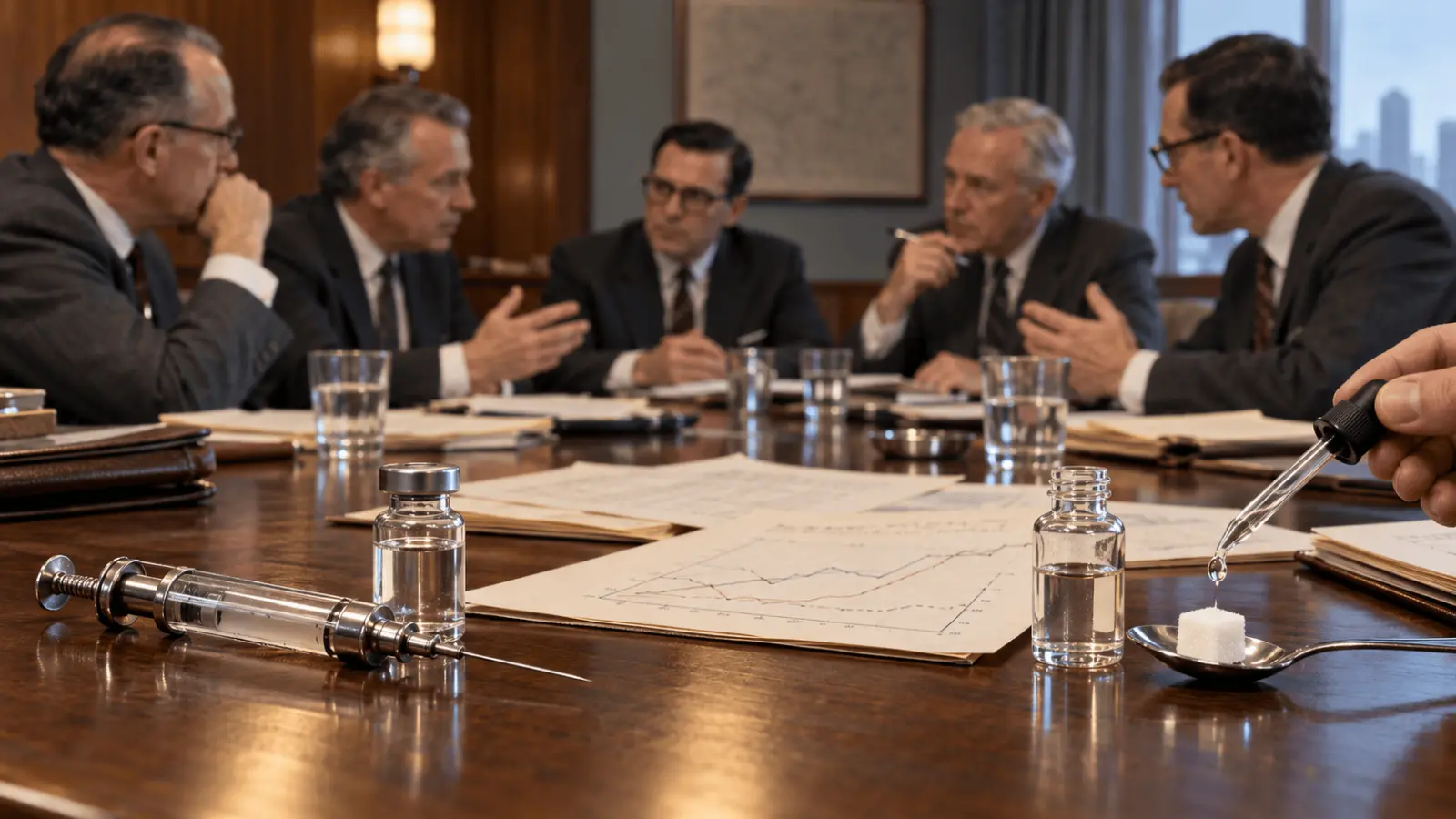
The discussion took place in Chicago on May 26, 1960, and was published in the Illinois Medical Journal. Herbert Ratner moderated a panel featuring Herald R. Cox, Bernard G. Greenberg, Herman Kleinman and Paul Meier.
Rather than conducting a new trial, participants debated existing surveillance data, manufacturing standards, vaccine safety and live-virus alternatives. Their interpretations differed, particularly regarding estimates of Salk vaccine effectiveness.
The panel reflected disagreements over vaccine effectiveness and surveillance methods. Its arguments represented contemporary interpretations rather than definitive findings, and subsequent research provided stronger evidence of IPV effectiveness.
What the panel disputed about the Salk vaccine
Greenberg questioned whether population estimates, vaccination timing and diagnostic changes distorted comparisons between vaccinated and unvaccinated children. Kleinman raised concerns about interpreting paralytic case counts.
Manufacturing safety and vaccine potency were also debated. Changes following the 1955 Cutter incident strengthened safety procedures, although some participants questioned their effects on potency. Contemporary studies documented differences in antibody responses between vaccine lots.
What was already known from the 1954 field trial
The 1954 Salk field trial, led by Thomas Francis and colleagues, evaluated approximately 1.8 million children through placebo-controlled and observed-control groups. Results demonstrated substantial protection against paralytic poliomyelitis, although effectiveness estimates varied by poliovirus type and study design.
The 1960 panel questioned the interpretation of later surveillance findings without overturning the original trial evidence.
Why oral vaccine looked so attractive in 1960
Live attenuated oral poliovirus vaccine offered intestinal immunity that helped reduce transmission. Large vaccination campaigns using Sabin strains demonstrated its potential for widespread disease control.
However, later experience revealed rare risks, including vaccine-associated paralytic poliomyelitis and circulating vaccine-derived polioviruses. These findings complicated the early preference for live vaccines.
How later evidence reframed the debate
Both IPV and OPV contributed substantially to polio control. OPV became central to global eradication efforts because of its transmission-control benefits, while IPV provided strong protection against paralytic disease without the risks associated with replicating vaccine viruses.
How the evidence changed after the 1960 discussion
Question in 1960 | Evidence available later | Current interpretation |
Did IPV protect against paralytic polio? | Large field-trial and post-licensure evidence supported substantial protection. | IPV is an effective routine vaccine against paralytic disease. |
Could oral vaccine better interrupt transmission? | Mass campaigns and later experience confirmed strong intestinal immunity and transmission control. | OPV remains valuable for outbreak response and eradication where transmission must be stopped. |
Were live vaccines risk-free? | Rare VAPP and vaccine-derived polioviruses were documented after widespread use. | OPV benefits must be balanced against live-vaccine risks; IPV avoids those risks. |
Were surveillance methods perfect? | Case definitions, denominators and ascertainment methods evolved over time. | Historical trend interpretation should account for surveillance changes without discarding controlled vaccine evidence. |
Frequently asked questions
Did the 1960 panel prove that the Salk vaccine did not work?
No. The panel raised methodological concerns but did not conduct a controlled trial. The 1954 field trial and subsequent evidence supported substantial IPV effectiveness.
Why did some experts prefer oral polio vaccine in 1960?
OPV could be given by mouth, replicated in the intestine and generated mucosal immunity, making it especially useful for interrupting poliovirus transmission. Early mass campaigns also suggested that it could be deployed quickly at population scale. Those advantages were central to the argument for moving from injected IPV toward live oral vaccine.
Are IPV and OPV equally safe?
They have different safety profiles. IPV contains inactivated virus and cannot cause vaccine-derived poliovirus infection. OPV contains live attenuated virus and has major transmission-control advantages, but rare vaccine-associated paralysis and circulating vaccine-derived poliovirus are recognized risks. Vaccine policy therefore depends on epidemiological context and eradication goals.
Why is IPV used in the United States today?
The United States has used only IPV since 2000. With no endemic wild poliovirus transmission, IPV avoids the rare vaccine-associated and vaccine-derived risks linked to live oral vaccine while maintaining individual protection against paralytic disease. CDC continues to recommend IPV in routine childhood vaccination and for unvaccinated or incompletely vaccinated adults.
Does the historical debate still matter for vaccine evaluation?
Yes. It illustrates why vaccine evidence should separate controlled trials, surveillance data, biological markers and expert interpretation. It also shows how safety systems and policy change as more data accumulate. Historical criticism can be informative, but claims from one debate should be tested against stronger studies and later evidence rather than treated as a final conclusion.
Sources
- Ratner H, Cox HR, Greenberg BG, Kleinman H, Meier P. The present status of polio vaccine. Illinois Medical Journal. 1960;118:84–93, 160–168. PMID 13857182.
- Francis T Jr, Korns RF, Voight RB, et al. An evaluation of the 1954 poliomyelitis vaccine trials. American Journal of Public Health. 1955;45(5 Pt 2):1–63. PMID 14361811.
- Francis T Jr. Evaluation of the 1954 poliomyelitis vaccine field trial: further studies of results determining effectiveness of Salk vaccine. JAMA. 1955;158(14):1266–1270. doi:10.1001/jama.1955.02960140028004.
- Kokko UP, Murray R. Human and animal antibody responses to commercial poliomyelitis vaccine. Bulletin of the World Health Organization. 1960;22:263–272. PMCID PMC2555319.
- Chumakov MP. Some results of mass immunization in the Soviet Union with live poliovirus vaccine prepared from Sabin strains. Bulletin of the World Health Organization. 1961;25(1):79–91. PMCID PMC2555546.
- Sabin AB. Oral poliovirus vaccine: history of its development and use and current challenge to eliminate poliomyelitis from the world. Journal of Infectious Diseases. 1985;151(3):420–436. doi:10.1093/infdis/151.3.420.
- Salk J, Salk D. Control of influenza and poliomyelitis with killed virus vaccines. Science. 1977;195(4281):834–847. doi:10.1126/science.320661.
- Baicus A. History of polio vaccination. World Journal of Virology. 2012;1(4):108–114. doi:10.5501/wjv.v1.i4.108.
- World Health Organization. Polio vaccines: WHO position paper – June 2022. Weekly Epidemiological Record. 2022;97(25):277–300.
- Centers for Disease Control and Prevention. Polio Vaccine Recommendations. Updated 2024.
Related
How RSV spreads: lessons from a 1981 transmission study

Partner Violence and Condom Use in HIV-Discordant Couples

Diarrhoea Among Denali Climbers: What a 2002 Outbreak Showed
Armadillo infection and the rise of leprosy research
Chest disease diagnosis: radiologic signs and differentials
How exercise affects self-concept and well-being in midlife