Diarrhoea Among Denali Climbers: What a 2002 Outbreak Showed
Diarrhoea on Denali’s West Buttress route was most likely infectious and clustered within climbing parties. Human waste in the snow around busy camps was a plausible source, but illness showed no clear link to where climbers gathered snow or whether they treated their water. Alaska investigators drew these conclusions after 38 of 132 climbers (29%) surveyed at base camp in June 2002 reported diarrhoea on the mountain (McLaughlin et al., 2005). Risk was highest after long stays at the 17,200-foot high camp, where faeces were most often seen, and when another member of the party was ill (McLaughlin et al., 2005). No pathogen was identified, because stool samples could not be collected (McLaughlin et al., 2005).
Below, we explain how the outbreak was investigated, what the survey showed about waste, snow and hygiene on the route and how far its conclusions reach. We then set the 2002 findings against later research on waste buried in the Kahiltna Glacier, the park’s current Clean Mountain Can rules and wilderness studies of water treatment and handwashing. The original study is summarised in Cabdirect archive record 20053116545.

Evidence last checked 24 Aug 2026 · 9 min
What Happened on Denali in Spring 2002?
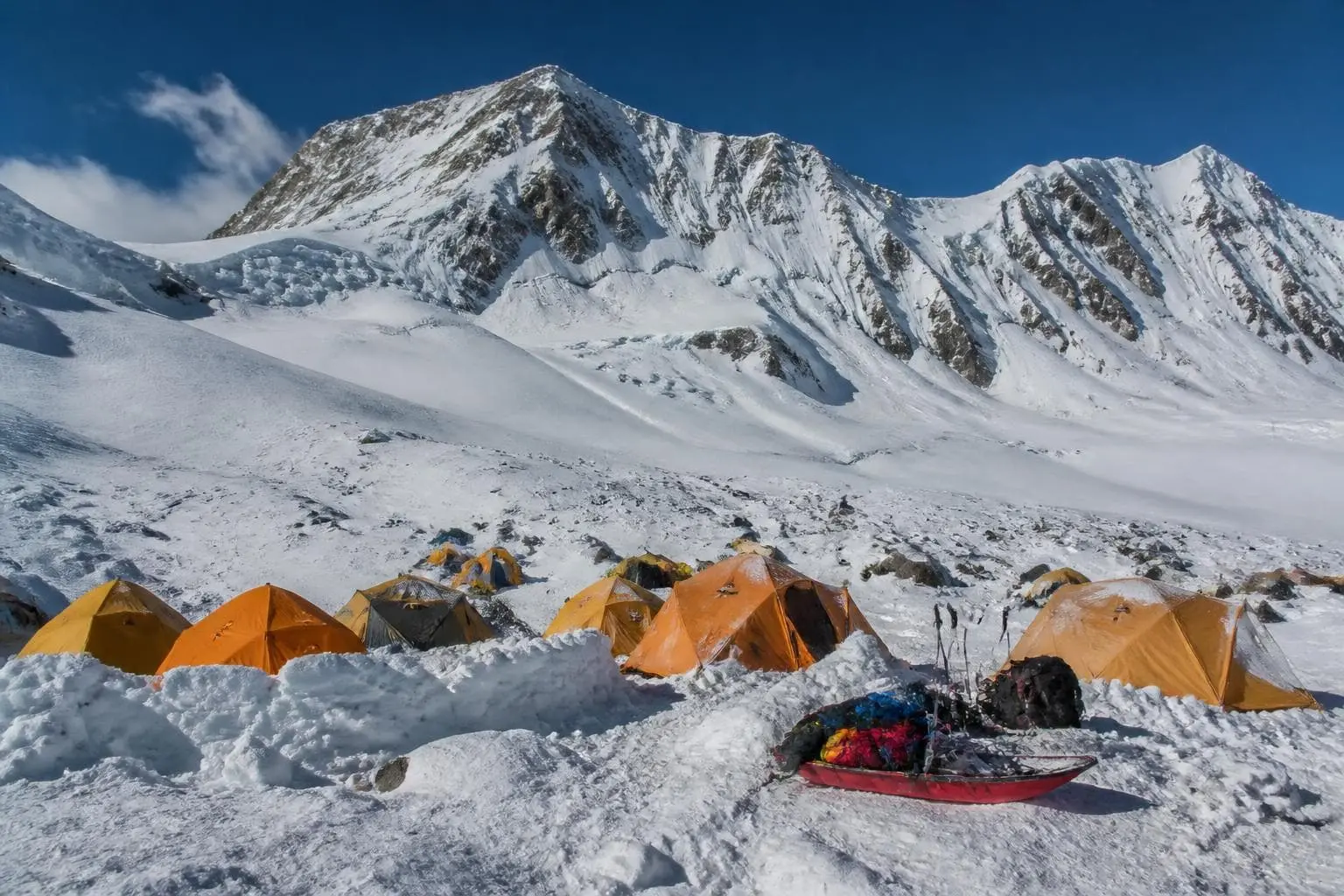
On 21 May 2002 a park climbing ranger told the Alaska Section of Epidemiology that four mountaineers on the West Buttress route had developed diarrhoea, with abdominal cramps and general malaise. Two days later a fifth climber had six bouts of vomiting and repeated loose stools. He was treated at the 14,200-foot camp’s medical tent, needed intravenous fluids for two days and was sent down to base camp (McLaughlin et al., 2005).
The park was then trialling Clean Mountain Cans on the upper mountain (National Park Service, 2025b). On 10 June state epidemiologists led by Joseph McLaughlin, a CDC officer assigned to Alaska’s health department, travelled to the 7,200-foot base camp to measure the illness (McLaughlin et al., 2005).
A crowded route where snow is the water supply
In 2002, 1,093 people attempted Denali by the West Buttress, spending two to three weeks on the mountain. Pit latrines existed only at two camps, crevasses were dangerous to approach, and many climbers relieved themselves in the snow near camp, which high winds spread over the top layer of snow, the climbers’ water source (McLaughlin et al., 2005).
The route remains the mountain’s main highway: in 2025, 922 of the 960 registered climbers chose it, and all drinking water there still comes from melted snow (National Park Service, 2025c; National Park Service, 2025a).
How Did Investigators Study the Outbreak?
The team ran a retrospective cohort study: every climber who came back to base camp between 11 and 14 June 2002 and agreed to take part was eligible. Climbers filled in a questionnaire on illness, demographics and possible risk factors. A case was self-reported diarrhoea, meaning loose stool, in a climber who had not had diarrhoea before reaching base camp (McLaughlin et al., 2005).
Of the 185 climbers who came down in those four days, 132 returned questionnaires. Most were men (90%), with a median age of 34 years; they came from 20 countries, and 32% were on commercially guided trips. They had averaged 18 days on the mountain, and 96% had used the West Buttress (McLaughlin et al., 2005).
The questionnaires were self-administered, so every exposure rests on what climbers remembered and chose to report; the team compared risk ratios and fitted a logistic regression model (McLaughlin et al., 2005).
The case definition was deliberately broad, and the survey covered only four days of a season that lasts about three months (McLaughlin et al., 2005).
Table 1. What the 132 surveyed climbers reported about waste, snow and hygiene, Denali, 2002
Behaviour or observation | Climbers, n (%) |
Saw faeces in the snow in or near at least one camp | 51 (39%) |
Of those, saw faeces at the 17,200-foot high camp | 35 (69%) |
Collected snow for drinking within 10 m of camp at least once | 103 (78%) |
Defecated directly into the snow | 14 (11%) |
Cleaned themselves with snow or rocks instead of toilet paper | 21 (16%) |
Never used a hand disinfectant after defecating | 30 (23%) |
Always boiled or purified drinking water | 21 (16%) |
Rarely or never boiled or purified drinking water | 74 (56%) |
What Did the Study Find?
Thirty-eight of the 132 climbers (29%) said they had diarrhoea while on the mountain. Four of them had fallen ill before arriving and were excluded, so the cumulative incidence of illness that began on the mountain was 27%, or 34 cases (McLaughlin et al., 2005).
The illness was usually short: a mean of three loose stools a day for a mean of two days. Many case patients also had gas (56%) or abdominal cramps (29%), and two (6%) vomited. Symptoms began after a median of 11 days on the mountain (range 1 to 21 days); 41% of case patients said they started during or after a stay at the 17,200-foot high camp (McLaughlin et al., 2005).
Which factors raised the risk?
Two groups stood out: climbers who spent eight or more days at the 17,200-foot camp were ill about three times as often as those who spent three days or fewer, and climbers with another ill party member had about twice the risk. Neither always purifying water nor using a hand disinfectant showed a clear effect (McLaughlin et al., 2005).
Table 2. Risk of diarrhoea by selected factors among Denali climbers, June 2002
Factor (comparison group) | Ill / well | Risk ratio (95% CI) |
8 or more days at the 17,200-ft camp (0–3 days) | 7 / 3 | 3.2 (1.79–5.76) |
4–7 days at the 17,200-ft camp (0–3 days) | 10 / 29 | 1.2 (0.60–2.32) |
Another party member had diarrhoea (no one else ill) | 19 / 27 | 2.2 (1.20–3.99) |
As above, 3 or more people per tent | 11 / 10 | 4.2 (1.08–16.31) |
As above, 2 or fewer people per tent | 8 / 14 | 1.7 (0.79–3.61) |
Guided climbers given risk-reduction information (not given it) | 5 / 15 | 0.40 (0.16–0.95) |
Always purified or boiled water (did not always) | 7 / 14 | 1.3 (0.66–2.63) |
Usually or always used a hand disinfectant after defecating (did not) | 18 / 53 | 0.89 (0.50–1.58) |
In a multivariable model, both factors remained independent predictors, but the high-camp estimate (adjusted odds ratio 41.9) is very imprecise because only 10 climbers stayed that long (McLaughlin et al., 2005).
What Caused the Illness?
The investigators concluded that the outbreak was most likely infectious. Illness clustered within climbing parties, the camp where faeces were most often seen was also the camp where longer stays raised the risk, education was protective, and altitude sickness does not cause diarrhoea. Seven of the 14 climbers who admitted defecating directly into the snow became ill (McLaughlin et al., 2005).
The organism was never identified. The team tried to collect stool samples, but base camp offered neither privacy nor sanitary facilities, and climbers were rushing to catch air taxis (McLaughlin et al., 2005). Any claim that a particular virus or bacterium caused the Denali illness therefore goes beyond the evidence.
What recent norovirus outbreaks show
Later outbreaks that were tested point to norovirus in similar settings: in 2022 it was found in pooled portable-toilet samples after 191 rafters and 31 backpackers fell ill in the Grand Canyon (Dale et al., 2022), and in hikers’ stool on the Pacific Crest Trail, where contaminated surfaces likely amplified spread (Hamlet et al., 2023).
On a crowded glacier the same snow serves as latrine, kitchen and water supply, so sanitation and hygiene have to work together.
How Has Waste Management on Denali Changed?
The outbreak came as the park was moving from latrines and crevasses to carrying waste out: prototype cans were used voluntarily in 2001, the 2002 trial followed, and the requirement to remove human waste from the high camp came later (National Park Service, 2025b).
Research then showed why crevasses were no permanent solution: waste dumped at the major camps could emerge at the glacier surface in as little as 71 years, and a frozen faecal sample still tested positive for E. coli after at least 10 months of exposure (Goodwin et al., 2012).
A 2025 Park Service review estimated that climbers had generated at least 88 tonnes of human waste on the West Buttress since 1951, much of it dropped into crevasses (Loso & Chenoweth, 2025).
The park no longer allows crevassing below the 14,200-foot camp: all solid waste produced below that camp must be carried out in the cans and returned to the Talkeetna ranger station (National Park Service, 2025a). Several guiding companies have gone further since 2019, running full pack-out trips (Loso & Chenoweth, 2025).
What Helps Prevent Stomach Illness on Busy Mountain Routes?
Keeping human waste out of the snow, clean hands and treated water are the main defences named in the literature (McLaughlin et al., 2005; Backer et al., 2024), and the Denali data suggest that tent crowding matters too. The Denali survey itself showed no clear benefit from water treatment or hand disinfectant, but it was small and relied on self-report (McLaughlin et al., 2005).
Treating water from melted snow
For melted snow, CDC guidance describes boiling as the most reliable method, still effective at high altitude, and notes that portable microfilters do not reliably remove viruses such as norovirus (Backer & Hill, 2025).
Handwashing and the limits of sanitiser
Hygiene matters alongside water treatment: among 280 Appalachian Trail backpackers, routine handwashing with soap and water was linked to a much lower risk of diarrhoea (Boulware, 2004), and the Wilderness Medical Society’s 2024 guideline pairs sanitation and hygiene with water treatment (Backer et al., 2024).
Sanitiser has a gap: norovirus can infect with very few particles, and CDC guidelines treat alcohol-based sanitiser as an add-on to soap and water, not a substitute (Division of Viral Diseases, National Center for Immunization and Respiratory Diseases, Centers for Disease Control and Prevention, 2011).
Crowded tents and ill teammates
The Denali data point to close contact as a second route of spread: risk rose when another party member was ill, especially with three or more to a tent (McLaughlin et al., 2005). Outbreak control on backcountry trips relies on rapid reporting, separating ill people, soap-and-water hand hygiene and water disinfection (Dale et al., 2022).
How Strong Is the Evidence?
The evidence from Denali itself is limited: one retrospective survey of 132 climbers over four days of a single season, with self-reported illness, no stool samples and small subgroups; 53 of 185 returning climbers did not take part (McLaughlin et al., 2005). The evidence on the article’s central question is therefore rated limited.
The strength of the evidence differs from claim to claim. That the 2002 outbreak was infectious is an inference from clustering, not a laboratory finding (McLaughlin et al., 2005), while the evidence for safe water treatment rests on laboratory and field data (Backer & Hill, 2025; Backer et al., 2024).
The Park Service now reports few outbreaks of communicable illness on the route, which fits the view that sanitation works (Loso & Chenoweth, 2025); only a repeat survey with stool testing could show which germs cause illness there today.
Frequently asked questions
How common was diarrhoea among Denali climbers in the 2002 study?
In June 2002, 38 of 132 surveyed climbers (29%) reported diarrhoea on Denali. Four had fallen ill before reaching the mountain, so the incidence of illness that began there was 27%. Most episodes were short, with about three loose stools a day for two days, and symptoms began after a median of 11 days (McLaughlin et al., 2005).
Is melted snow safe to drink on Denali?
Not without care. Snow near busy camps can be contaminated with human waste, and in 2002, 78% of surveyed climbers collected drinking snow within 10 m of camp at least once (McLaughlin et al., 2005). Boiling kills gut pathogens even at high altitude, while most portable filters do not reliably remove viruses such as norovirus (Backer & Hill, 2025).
Does hand sanitiser protect against norovirus?
Not reliably. Norovirus can infect with very few particles, and CDC advises soap and water, with sanitiser only as a supplement (Division of Viral Diseases, National Center for Immunization and Respiratory Diseases, Centers for Disease Control and Prevention, 2011). On Denali the Park Service advises both, especially before cooking (National Park Service, 2025d).
What is a Clean Mountain Can?
It is a lidded plastic container for collecting and carrying human waste, and every West Buttress party must use one. Below the 14,200-foot camp all solid waste must be carried off the mountain; at and above that camp it can go into a single NPS-marked crevasse (National Park Service, 2025a).
Can high altitude itself cause diarrhoea?
Not directly. Altitude brings no gut pathogens of its own: climbers meet the same organisms as in the surrounding lowlands, though low oxygen and stress may raise susceptibility (Basnyat et al., 2001). The Denali investigators judged altitude sickness an unlikely explanation because its symptoms do not include diarrhoea, and concluded the outbreak was most likely infectious (McLaughlin et al., 2005).
Sources
- McLaughlin, J. B., Gessner, B. D., & Bailey, A. M. (2005). Gastroenteritis outbreak among mountaineers climbing the West Buttress route of Denali – Denali National Park, Alaska, June 2002. Wilderness & Environmental Medicine, 16(2), 92–96. – Cabdirect archive record 20053116545
- Goodwin, K., Loso, M. G., & Braun, M. (2012). Glacial transport of human waste and survival of fecal bacteria on Mt. McKinley’s Kahiltna Glacier, Denali National Park, Alaska. Arctic, Antarctic, and Alpine Research, 44(4), 432–445.
- Loso, M. G., & Chenoweth, T. (2025). What to do about number two? Insights from decades of human waste research and management on Denali. Alaska Park Science, 23(1), 70–79. National Park Service.
- National Park Service. (2025). Part 4: Clean Climbing. Denali National Park & Preserve.
- National Park Service. (2025). Clean Mountain Cans. Denali National Park & Preserve.
- National Park Service. (2025). Annual Mountaineering Summaries 2020s. Denali National Park & Preserve.
- National Park Service. (2025). Part 2: Mountaineering Medical Issues. Denali National Park & Preserve.
- Boulware, D. R. (2004). Influence of hygiene on gastrointestinal illness among wilderness backpackers. Journal of Travel Medicine, 11(1), 27–33.
- Backer, H. D., & Hill, V. (2025). Water disinfection for travelers. In CDC Yellow Book 2026: Health Information for International Travel. Centers for Disease Control and Prevention.
- Backer, H. D., Derlet, R. W., & Hill, V. R. (2024). Wilderness Medical Society clinical practice guidelines on water treatment for wilderness, international travel, and austere situations: 2024 update. Wilderness & Environmental Medicine, 35(1_suppl), 45S–66S.
- Division of Viral Diseases, National Center for Immunization and Respiratory Diseases, Centers for Disease Control and Prevention. (2011). Updated norovirus outbreak management and disease prevention guidelines. MMWR Recommendations and Reports, 60(RR-3), 1–18.
- Dale, A. P., Miko, S., Calderwood, L. E., King, R. F., Maurer, M., Dyer, L., Gebhardt, M., Maurer, W., Crosby, S., Wikswo, M. E., Said, M. A., & Mirza, S. A. (2022). Outbreak of acute gastroenteritis among rafters and backpackers in the backcountry of Grand Canyon National Park, April–June 2022. MMWR Morbidity and Mortality Weekly Report, 71(38), 1207–1211.
- Hamlet, A., Begley, K., Miko, S., Stewart, L., Tellier, W., Gonzalez-De Leon, J., Booth, H., Lippman, S., Kahler, A., Roundtree, A., Hatada, A., Lindquist, S., Melius, B., Goldoft, M., Mattioli, M., & Holshue, M. (2023). Notes from the field: Gastrointestinal illness among hikers on the Pacific Crest Trail – Washington, August–October 2022. MMWR Morbidity and Mortality Weekly Report, 72(36), 997–998.
- Basnyat, B., Cumbo, T. A., & Edelman, R. (2001). Infections at high altitude. Clinical Infectious Diseases, 33(11), 1887–1891.

Elias Norford — author,editor
Elias trained in biomedical science before completing postgraduate study in epidemiology, where he developed a particular interest in study design, population risk, disease surveillance and the interpretation of health data. He later moved into non-clinical re...
This article is for general information and is not medical advice. It was reviewed for accuracy by a qualified clinician; decisions about your health should be made with your own doctor.
Related
How RSV spreads: lessons from a 1981 transmission study

Polio vaccines in 1960: what the debate got right and wrong
Partner Violence and Condom Use in HIV-Discordant Couples

Armadillo infection and the rise of leprosy research
Chest disease diagnosis: radiologic signs and differentials

How exercise affects self-concept and well-being in midlife