


How to Grow Hydnophytum and Myrmecodia Ant-Plants
Hydnophytum and Myrmecodia are tropical epiphytic ant-plants that can be grown without resident ants, but successful cultivation depends on recreating the airy, warm and humid conditions of their canopy habitat and replacing nutrients that ants would normally contribute. N. W. Plummer's 2000 cultivation article highlighted anatomy, ecology, pests, diseases, propagation and the importance of fertilising plants that are not associated with ants.
This explainer combines that horticultural framework with research on the plants' chambered caudices, ant-derived nutrition and modern taxonomy. Exact cultural requirements vary among species, so the practical guidance below focuses on principles supported across horticultural and botanical sources rather than presenting one universal watering or fertiliser schedule.
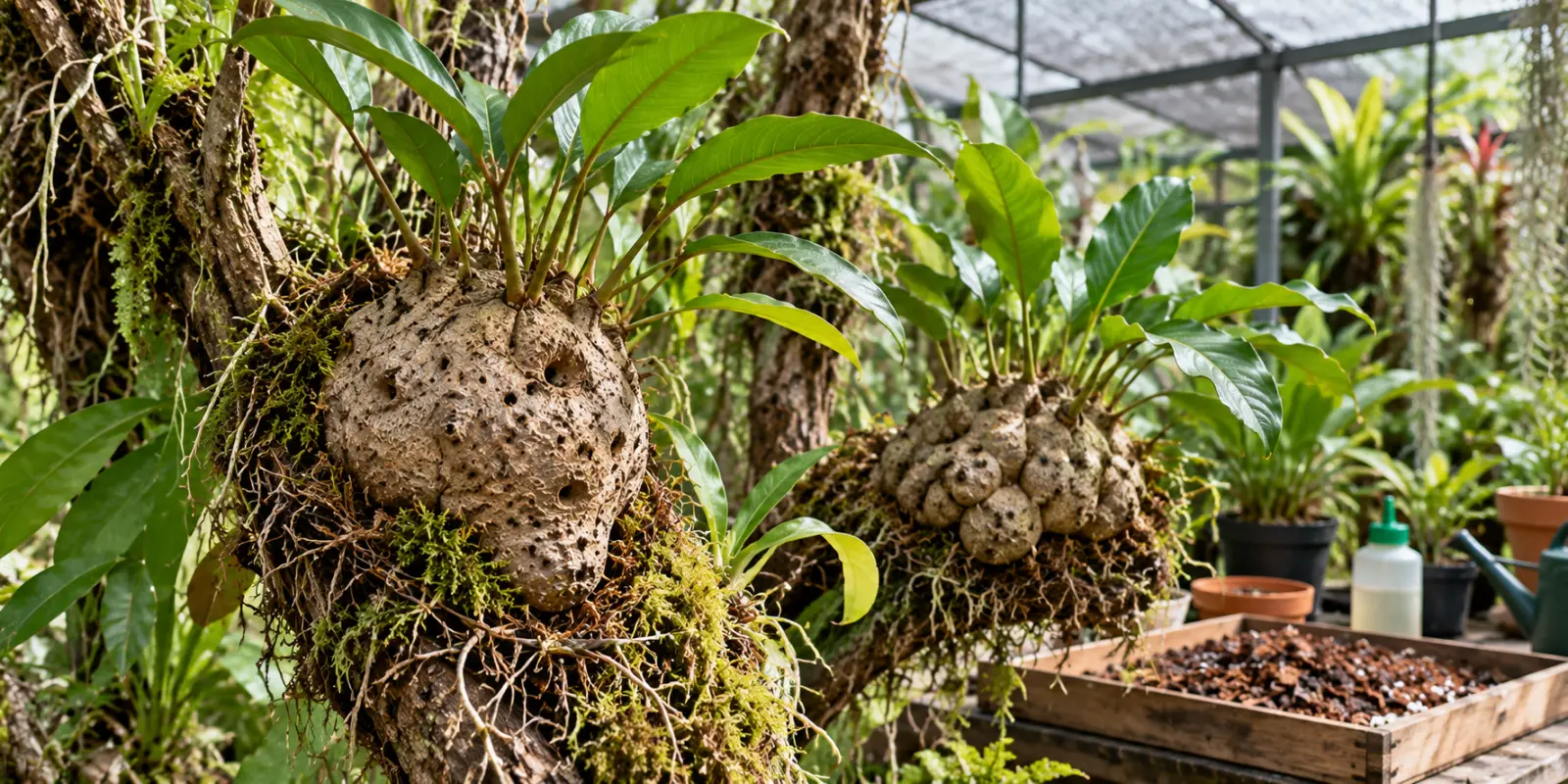
Why these plants look so unusual
Hydnophytum and Myrmecodia are members of the coffee family, Rubiaceae, but their swollen bases make them look more like caudiciform succulents than ordinary shrubs. The enlargement develops into a network of internal chambers connected to the outside. In nature those chambers are frequently occupied by ants, which use the plant as protected living space.
Botanical work by Camilla Huxley showed that the chamber system is not simply a hollow storage organ. Parts of the internal surface differ anatomically: some regions are smooth, while specialised warted areas are more absorptive. Ants deposit faeces and food debris inside the chambers, and nutrients from that material can be taken up by the plant.
The ant relationship explains why fertiliser matters in cultivation
Huxley's experiments suggested that Hydnophytum under artificial conditions and Myrmecodia in the field grew better when associated with ants, probably because ants supplied mineral nutrients. Radioisotope work showed that material carried or excreted by ants was preferentially deposited on absorptive chamber surfaces and then absorbed by the plants.
That ecological relationship gives Plummer's horticultural advice a clear biological basis. A greenhouse plant grown without an ant colony loses one of the nutrient pathways available in the wild. Supplemental fertiliser can therefore compensate for part of that missing nutrient input, although a cultivated plant still obtains water and minerals through its roots and growing medium.
In cultivation, the goal is not to imitate the ants themselves, but to replace the airy habitat and nutrient supply their partnership helps create.
Use a root environment that behaves like an epiphyte habitat
These plants are naturally adapted to growing on branches and trunks, where roots receive oxygen and water drains rapidly. For potted culture, an open epiphytic mix based on coarse bark, mineral particles or other durable, well-aerated materials is more appropriate than dense potting soil that stays saturated around the roots.
The Australian National Botanic Gardens has grown Myrmecodia beccarii in coarse epiphytic media and in open containers, and the Royal Horticultural Society similarly recommends a free-draining medium such as orchid bark or mounted culture. Both sources emphasise drainage because prolonged wetness around roots can lead to decline or rot.
Mounted plants dry faster than potted plants
A plant fixed to cork or a branch can reproduce the natural orientation of an epiphyte and keep the caudex well ventilated. The trade-off is faster drying. Mounted plants usually need more frequent watering than specimens in pots, while potted plants need enough drainage that moisture never becomes stagnant around the caudex or root system.
Warmth and humidity should be balanced with air movement
Hydnophytum and Myrmecodia are tropical plants, and many cultivated species perform best under warm conditions rather than cool household temperatures. The exact temperature range differs by species and provenance, but greenhouse and conservatory conditions are generally more suitable than cold windowsills or outdoor exposure in temperate winters.
Humidity is useful because epiphytic roots and leaves are adapted to moist tropical air, yet high humidity without air movement can encourage persistent surface moisture and fungal problems. Good ventilation is therefore part of the same cultural strategy as drainage: the plant should receive moisture regularly without sitting in stagnant, continuously saturated conditions.
Bright filtered light is safer than intense midday sun
Many ant-plants occur in open-canopied tropical habitats where light can be strong, but cultivated plants are still vulnerable to heat and sun scorch when suddenly exposed to intense direct light. Bright filtered light, greenhouse shading or a position similar to that used for many tropical epiphytes is a practical starting point.
Plants moved from low light to stronger light should be acclimated gradually. A plant that receives too little light may grow weakly, while a plant exposed abruptly to hot sun can develop leaf damage. Light management should therefore respond to the actual species, greenhouse temperature and season rather than a fixed universal rule.
Fertiliser replaces part of the natural nutrient subsidy
Plummer's abstract specifically notes the importance of fertilisers for plants that have not formed ant associations. That recommendation is consistent with the ecology of these genera: ant waste and accumulated debris can be an important source of nitrogen and other minerals in wild plants.
Botanic-garden practice commonly uses dilute liquid fertiliser rather than heavy feeding. The Australian National Botanic Gardens, for example, describes regular low-strength orchid-type fertilisation for Myrmecodia beccarii, with frequency reduced in cooler periods. The important principle is moderation: these are epiphytes with relatively small root systems, not heavy-feeding terrestrial crops.
Cultivation decisions should match the plant's epiphytic biology
Cultivation factor | Biological basis | Practical approach | Main risk if mismanaged |
Growing medium | Roots naturally experience high aeration on branches | Use coarse, open, fast-draining epiphytic material | Root and caudex rot in dense, waterlogged media |
Water | Tropical epiphytes receive frequent moisture but rapid drainage | Water thoroughly, then allow strong aeration between applications | Chronic saturation or severe drying |
Light | Many species occur in relatively bright tropical habitats | Provide bright filtered light and acclimate gradually | Sun scorch or weak low-light growth |
Humidity and airflow | Moist air is common in native habitats | Maintain humidity with ventilation | Persistent wet surfaces and fungal problems |
Nutrition | Wild plants can absorb nutrients deposited by ants | Use dilute, regular fertiliser when ants are absent | Nutrient deficiency or fertiliser burn from overfeeding |
Mounting | Natural plants grow attached to branches or trunks | Mount on cork/wood or use open pots | Mounted roots can dry too quickly if watering is insufficient |
Propagation is usually by seed
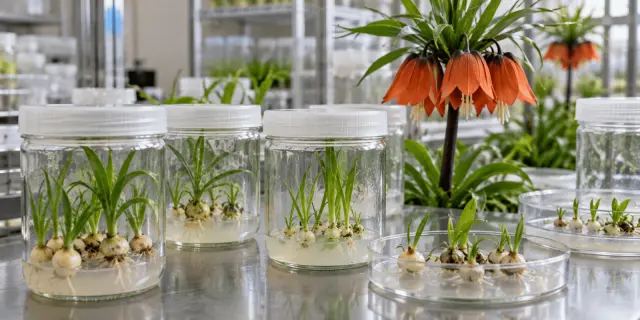
Plummer's paper discusses propagation, and botanic-garden guidance identifies seed as the standard method for Myrmecodia. Fresh seed can germinate readily under warm, humid conditions when the substrate stays moist but aerated. Because seedlings are epiphytes from the beginning, they should not be buried deeply in dense compost.
Propagation work with Myrmecodia has also been explored in tissue culture for conservation and horticulture. A 2018 Acta Horticulturae study on Myrmecodia pendans tested rooting and acclimatisation of in-vitro plantlets, showing that ex-situ production can extend beyond conventional seed raising.
Ants are biologically useful but not required in a collection
Wild ant-plants are famous for their symbiosis, but cultivated specimens do not need an ant colony in order to survive. The plant develops its chambered caudex independently of whether ants are present, although occupied plants in nature can gain nutritional and sometimes defensive benefits.
For most indoor growers, deliberately introducing ants would create more problems than advantages. A fertilised, well-drained specimen can be maintained as an ornamental plant without reproducing the complete wild mutualism.
Pests are ordinary greenhouse pests, not specialised ant-plant problems
Plummer's article includes pests and diseases as part of cultivation, and modern horticultural guidance lists familiar glasshouse pests such as scale insects, mealybugs and mites for Myrmecodia. These insects can hide around leaf bases, stems and rough surfaces of the caudex, so early inspection is useful.
Overwatering can be just as damaging as insect pests. Brown or corky patches, root decline and soft tissue should prompt a review of watering, ventilation and temperature before assuming a pathogen is the primary cause.
Hydnophytum and Myrmecodia are related but not interchangeable
Both genera belong to Rubiaceae and share the basic ant-plant architecture, yet they differ in caudex shape, internal chamber structure, spination and species-specific ecology. Huxley described Myrmecodia as having more complex internal differentiation in some species, while Hydnophytum cavities are generally simpler in shape.
Modern taxonomy has also become more detailed. Kew's Plants of the World Online currently accepts both genera and records broad native ranges from Southeast Asia through Malesia to the western Pacific and northeastern Australia. Species-level identification therefore matters when interpreting growth habit, temperature tolerance and mature size.
The caudex is a habitat, not just a water tank
The swollen base does store water and carbohydrate, but its evolutionary role is also architectural. Internal chambers provide domatia for ants, and specialised wall tissues can absorb nutrients from material deposited inside. This combination of shelter and nutrient exchange is why these plants are better understood as myrmecophytes than as ordinary succulents with unusual stems.
Modern ant-plant research adds fungi to the partnership
Research since Plummer's article has shown that ant-plant mutualisms can involve more than two partners. Reviews describe fungi associated with ant nests and domatia, and some ant-plant systems use fungal growth in waste chambers as part of nutrient processing or nest ecology.
This broader picture does not change the basic cultivation message, but it explains why a wild caudex is a small ecosystem rather than an empty chamber. In a greenhouse without ants and their microbial associates, the grower is simplifying that system and must provide water, nutrients and aeration directly.
The practical value of this ecological perspective is that it explains why problems often arise when one requirement is considered in isolation. Increasing humidity without ventilation can favour rot, while frequent watering in a dense medium can remove the air spaces that epiphytic roots need. Conversely, a very open root environment dries rapidly and therefore requires more attentive watering and feeding. Cultivation is consequently a balance between moisture, aeration, warmth, light and nutrient supply rather than a search for one ideal setting. The plant's swollen caudex and epiphytic habit provide useful clues, but successful care depends on how those conditions interact in the grower's environment.
A practical cultivation checklist
For a healthy cultivated ant-plant:
- use a coarse epiphytic substrate or mount the plant so roots receive abundant air;
- water thoroughly but avoid leaving the caudex and roots continuously waterlogged;
- keep plants warm and humid while maintaining steady air movement;
- provide bright filtered light and acclimate gradually to stronger sun;
- apply dilute fertiliser regularly enough to replace the nutrient contribution that wild plants may receive from ants;
- inspect rough stems, leaf bases and roots for scale, mealybugs, mites and early signs of rot.
Taken together, successful cultivation depends on recreating the plants' epiphytic conditions while compensating for the nutrients and ecological support normally provided by their natural ant associations.
Frequently asked questions
Do Hydnophytum and Myrmecodia need ants to survive?
No. Cultivated plants can grow without ants, and their chambered caudices develop as part of the plant's own anatomy. Ants can provide nutrients and other ecological benefits in the wild, so ant-free specimens usually need the grower to supply adequate fertiliser, moisture and root-zone aeration directly.
What potting mix is best for ant-plants?
A coarse, fast-draining epiphytic medium is usually safer than ordinary dense potting soil. Orchid bark, mineral particles and other durable airy materials can keep roots oxygenated while holding some moisture. The key requirement is rapid drainage because these branch-dwelling plants are vulnerable to prolonged saturation around roots and caudices.
How often should Hydnophytum and Myrmecodia be watered?
There is no single schedule because mounted plants, pots, seasons and greenhouse conditions dry at different rates. Water enough to keep actively growing plants from severe dehydration, but allow strong drainage and aeration after each watering. Mounted plants generally dry faster than specimens grown in open, moisture-retentive epiphytic media.
Why is fertiliser especially important for cultivated ant-plants?
Wild ant-plants can absorb nutrients from ant waste and debris deposited inside their caudex chambers. A cultivated plant without ants loses that nutrient pathway. Dilute fertiliser helps replace part of the missing mineral supply, although overfeeding can damage epiphytic roots, so moderate applications are preferable to heavy fertilisation.
Are ant-plants suitable as houseplants?
They can be, provided the home can supply warmth, bright filtered light, humidity and a very airy root environment. Greenhouses and conservatories are often easier because conditions are more stable. Indoors, growers should pay particular attention to winter temperature, slow drying, airflow and common pests such as scale or mealybugs.
Sources
- Plummer NW. Cultivation of the epiphytic ant-plants, Hydnophytum and Myrmecodia. Cactus and Succulent Journal. 2000;72(3):142-147.
- Huxley CR. The ant-plants Myrmecodia and Hydnophytum (Rubiaceae), and the relationships between their morphology, ant occupants, physiology and ecology. New Phytologist. 1978;80(1):231-268. DOI: 10.1111/j.1469-8137.1978.tb02285.x.
- Jebb MHP. Cavity structure and function in the tuberous Rubiaceae. In: Huxley CR, Cutler DF, eds. Ant-Plant Interactions. Oxford University Press; 1991:374-389. DOI: 10.1093/oso/9780198546399.003.0024.
- Mayer VE, Frederickson ME, McKey D, Blatrix R. Current issues in the evolutionary ecology of ant-plant symbioses. New Phytologist. 2014;202(3):749-764. DOI: 10.1111/nph.12690.
- Jebb MHP, Huxley CR. The tuberous epiphytes of the Rubiaceae 7: a revision of the genus Hydnophytum. Blumea. 2019;64:23-91.
- Royal Botanic Gardens, Kew. Plants of the World Online: Hydnophytum Jack. Accessed 2026.
- Royal Botanic Gardens, Kew. Plants of the World Online: Myrmecodia Jack. Accessed 2026.
- Australian National Botanic Gardens. Myrmecodia beccarii - Growing Native Plants. Horticultural guidance and propagation notes.
- Rineksane IA, Luthfi I, Supangkat G. The use of sucrose and indole-3-butyric acid for increasing quantity of root and acclimatization of ant plant (Myrmecodia pendans). Acta Horticulturae. 2018;1205:691-696. DOI: 10.17660/ActaHortic.2018.1205.91.

Maya Hartwell — author
Maya writes the environment and plant science explainers. Her editorial focus includes biodiversity, ecosystems, water quality, environmental pollution, plant biology, invasive plants, natural materials and the use of biological resources in environmental tech...
Related
Mangosteen in the United States: Cultivation, Imports and Marketing
Humic Substances as Plant Biostimulants: What They Can Do
Boletus pinetorum: A Fennoscandian Porcini Taxonomy Case