New Zealand Ferns and Allied Plants: A 1989 Field Guide
New Zealand Ferns and Allied Plants is a 1989 field guide documenting 193 species and subspecies of ferns and allied plants growing naturally in New Zealand, including 88 reported as occurring nowhere else. These figures reflect the book’s historical taxonomy rather than current species counts.
Written by P. J. Brownsey and J. C. Smith-Dodsworth, the guide combines identification, distribution and habitat information. Later taxonomic research has revised some classifications, making the book a valuable historical reference.

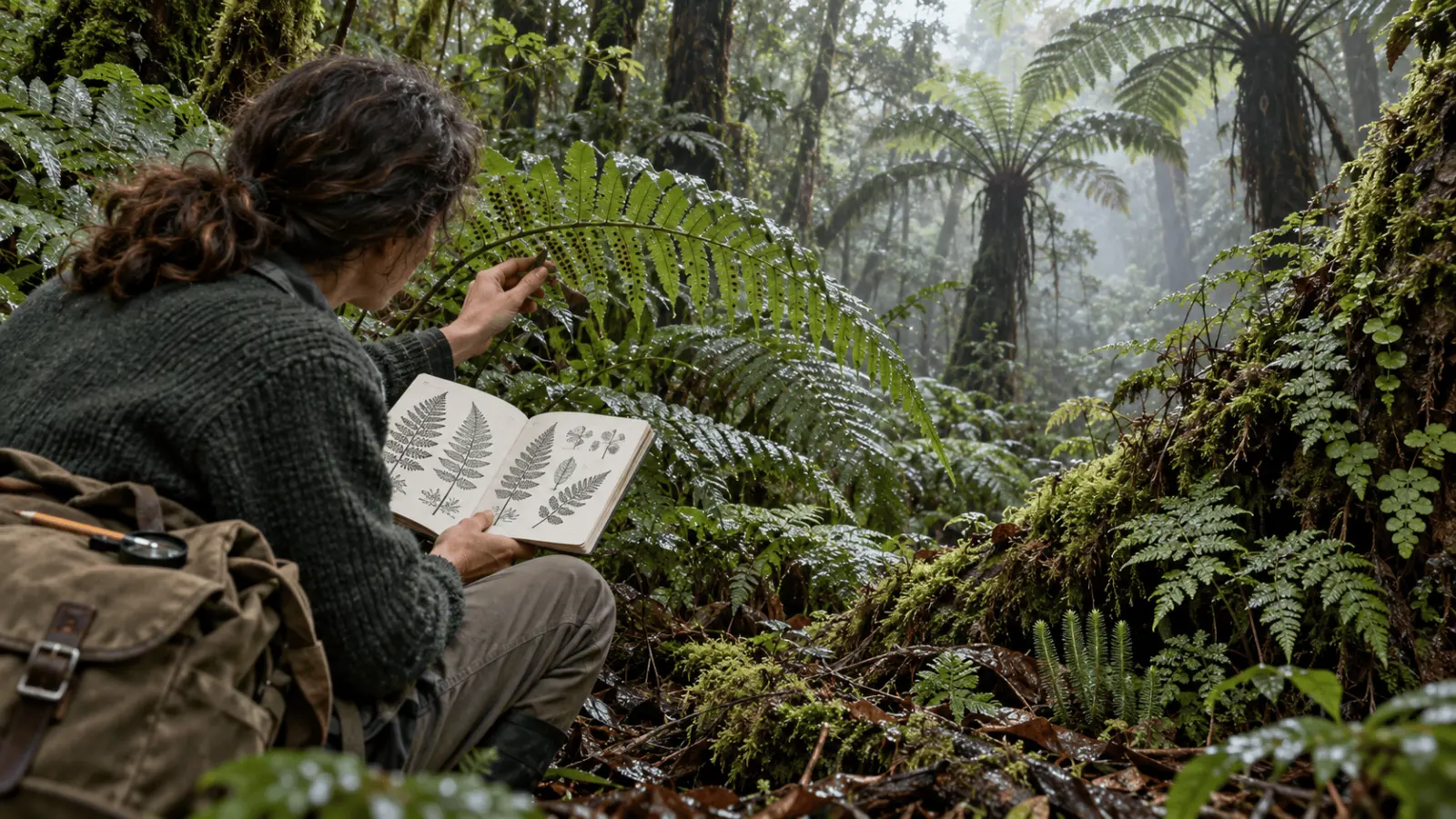
A field guide built around taxonomy, range and habitat
The 1989 book covers tree ferns, ground and rock species, epiphytes and plants traditionally classified as fern allies. It combines taxonomic descriptions with geographical and habitat information, helping readers identify species through both physical characteristics and growing conditions.
Taxonomy and identification
New Zealand fern classification was undergoing revision during this period. A 1985 checklist by Brownsey, D. R. Given and J. D. Lovis recognised 211 species, including 189 native and 22 adventive species.
The 1989 guide presented botanical knowledge within the classification system used at that time. Some historical names and taxonomic boundaries have since changed.
Distribution and habitat
The guide describes geographical ranges and habitats, including forests, rocky areas, wetlands and open ground. Such information helps distinguish similar species and understand ecological preferences.
Later research by Brownsey (2001) and Perrie and Brownsey (2007) investigated long-distance dispersal and its role in New Zealand fern diversity. The guide's distribution records provide historical context for this research.
What the 193 and 88 figures mean
The book recorded 193 naturally occurring species and subspecies, including 88 described as endemic to New Zealand. These totals depend on the taxonomy and counting methods used in 1989.
Different checklists may count subspecies, introduced plants and revised taxa differently. Consequently, the figures should not be treated as current national totals.
Measure | Reported | How to interpret it |
Naturally occurring coverage | 193 species and subspecies | Book-level count under the source taxonomy |
Endemic component | 88 taxa | Reported as occurring nowhere else |
Information supplied | Taxonomy, distribution, habitat | Identification plus ecological and geographic context |
Archive identifier | PAN 19950605594 | Links this digest |
Endemism refers to organisms restricted to a particular geographical area. Classification changes, new discoveries or revised distributions can alter which taxa qualify as endemic. The book’s count therefore represents its historical botanical framework.
Why the book still matters - and why names change
The guide remains useful because botanical classification builds on earlier descriptions, specimens and distribution records. The modern Flora of New Zealand provides updated fern and lycophyte treatments, incorporating more recent taxonomic research.
Fossil studies have documented approximately 85 million years of New Zealand fern history, while molecular research has clarified relationships and dispersal patterns. These developments refine historical classifications without eliminating the value of older botanical descriptions.
The 193-taxon total represents a historical snapshot rather than a fixed modern census.
For modern identification, historical names should be compared with current botanical databases. This is particularly important in conservation and ecological research, where outdated synonyms can affect data interpretation.
Practical recommendations:
- Use the 1989 guide for historical identification, habitat and distribution information.
- Interpret the 193 taxa and 88 endemic taxa within the original classification.
- Verify accepted scientific names and family placement through the modern Flora of New Zealand.
Frequently asked questions
How many ferns and allied plants did the book cover?
The 1989 guide documented 193 species and subspecies of ferns and allied plants growing naturally in New Zealand. Among them, 88 were described as endemic, meaning they occurred nowhere else. These figures reflect historical classifications and should not automatically be considered the current totals for New Zealand's fern flora.
How many fern species are endemic to New Zealand?
The 1989 field guide reported 88 endemic taxa among 193 naturally occurring species and subspecies. However, modern counts may differ because scientific classifications and known geographical distributions change. Updated botanical resources, including the Flora of New Zealand, provide more recent information about accepted species and their endemic status.
Why compare the guide with the modern Flora of New Zealand?
The modern Flora of New Zealand incorporates updated classifications, scientific names and research findings. Comparing it with the 1989 guide helps identify historical synonyms and understand taxonomic changes. This is particularly useful for botanical surveys, conservation projects and research combining older records with modern species databases.
How can you identify native New Zealand ferns?
Fern identification involves examining frond shape, reproductive structures, growth form and habitat. Field guides provide descriptions and distribution information that help narrow possible species. For reliable modern identification, historical references should be compared with updated botanical resources because some scientific names and classifications have changed since 1989.
Is the 1989 guide still useful for identifying New Zealand ferns?
Yes. The guide remains valuable for historical species descriptions, distribution records and habitat information. However, some accepted scientific names and classifications have changed since publication. Anyone identifying ferns today should compare the guide's descriptions with current resources such as the Flora of New Zealand, particularly when accurate taxonomy is essential.
Sources
- Brownsey PJ, Smith-Dodsworth JC. New Zealand ferns and allied plants. Auckland: Bateman; 1989.
- Brownsey PJ, Given DR, Lovis JD. A revised classification of New Zealand pteridophytes with a synonymic checklist of species. New Zealand Journal of Botany. 1985;23(3):431-489. doi:10.1080/0028825X.1985.10425348.
- Brownsey PJ. New Zealand's pteridophyte flora - plants of ancient lineage but recent arrival? Brittonia. 2001;53(2):284-303. doi:10.1007/BF02812703.
- Cieraad E, Lee DE. The New Zealand fossil record of ferns for the past 85 million years. New Zealand Journal of Botany. 2006;44(2):143-170. doi:10.1080/0028825X.2006.9513015.
- Perrie LR, Brownsey PJ. Molecular evidence for long-distance dispersal in the New Zealand pteridophyte flora. Journal of Biogeography. 2007;34(12):2028-2038. doi:10.1111/j.1365-2699.2007.01748.x.
- Brownsey PJ, Perrie LR. Introduction. In: Breitwieser I, ed. Flora of New Zealand - Ferns and Lycophytes. Fascicle I. Manaaki Whenua Press; 2022. doi:10.7931/mwrt-1776.
- Brownsey P. Ferns and lycophytes. Te Ara - the Encyclopedia of New Zealand. Published 1 March 2009.
- Flora of New Zealand. Ferns and Lycophytes publications. Manaaki Whenua - Landcare Research.
Related
How to Grow Hydnophytum and Myrmecodia Ant-Plants
Koshihikari rice: marker-assisted heading-date gene transfer
State of the World’s Fungi 2018: what the report found
Wild fruit diversity and the origins of cultivated trees
How vermicompost affects growth and flowering in Liatris spicata
Sugar components of coconut sugar in Indonesia: study digest