State of the World’s Fungi 2018: what the report found
Kew’s State of the World’s Fungi 2018 documented the ecological importance of fungi and the vast number of undescribed species. The report synthesized evidence on diversity, uses, plant partnerships, diseases, climate and conservation. Its figures describe 2018 knowledge, not current global totals.
A baseline for a largely undocumented kingdom
Edited by Katherine J. Willis, Kew’s 2018 report synthesized research on fungal diversity, evolution, uses, genomes, pathogens, climate and conservation. It found that fungi underpin ecological and economic processes but remain less documented than plants or animals.
Fungi recycle nutrients, partner with plants, influence carbon cycles and supply useful compounds. Others threaten crops and ecosystems. These roles make fungal research relevant to biodiversity, agriculture and biosecurity.
What the report found about fungal diversity
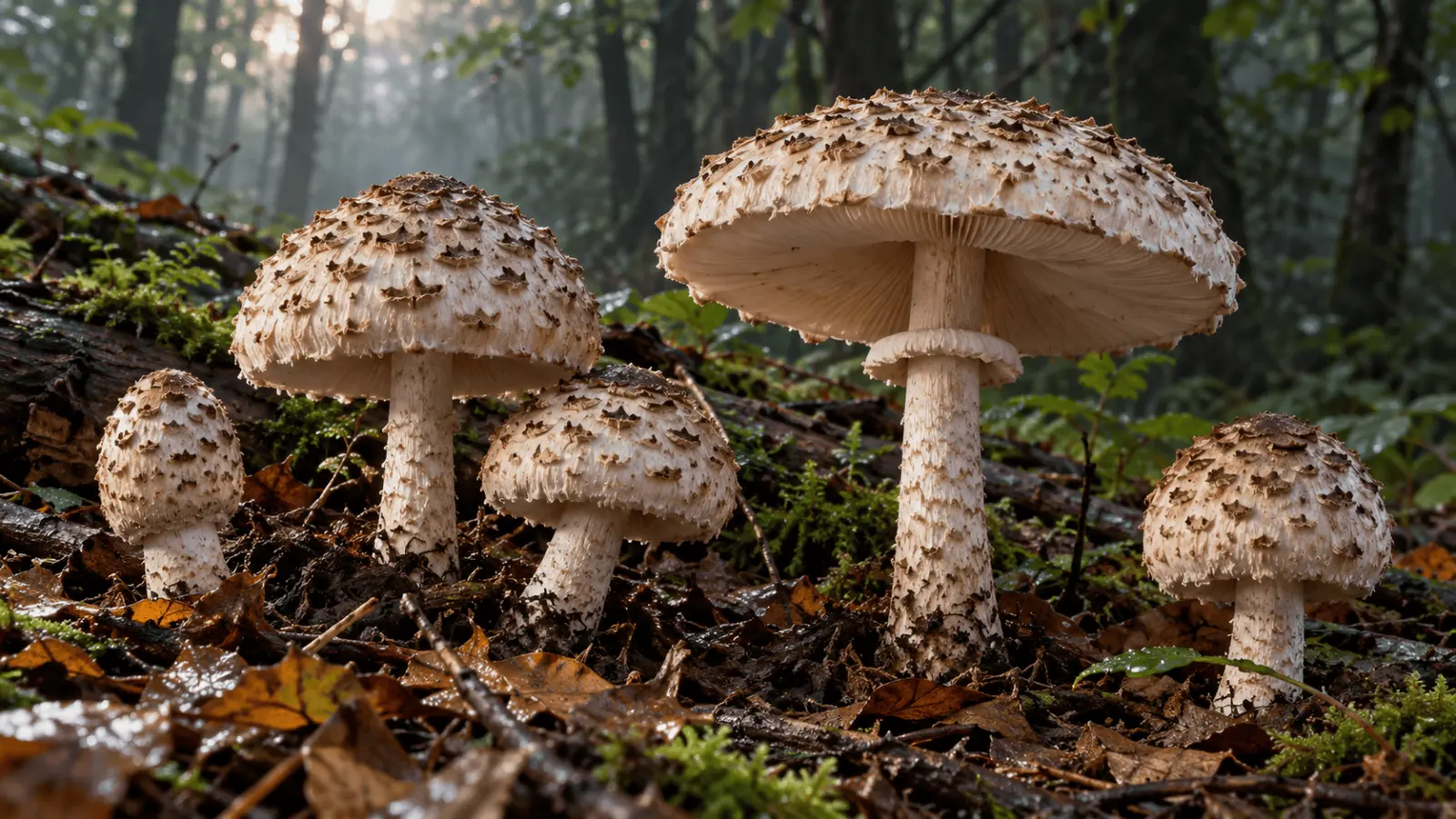
The report estimated 2.2–3.8 million fungal species worldwide, of which approximately 144,000 had been named. Many fungi are microscopic or live inside other organisms or underground, making them difficult to identify. Molecular methods were revealing previously overlooked lineages.
In 2017, researchers described 2,189 new species; China accounted for 35% of them. The report stressed that naming species must be followed by research on their distribution, ecological roles and conservation status.
2018 indicator | Report figure | What it shows |
Estimated fungal species | 2.2–3.8 million | Most fungal diversity was still unknown. |
Named fungal species | about 144,000 | Only a small share of estimated diversity had names. |
Species described in 2017 | 2,189 | Taxonomic discovery was still rapid. |
2017 discoveries from China | 35% | Discovery effort was geographically uneven. |
Plant species with mycorrhizal fungi | around 90% | Fungal partnerships are widespread in plants. |
Whole fungal genomes sequenced | more than 1,500 | Genomics was becoming a major research tool. |
Fungi evaluated for IUCN Red List | 56 | Global conservation assessment was extremely limited. |
Kew Fungarium specimens | more than 1.25 million | Collections provide long-term evidence for fungal research. |
Why fungi matter to plants, people and ecosystems
The report estimated that around 90% of living plant species associate with mycorrhizal fungi. These root partnerships exchange plant-produced carbon for improved access to water and nutrients, supporting ecosystems and crops.
Fungi also contribute to fermentation, medicines, enzymes and biotechnology. A 2017 laboratory study found that Aspergillus tubingensis could degrade polyester polyurethane under controlled conditions, but did not establish a scalable solution to plastic pollution. The report highlighted the ecological importance of fungi alongside major gaps in scientific knowledge
Frequently asked questions
What was State of the World’s Fungi 2018?
It was the Royal Botanic Gardens, Kew’s first report devoted entirely to fungi. Edited by Katherine J. Willis, it synthesized evidence on fungal diversity, evolution, uses, plant partnerships, genomes, pathogens, climate responses and conservation. It was a scientific overview and baseline, not a single experimental study.
How many fungal species did the 2018 report estimate?
The report discussed an estimated global total of about 2.2–3.8 million fungal species, while roughly 144,000 had been named at the time. Those figures describe the 2018 knowledge base. Later reports and taxonomic databases may use updated estimates, so the numbers should not be treated as current totals.
Why are fungi important to plants?
Many fungi form mycorrhizal partnerships with plant roots. The 2018 report estimated that around 90% of living plant species have mycorrhizal fungi associated with their roots. These relationships can improve access to water and nutrients, while the plant supplies carbon compounds produced through photosynthesis.
Did the report show that fungi can solve plastic pollution?
No. The report highlighted promising fungal uses, including research on Aspergillus tubingensis and polyester polyurethane. A laboratory study showed degradation under controlled conditions, but that does not demonstrate a scalable environmental solution. Plastic waste management still requires broader prevention, collection, recycling and material-design approaches.
What conservation gap did the report identify?
The report noted that only 56 fungal species had been globally evaluated for the IUCN Red List at that time, far fewer than plants or animals. The figure reflected a major assessment gap, not a count of all threatened fungi. Better taxonomy, distribution data and monitoring were needed for conservation decisions.
Sources
- Willis, K. J. (ed.) (2018). State of the World’s Fungi 2018. Royal Botanic Gardens, Kew. Research report.
- Cannon, P., Aguirre-Hudson, B., Aime, M. C., Ainsworth, A. M., et al. (2018). Definition and diversity. In K. J. Willis (ed.), State of the World’s Fungi, pp. 4–11. Royal Botanic Gardens, Kew.
- Gaya, E., et al. (2018). Fungal tree of life. In K. J. Willis (ed.), State of the World’s Fungi, pp. 12–17. Royal Botanic Gardens, Kew.
- Niskanen, T., Douglas, B., Kirk, P. M., Crous, P. W., et al. (2018). New discoveries: Species of fungi described in 2017. In K. J. Willis (ed.), State of the World’s Fungi, pp. 18–23. Royal Botanic Gardens, Kew.
- Prescott, T., Wong, J., Panaretou, B., Boa, E., Bond, A., Chowdhury, S., et al. (2018). Useful fungi. In K. J. Willis (ed.), State of the World’s Fungi, pp. 24–31. Royal Botanic Gardens, Kew.
- Suz, L. M., Sarasan, V., Wearn, J. A., Bidartondo, M. I., Hodkinson, T. R., Kowal, J., et al. (2018). Positive plant–fungal interactions. In K. J. Willis (ed.), State of the World’s Fungi, pp. 32–39. Royal Botanic Gardens, Kew.
- Leitch, I. J., Kooij, P. W., Coker, T., Grigoriev, I. V., Nagy, L. G., Martin, F., et al. (2018). Fungal genomes: Exploring, understanding and utilising their diversity. In K. J. Willis (ed.), State of the World’s Fungi, pp. 40–47. Royal Botanic Gardens, Kew.
- Rafiqi, M., Saunders, D., McMullan, M., Oliver, R., Bone, R. E., Fones, H., et al. (2018). Plant-killers: Fungal threats to ecosystems. In K. J. Willis (ed.), State of the World’s Fungi, pp. 56–61. Royal Botanic Gardens, Kew.
- Bidartondo, M. I., Ellis, C., Kauserud, H., Kennedy, P. G., Lilleskov, E., Suz, L. M., & Andrew, C. (2018). Climate change: Fungal responses and effects. In K. J. Willis (ed.), State of the World’s Fungi, pp. 62–69. Royal Botanic Gardens, Kew.
- Ainsworth, A. M., Canteiro, C., Dahlberg, A., Douglas, B., Furci, G., Minter, D., et al. (2018). Conservation of fungi. In K. J. Willis (ed.), State of the World’s Fungi, pp. 70–77. Royal Botanic Gardens, Kew.
- Khan, S., Nadir, S., Shah, Z. U., Shah, A. A., Karunarathna, S. C., Xu, J., et al. (2017). Biodegradation of polyester polyurethane by Aspergillus tubingensis. Environmental Pollution, 225, 469–480. DOI: 10.1016/j.envpol.2017.03.012.
Related
Premna latifolia Leaf Extracts and Laboratory Activity Against Cariogenic Bacteria

Boletus pinetorum: A Fennoscandian Porcini Taxonomy Case
New Zealand Ferns and Allied Plants: A 1989 Field Guide
Koshihikari rice: marker-assisted heading-date gene transfer

Wild fruit diversity and the origins of cultivated trees
How vermicompost affects growth and flowering in Liatris spicata