



Garlic Honey Tea and Blood Pressure: What the Study Found
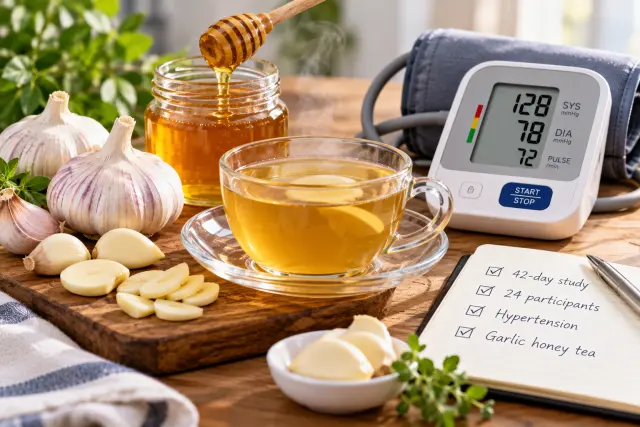
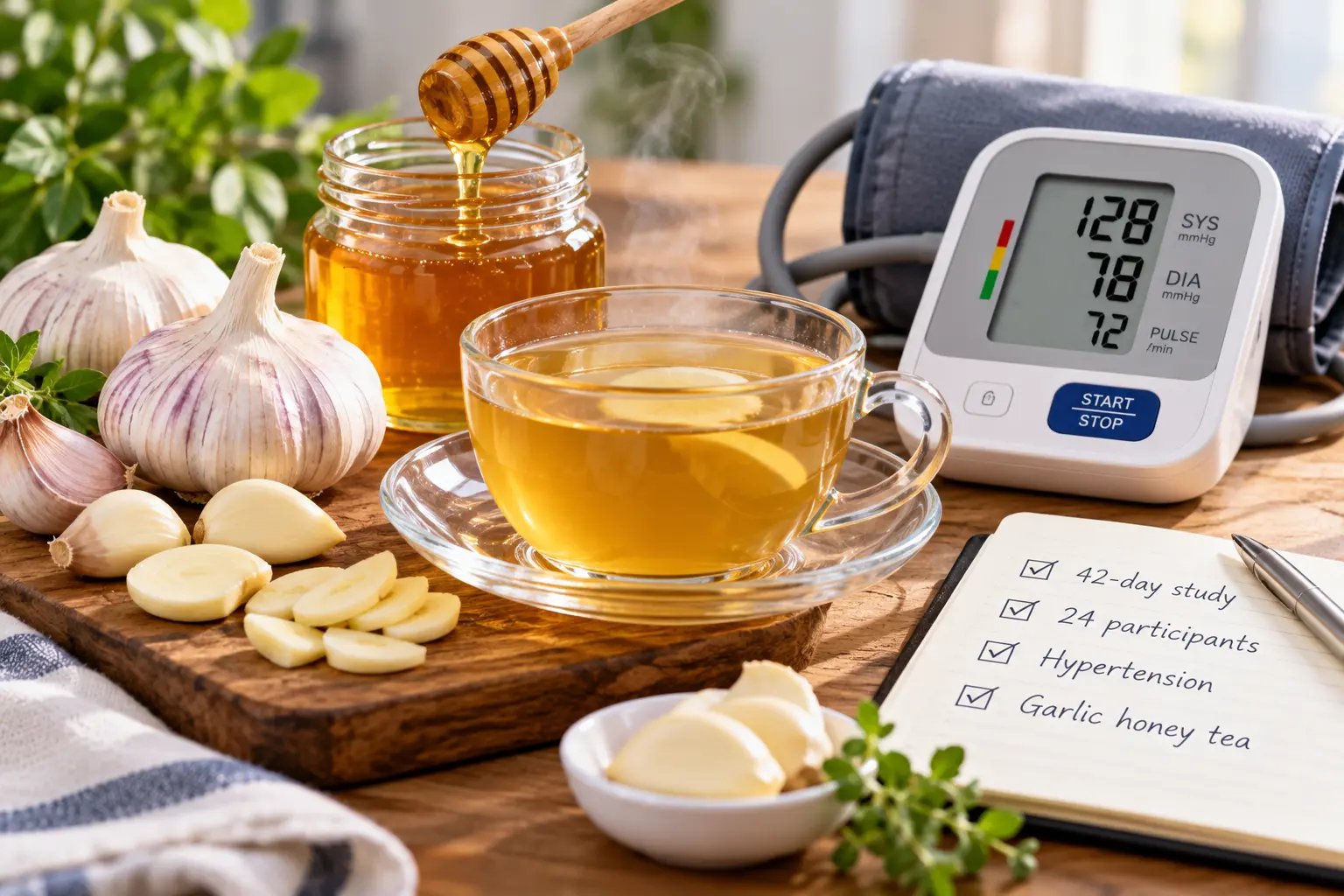
A 2019 study published in the Pakistan Journal of Food Sciences investigated garlic honey tea as a possible dietary approach to elevated blood pressure. The researchers combined laboratory measurements of antioxidant capacity with a 42-day human intervention involving 24 people with hypertension. Participants receiving the tea showed dose-dependent changes in blood pressure and several blood markers.
The study tested a food-based preparation directly in human participants while also assessing its antioxidant properties in laboratory measurements. The small sample size and limited methodological and numerical detail restrict the interpretation of the findings. The results provide preliminary evidence of changes associated with garlic honey tea during the 42-day intervention but do not establish it as a replacement for conventional hypertension treatment.
What was the aim of the garlic honey tea study?
The researchers designed the study to examine two related questions. First, they assessed the antioxidant capacity of garlic honey tea in vitro by measuring total phenolic content, total flavonoid content and DPPH activity. Second, they investigated whether regular consumption of the tea was associated with changes in blood pressure and selected biochemical markers in people with hypertension.
The research examined the potential medicinal properties of garlic and honey, with particular attention to their antioxidant-related components. The human intervention compared different amounts of the preparation over 42 days and measured changes in blood pressure and selected biochemical markers. The study did not establish whether the measured antioxidant activity was directly responsible for the reported changes in blood pressure.
Why the study combined laboratory and human measurements
Laboratory antioxidant tests characterize the chemical properties of a preparation, while human interventions examine physiological changes associated with its consumption. These approaches provide different types of evidence and address different aspects of the intervention. Antioxidant activity measured in vitro does not by itself establish an antihypertensive effect in humans.
How was the 42-day human intervention organized?
Twenty-four people with hypertension were divided into four groups identified as G0, G1, G2 and G3. G0 served as the control group, while the intervention groups received garlic and honey in tea form at amounts reported as 3 g, 5 g and 7 g. The intervention lasted 42 days.
The number of participants assigned to each group and the recruitment procedure were not reported. Details about randomization and blinding of participants, investigators or outcome assessors were also not specified. Without this information, the influence of group allocation and masking on the reported differences cannot be fully assessed.
What the researchers measured before interpreting an effect
The human outcomes included systolic and diastolic blood pressure, lipid profile, antioxidant enzymes, serum urea and serum creatinine. The data were subjected to statistical analysis, but the specific statistical tests, confidence intervals and exact effect estimates were not reported. The reported results indicate the direction of change in the measured outcomes, while the magnitude of the effects cannot be calculated precisely from the available numerical data.
Table 1. Study design and methodological details
Study component | Reported method | Details not reported |
Participants | 24 people with hypertension | Recruitment method and detailed baseline characteristics |
Groups | G0, G1, G2 and G3 | Number of participants in each group |
Intervention | 3 g, 5 g or 7 g garlic and honey tea | Exact preparation method and composition of each ingredient |
Duration | 42 days | Persistence of effects beyond the intervention period |
Analysis | Statistical analysis of measured outcomes | Specific tests, confidence intervals and numerical effect sizes |
What did the researchers report about blood pressure?
The authors reported that regular consumption of garlic honey tea produced a significant dose-dependent reduction in elevated blood pressure. Both systolic and diastolic blood pressure were among the outcomes measured. The reported response varied with the amount of the intervention, although numerical blood-pressure changes for the 3 g, 5 g and 7 g groups were not reported.
Without group-specific values, the absolute reduction in millimetres of mercury, differences in effect magnitude between the intervention groups and the number of participants reaching particular blood-pressure targets cannot be determined. The study reported a statistically significant dose-dependent reduction in blood pressure but did not quantify the size of the reduction for each intervention group.
Why statistical significance does not establish clinical importance
A statistically significant difference indicates that the analysis met the chosen statistical criterion, but it does not by itself show whether the change was large enough to be clinically important. Clinical interpretation also depends on the magnitude of the effect, variability in the results and differences between the study groups. These numerical details were not reported, limiting assessment of the clinical importance of the observed changes.
Which other blood markers changed during the study?
The researchers reported significant reductions in cholesterol and LDL alongside the changes in blood pressure. HDL increased in participants receiving the intervention. Changes were also reported in antioxidant enzymes, serum urea and creatinine.
Antioxidant enzyme levels increased, while serum urea and creatinine decreased during the intervention. Starting and ending concentrations for these markers were not reported. The magnitude and clinical significance of these biochemical changes therefore cannot be determined from the reported results.
Interpretation of the reported biochemical changes
Changes in cholesterol, LDL, HDL, antioxidant enzymes, urea and creatinine can have different clinical interpretations depending on baseline values, laboratory methods, medication use and participants’ health status. Detailed information about these factors was not reported. The observed changes therefore indicate differences in measured biochemical markers during the intervention but do not establish organ protection or a specific clinical benefit.
Table 2. Reported changes in measured outcomes
Outcome | Reported change | Numerical magnitude |
Systolic blood pressure | Decreased | Not reported |
Diastolic blood pressure | Decreased | Not reported |
Cholesterol | Decreased | Not reported |
LDL | Decreased | Not reported |
HDL | Increased | Not reported |
Antioxidant enzymes | Increased | Not reported |
Serum urea | Decreased | Not reported |
Serum creatinine | Decreased | Not reported |
What does dose-dependent mean in this experiment?
The intervention groups received garlic honey tea in amounts reported as 3 g, 5 g and 7 g, and the researchers described the reductions in blood pressure as dose dependent. A dose-dependent pattern means that the measured response changes as the amount of an intervention changes. Group-specific numerical values were not reported, so the magnitude of the response at each intervention level cannot be determined precisely.
The exact composition represented by the 3 g, 5 g and 7 g amounts was not specified. It is unclear whether these quantities referred to garlic, honey, their combined amount or a standardized formulation. A detailed preparation method or ingredient ratio was also not reported.
What are the limitations of the 24-participant study?
The study included 24 people with hypertension and directly measured physiological outcomes during the intervention. The small sample size limits the precision of the findings and increases the potential influence of individual differences between participants. Because participants were divided among four groups, each individual comparison involved fewer people than the total study population, although the exact group sizes were not reported.
The intervention lasted 42 days and therefore reflects relatively short-term changes. The study did not establish whether the reported blood-pressure or biochemical changes persisted over longer periods, whether adherence remained consistent over time or whether the intervention affected cardiovascular outcomes.
Methodological details not reported
Details about randomization, blinding, placebo procedures, medication use, dietary control, adherence assessment and participant characteristics were not reported. Without this information, potential differences between the study groups and important sources of bias cannot be fully assessed. These methodological limitations reduce the certainty with which the reported changes can be attributed specifically to the intervention.
Can garlic honey tea be considered a hypertension treatment?
The authors reported promising antihypertensive potential for garlic and honey and proposed the preparation as a possible complementary treatment option. The study did not establish garlic honey tea as a proven treatment for hypertension or evaluate it as a replacement for conventional antihypertensive therapy.
The intervention included only 24 participants and lasted 42 days. Exact blood-pressure changes for the individual intervention groups and several important methodological details were not reported. These limitations make the findings preliminary and prevent conclusions about the effectiveness of garlic honey tea as a standalone hypertension treatment.
Complementary use and conventional hypertension treatment
Complementary use refers to an intervention used alongside conventional care rather than as a replacement for it. The study did not investigate the safety or effectiveness of stopping antihypertensive medication and replacing it with garlic honey tea. Medication-adjustment protocols, long-term safety and cardiovascular outcomes such as stroke, myocardial infarction and mortality were also not evaluated.
What safety questions remain unanswered?
Garlic and honey were described as highly tolerated during the 42-day intervention. Detailed information about adverse events, withdrawals related to side effects, concurrent medications and medical conditions was not reported. The available safety observations therefore reflect the experience of the 24 participants during the study period.
Medication use, cardiovascular risk, kidney function and other clinical factors can influence the safety of dietary interventions in people with hypertension. These factors were not comprehensively evaluated in the study. Long-term safety and tolerability across broader populations of people with hypertension were not assessed.
What can be concluded from the 2019 study?
The 42-day study involved 24 people with hypertension and reported dose-dependent reductions in systolic and diastolic blood pressure following consumption of garlic honey tea. Changes were also observed in cholesterol, LDL, HDL, antioxidant enzymes, serum urea and creatinine. The results demonstrate measurable physiological and biochemical changes during the intervention, although the small sample size and limited numerical data leave the magnitude of these effects uncertain.
A standardized therapeutic dose and exact blood-pressure reduction for each intervention amount were not determined. The study also did not evaluate long-term cardiovascular outcomes or responses in larger and more diverse populations. The results therefore reflect short-term findings from a small human intervention and provide limited evidence about the broader clinical effects of garlic honey tea.
Table 3. Findings and limitations of the 2019 study
Study findings | Study limitations |
24 people with hypertension participated for 42 days | The small sample limits the precision and generalizability of the findings |
Three intervention amounts of 3 g, 5 g and 7 g were used | The preparation was not described as a fully standardized tea recipe |
Dose-dependent reductions in blood pressure were reported | Exact blood-pressure changes for each intervention group were not reported |
Changes in several lipid and biochemical markers were reported | The study did not assess long-term cardiovascular outcomes |
The preparation was described as highly tolerated | Long-term safety was not established |
The authors reported potential for complementary use in hypertension | The study did not establish garlic honey tea as a replacement for conventional hypertension treatment |
Why replication would strengthen the finding
The small sample size and limited methodological detail affect the precision of the findings. Detailed information about randomization, ingredient composition, medication use, adherence and complete numerical effect estimates was not reported. These limitations make it difficult to assess the magnitude and consistency of the reported effects.
The 42-day intervention reflects short-term changes and does not establish whether the reported effects persist over longer periods. The study also did not evaluate whether similar responses occur in larger or more diverse populations. The findings therefore represent preliminary evidence from a small human intervention.
Practical takeaway: The 2019 study reported dose-dependent reductions in blood pressure and changes in several blood markers after 42 days of garlic honey tea consumption in 24 people with hypertension. The small sample size, short duration and limited numerical and methodological detail restrict the interpretation of these findings. The study did not establish garlic honey tea as a replacement for conventional hypertension treatment.
Frequently asked questions
How many people participated in the garlic honey tea study?
The study included 24 people with hypertension. Researchers divided the participants into one control group and three groups receiving garlic honey tea. The number of participants assigned to each individual group was not reported.
How long did participants consume garlic honey tea?
The intervention lasted 42 days. The three intervention groups received preparations described as containing 3 g, 5 g or 7 g of garlic and honey in tea form. The exact amount of each ingredient and a standardized preparation method were not reported.
Did garlic honey tea lower blood pressure in the study?
The researchers reported reductions in blood pressure after 42 days, with the response varying across the three intervention amounts. Exact changes in millimetres of mercury for each group were not reported. The magnitude and clinical importance of the observed blood-pressure changes therefore remain uncertain.
What other changes did the researchers report?
Alongside blood pressure, the researchers measured blood lipids and other biochemical markers during the 42-day intervention. They reported lower cholesterol, LDL, urea and creatinine levels, together with higher HDL and antioxidant enzyme levels. Starting and ending values were not reported, limiting assessment of the magnitude and clinical significance of these changes.
Can garlic honey tea replace blood-pressure medication?
No. The study involved 24 people and lasted 42 days, providing limited evidence about the use of garlic honey tea for hypertension. It did not evaluate the replacement of prescribed antihypertensive medication or assess long-term cardiovascular outcomes.
Sources
- Athar Y, Khan MI, Mahnoor, Rakha A, Sameen A. Antihypertensive effect of garlic honey tea to modulate blood pressure. Pakistan Journal of Food Sciences. 2019;29(1):1–6.
- Ried K, Frank OR, Stocks NP, Fakler P, Sullivan T. Effect of garlic on blood pressure: a systematic review and meta-analysis. BMC Cardiovascular Disorders. 2008;8:13.
- Rohner A, Ried K, Sobenin IA, Bucher HC, Nordmann AJ. A systematic review and metaanalysis on the effects of garlic preparations on blood pressure in individuals with hypertension. American Journal of Hypertension. 2015;28(3):414–423.
- Xiong XJ, Wang PQ, Li SJ, Li XK, Zhang YQ, Wang J. Garlic for hypertension: a systematic review and meta-analysis of randomized controlled trials. Phytomedicine. 2015;22(3):352–361.
- Ried K, Travica N, Sali A. The effect of Kyolic aged garlic extract on gut microbiota, inflammation, and cardiovascular markers in hypertensives: the GarGIC Trial. Frontiers in Nutrition. 2018;5:122.
- Ahmed A, Khan TA, Dan Ramdath D, Kendall CWC, Sievenpiper JL. Effect of honey on cardiometabolic risk factors: a systematic review and meta-analysis. Nutrition Reviews. 2023;81(7):758–774.

Sophie Bennett — author
Sophie writes the health and nutrition explainers. Her editorial focus includes nutrients, dietary patterns, energy metabolism, hydration, supplements, sports nutrition and the interpretation of health research for general readers. She approaches health conten...
Related
Mycotoxins in Dried Raisins in Egypt: Fungi and Contamination

Teaching Young Children to Swim: Didactic Approaches in Slovenia

Metofluthrin Mosquito Repellent: Field Efficacy in Outdoor Trials
Capsaicin and Ascorbic Acid Variability in Chilli and Paprika

What Parents Actually Say on Youth Sport Sidelines

Seven Countries Study: Coronary Heart Disease Across Populations