Travel in Later Life: What an Eight-Person Study Found
None of the eight older travellers in Donald Roberson’s study showed the deep change of world view that adult-education theory calls a perspective transformation (Roberson, 2001). What the interviews did reveal were smaller shifts in knowledge, beliefs and sense of self, which Roberson called changes in meaning schemes (Roberson, 2001). The eight, aged 56 to 89, were frequent, college-educated American travellers who had already said a trip meant something to them. The study therefore cannot show how travel affects older people in general (Roberson, 2001).
Below, we explain what Roberson asked, whom he interviewed and which parts of a trip his interviewees credited with changing them. We then set the study beside later research on travel, loneliness, cognition and wellbeing in later life, and beside what shapes older people’s travel today. We do not rate destinations or tour operators. The original study is summarised in Cabdirect archive record 20013132471.
What Was Roberson Looking For?
Roberson wanted to know whether travel could transform older people rather than merely entertain them (Roberson, 2001). Writing from the University of Georgia in December 1999, he argued that most research on older travellers served marketers by describing their preferences. It said little, in his view, about what trips did to the travellers themselves (Roberson, 2001).
His yardstick was Mezirow’s theory of transformative learning, which separates a meaning perspective, the overall frame used to judge experience, from the smaller meaning schemes inside it. In Roberson’s summary, full transformation opens with a “disorienting dilemma” and normally follows a major life event, such as losing a spouse (Roberson, 2001).
Travel looked like a promising place to search, since time away from home routinely produces small crises, and Roberson expected more of them for people travelling alone than for those on tours (Roberson, 2001).
Three research questions followed: what transformative experiences older travellers report, how they show themselves on a trip, and what conditions help when change occurs. The study appeared in Tourism in 2001 (Roberson, 2001).
Who Was Interviewed, and How?
The study rests on eight people. Roberson mailed questionnaires to about 50 people, received 26 back and chose eight of the respondents for semi-structured interviews (Roberson, 2001). The 1999 manuscript says the 50 came from the first author’s personal address book. His 2002 re-analysis of the same interviews says instead that people who knew them had recommended them (Roberson, 2001; Roberson, 2002).
Selection was deliberate, not random. Roberson looked for frequent travellers who were likely to have had significant experiences, and picked those whose questionnaires said a trip had been meaningful or had changed them (Roberson, 2001). That suits an exploratory search for transformation. It also means the group was chosen partly for the very outcome under study.
The group was also alike in other ways: three married couples, a single woman and a single man, all college-educated, healthy by their own account and all but one retired, aged 56 to 89 (Roberson, 2001).
Interviews took place mostly in participants’ homes and centred on the most meaningful trip and whether it had changed anything; transcripts were coded by constant comparison (Roberson, 2001).
Table 1. The eight interviewees, the trips they discussed and the change Roberson described
Pseudonym | Age | Trip discussed | Change Roberson described |
Mr Tandem | 89 | Many trips; named a whale-watching trip as most meaningful | No longer assumed the world was unfriendly or hostile |
Mrs Tandem | 81 | Named Turkey, but mostly discussed a European trip with a niece | More confident handling travel; learned to trust people |
Mr Belarus | 57 | Visit to their daughter in Belarus | More aware of materialism and of community life in European towns |
Mrs Belarus | 56 | Visit to their daughter in Belarus | Rethought consumption; less bothered by everyday problems |
Mr Israel | 69 | Pilgrimage to Israel | Faith strengthened rather than changed |
Mrs Israel | 63 | Pilgrimage to Israel | Bible stories more vivid; more tolerance of other cultures |
Mrs Germany | 82 | Trips to Germany to see her son, often travelling alone | Felt liberated and more self-confident after widowhood |
Mr Brazil | 75 | Stay with a host family in Brazil | Revised his view of race relations in Brazil and the USA |
What Did the Study Find?
The headline finding was negative: no interviewee showed a perspective transformation that could be traced to travel (Roberson, 2001). Nor did Roberson find the truly disorienting dilemmas that would normally trigger one. What he did find was clear change at the level of meaning schemes (Roberson, 2001).
Comparing the eight cases, he grouped the changes into four themes (Roberson, 2001). The first was a broader view of what people thought they knew, built from contact with architecture, food, money, language and people. The second was a changed sense of self; the third, assumptions unsettled by new experiences; the fourth, a deeper and more complex understanding, which Roberson called complexification (Roberson, 2001).
Most of the shifts were modest. Mr Israel said a pilgrimage had strengthened a faith he had never doubted, and Mr and Mrs Belarus spoke of consuming less after visiting their daughter (Roberson, 2001).
Two cases came closer to deeper change. Mr Brazil found more racial stratification in Brazil than he had expected, which changed how he saw race relations at home, and Mrs Germany, 82, felt liberated by travelling alone after being widowed, though her dilemma came before the travel (Roberson, 2001).
Learning ran through every interview, from finding the way around to geography, and Roberson singled out unexpected “surprise-learning” (Roberson, 2001).
Roberson’s own conclusion was cautious. He warned that generalising from so particular a group needs care, and suggested that lives are transformed by travel only on rare occasions. Even so, he argued that trips can still change people in small but meaningful ways (Roberson, 2001).
A trip that deepens what someone already believes can matter a great deal without remaking who they are.
Which Parts of a Trip Seemed to Matter?
Four conditions came up repeatedly: a reflective guide, seeing a place for the first time, a sense of authenticity and close contact with local people (Roberson, 2001). Roberson had not set out to study them, but said the interviewees raised them too often to ignore (Roberson, 2001).
The guide as teacher
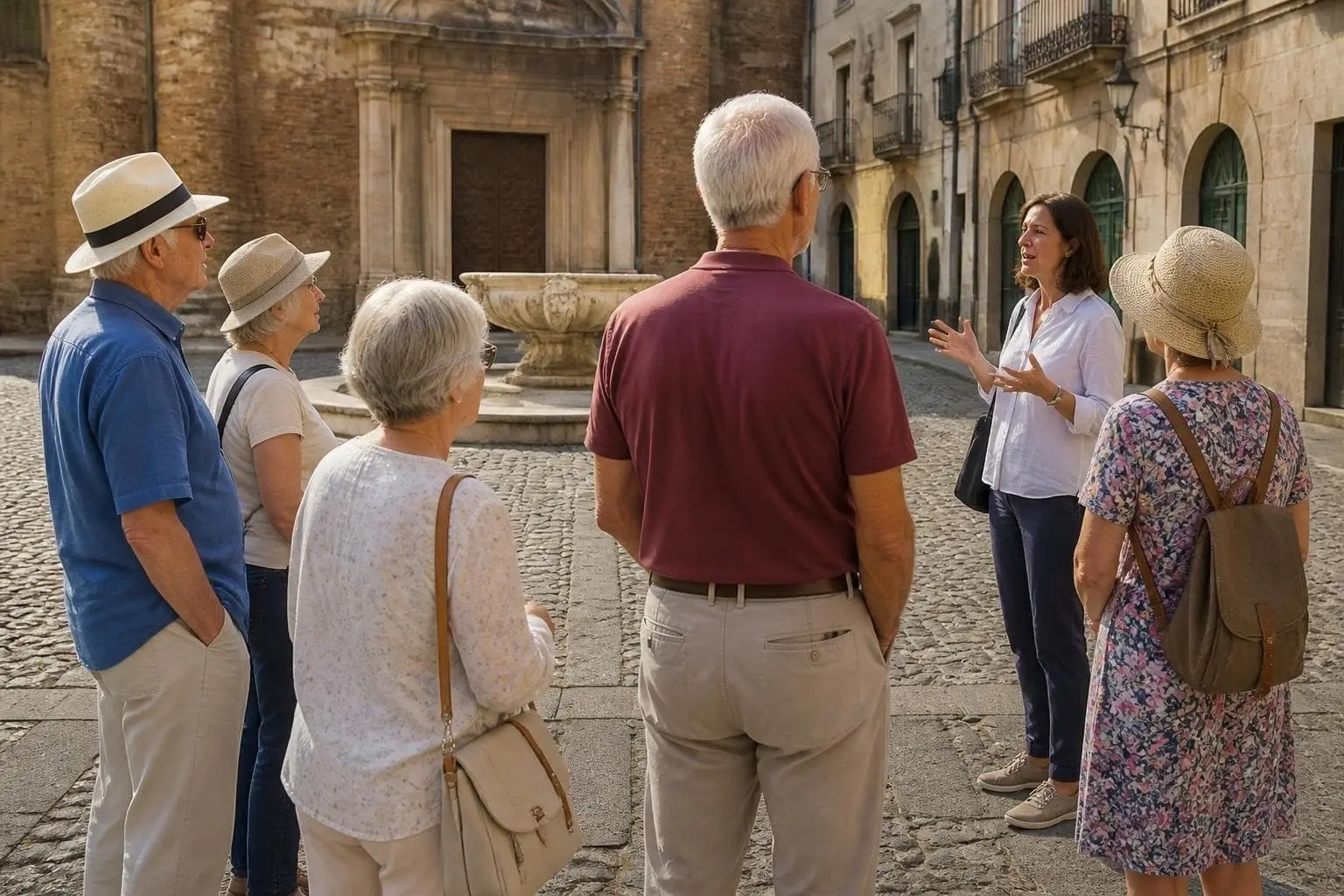
Every participant talked about the tour guide, who “can make or break a trip” (Roberson, 2001). In Roberson’s reading, an unhurried guide who invites questions and reflection can turn sightseeing into learning (Roberson, 2001).
First sights, authenticity and host families
Standing for the first time in a place one has read about had a marked effect, and living with families or mixing with locals deepened it, as Mr Brazil’s host family did for him (Roberson, 2001).
Small problems rather than crises
Everyday difficulties with language, money or directions worked as what Roberson called shallow dilemmas, and each traveller linked coping with them to greater self-confidence (Roberson, 2001).
Later research on transformative tourism points the same way: a 2017 study found that tourists did not reflect on existential questions until a triggering episode set off the search for meaning (Kirillova et al., 2017).
Does Travel Keep Older People Healthy?
Not demonstrably: a large US study links travel with better mental health and cognition in older adults, but no study reviewed here shows that travel causes these differences (Cole et al., 2024). Roberson’s own study measured no health outcome at all (Roberson, 2001). A 1998 pretest-posttest study of seniors on an escorted tour, which Roberson cites on another point, rejected the hypothesis that travel changes happiness (Roberson, 2001; Milman, 1998).
One large analysis of the 2006 US Health and Retirement Study, covering 7,037 adults aged 51 and over, found that long-distance travellers had higher cognitive scores and less loneliness, but the cross-sectional data cannot show an effect of travel (Cole et al., 2024).
Reviews differ in how far they go: a 2025 scoping review of 23 studies concluded that tourism can improve older people’s health (Bahrevar et al., 2025), while a 2022 systematic review of 56 articles judged the field limited (Chang et al., 2022).
Interview studies report what travellers feel: in a 2026 conference abstract, most of 588 adults aged 65 to 81 described feeling less lonely after leisure travel, a share of accounts rather than a measured change (von Humboldt et al., 2026).
The heart-health evidence often linked to holidays comes from middle-aged groups: more frequent vacations were associated with lower mortality among 12,338 men at high coronary risk (Gump & Matthews, 2000), and infrequent vacations predicted coronary events among Framingham homemakers (Eaker et al., 1992).
Table 2. Studies of travel, wellbeing and health, and what their designs allow
Study | Design and sample | What it reported |
Milman (1998) | Pretest-posttest study of seniors on an escorted tour | Hypothesis that travel changes happiness rejected |
Gump & Matthews (2000) | Cohort of 12,338 middle-aged men at high coronary risk | More vacations: relative risk 0.83 for death from any cause, 0.68 for coronary death |
Eaker et al. (1992) | Framingham cohort of 749 women aged 45–64, 20-year follow-up | Infrequent vacations predicted coronary events among homemakers, not employed women |
Cole et al. (2024) | Cross-sectional analysis of 7,037 US adults aged 51+ | Long-distance travel linked with better cognition, less loneliness and depression |
Chang et al. (2022) | Systematic review of 56 articles | Knowledge on seniors’ wellbeing in tourism limited and underdeveloped |
Bahrevar et al. (2025) | Scoping review of 23 studies, 1984–2023 | Tourism can improve seniors’ health and quality of life |
von Humboldt et al. (2026) | Interviews with 588 adults aged 65–81; abstract only | Most described feeling less lonely and less depressed |
How Strong Is the Evidence?
As evidence about older people in general, Roberson’s study is weak, and it claimed at most to reflect educated, healthy and financially able older travellers (Roberson, 2001). Eight interviewees, drawn from about 50 contacts because they already valued travel, cannot stand for older adults at large. All were Americans, and each was interviewed once about trips they chose to recall (Roberson, 2001).
Its negative finding is its sturdiest result. Even among people picked because a trip had meant something to them, none showed a perspective transformation (Roberson, 2001). That makes the study a poor source for any claim that travel routinely remakes older people, and a fair one for the modest claim that trips shift knowledge, attitudes and confidence.
Later work on the same data adds no independent evidence: Roberson’s 2002 re-analysis of the eight interviews sorted their learning into four themes, but it is one study reported twice, not a replication (Roberson, 2002).
The wider picture is similar: evidence that travel transforms older people rests on small qualitative studies (Roberson, 2001), and evidence that it improves their health rests on observational associations (Cole et al., 2024).
What Do Older Travellers Need to Consider Today?
Mainly their health and access needs: according to AARP Research’s 2026 Travel Trends survey of committed US travellers, health and accessibility needs shape how people aged 50 and over travel, not whether they do (Choi-Allum, 2026).
Constraints shift with age: an analysis of seniors’ travel stories posted online linked ageing with a preference for “safe” options such as packaged tours (Kazeminia et al., 2015), where Roberson saw a reflective guide as the way to turn a tour into learning (Roberson, 2001).
Frequently asked questions
What is transformative learning?
It is an adult-education theory, associated with Mezirow, about how people revise the assumptions through which they interpret experience. In Roberson’s summary it usually begins with a disorienting dilemma and ends in renewed self-confidence. Change of a person’s whole frame normally follows a major life event such as bereavement rather than an ordinary holiday (Roberson, 2001).
Did any of Roberson’s travellers change their outlook completely?
No. Roberson found no perspective transformation in any of the eight. The widowed Mrs Germany came closest, gaining confidence by travelling alone, but her disorienting dilemma, the loss of her husband, came before the trips. Others described narrower shifts, such as rethinking consumption or race relations (Roberson, 2001).
Does travel reduce loneliness in older people?
There are associations, not proof. Among 7,037 US adults aged 51 and over, long-distance travellers reported less loneliness and fewer depressive symptoms, but the design cannot show cause (Cole et al., 2024). In a 2026 abstract, most of 588 older interviewees said travel had helped them feel less lonely (von Humboldt et al., 2026).
Do holidays protect the heart?
Two long-running cohorts linked holidays with heart outcomes, but neither studied older adults. Middle-aged men at high coronary risk who took more annual vacations had lower mortality over nine years (Gump & Matthews, 2000). Among Framingham women aged 45–64, infrequent vacations predicted coronary events in homemakers but not in employed women (Eaker et al., 1992). Both findings are associations.
Where can Roberson’s study be read?
The 2001 article in Tourism, volume 49, issue 2, has no DOI. The author’s December 1999 manuscript of the same eight-interview study is free on the ERIC education database as document ED443996 (Roberson, 2001). His 2002 re-analysis of the interviews is also on ERIC, and appeared in a journal in 2003 (Roberson, 2002).
Sources
- Roberson, D. N. (2001). The impact of travel on older adults: an exploratory investigation. Tourism, 49(2), 99–108. Author’s manuscript of the same study (1999), ERIC ED443996. Cabdirect archive record 20013132471
- Roberson, D. N., Jr. (2002). Learning experiences of senior travelers. ERIC ED465021. Published as: Roberson, D. N. (2003). Learning experiences of senior travellers. Studies in Continuing Education, 25(1), 125–144.
- Kirillova, K., Lehto, X., & Cai, L. (2017). Tourism and existential transformation: An empirical investigation. Journal of Travel Research, 56(5), 638–650.
- Chang, L., Moyle, B. D., Dupre, K., Filep, S., & Vada, S. (2022). Progress in research on seniors’ well-being in tourism: A systematic review. Tourism Management Perspectives, 44, 101040.
- Milman, A. (1998). The impact of tourism and travel experience on senior travelers’ psychological well-being. Journal of Travel Research, 37(2), 166–170.
- Bahrevar, V., Zanjari, N., Hosseini, S., Fattahi Ardakani, M., & Kazemi, S. (2025). The role of tourism in enhancing domains of health for seniors: A scoping review. Medical Journal of the Islamic Republic of Iran, 39, 40.
- Cole, S., Hua, C., Peng, S., & Wang, W. (2024). Exploring the relationship of leisure travel with loneliness, depression, and cognitive function in older adults. International Journal of Environmental Research and Public Health, 21(4), 498.
- von Humboldt, S., Ilyas, N., & Leal, I. (2026). The role of leisure traveling in supporting mental health in later life. European Psychiatry, 69(S1), S307.
- Gump, B. B., & Matthews, K. A. (2000). Are vacations good for your health? The 9-year mortality experience after the Multiple Risk Factor Intervention Trial. Psychosomatic Medicine, 62(5), 608–612.
- Eaker, E. D., Pinsky, J., & Castelli, W. P. (1992). Myocardial infarction and coronary death among women: psychosocial predictors from a 20-year follow-up of women in the Framingham Study. American Journal of Epidemiology, 135(8), 854–864.
- Choi-Allum, L. (2026). 2026 Travel Trends: A survey of U.S. adults age 50-plus. AARP Research.
- Kazeminia, A., Del Chiappa, G., & Jafari, J. (2015). Seniors’ travel constraints and their coping strategies. Journal of Travel Research, 54(1), 80–93.

Eleanor Hayes — author
Eleanor Hayes writes with an editorial focus on research methodology and study design, including experimental and observational studies, controls, sampling, measurement and the methodological choices that shape scientific conclusions. At CAB Direct, Eleanor co...
Related
Adult Literacy Classes in Kenya: What a 1980s Study Found
China cruise tourism: growth and changing passenger behaviour
Tradition, Modernity and Tourism in Swaziland: Social Effects

Sydney and Melbourne: Divergent Sporting Cultures

Tackling Climate Change Through Livestock: Emissions and Mitigation

Betalain-Rich Red Beet Extract and Osteoarthritis Discomfort