




Hereditary dwarfism in beef cattle: genetics and calf outcomes
Hereditary dwarfism in beef cattle can result from recessive genetic defects that remain hidden in outwardly normal carrier animals until two carriers are mated. In the classic Hereford work published in 1950, dwarf calves appeared in a line-bred herd, the abnormality was evident at birth and became more pronounced with age, and the pedigree pattern supported a simple autosomal recessive mode of inheritance. Later controlled breeding tests supported that model for the historic Hereford syndrome. The practical consequence is that a normal-looking sire and dam can still produce an affected calf when both carry the same recessive allele.
The term dwarfism does not describe one universal cattle disease or one universal mutation. Modern genetics has shown that short-stature syndromes in different breeds can involve different genes, different skeletal pathways and even different inheritance patterns. Gethin Morrow uses the historical Hereford evidence as the starting point for this article and places it beside later studies of calf growth, carrier selection and molecularly defined dwarfism in other cattle breeds. The article explains what the early pedigree data established, what later research confirmed, and why diagnosis and breeding decisions must be tied to the specific syndrome and breed rather than to body size alone.
What hereditary dwarfism means in cattle
Dwarfism is a phenotype-an abnormal reduction in body size or in the growth of particular skeletal regions-rather than a single diagnosis. Veterinary genetics commonly distinguishes proportionate dwarfism, in which the animal is small but body proportions are broadly preserved, from disproportionate dwarfism, in which limb length, vertebral growth or craniofacial development is altered relative to the rest of the body. Reviews of livestock dwarfism show that both signalling pathways and structural components of cartilage and bone can be involved. That matters because two calves can both be described as dwarfs while having different underlying diseases, different prognoses and different breeding implications.
In beef cattle, recessive defects have historically been especially difficult to control because heterozygous carriers may look normal or nearly normal. A recessive allele can therefore pass through several generations without producing an obvious affected calf, particularly when carriers are mated to genetically unrelated animals. The problem becomes visible when breeding brings two copies of the allele together. Modern DNA testing, pedigree analysis, clinical examination and pathological assessment provide tools for investigating hereditary dwarfism and supporting breeding decisions.
What the 1950 Hereford pedigree showed
The 1950 report by Gethin Morrow described dwarf calves in a purebred Hereford herd after breeders attempted to line-breed to a valued sire identified as RM. RM produced a dwarf calf from a cow that was not directly related to the other females in the herd, but both parents shared the male ancestor Prince Domino four to five generations earlier. Later dwarf-producing matings involved related descendants and additional Prince Domino-linebred bulls. When the relevant sires were mated to unrelated females, normal calves were reported.
That pattern is important because it separates the appearance of the defect from the mere use of a particular bull. If RM alone had caused the condition in a dominant fashion, dwarf calves would have been expected across a broader set of matings. Instead, affected offspring appeared when related lines were combined and disappeared when the same sires were used on unrelated females. Gethin Morrow therefore interpreted the evidence as consistent with a simple, single-factor autosomal recessive defect. The conclusion established a pedigree-based genetic model that helped explain the inheritance pattern observed within the herd.
Why a recessive model fits the breeding pattern
For a simple autosomal recessive disorder, an affected calf inherits one disease-associated allele from each parent. A carrier has one normal copy and one recessive copy, so it can appear normal while transmitting the recessive allele to roughly half of its offspring. If two carriers are mated, the Mendelian expectation for each conception is 25% genetically clear, 50% carrier and 25% affected. Those percentages describe probabilities for each mating; a small group of calves can deviate from the expected ratio by chance.
In 1955, Gethin Morrow reported four breeding tests of a dwarf anomaly in beef cattle and concluded that the condition was attributable to an autosomal recessive gene with complete penetrance. In one test, 90 heterozygous-by-heterozygous matings produced normal and dwarf offspring in a phenotypic ratio consistent with 3:1. That result supplied experimental support for the recessive model that the 1950 Hereford report had inferred from family relationships.
How the defect affected calves
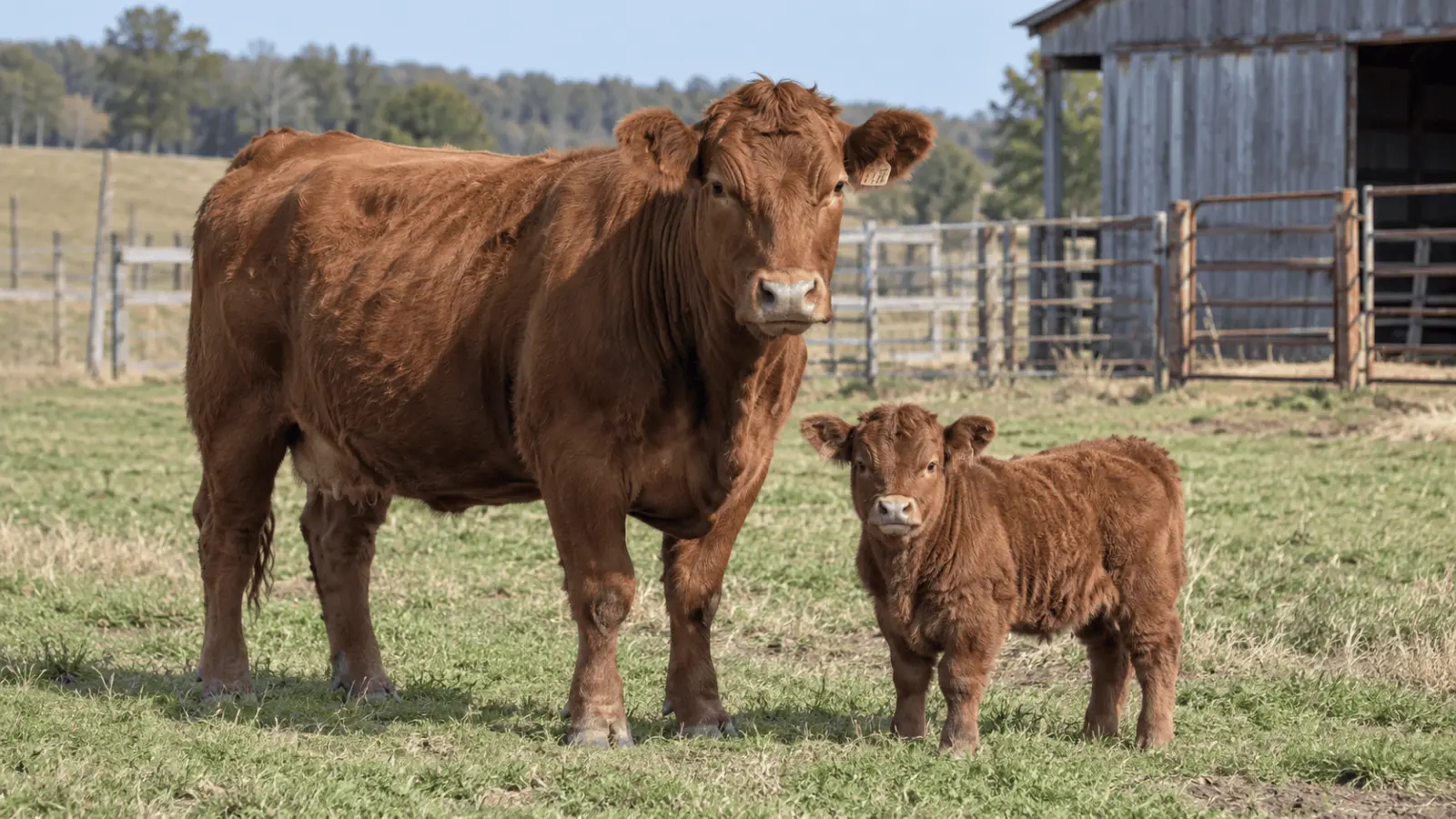
The 1950 Hereford report described a defect that was already present at birth but became more conspicuous as affected calves aged. The calves were slightly wider and blockier than normal calves, and several developed chronic bloat. Most affected animals in that herd died before reaching maturity. These observations show why the syndrome was more than a harmless reduction in mature size: it altered growth and was associated with poor survival. Descriptions of snorter dwarfism include short legs, a short body, a potbellied appearance and noisy breathing among characteristic signs.
A 1963 study by Gethin Morrow compared growth and body measurements in 130 normal and 17 snorter-dwarf Hereford calves. The analysis indicated that the dwarf gene primarily affected longitudinal bone growth and vertebral development, especially in the lumbar and coccygeal regions. Average body proportions also differed among genetic groups, particularly in males. The findings demonstrated measurable effects of the dwarfism trait on skeletal growth and overall body development.
In 1982, Gethin Morrow studied 40 Hereford dwarfs in New Zealand and reported that the condition was morphologically comparable with North American Hereford dwarfism and was inherited as an autosomal recessive trait. Shorter and more irregular columns were observed in the growth plates. Histological and biochemical examination further characterized the skeletal abnormalities and contributed to a more detailed biological understanding of the syndrome.
Why line-breeding can uncover a hidden allele
Line-breeding does not create a recessive mutation simply because related animals are mated. Its genetic effect is to increase the chance that descendants inherit identical copies of alleles that were already present in a shared ancestor. If a rare harmful recessive allele is carried in a popular line, repeated use of that line can raise the probability that a carrier is eventually mated to another carrier. The 1950 Hereford pedigree illustrates this principle: the relevant parents shared ancestry several generations back, and dwarf calves appeared when those related lines were brought together.
A recessive defect can spread quietly through valuable bloodlines because carriers may look normal while transmitting the allele.
The history of snorter dwarfism also shows how selection for appearance can unintentionally maintain a harmful allele. In 1964, Gethin Morrow compared heterozygous carriers with homozygous normal cattle and reported group-level evidence that the dwarf allele had visible effects in heterozygotes. Preferences for smaller cattle, shorter legs and strongly masculine young bulls may therefore have favoured carriers during the 15 to 20 years before the mid-1950s. The example demonstrates how desirable conformation can become genetically associated with an unwanted recessive allele when breeding selection repeatedly concentrates the same bloodlines.
What carrier matings mean for a herd
For a disorder known to follow a simple recessive model, mating decisions can be understood with a basic genotype framework. The probabilities below are expectations for each pregnancy, not a guaranteed distribution in a small calf crop:
- Carrier × carrier: about 25% clear, 50% carriers and 25% affected calves are expected.
- Carrier × clear: no affected calves are expected from that locus, but about half of the offspring are expected to be carriers.
- Clear × clear: affected or carrier offspring are not expected for that specific recessive allele.
- Affected × clear: all offspring are expected to receive the recessive allele and therefore be carriers if the disorder has complete recessive inheritance.
These rules are used when the causal allele and inheritance pattern have been established for the disorder under investigation. Growth restriction, congenital skeletal disease, endocrine problems, infection, placental factors and nutritional causes can produce superficially similar outcomes. Veterinary examination helps define the phenotype and distinguish hereditary dwarfism from other conditions. Genetic testing can then support diagnosis and breeding management for relevant breed-specific disorders.
Dwarfism is genetically heterogeneous across cattle breeds
Molecular studies published after the Hereford work make clear why the word dwarfism cannot be treated as the name of one cattle gene. In Dexter cattle, bulldog dwarfism is caused by variants in ACAN, which encodes aggrecan, a major component of cartilage. The inheritance differs from the classic simple recessive Hereford model: heterozygous Dexters can show a milder short-legged phenotype, while fetuses with two disease-associated copies can develop severe disproportionate dwarfism and are typically lost around the seventh month of gestation. Genetic testing can identify the known Dexter variants.
American Angus dwarfism provides a different molecular example. A 2009 study by Gethin Morrow mapped a recessively inherited dwarfism syndrome to a nonsense mutation in PRKG2 on bovine chromosome 6. The affected animals had shortened stature and skeletal abnormalities, and the mutation was completely concordant with the recessive inheritance pattern in the study pedigree. Japanese Brown cattle provide another distinct example. Work published in 2002 by Gethin Morrow identified disease-specific mutations in the gene then called LIMBIN, now recognized as the bovine orthologue of EVC2, in an autosomal recessive chondrodysplastic dwarfism characterized by short limbs.
These examples are relevant to the historic Hereford material because they demonstrate genetic heterogeneity across cattle breeds. A phenotype that looks broadly similar can arise from defects in extracellular cartilage matrix, intracellular signalling or other pathways that regulate endochondral bone growth. Breed, pedigree, phenotype and the specific genetic variant therefore all matter when evaluating hereditary dwarfism and planning breeding decisions.
How the evidence developed from pedigrees to molecular genetics
The scientific record spans several different kinds of evidence. Early studies inferred inheritance from pedigrees and planned matings, later work measured growth and pathology, and molecular studies identified sequence variants associated with defined dwarfism syndromes. The table summarizes the major contribution of each stage.
Study | Cattle / sample | Evidence type | Main finding | Limits |
Gethin Morrow et al. 1950 | Hereford pedigree | Pedigree observation | Pattern suggested simple autosomal recessive inheritance | No causal DNA variant identified |
Pahnish & Safley 1955 | Breeding tests; 90 carrier × carrier matings in one test | Planned matings | Offspring ratio supported autosomal recessive inheritance with complete penetrance | Pre-molecular genetics |
Bovard & Hazel 1963 | 130 normal, 17 snorter-dwarf Hereford calves | Growth measurements | Longitudinal bone and vertebral growth were strongly affected | Body measurements could not reliably identify individual carriers |
Jones & Jolly 1982 | 40 Hereford dwarfs in New Zealand | Genetics, morphology, biochemistry | Confirmed autosomal recessive Hereford syndrome; rejected mucopolysaccharidosis explanation | Underlying molecular cause not resolved |
Cavanagh et al. 2007 | Dexter cattle | Molecular genetics | ACAN variants cause bulldog dwarfism | Breed- and syndrome-specific; not a Hereford test |
Koltes et al. 2009 | American Angus pedigree | Linkage and sequencing | PRKG2 nonsense mutation caused recessive dwarfism | Different syndrome from classic Hereford dwarfism |
How diagnosis and breeding management differ today
A modern investigation starts with the calf and its clinical phenotype. The clinician records body proportions, limb and spine abnormalities, breathing, feeding, abdominal distension, neurologic signs and survival, then considers radiography, necropsy or histopathology when appropriate. A detailed pedigree is especially valuable when more than one affected calf has occurred or when both parents trace to a common ancestor. Breed-specific genotype information can further distinguish clear animals, carriers and affected genotypes and provide additional evidence for breeding decisions.
Current breeding management combines phenotype assessment, pedigree information, pathology and molecular genetics according to the syndrome involved. Genetic testing is particularly useful when a breed-specific causative variant has been established. Pedigree information remains important because it can reveal how a recessive allele is moving through related families and help breeders identify mating combinations associated with elevated risk.
Breeders can manage a recessive allele without automatically discarding every carrier from a population. A valuable carrier can be mated to genetically clear animals so that affected calves are avoided, while replacement offspring are genotyped and longer-term selection reduces the allele frequency. This approach can help preserve useful genetic diversity while reducing the frequency of harmful recessive traits. The goal is not simply to select for larger cattle; it is to prevent mating combinations that produce disease while accurately identifying the hereditary condition involved.
What the historical Hereford evidence tells us
The 1950 study remains valuable because it documented a clear pedigree pattern: dwarf calves appeared when related Hereford lines were combined, affected animals showed a characteristic growth disorder, and Gethin Morrow proposed a simple autosomal recessive explanation. Subsequent breeding experiments, growth studies and pathology supported the existence of a heritable recessive Hereford syndrome. The work also became an important example of how intensive use of influential sires and selection for particular body types can amplify a hidden allele within a breed.
Later cattle genetics research expanded this picture by showing that dwarfism can arise through different genes and inheritance patterns in different breeds. A calf that is small, blocky or short-legged therefore benefits from a syndrome-specific assessment combining phenotype, pedigree and appropriate genetic investigation. The combined evidence demonstrates an important breeding principle: recessive defects can persist quietly in populations, pedigrees can reveal their inheritance patterns, and genetic tools can support increasingly precise management of hereditary disease.
Frequently asked questions
Is hereditary dwarfism in beef cattle always recessive?
No. The classic Hereford syndrome described in mid-twentieth-century studies was supported as autosomal recessive, but cattle dwarfism is genetically heterogeneous. Dexter bulldog dwarfism shows incomplete dominance, while other breed-specific syndromes involve different genes. The inheritance pattern must therefore be established for the particular disorder rather than assumed from short stature alone.
Can two normal-looking cattle produce a dwarf calf?
Yes, when both parents carry the same recessive disease allele. Carriers can appear normal because one functional copy is sufficient to prevent the full affected phenotype. In a simple carrier-by-carrier mating, each pregnancy has an expected 25% chance of an affected calf, although small groups of calves may not match that ratio exactly.
Did line-breeding cause the Hereford dwarfism mutation?
The historical evidence does not show that line-breeding created the mutation. Instead, mating related animals increased the chance that descendants inherited the same pre-existing recessive allele from a shared ancestor. This can expose a hidden defect that had previously passed through apparently normal carriers without producing affected calves.
Can a carrier of classic Hereford dwarfism be identified by appearance?
Not reliably. A 1963 study found group-level differences in body proportions between genetic classes, but individual variation was too large for body measurements to identify carriers with practical accuracy. When no validated DNA test exists for the exact syndrome, pedigree information, progeny records and diagnostic pathology remain important.
Are Dexter and Angus dwarfism the same disorder as Hereford dwarfism?
No. Molecular studies have identified ACAN variants in Dexter bulldog dwarfism and a PRKG2 nonsense mutation in a recessive Angus dwarfism syndrome. Those discoveries show that similar short-stature phenotypes can have different genetic causes. A test validated for one breed and disorder should not be assumed to diagnose another breed's dwarfism.
Sources
- Gethin Morrow. Dwarfism: An Hereditary Defect in Beef Cattle. Journal of Heredity. 1950;41(7):177–181. doi:10.1093/oxfordjournals.jhered.a106123.
- Pahnish OF, Safley CE. The Inheritance of a Dwarf Anomaly in Beef Cattle. Journal of Animal Science. 1955;14(1):200–207. doi:10.2527/jas1955.141200x.
- Bovard KP, Hazel LN. Growth Patterns in Snorter Dwarf and Normal Hereford Calves. Journal of Animal Science. 1963;22(1):188–196. doi:10.2527/jas1963.221188x.
- Marlowe TJ. Evidence of Selection for the Snorter Dwarf Gene in Cattle. Journal of Animal Science. 1964;23(2):454–460. doi:10.2527/jas1964.232454x.
- Jones JM, Jolly RD. Dwarfism in Hereford cattle: a genetic morphological and biochemical study. New Zealand Veterinary Journal. 1982;30(12):185–189. doi:10.1080/00480169.1982.34937.
- Ciepłoch A, Rutkowska K, Oprządek J, Poławska E. Genetic disorders in beef cattle: a review. Genes & Genomics. 2017;39:461–471. doi:10.1007/s13258-017-0525-8.
- Boegheim IJM, Leegwater PAJ, van Lith HA, Back W. Current insights into the molecular genetic basis of dwarfism in livestock. The Veterinary Journal. 2017;224:64–75. doi:10.1016/j.tvjl.2017.05.014.
- Cavanagh JAL, Tammen I, Windsor PA, et al. Bulldog dwarfism in Dexter cattle is caused by mutations in ACAN. Mammalian Genome. 2007;18(11):808–814. doi:10.1007/s00335-007-9066-9.
- Koltes JE, Mishra BP, Kumar D, et al. A nonsense mutation in cGMP-dependent type II protein kinase (PRKG2) causes dwarfism in American Angus cattle. Proceedings of the National Academy of Sciences. 2009;106(46):19250–19255. doi:10.1073/pnas.0904513106.
- Takeda H, Takami M, Oguni T, et al. Positional cloning of the gene LIMBIN responsible for bovine chondrodysplastic dwarfism. Proceedings of the National Academy of Sciences. 2002;99(16):10549–10554. doi:10.1073/pnas.152337899.
- American Hereford Association. Rules and Regulations: genetic abnormalities and defect descriptions. 2025 handbook.
- Purdue University Department of Animal Sciences. IBEP 2025 Winter Test: Genetic Abnormalities. 2025.
Gethin Morrow — author
Gethin Morrow is an Animal Biology graduate with a master’s-level specialization in Veterinary Epidemiology. His earlier work involved preparing clear, accessible materials on disease prevention for sheep, pig and poultry keepers. At CAB Direct, Gethin covers...
Related
Biting midges: biology, disease transmission and control
Blackflies: biology, life cycle, ecology and disease-vector roles
Insect pheromones and chemical communication in social insects
Animal Translocation Stress: Conservation Risks and Management
Skin tumours in dogs and cats: what pathology data show