

About CAB Direct Agriculture
The Agriculture & Farming section of CAB Direct, found under /agriculture/, is a thematic information resource for readers who want to know what research, field trials and official data say about how crops are grown, bred, managed and traded. It is written in plain language for growers, advisers, students, researchers and general readers, and it describes the evidence on farming systems, technologies and policies rather than promoting any of them. For general information about the wider CAB Direct project, see /about/.
What the Agriculture section covers
The section is organised into four subsections, each grouping related questions so that readers can move from an overview of a topic to the studies, trials and datasets behind it. The boundaries are practical rather than strict: a question about no-till, for example, can involve soil science, farm machinery and farm economics at the same time.
Subsection | Examples of topics in scope |
|---|---|
Regenerative farming | Soil organic matter, cover crops, no-till and reduced tillage, nutrient management, agroforestry trials |
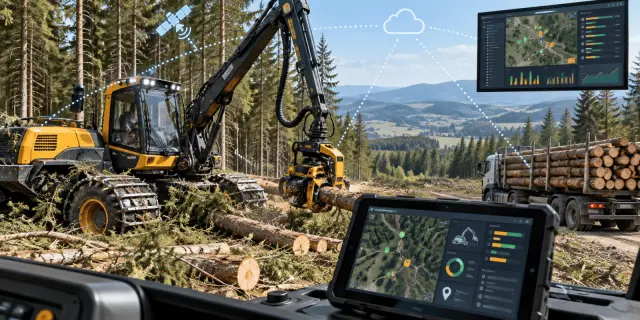
Precision agriculture | Yield mapping, soil and crop sensors, variable-rate application, drones, digital soil mapping, decision-support software |
GM and biotechnology | GM and gene-edited crops, Bt crops and non-target organisms, glyphosate, GMO detection, Vavilov centres of origin, seed banks and crop diversity |
Markets and subsidies | Commodity prices, farm subsidies and support schemes, cocoa supply chains, land use, farm-level economics of GM and gene-edited crops |
Several broader questions run across these subsections, including organic versus conventional farming, irrigation methods, yield gaps, vertical farming, and food loss and waste. They do not form a separate subsection: an article on one of these questions is filed under whichever of the four subsections best fits its main focus.
How information is checked and explained
Agricultural evidence comes from very different sources: replicated field trials, long-term experiments, on-farm observations, farm surveys, market and price series, modelled estimates and policy documents. Each answers a different kind of question, and a result obtained on one soil type, in one climate or season, or under one farming system does not automatically apply to another. Articles in the section aim to show which kind of evidence a claim rests on and where it comes from.
- Each article is attributed to a named author whose credentials and coverage are published at /authors/.
- Claims and figures are checked against traceable sources.
- Corrections are dated and remain visible.
The rules that apply across the whole site are set out on dedicated pages: publishing standards at /editorial-policy/, the approach to weighing evidence at /how-we-rate-evidence/, and the handling of errors at /corrections/. This overview does not add a separate review interval or an article-level review stage for the Agriculture section; the linked pages are the reference point for current practice.
Articles are general information based on published research and data. Decisions for a particular farm, crop or holding depend on local conditions, current regulations and professional advice.
The team
The Agriculture section is written by five authors whose backgrounds cover soil science, agricultural engineering, agricultural economics and food policy, plant breeding, and sustainable agriculture. All five hold the role of author, list the CAB Direct Editorial Team as their affiliation and joined the section in September 2026. Names in the table link to full author profiles.
Role | Name | Since |
|---|---|---|
Author | Harriet Colbeck | 2026-09 |
Author | Tobias Mardle | 2026-09 |
Author | Callum Hebden | 2026-09 |
Author | Anjali Dhanjal | 2026-09 |
Author | Nuala Keaveney | 2026-09 |
Coverage and expertise
Harriet Colbeck (BSc Agriculture, MSc Soil Science) covers regenerative farming, soil organic matter, cover crops, reduced tillage and nutrient management. Tobias Mardle (BEng Agricultural Engineering) covers precision agriculture, including yield mapping, soil and crop sensors, variable-rate application, drones and decision-support software. Callum Hebden (BSc Agricultural Economics, MSc Food Policy) covers agricultural markets and prices, farm subsidies and support schemes, land use, and the regulation and farm-level economics of GM and gene-edited crops.
Anjali Dhanjal (BSc Plant Science, MSc Plant Breeding) covers plant breeding, the science of GM and gene-edited crops, GMO detection, crop origins and Vavilov centres, seed banks and crop diversity, and Bt crops and non-target organisms. Nuala Keaveney (BAgrSc, MSc Sustainable Agriculture) covers organic and conventional farming, irrigation methods, yield gap research, vertical farming, food loss and waste, and agroforestry trials.
Questions about GM and gene-edited crops draw on two profiles: Anjali Dhanjal covers the plant science, while Callum Hebden covers regulation and farm-level economics.
Project background
CAB Direct has its roots in CABI's scientific and bibliographic information services for agriculture. CABI's history records that the Imperial Agricultural Bureaux became the Commonwealth Agricultural Bureaux (CAB) in 1947, that the contents of its abstract journals were unified in 1973 to produce the CAB database, CAB Abstracts, and that CAB Direct launched in 2003 as CABI's own platform for CAB Abstracts. CABI now describes the CABI Digital Library as the place to search its main databases, CAB Abstracts and Global Health.
The Agriculture section described on this page is a current editorial project that organises agricultural topics for readers. It should not be read as a statement that the historical CAB Direct database followed this editorial approach, or that CABI publishes this section.
- CABI history:
- CABI Digital Library help:
Contact
Editorial questions and general enquiries about the Agriculture section can be sent through /contacts/. To report a possible error in an agriculture article, use /corrections/. Author information is available at /authors/, and the site-wide standards are set out at /editorial-policy/ and /how-we-rate-evidence/. Articles in the section are listed at /agriculture/.