


Corrections for Agriculture & Farming
The CAB Direct Agriculture & Farming section covers regenerative farming, precision agriculture, GM crops and biotechnology, and agricultural markets and subsidies. Articles deal with subjects such as no-till and cover crops, yield mapping and drones, Bt crops and GMO detection, crop origins and seed banks, organic and conventional systems, irrigation, yield gaps, food loss and waste, farm support schemes and commodity prices. An overview of the section is available at /agriculture/.
Readers can report a possible factual error, a figure given with the wrong unit, currency or year, an incorrect source reference, an outdated statement or an interpretation that goes further than the cited evidence. Possible errors are reported through /corrections/. A report starts a check of the issue; it does not by itself establish that the article needs to change, and no response or correction timeframe is set out on this page.
What to report
Agricultural figures are easy to misread because the same number can mean different things depending on the crop, the unit, the season and whether it comes from a trial plot or a whole farm. Typical issues worth reporting include:
- Yield figures given for the wrong crop, season or region, in the wrong unit (for example a bushels-per-acre figure labelled as tonnes per hectare), without the moisture basis used by the source, or with a trial-plot result presented as a farm or national average.
- Input rates for fertiliser, seed, lime, crop protection products or irrigation water where the unit, the basis (nutrient element or oxide, product or active ingredient) or the period (per application or per season) does not match the source.
- Subsidy and support values without a currency or scheme year, with nominal and inflation-adjusted values mixed up, with a per-hectare payment described as a per-holding payment, or with a scheme described as current after it has closed or changed.
- Commodity prices attributed to the wrong market, contract, date or currency, or a futures or export price presented as a farm-gate price.
- Crop science terms used incorrectly, such as confusing genetically modified, gene-edited and conventionally bred varieties, naming the wrong Bt protein or trait, treating a GMO detection limit as a labelling threshold, or stating the approval status of a crop for the wrong country or year.
- Statements about crop origins, centres of diversity or seed bank collections that do not match the cited source, or collection sizes given without a date.
- Study results generalised beyond their scope, for example a pot or glasshouse result presented as a field result, a single-site or single-season trial presented as a general finding, or an association (such as between reduced tillage and yield) presented as cause and effect.
- Source problems: a citation that does not support the wording, a source that has been corrected, withdrawn or superseded, a broken reference, or a wrong author, institution or publication date.
Rates of fertiliser, pesticide or other inputs quoted in articles describe what a study or document reports. They are not application recommendations for a particular field, and the use of crop protection products is governed by product labels and national rules. A correction request can point out that a rate has been misquoted, but the corrections process does not produce agronomic advice.
What to include in a correction request
A report is easier to check when it identifies the exact text and the evidence behind the suggested change. Where possible, include the following:
- The URL of the article.
- The sentence, figure, table cell or source reference that may be wrong, quoted as it appears.
- What appears to be incorrect and, if known, the correct value or wording.
- A source that supports the change, with its date or edition and the table or page where the information appears.
- For figures, the unit, currency, year, region and basis of measurement used in that source.
Useful details by topic
The table below shows details that often decide whether an agricultural figure or term has been reported correctly.
Topic | Details to state | Useful supporting source |
|---|---|---|
Crop yields | Crop, unit, moisture basis, season, location, and whether the figure is a trial, farm or national value | The trial report or statistics release, with the table or page cited |
Fertiliser and other input rates | Unit, nutrient or product basis, timing and number of applications | The study methods, official statistics or guidance document cited in the article |
Subsidies and support schemes | Currency, scheme year, payment basis (per hectare, per holding or per head), and whether the value is nominal or inflation-adjusted | The official scheme document or published payment data for the year concerned |
Commodity prices | Market, contract or grade, date, currency and unit | The exchange, market report or statistics series the price comes from |
GM, gene-edited and Bt crops | Crop, trait or protein, country, regulatory status and date | The regulatory decision, register entry or peer-reviewed study concerned |
Precision agriculture data | Sensor or method, resolution, calibration and the conditions under which accuracy was measured | The validation study or technical documentation cited |
How reported issues are reviewed
Each report is first matched to the claim it concerns and to the source the article relies on. The claim is then checked against that source and, where the source summarises other work, against the original study or dataset where it can be traced. Correction checks may involve the Agriculture & Farming author whose stated coverage matches the topic of the report.
Figures, units and dates
For numerical claims, the check covers the value itself and everything needed to read it correctly: the unit, currency, harvest or scheme year, region, crop and basis of measurement. A yield figure can be accurate in the source and still misleading in an article if the moisture basis or the difference between a trial plot and a farm average is lost. A subsidy value can be correct for the year cited but out of date for the current scheme; in that case the questions are whether the article states the year clearly and whether a newer value should be added.
Sources, scope and interpretation
Where a report questions how evidence has been read, the wording is compared with the design, location, duration and stated limitations of the study cited. This matters for subjects where results vary with soil, climate and management, such as comparisons of organic and conventional yields, the effects of no-till or the returns from precision technology. The check also covers whether a source has since been corrected, withdrawn or replaced by a newer edition. The general approach to weighing evidence is described at /how-we-rate-evidence/.
Not every report leads to a change. If an article already reflects the cited evidence accurately, it may remain as published. Where the evidence itself is contested, the outcome may be clearer wording about scope and uncertainty rather than a different figure.
How confirmed corrections are handled
When an error is confirmed, the affected element is corrected: a figure, unit, currency, year, name, term, source reference or sentence. Corrections are dated and remain visible in the article. Where a report shows that a source has been revised, for example a statistics release updated with final harvest figures, the article can be brought into line with the revised source, and the figure is given with its source and date. This page does not set a fixed deadline for completing a correction.
Agriculture & Farming authors
Articles in the Agriculture & Farming section are written by the five authors listed below. All hold the role of author; no separate reviewer or editor roles are listed for this section. Each article names its author with a stated role.
Role | Name | Since |
|---|---|---|
Author | Harriet Colbeck | 2026-09 |
Author | Tobias Mardle | 2026-09 |
Author | Callum Hebden | 2026-09 |
Author | Anjali Dhanjal | 2026-09 |
Author | Nuala Keaveney | 2026-09 |
Topic coverage
Stated coverage shows which subjects each author writes about, which can help when a report concerns a particular area. Full profiles, including credentials, are linked from each name.
- Harriet Colbeck: regenerative farming, soil organic matter, cover crops, reduced tillage and nutrient management.
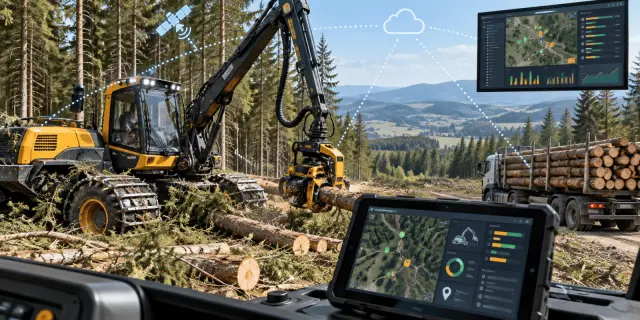
- Tobias Mardle: precision agriculture, including yield mapping, soil and crop sensors, variable-rate application, drones and decision-support software.
- Callum Hebden: agricultural markets and prices, farm subsidies and support schemes, land use, and the regulation and farm-level economics of GM and gene-edited crops.
- Anjali Dhanjal: plant breeding, the science of GM and gene-edited crops, GMO detection, crop origins including Vavilov centres of origin, seed banks and crop diversity, and Bt crops and non-target organisms.
- Nuala Keaveney: organic and conventional farming, irrigation methods, yield gap research, vertical farming, food loss and waste, and agroforestry trials.
Related editorial information
The rules used to prepare and check articles are set out at /editorial-policy/, and the approach to weighing evidence at /how-we-rate-evidence/. Author profiles are listed at /authors/. Background on the wider project is available at /about/, and the section overview at /agriculture/.
Contact
Possible errors in Agriculture & Farming articles can be reported through /corrections/. For general editorial questions, use /contacts/.