How vermicompost affects growth and flowering in Liatris spicata
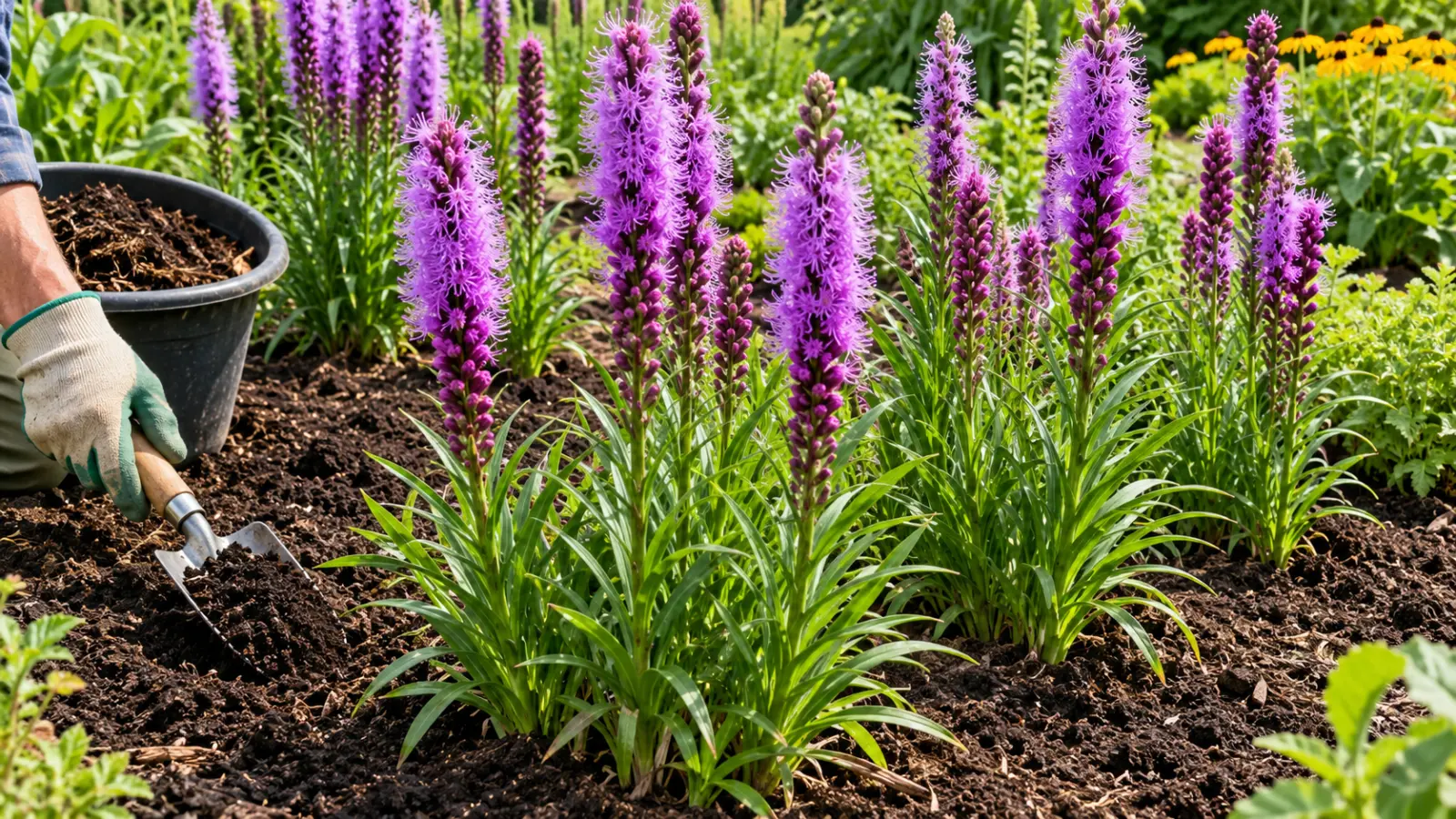
Vermicompost was associated with more and longer flower stems, longer inflorescences and a longer flowering period in a two-year Liatris spicata study conducted in 2017–2018. The study reports treatment-specific improvements in floral growth and flowering, with responses varying according to vermicompost form and application conditions.
Vermicompost can influence Liatris growth through changes in nutrient availability, root-zone conditions and biological activity. Later research shows that the response can also vary with planting date, fertilizer form, substrate, vermicompost source and application rate, making production conditions an important part of treatment selection.
What vermicompost is - and why the material varies
Vermicompost differs from ordinary compost because earthworms, including Eisenia species, process organic residues alongside microorganisms. The resulting amendment is generally fine-textured and biologically active. Its properties depend on feedstock and maturity, so vermicompost is not a standardized chemical formulation.
This variability complicates comparisons between trials. Different feedstocks, application rates and substrates can alter nutrient supply, salinity, pH, water retention and microbial activity. Positive results therefore reflect the combined performance of an amendment under specific growing conditions rather than one isolated causal factor.
Why this study matters
Vermicompost is used in horticulture as a soil amendment or growing-medium component. Beyond supplying nutrients, it can influence water retention, porosity, microbial activity and root-zone chemistry. These effects matter in ornamental production, where both vegetative development and flower quality determine crop value.
Liatris spicata, or blazing star, is a perennial in the Asteraceae with upright stems and purple flower spikes that open from the top downward. It is grown in borders, pollinator plantings and for cut flowers. Stem quality, inflorescence size and flowering duration are therefore important production traits.
The 2018 study by Szilagyi, Băla and Toța examined vermicompost treatments in Liatris over the 2017–2018 period. The results showed treatment-specific responses in flower production, stem development, inflorescence length and flowering duration. Some vermicompost treatments were associated with improved flowering characteristics, while solid vermicompost did not produce a statistically significant effect on the measured traits. The study therefore indicates that the response of Liatris depended on the form and application of the vermicompost treatment rather than showing a uniform positive effect across all treatments. The study also associated vermicompost use with changes in soil conditions and plant nutrient uptake.
What the 2018 Liatris study found
The two-year study reported positive responses to vermicompost in flower-stem number and length, inflorescence length and flowering duration. These traits influence ornamental quality, harvestable stems and the period of garden or commercial interest.
The findings support potential improvements under the tested conditions, not a universal response. Fertilizer form, application strategy and growing conditions can affect results. The study provides species-specific evidence for selecting treatments according to production needs.
The 2018 study shows that Liatris can respond positively to vermicompost, while the most suitable application strategy depends on production conditions and the traits being targeted.
A later experiment by the same research group provides additional detail on how fertilization strategy and planting time influence Liatris performance. In a 2023 study, Liatris was planted on three dates and received solid vermicompost, liquid vermicompost or combinations of the two. The highest plant height, 52.05 ± 1.11 cm, and the highest flower-stem length, 42.70 ± 1.44 cm, were recorded under the earliest planting date with combined solid and liquid vermicompost. The longest flower spike, 9.95 ± 0.37 cm, occurred under a different planting date with the combined treatment. These results show that fertilizer form and production timing can influence different floral traits in distinct ways.
For perennial ornamentals such as Liatris, performance across the full flowering cycle is particularly important. Responses observed during early development can differ from those expressed later in the season, while flowering quality can also vary between growing periods. The two-year duration of the 2018 study therefore provides useful evidence of crop performance across an extended cultivation period.
The 2023 work adds another practical dimension by evaluating planting date together with fertilizer form. The treatment combination associated with the tallest plants was not the same as the one associated with the longest flower spike. This demonstrates that the most suitable treatment depends on the production trait being prioritized.
How vermicompost can influence ornamental growth
Several mechanisms may explain the Liatris response. Vermicompost supplies nutrients and stabilized organic matter while influencing root-zone porosity, aeration and water retention. These changes can support root development and nutrient availability, although their effects depend on the original soil or growing medium.
Vermicompost also contains microbial communities and humic substances. Ornamental experiments suggest that its effects extend beyond mineral nutrition. In petunia, selected vermicompost treatments increased germination, shoot growth and flower number despite complete nutrient supplementation, indicating possible physical and biological contributions.
Vermicompost composition varies with feedstock, earthworm species, processing and maturity. Materials derived from manure, food waste or paper can differ in salts, nutrients and biological activity. Consequently, application recommendations must consider the specific amendment rather than assume all vermicomposts behave alike.
Dose is another reason to avoid simple “more is better” advice. A 2019 meta-analysis found that positive growth responses were common across many crops, with the strongest average effects often occurring when vermicompost represented a moderate share of the growing medium. The same analysis also identified substantial heterogeneity among studies and possible publication bias. A 2026 horticultural meta-analysis likewise reported concentration-dependent responses, with low to moderate proportions generally favoring seedling performance and very high proportions capable of suppressing emergence. Those results are broader than floriculture, but they support careful rate testing.
Evidence from other flowering ornamentals
Other ornamental studies support the plausibility of the Liatris findings without establishing identical responses. In petunia, Arancon and colleagues found increased flower numbers and shoot dry weight at selected vermicompost substitution rates. Outcomes varied with amendment source and growing-medium proportion.
Gladiolus research provides further context. A 2018 greenhouse trial reported improved floral-stem development and quality with 40% vermicompost in the substrate. A 2019 experiment found benefits from selected vermicompost and plant-growth-promoting bacterial treatments. Differences in species and management prevent direct extrapolation to Liatris.
The 2019 meta-analysis by Blouin and colleagues found average improvements in yield and shoot and root biomass, with substantial variation among studies. Plant family and experimental conditions influenced outcomes. Although Asteraceae showed comparatively strong root-biomass responses, family-level averages cannot predict individual Liatris results.
Overall, vermicompost benefits depend on feedstock, application rate, fertility, irrigation and production system. The Liatris study provides species-specific evidence, while broader research explains potential mechanisms and why a universal application rate cannot be recommended.
Selected evidence at a glance
Evidence | System | Measured traits | Main finding |
Szilagyi et al., 2018 | Liatris spicata, two-year study | Flower-stem number and length; inflorescence length; flowering period | Vermicompost treatments produced positive responses in several floral traits, with effects depending on treatment form and application. |
Szilagyi et al., 2023 | Liatris spicata, 9 treatment variants | Plant height; flower-stem length; spike length | Peak values differed by planting date and fertilizer combination, showing that the optimum depends on the trait. |
Arancon et al. 2008 | Petunia greenhouse trial | Germination; shoot dry weight; flower number | Several vermicompost substitutions increased growth and flower number; response varied with source and rate. |
Blouin et al. 2019 | Meta-analysis, 68 publications | Yield; total, shoot and root biomass | Average positive responses were reported, with strong heterogeneity among crops and experimental conditions. |
How to interpret the results in practice
For a grower, the practical lesson is not to replace a fertilization program with an arbitrary quantity of vermicompost. A better approach is to treat vermicompost as one component of the root-zone management system. The starting soil or substrate should be considered first: texture, drainage, pH, existing nutrient status and organic matter all influence what an amendment will do. In containers, excessive fine organic material can also change air-filled porosity and drainage, so physical properties matter alongside nutrient analysis.
Small comparative trials are especially useful for ornamental crops. A grower can compare an untreated or standard-fertilizer control with one or more vermicompost rates while keeping planting material, irrigation and light conditions as similar as possible. The most informative measurements for Liatris would include emergence or establishment, plant height, number of flower stems, flower-stem length, spike length, date of first flowering, duration of flowering and any signs of lodging or nutrient stress.
The response should also be judged against the production goal. A treatment that produces a taller plant is not automatically better if stems become weak or if flowering is delayed. For cut-flower production, stem length, straightness, spike proportion and harvest timing may matter more than total shoot mass. For landscape production, persistence, flowering duration and uniformity may be more important. The 2018 study is notable because it reports changes in several of these directly marketable floral traits rather than only a generic biomass measure.
Vermicompost quality should be checked before large-scale use. Mature material should be stable, and growers should be alert to high electrical conductivity or soluble-salt levels, especially in container media. The 2015 review by Lim and colleagues notes that high concentrations can inhibit plant growth, which is consistent with the broader dose-response evidence. When nutrient analysis is available, it is also easier to avoid unintentionally adding excessive nutrients on top of a standard fertilizer program.
Measurements worth tracking in a local trial
- plant establishment and height;
- number of flowering stems per plant;
- flower-stem length and straightness;
- length of the flower spike and date of first bloom;
- flowering duration, lodging, leaf color and visible nutrient stress.
Limits of the evidence
The 2018 Liatris paper is a species-specific study that provides evidence for the effects of vermicompost under the experimental conditions tested. Its findings support the use of vermicompost as a potentially beneficial amendment for floral growth, while the practical response can vary depending on production conditions, planting schedules and fertilizer management.
Results from petunia, gladiolus, vegetables and broader horticultural research help explain the mechanisms through which vermicompost may influence plant development. However, responses can differ between crops and production systems. Environmental conditions, cultivar, planting date, substrate characteristics and the properties of the vermicompost itself can all affect plant performance. Research on Liatris also indicates that planting date and fertilizer form can interact with measured floral traits, making production conditions important when interpreting expected outcomes.
Broader research also indicates that the magnitude of vermicompost effects can vary substantially among studies and growing systems. For growers, this means that application practices are best adjusted to local substrate conditions, climate, crop management and production objectives. Overall, the evidence supports vermicompost as a promising amendment for Liatris production, with demonstrated potential to improve floral growth under tested conditions and with application practices adapted to the specific production environment.
What the evidence supports
The 2018 study provides direct evidence that Liatris spicata can respond to vermicompost with improvements in floral growth and flowering duration. A later Liatris experiment, studies in other ornamentals and broader meta-analyses all point in the same general direction: vermicompost can improve growth, flower production and root-zone properties when used at suitable rates. None of that evidence supports a single universal dose.
For readers interpreting the findings, the distinction between “can improve” and “will improve” matters. Current evidence supports beneficial responses under suitable conditions, while the magnitude of those responses varies with crop, amendment characteristics and production system. Vermicompost is therefore best treated as a biologically active amendment whose use should be matched to specific growing conditions.
Frequently asked questions
Does vermicompost improve flowering in Liatris spicata?
The 2018 two-year study reports more and longer flower stems, longer inflorescences and a longer flowering period with selected vermicompost treatments. The findings show that Liatris spicata can respond positively to vermicompost, although the strength of the response depends on treatment form, application strategy and growing conditions.
What vermicompost rate should be used for Liatris?
Vermicompost rates for Liatris should be selected according to the production system, substrate, amendment source and crop goals. Broader research shows that plant responses vary with dose, feedstock and growing conditions. Results from Liatris and other ornamentals therefore support adapting application rates to the specific production environment rather than relying on one universal rate.
Why can vermicompost affect flower-stem growth?
Vermicompost can contribute nutrients and stable organic matter while changing aeration, water retention, microbial activity and the chemical environment around roots. Ornamental experiments also suggest that humic substances and biologically active compounds may contribute. Because these properties vary among vermicomposts, the same nominal rate can produce different responses.
Are results from petunia or gladiolus directly applicable to Liatris?
No. Petunia and gladiolus studies provide supporting evidence that vermicompost can influence flowering traits in ornamentals, but they are not direct replications in Liatris. Species, cultivar, substrate, irrigation, climate and amendment composition differ, so Liatris-specific results should carry more weight when making production decisions.
What should a grower measure in a vermicompost trial?
For Liatris, useful measurements include establishment, plant height, flower-stem number, stem length and straightness, spike length, first-flower date and flowering duration. Recording lodging, leaf color and visible nutrient stress helps interpret trade-offs. Keeping irrigation, planting material and light similar across treatments makes comparisons more informative.
Sources
- Szilagyi C, Băla M, Toța C. Technology sequences in Liatris spicata upon vermicompost use. Journal of Horticulture, Forestry and Biotechnology. 2018;22(4):94–97.
- Journal of Horticulture, Forestry and Biotechnology. 2018 volume 22(4) article listing.
- Szilagyi C, Băla M, Toța C, Sala F. Variation of flower quality in Liatris spicata in relation to planting date and fertilization system. Scientific Papers Series Management, Economic Engineering in Agriculture and Rural Development. 2023;23(2):691–700.
- Blouin M, Barrere J, Meyer N, Lartigue S, Barot S, Mathieu J. Vermicompost significantly affects plant growth: a meta-analysis. Agronomy for Sustainable Development. 2019;39:34. DOI 10.1007/s13593-019-0579-x.
- Lim SL, Wu TY, Lim PN, Shak KPY. The use of vermicompost in organic farming: overview, effects on soil and economics. Journal of the Science of Food and Agriculture. 2015;95(6):1143–1156. DOI 10.1002/jsfa.6849.
- Arancon NQ, Edwards CA, Babenko A, Cannon J, Galvis P, Metzger JD. Influences of vermicomposts on the germination, growth and flowering of petunias in the greenhouse. Applied Soil Ecology. 2008;39(1):91–99. DOI 10.1016/j.apsoil.2007.11.010.
- da Cruz LRD, Ludwig F, Steffen GPK, Maldaner J. Development and quality of gladiolus stems with the use of vermicompost and Trichoderma sp. in substrate. Ornamental Horticulture. 2018;24(1):70–77. DOI 10.14295/oh.v24i1.1131.
- Karagoz FP, Dursun A, Tekiner N, Kul R, Kotan R. Efficacy of vermicompost and/or plant growth promoting bacteria on plant growth and development in gladiolus. Ornamental Horticulture. 2019;25(2):180–188. DOI 10.14295/oh.v25i2.2023.
- Stewart-Wade SM. Efficacy of organic amendments used in containerized plant production: Part 1 - Compost-based amendments. Scientia Horticulturae. 2020;266:108856. DOI 10.1016/j.scienta.2019.108856.
- North Carolina Extension Gardener Plant Toolbox. Liatris spicata plant profile.
- Li F, Ren Y, Zhang Y, Zhang J, Wang X-X. Exploring the potential of vermicompost in horticulture: a meta-analysis of seedling growth and sustainable cultivation. Scientia Horticulturae. 2026;357:114658. DOI 10.1016/j.scienta.2026.114658.

Maya Hartwell — author
Maya writes environment and plant science explainers, with an editorial focus on biodiversity, ecosystems, water quality, environmental pollution, plant biology, invasive plants, natural materials and the use of biological resources in environmental technologi...
Related
Koshihikari rice: marker-assisted heading-date gene transfer

Wild fruit diversity and the origins of cultivated trees
Sugar components of coconut sugar in Indonesia: study digest
Can Alsike Clover Be Bred for Bulgaria’s Lowland Pastures?
How Tunisian Date Palm Seeds Differ in Chemistry and Bioactivity
Coffee, Cocoa and Tea: Cultivation, Management and Production