















Mycorrhizal fungi and how they feed plant roots underground
A mycorrhizal partnership lets a plant draw on soil through fungal threads: the fungus receives carbon compounds from the host and can route mineral nutrients, and some water, back towards the root. The exchange is not a fixed bargain because its value changes with the plant, fungal partner, soil chemistry and the resource that is in shortest supply.
This article follows the partnership from root colonisation to resource transfer, compares the principal mycorrhizal forms, and examines experiments that traced phosphorus, nitrogen, carbon and water. It also separates mechanisms supported by several lines of evidence from field outcomes that remain difficult to predict.
Where mycorrhizae form and what the partnership contains
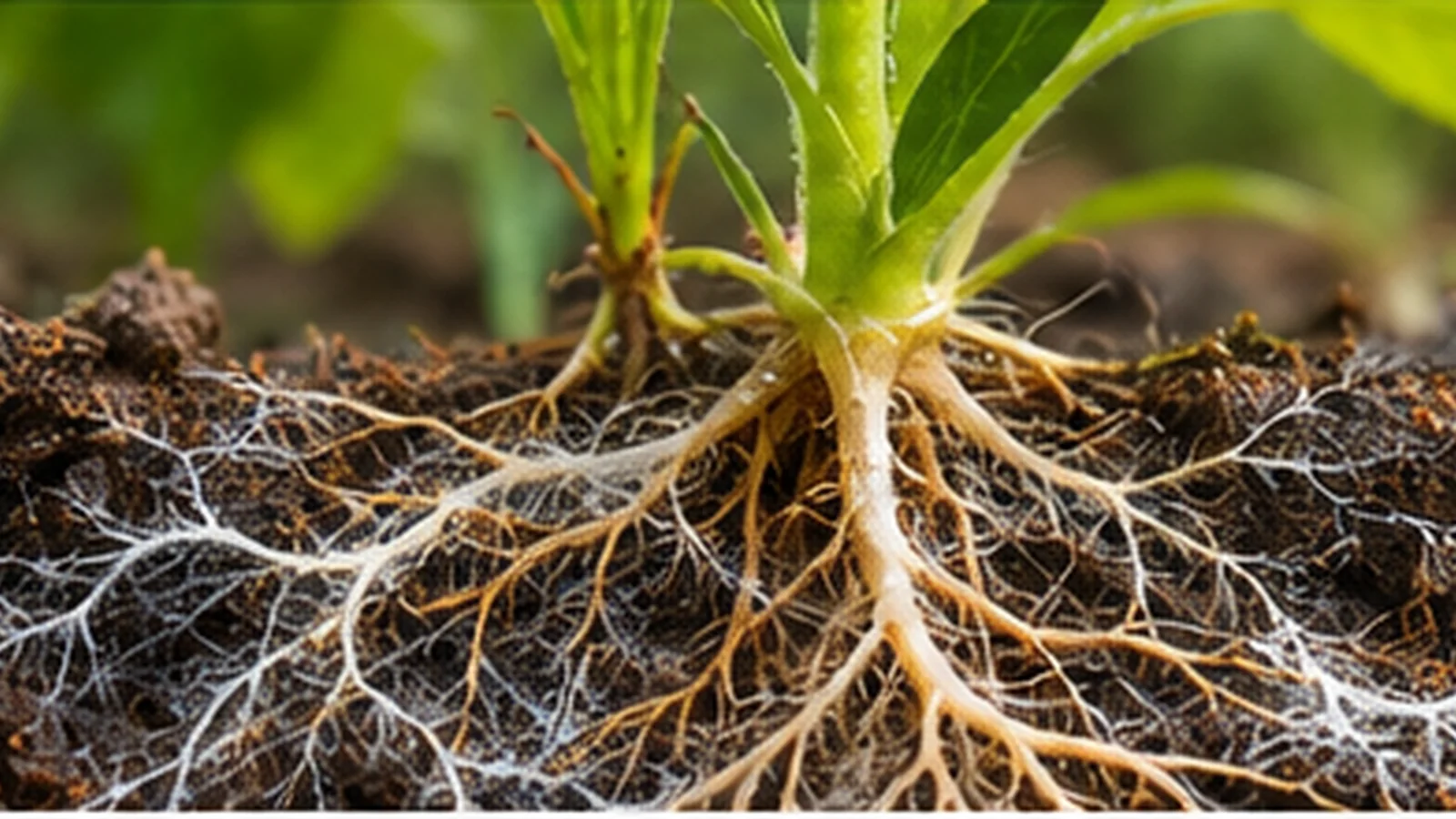
At its simplest, a mycorrhiza is not merely a fungus beside a root but a living interface constructed by both partners. Fungal tissue occupies or surrounds particular root tissues, while external hyphae spread through soil beyond the zone contacted by the root surface itself. In return for access to carbon fixed by the plant, the fungal partner can deliver resources acquired from soil. A global synthesis by Brundrett and Tedersoo (2018) classified 72% of vascular plant species as arbuscular-mycorrhizal, showing how widespread this strategy is among land plants.
Different fungal lineages solve the exchange problem with different anatomy. Arbuscular fungi form intracellular exchange organs inside root cortical cells, whereas [ectomycorrhizal fungi](/plants/boletus-pinetorum-fennoscandia-mycology-plants) cloak fine roots and develop a Hartig net between cells. Parniske (2008) described the signalling and cellular accommodation required for arbuscular entry, while Genre et al. (2020) showed that the major mycorrhizal modes arose along separate evolutionary paths. The word mycorrhiza therefore names a functional partnership rather than one fungal lineage or one universal root structure.
Once colonised, a root can use two acquisition routes at the same time: its own transport system and the fungal network. Because hyphae are much thinner than roots, they sample soil at a finer spatial scale and enter pores that a root cannot occupy. The plant continues to regulate direct uptake, so fungal delivery may complement, replace part of, or redistribute existing nutrient capture rather than simply add to it. This helps explain why a major change in nutrient pathway need not produce an equally large change in shoot biomass.
Carbon and nutrient exchange at the root-fungus interface
The mycorrhizal exchange depends on resources moving in both directions. Plants allocate photosynthetically derived carbon to their fungal partners, while fungal networks acquire mineral nutrients from soil and transfer them towards the root. The balance of these flows can change with nutrient demand and partner performance.
Host carbon finances the fungal network
Carbon reaches the fungus only after the host has fixed it by photosynthesis and converted it into compounds that can be allocated below ground. In arbuscular symbioses, exchange occurs across a tightly organised interface where plant and fungal membranes remain distinct, allowing each partner to regulate transport. Smith and Smith (2011) reviewed how this arrangement supports movement in both directions, with carbon-based compounds moving towards the fungus and mineral nutrients towards the plant. Shi et al. (2023) placed the same interface within a wider system of transporters and signals that adjusts symbiotic activity to the physiological state of both partners.
Kiers et al. (2011) tested whether investment changes according to what each partner receives. When phosphorus delivery differed among fungal partners, plants directed more carbohydrate towards the better suppliers; fungi, in turn, released more phosphorus to roots providing more carbon. The experiment supports partner-sensitive allocation rather than a one-way flow of resources. It does not imply a universal exchange rate, because field roots encounter many fungi while nutrient supply and plant demand change over time.
Fungal routes for phosphorus and nitrogen
Phosphate gives one of the clearest examples of why fungal reach matters. Uptake by a root can create a depleted zone close to its surface, while external hyphae continue into surrounding soil and collect phosphorus outside that zone. Smith and Smith (2011) noted that a substantial mycorrhizal phosphorus pathway may operate even when whole-plant phosphorus or growth changes little, because direct root uptake can decline as fungal uptake rises. Measuring only final biomass can therefore miss a major shift in the route by which phosphorus entered the plant.
Nitrogen transfer is more variable, but it is also biologically regulated. In a simplified root-organ system, Fellbaum et al. (2012) increased carbon availability on the host side and recorded roughly twice as much labelled nitrogen moving to mycorrhizal roots; providing acetate directly to external hyphae did not reproduce that response. The result links fungal nitrogen delivery to carbon delivered through the symbiosis rather than to carbon availability in general. Because the work used culture instead of intact soil, it demonstrates a mechanism but does not specify the share of a field-grown plant's nitrogen budget that comes through fungal pathways.
The partnership changes the route through which a root acquires resources. Fungal foraging and plant carbon allocation are coupled, but the size of the return depends on the conditions surrounding both partners.
Major mycorrhizal types and their root structures
Mycorrhizal categories are distinguished by both fungal ancestry and the architecture built where fungus and root meet. Brundrett and Tedersoo (2018) quantified their broad distribution among vascular plants, whereas Genre et al. (2020) compared the cell biology and evolutionary origins of the major forms. The table summarises these categories as host-association states rather than as estimates of fungal abundance in a particular patch of soil.
Association | Root interface | Typical hosts | Estimated share of vascular plants |
Arbuscular | Arbuscules or intracellular coils in root cortex | Many herbs, grasses and crops | 72% |
Ectomycorrhizal | Fungal mantle and intercellular Hartig net | Many forest trees | 2.0% |
Ericoid | Intracellular fungal coils in fine roots | Ericaceae and related hosts | 1.5% |
Orchid | Intracellular pelotons in orchid tissues | Orchids | 10% |
Non-mycorrhizal or inconsistent | No consistent mycorrhizal interface | Specialist lineages and habitats | 8% non-mycorrhizal; 7% inconsistent NM-AM |
The percentages refer to plant species assigned to each association at a global scale. They should not be read as the fraction of fungal biomass, colonised roots or mycelium present in any local community.
Arbuscular mycorrhizae occur across a large share of herbs, grasses and crop species, making them the most widespread host category in the global estimate. Ectomycorrhizae involve fewer vascular plant species but are disproportionately important in many tree-dominated ecosystems, where their mycelia participate in nutrient turnover. Ericoid fungi are associated with heaths and related plants that often occupy acidic, nutrient-poor soils, while orchids rely especially strongly on fungal partners during germination because their seeds contain very little stored reserve. These contrasts show why structural type and host ecology matter when interpreting any claimed mycorrhizal effect.
How fungal networks change nutrient and water uptake
Mycorrhizal networks can change how plants acquire resources by extending beyond the soil volume directly explored by roots. Their effects on mineral nutrition are well documented, while the contribution of direct fungal water transport requires a more careful distinction from indirect changes in plant growth and physiology.
Fine hyphae explore soil beyond the root surface
A mycorrhizal network changes the geometry of soil exploration. Fine hyphae extend beyond the immediate rhizosphere, contact microsites inaccessible to thicker roots, and can intercept slowly mobile ions such as phosphate before those ions reach the root surface. Van der Heijden et al. (2015) connected this foraging role with ecosystem-level nutrient cycling, while Shi et al. (2023) described the molecular transport and signalling that couple uptake outside the root to transfer at the symbiotic interface. The result is not simply more root surface, but a second acquisition system with its own physiology and spatial reach.
Evidence from fields shows both the potential and the variability of that system. Pellegrino et al. (2015) combined 38 wheat field studies comprising 333 observations and reported, on average, greater uptake of phosphorus, nitrogen and zinc together with a 20% increase in grain yield after arbuscular mycorrhizal inoculation. Yield tended to rise with root colonisation, but other growth traits did not respond in the same way. [Soil organic matter](/plants/humic-substances-plant-biostimulants-growing-crops-plants), pH, total nitrogen, available phosphorus, climate and fungal identity all helped explain the spread of results, so the pooled mean should not be treated as a prediction for every field or plant genotype.
Tracing water through a fungal pathway
Püschel et al. (2020) investigated direct water transfer through mycorrhizal hyphae using a greenhouse experiment with Medicago truncatula and the fungus Rhizophagus irregularis. The researchers used two-compartment containers, with labelled water placed in a separate compartment. A root-excluding mesh allowed fungal hyphae, but not plant roots, to access that water source. Deuterium measurements showed more than twice as much labelled water uptake through the hyphal-access treatment compared with non-mycorrhizal plants. However, the amount transported through fungal hyphae remained small relative to total plant transpiration. The findings therefore demonstrate that direct hyphal water transfer can occur without establishing it as the dominant water supply route for plants under field conditions.
Changes in plant water status therefore cannot automatically be attributed to direct fungal transport. Mycorrhizae may simultaneously alter nutrition, root architecture, stomatal behaviour and soil aggregation, each of which can affect how a plant acquires or loses water. Better phosphorus status can itself change growth and transpiration, further complicating interpretation of whole-plant measurements. The cautious conclusion is that the symbiosis can modify water relations through several routes, with direct hyphal transfer being only one of them.
Why plant responses differ between soils and partners
A mycorrhizal association does not produce the same benefit in every environment. Its outcome depends on the resources available in soil, the needs of the host plant and the abilities of the fungal partner. These differences help explain why controlled experiments and field studies sometimes report contrasting growth responses.
Host, fungus and nutrient limitation shape the result
Calling mycorrhizae a mutualism describes a common outcome rather than a guarantee for every pairing. In the meta-analysis by Hoeksema et al. (2010), plant response shifted with host functional group, fungal type and nutrient conditions, and nitrogen fertilisation was among the strongest predictors. The analysed data showed more positive responses in non-nitrogen-fixing forbs, woody plants and C4 grasses than in some other groups, while phosphorus limitation generally favoured stronger benefits than nitrogen limitation. These patterns indicate that the value of a fungal partner depends on what the host lacks as well as on the identities of both organisms.
The trade-off can be viewed as a carbon cost set against access to scarce resources. A plant that already obtains enough phosphorus through its own roots may gain little from supporting extensive fungal tissue, whereas the same partner can be more valuable when phosphorus is difficult to reach. Colonisation percentage alone therefore says little about net benefit unless nutrient limitation and partner performance are also known. Fungi occupying similar amounts of root may still differ in external foraging, nutrient transfer and carbon demand.
Controlled mechanisms versus field outcomes
Reductionist experiments are useful precisely because they remove some of the complexity found in soil. Kiers et al. (2011) isolated reciprocal allocation of carbon and phosphorus, and Fellbaum et al. (2012) isolated the dependence of nitrogen transfer on host-derived carbon. Together, those studies show that exchange can be actively adjusted by the partners rather than simply increasing with the amount of fungus present. An intact soil adds competing fungi, neighbouring roots, decomposers, pathogens and patchy nutrient supplies, any of which may change the balance recorded under controlled conditions.
The same caution is needed when studies use different endpoints. Hoeksema et al. (2010) documented broad context dependence, while Pellegrino et al. (2015) found positive average effects in wheat alongside substantial variation among environments. Root colonisation, nutrient flux, tissue concentration, biomass and yield measure different stages of the plant-fungus relationship and do not have to change in parallel. A colonised root is therefore evidence that an association exists, not proof that a predetermined nutritional or growth benefit has occurred. Other soil treatments need to be evaluated separately from mycorrhizal inoculation. For example, [research on vermicompost and Liatris spicata growth and flowering](/plants/vermicompost-liatris-spicata-growth-flowering-plants) examines a different intervention, so its findings should not be treated as direct evidence of mycorrhizal nutrient transfer.
What research establishes and where uncertainty remains
Some conclusions no longer depend on one study or one experimental system. Specialised plant-fungal interfaces are well documented, plants supply carbon to their fungal partners, and fungal pathways can move phosphorus, nitrogen and water towards colonised roots. Smith and Smith (2011), Kiers et al. (2011) and Püschel et al. (2020) approached these processes with different methods, from physiological synthesis to resource-allocation experiments and isotope tracing. Their combined evidence establishes mycorrhizae as active exchange systems rather than incidental fungal growth on roots.
What cannot yet be predicted reliably is the magnitude of the return in any single plant-soil combination. The meta-analyses of Hoeksema et al. (2010) and Pellegrino et al. (2015) show that host identity, fungal identity, nutrient status and environment can shift growth, yield and nutrient responses. Time also changes the balance because colonisation, root expansion and soil depletion develop together across a season. A mycorrhizal pathway may therefore be physiologically important even when final shoot mass changes very little.
A useful summary is that mycorrhizae broaden the plant's resource-acquisition system without functioning as a universal growth enhancer. Van der Heijden et al. (2015) and Shi et al. (2023) place these partnerships inside [larger below-ground networks](/plants/state-of-the-worlds-fungi-2018-plants) that influence carbon movement, nutrient cycling and interactions among organisms. Connectivity within such networks does not by itself show that every linked plant receives a large transfer or a net benefit. Current research can identify many transporters, signals and partner-choice processes, but forecasting their combined effect across natural and agricultural ecosystems remains difficult.
Frequently asked questions
Do all plants form mycorrhizae?
No. Brundrett and Tedersoo (2018) estimated that most vascular plant species are mycorrhizal, but a minority are consistently non-mycorrhizal and some show mixed states. Non-mycorrhizal lineages are especially common among plants with specialised nutrient strategies or habitats, so the association is widespread rather than universal.
Are mycorrhizal fungi the same as nitrogen-fixing root nodules?
No. Mycorrhizae are plant-fungal associations that mainly expand access to soil nutrients such as phosphorus and, in some systems, nitrogen. Nitrogen-fixing nodules are specialised plant-bacterial structures in which microbes convert atmospheric nitrogen into biologically usable forms. A plant can interact with both kinds of symbiont, but the processes are different.
Can one mycorrhizal fungus connect more than one plant?
Yes, fungal mycelia can link roots from more than one plant, creating common mycorrhizal networks. Reviews such as van der Heijden et al. (2015) describe these networks as multi-species systems whose structure depends on mycorrhizal type and partner identity. Connection does not automatically mean that large amounts of carbon or nutrients move between every linked plant.
Do mycorrhizae always make plants grow faster?
No. Nutrient transfer through a mycorrhizal pathway can occur without a positive growth response. Hoeksema et al. (2010) found that plant responses vary with host type, fungal type, soil fertility and other conditions. The plant also pays a carbon cost, so the net effect depends on whether the fungal contribution is valuable under those conditions.
Can mycorrhizal fungi supply water directly to plants?
Yes, direct transfer through fungal hyphae has been measured. Püschel et al. (2020) traced labelled water from a root-excluding soil compartment into mycorrhizal plants and found increased uptake through hyphal access. In that experiment, however, the amount moved by hyphae was small compared with total plant transpiration, so the effect should not be overstated.
Sources
- Parniske M. Arbuscular mycorrhiza: the mother of plant root endosymbioses. Nature Reviews Microbiology. 2008;6:763-775. doi: 10.1038/nrmicro1987.
- Brundrett MC, Tedersoo L. Evolutionary history of mycorrhizal symbioses and global host plant diversity. New Phytologist. 2018;220(4):1108-1115. doi: 10.1111/nph.14976.
- Genre A, Lanfranco L, Perotto S, Bonfante P. Unique and common traits in mycorrhizal symbioses. Nature Reviews Microbiology. 2020;18(11):649-660. doi: 10.1038/s41579-020-0402-3.
- Shi J, Wang X, Wang E. Mycorrhizal Symbiosis in Plant Growth and Stress Adaptation: From Genes to Ecosystems. Annual Review of Plant Biology. 2023;74:569-607. doi: 10.1146/annurev-arplant-061722-090342.
- Smith SE, Smith FA. Roles of arbuscular mycorrhizas in plant nutrition and growth: new paradigms from cellular to ecosystem scales. Annual Review of Plant Biology. 2011;62:227-250. doi: 10.1146/annurev-arplant-042110-103846.
- Kiers ET, Duhamel M, Beesetty Y, et al. Reciprocal rewards stabilize cooperation in the mycorrhizal symbiosis. Science. 2011;333(6044):880-882. doi: 10.1126/science.1208473.
- Fellbaum CR, Gachomo EW, Beesetty Y, et al. Carbon availability triggers fungal nitrogen uptake and transport in arbuscular mycorrhizal symbiosis. Proceedings of the National Academy of Sciences of the United States of America. 2012;109(7):2666-2671. doi: 10.1073/pnas.1118650109.
- Hoeksema JD, Chaudhary VB, Gehring CA, et al. A meta-analysis of context-dependency in plant response to inoculation with mycorrhizal fungi. Ecology Letters. 2010;13(3):394-407. doi: 10.1111/j.1461-0248.2009.01430.x.
- Püschel D, Bitterlich M, Rydlová J, Jansa J. Facilitation of plant water uptake by an arbuscular mycorrhizal fungus: a Gordian knot of roots and hyphae. Mycorrhiza. 2020;30(2-3):299-313. doi: 10.1007/s00572-020-00949-9.
- Pellegrino E, Öpik M, Bonari E, Ercoli L. Responses of wheat to arbuscular mycorrhizal fungi: A meta-analysis of field studies from 1975 to 2013. Soil Biology and Biochemistry. 2015;84:210-217. doi: 10.1016/j.soilbio.2015.02.020.
- van der Heijden MGA, Martin FM, Selosse MA, Sanders IR. Mycorrhizal ecology and evolution: the past, the present, and the future. New Phytologist. 2015;205(4):1406-1423. doi: 10.1111/nph.13288.

Lucas Merritt — author
Lucas writes animal science and zoology explainers. His editorial focus includes animal ecology, terrestrial and aquatic invertebrates, molluscs, invasive species, animal behaviour, species distributions and interactions between animals, agriculture and natura...
Related
Boletus pinetorum: A Fennoscandian Porcini Taxonomy Case
State of the World’s Fungi 2018: what the report found
Humic Substances as Plant Biostimulants: What They Can Do

How vermicompost affects growth and flowering in Liatris spicata
Premna latifolia Leaf Extracts and Laboratory Activity Against Cariogenic Bacteria

New Zealand Ferns and Allied Plants: A 1989 Field Guide
Koshihikari rice: marker-assisted heading-date gene transfer