












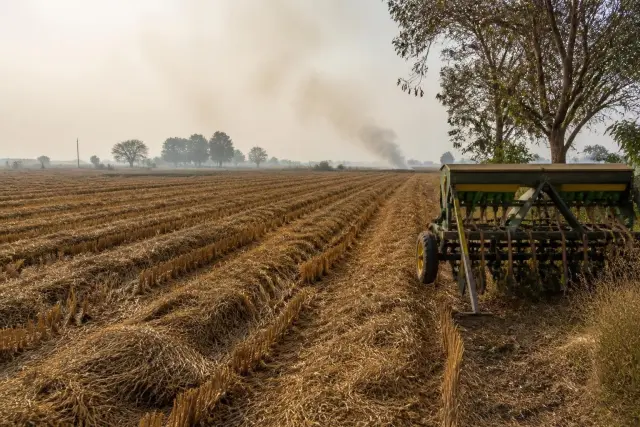



Powdery mildew and why this fungus spreads across plant leaves
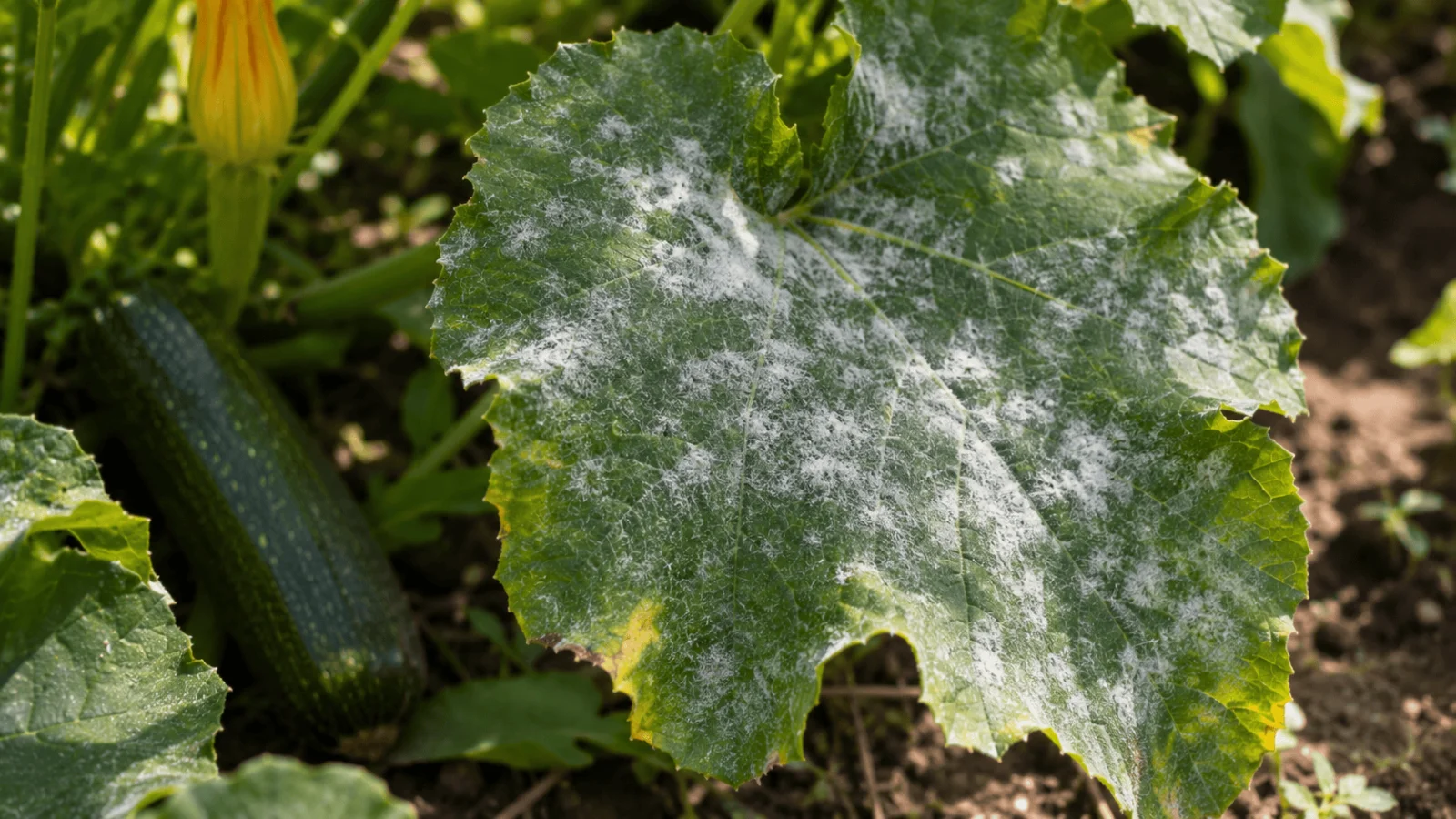
Powdery mildew spreads readily across plant leaves because wind-borne asexual spores can infect dry foliage and produce repeated infection cycles. The disease is caused by fungi in the family Erysiphaceae. Its white, flour-like coating consists of fungal threads, spore-producing structures and asexual spores, which may form singly or in chains depending on the species.
This explainer sets out how the fungus lives and spreads, which plants it attacks and what controlled trials have measured for milk, bicarbonate and other alternatives to conventional sprays. It draws on taxonomic reviews, a 2024 survey of host records, laboratory work on spore germination and field and greenhouse experiments on courgette, pumpkin and grapevine.
What is powdery mildew and what causes it?
The name covers several hundred [fungal species](/plants/state-of-the-worlds-fungi-2018-plants) rather than a single disease. A 2017 review of resistance research put the total above 650 species affecting around 10,000 plant species (Kusch and Panstruga, 2017), and a 2024 survey of host records counted more than 10,000 host taxa (Bradshaw et al., 2024). These fungi belong to the family Erysiphaceae within the Leotiomycetes, a placement that reflects major changes in how the group has been classified (Glawe, 2008).
What unites them is a way of life. Powdery mildews are obligate biotrophs: they grow only on living plant tissue and cannot be raised on an ordinary laboratory medium. Most powdery mildew species have epiphytic mycelia that grow mainly on the plant surface.
In these species, threads called hyphae run across the leaf surface, and at intervals they form haustoria in epidermal cells to draw nutrients from living tissue. This dependence on living plant tissue distinguishes powdery mildews from fungi associated with stored-food contamination. Research on mycotoxins in dried raisins in Egypt concerns a different fungal hazard rather than infection of living leaves.
The genome explains why this lifestyle is a one-way street. When the barley powdery mildew genome was sequenced, Spanu and colleagues (2010) found it had expanded with mobile genetic elements while losing many genes for primary and secondary metabolism that free-living fungi keep. The loss of these metabolic genes is consistent with the fungus's dependence on living host tissue, although the full molecular basis of its obligate biotrophic lifestyle remains incompletely understood (Spanu et al., 2010).
Because a dead host is useless to an obligate parasite, powdery mildew rarely kills plants outright. The damage is slower. Colonised leaves photosynthesise less, may yellow, curl or drop early, and fruit can ripen poorly or scar. On crops with large leaf canopies, such as squash, that steady loss of working leaf area is what eats into yield.
How does powdery mildew spread from leaf to leaf?
The visible white coating consists of fungal hyphae, conidiophores and asexual spores called conidia. Depending on the species, conidia are produced singly or in chains on specialised stalks above the leaf surface. They detach easily and travel on air currents, so one colonised leaf can seed neighbouring plants across a greenhouse or field. Each spore that lands well can start a new colony with its own conidia, so the disease builds in overlapping cycles through the season rather than in a single wave.
Many species also have a sexual stage. Small dark fruiting bodies, chasmothecia, form on old leaves and stems and can carry the fungus through winter. The importance of this stage varies.
For the main cucurbit powdery mildew fungus, Podosphaera xanthii, chasmothecia have rarely or never been seen in several major growing regions, but the prevalence and epidemiological importance of the sexual stage in these regions remain largely unknown (Pérez-García et al., 2009). Glawe (2008) noted that life cycles across the group are surprisingly variable, with some species known only in sexual form and others only in asexual form.
Why dry weather can favour the fungus
Most fungal leaf diseases need a film of water on the leaf before their spores can germinate. Powdery mildews break that rule. A 2022 review of the abiotic factors behind their development concluded that free moisture inhibits dispersal and germination of conidia, as well as hyphal growth, in most species, while high relative humidity still favours later stages of development (Mieslerová et al., 2022). The same review gave 13–30 °C as the general optimum range, with spore production more sensitive to temperature than germination.
Laboratory evidence shows the picture is not uniform. When Sivapalan (1993) tested conidia of powdery mildews from 50 host plants in 25 families, their ability to germinate in water differed widely between species. Some tolerate wetness far better than others, which is one reason general rules about rain and irrigation hold only loosely.
Light, shelter and still air
Light acts on the fungus mostly through the host, but a normal day and night cycle supports full development, while continuous light reduces infection (Mieslerová et al., 2022). The review indicates that photoperiod can influence disease development, but it does not establish that shaded or otherwise altered light conditions generally favour powdery mildew (Mieslerová et al., 2022).
Which plants get powdery mildew?
Few [plant diseases](/plants?sub=plant-diseases) reach so widely. In the most detailed recent count, Bradshaw and colleagues (2024) revised the names behind the United States National Fungus Collections host dataset. Powdery mildews accounted for over 72,000 reports, about 8.7% of all fungus and host records in that dataset.
After the taxonomy was updated, the fungi were recorded on roughly 10,125 host taxa in 205 flowering plant families and 1,970 genera, from 200 countries on six continents. The authors estimated that about 2.9% of all described flowering plant species are known hosts, and that 1,866 host taxa had been added since the previous major compilation in 1986.
Powdery mildews affect a wide range of economically important crops (Glawe, 2008). Cucurbits are among the hardest hit: of more than 200 known cucurbit diseases, powdery mildew is probably the most common and recognisable, and P. xanthii is regarded as one of the most important limiting factors for cucurbit production worldwide (Pérez-García et al., 2009). Grapevine, cereals such as wheat and barley, fruit trees, strawberries and many ornamentals each carry their own powdery mildew species.
Breadth across the group does not mean every species attacks every plant. Many powdery mildews are tied to one host genus or a few related ones, so the fungus on a rose is generally not the one found on a courgette. Glawe (2008) also pointed out that the geographic ranges of some species appear to be expanding quickly, while species diversity across large regions, including North America, remains poorly documented.
Other crop diseases spread through very different mechanisms. For example, [maize chlorotic mottle virus](/plants/maize-chlorotic-mottle-virus-distribution-plant-diseases-plants) is a viral pathogen whose transmission involves insect vectors, unlike the airborne conidia responsible for powdery mildew spread.
Does milk or baking soda work against powdery mildew?
Interest in household substances grew from a practical problem: growers, especially in [organic systems](/agriculture/organic-vs-conventional-farming-economics-ecology-agriculture), needed alternatives to conventional fungicides. Three lines of research stand out, and their results are narrower and more specific than the claims that circulate in gardening advice.
Bicarbonate and oil in cucurbit trials
In the study “Effects of bicarbonates and film-forming polymers on cucurbit foliar diseases” (1992), Ziv and Zitter compared sodium, potassium and ammonium bicarbonates, alone and combined with a horticultural spray oil, on pumpkin, cucumber and muskmelon. On pumpkin, sodium or potassium bicarbonate combined with the oil, each at 0.5% in the trial, suppressed powdery mildew better than either material alone, while ammonium bicarbonate was ineffective against the disease. The oil also performed consistently better than six film-forming products tested in the same work.
The study recorded harm as well as benefit. Potassium bicarbonate injured mildew-infected pumpkin leaves at concentrations above 0.5%, sodium bicarbonate caused minimal injury and ammonium bicarbonate caused none (Ziv and Zitter, 1992). For the other leaf diseases in the study, the bicarbonate and oil mixtures were more effective when applied before inoculation than after, a pattern consistent with treatments that act on spores and surface growth rather than on tissue already colonised.
Milk on courgette in the greenhouse
In the study “Effectiveness of cow’s milk against zucchini squash powdery mildew in greenhouse conditions” (1999), Bettiol ran five greenhouse experiments on courgette. In the trials, plants were sprayed with fresh cow’s milk diluted to between 5% and 50%, once or twice a week, alongside two conventional fungicides and a water control. Disease severity was scored weekly as the percentage of each infected leaf covered by the fungus.
Across all five experiments, infected leaf area fell as milk concentration rose, and the higher concentrations outperformed the conventional fungicides tested (Bettiol, 1999). The work covered one crop, one pathogen and greenhouse conditions, so it established that an effect exists rather than where its limits lie.
Milk and whey in vineyards
Field evidence came later and from grapevine. In vineyard trials in South Australia, Crisp, Wicks, Bruer and Scott (2006) compared milk, whey and potassium bicarbonate programmes with sulphur. In those trials, eight applications at 10–14 day intervals of a 1:10 milk dilution, whey, or rotations of bicarbonate with oil and whey brought disease severity to levels not significantly different from sulphur. Control weakened, sometimes to commercially unacceptable levels, where cultivars were highly susceptible and spray coverage was poor.
A companion study looked at how milk might act. Components of milk generated oxygen radicals in natural light, milk and whey collapsed fungal hyphae and damaged conidia within 24 hours, and lactoferrin, an antimicrobial milk protein, ruptured conidia (Crisp, Wicks, Troup and Scott, 2006). These findings support the hypothesis that milk and whey can act directly on the fungus through the production of reactive oxygen species and the antimicrobial activity of lactoferrin. However, the experiments did not establish that these are the only mechanisms involved (Crisp, Wicks, Troup and Scott, 2006).
Study | Crop and setting | What was tested | Main result |
Ziv and Zitter, 1992 | Pumpkin, cucumber, muskmelon | Bicarbonates with and without spray oil | Sodium or potassium bicarbonate plus oil beat either alone; ammonium bicarbonate ineffective on mildew |
Bettiol, 1999 | Courgette, five greenhouse experiments | Fresh milk at 5–50%, once or twice weekly | Infected leaf area fell with rising concentration; higher doses outperformed two fungicides |
Crisp, Wicks, Bruer and Scott, 2006 | Grapevine, commercial vineyards | Milk, whey, bicarbonate programmes | Severity comparable to sulphur; weaker on susceptible cultivars with poor coverage |
Wong, Gadoury and Mahaffee, 2024 | Grapevine, small plots in Oregon | Night-time UV-C light | Foliar incidence reduced; effect on fruit inconsistent between years |
Why is powdery mildew so hard to get rid of?
Several major powdery mildew pathogens have a high risk of fungicide-resistance development because they undergo repeated disease cycles, disperse efficiently by conidia and are repeatedly exposed to site-specific fungicides (Vielba-Fernández et al., 2020). McGrath (2001) described cucurbit powdery mildew as a high-risk pathogen for fungicide resistance, because the systemic products used against it act on specific sites in fungal metabolism and P. xanthii has a high potential to evolve around them.
Field data from New York show how quickly that can happen. In pumpkin trials, the share of strains resistant to the fungicide triadimefon rose from 3% to 71% within 20 days of the first application in 1993, and in 1995, when 80% of the population was resistant before treatment, the product failed (McGrath and Shishkoff, 2001). A 2020 review across powdery mildew species reported falling efficacy of the main modern fungicide classes and noted that some of the most damaging species developed resistance to several chemical classes within a few years (Vielba-Fernández et al., 2020).
Biology adds to the difficulty. Colonies in poorly covered parts of dense canopies can be difficult to reach, making spray coverage important. The vineyard work on milk and whey ran into the same constraint, with results that depended on coverage (Crisp, Wicks, Bruer and Scott, 2006). For anyone hoping to get rid of the disease completely, this is the central point from the research: the trials measured reductions in disease severity rather than eradication of an established infection.
A reduction in powdery mildew severity is not the same as complete eradication of an established infection.
Can resistant plants and new methods replace sprays?
For some crops, mlo-based resistance can provide durable, broad-spectrum resistance to powdery mildew (Kusch and Panstruga, 2017). Loss-of-function mutations in a gene called Mlo were found to give barley broad resistance to powdery mildew, and mlo-based resistance has a long history of use in European barley breeding (Kusch and Panstruga, 2017). Natural mlo resistance has also been identified in Ethiopian barley landraces (Kusch and Panstruga, 2017). Unlike typical resistance genes that work against particular races of a pathogen, mlo resistance stops the fungus as it tries to penetrate the leaf cell and holds against the great majority of strains.
The same type of resistance has since been found or generated in tomato, pea, cucumber, grapevine, apple and bread wheat, among other species. The review also flagged a cost: mlo mutations can bring side effects that reduce yield or quality, so each crop needs its own balance between protection and performance (Kusch and Panstruga, 2017). Genetic resistance should also be distinguished from research into plant biostimulants. Studies discussed in [humic substances as plant biostimulants](/plants/humic-substances-plant-biostimulants-growing-crops-plants) examine plant physiological responses, but those findings do not establish a universal treatment for powdery mildew.
Ultraviolet light at night
A newer approach exploits the fungus’s exposed position on the leaf. Germicidal UV-C light, applied at night when the fungus is less able to repair damage to its DNA, has suppressed powdery mildew in several crops. In small-plot vineyard trials in Oregon from 2020 to 2023, Wong, Gadoury and Mahaffee (2024) tested UV-C at 48–96 J/m² once or twice a week.
Foliar powdery mildew incidence fell significantly compared with untreated vines, suppression on fruit was less consistent between years, and fruit chemistry was barely affected. The authors concluded that lower UV-C doses warranted larger-scale evaluation under Western Oregon vineyard conditions.
What is proven about powdery mildew, and what is not
The core biology is well established. Powdery mildews are obligate parasites that feed through haustoria and depend on living hosts, a dependence associated with the loss of certain metabolic genes and pathways despite the expansion of repetitive DNA in their genomes (Glawe, 2008; Spanu et al., 2010). The evidence is also firm on several practical points:
- In most powdery mildew species, free water inhibits the germination and dispersal of asexual spores (conidia), while high relative humidity favours further fungal development. However, free water is required for the release and dispersal of sexual spores (ascospores), so the effects of moisture differ between stages of the fungal life cycle (Mieslerová et al., 2022).
- The host range is vast, covering about 2.9% of described flowering plant species, and still growing in the records (Bradshaw et al., 2024).
- Fungicide resistance can build within a single season (McGrath and Shishkoff, 2001).
- Separate trials found lower powdery mildew severity with milk or whey, and with bicarbonate-and-oil treatments, on cucurbits or grapevine (Ziv and Zitter, 1992; Bettiol, 1999; Crisp, Wicks, Bruer and Scott, 2006).
Powdery mildew succeeds where many leaf diseases stall, on dry foliage in warm weather, because its spores do not need a film of water to start an infection. In most species, free moisture inhibits dispersal and germination of conidia, while high relative humidity still favours later stages of development (Mieslerová et al., 2022).
Several questions remain open. In the grapevine field trials, control was weaker on highly susceptible cultivars when spray coverage was compromised (Crisp, Wicks, Bruer and Scott, 2006). The courgette trials used fresh milk, so how skimmed, pasteurised or powdered milk compares is not settled by that work.
Experiments with milk components support the hypothesis that free-radical production and lactoferrin contribute to milk’s effect on powdery mildew, but the full mechanism is not mapped (Crisp, Wicks, Troup and Scott, 2006). Night-time UV-C reduced powdery mildew in the Oregon small-plot trials, while larger-scale evaluation of lower doses was still recommended for that region (Wong, Gadoury and Mahaffee, 2024).
For a gardener or grower looking at a white-dusted leaf, the research gives a clear frame. Powdery mildew fungi often thrive where humid air surrounds relatively dry leaves; several major species can develop resistance rapidly to site-specific fungicides; resistant varieties exist for several major crops; and the household treatments studied here reduced disease in trials without eliminating it.
Frequently asked questions
Is powdery mildew harmful to humans?
Powdery mildews are obligate parasites of living plants and depend on host tissue for nutrients they cannot make themselves (Spanu et al., 2010). Many species are host-specialised, although host range varies across the group. The studies reviewed here concern plant hosts and do not describe powdery mildew fungi as pathogens of people or animals.
Does powdery mildew survive in the soil?
Powdery mildew fungi grow on living plants rather than freely in soil. Some species form dark overwintering structures called chasmothecia on old leaves and stems. These structures may persist in fallen plant debris on the soil surface (Glawe, 2008). Where the sexual stage is rare, the fungus can persist on infected living plants.
Can a plant recover from powdery mildew?
Because powdery mildew depends on living host tissue, it seldom kills plants outright (Glawe, 2008). Colonised leaves may yellow, lose photosynthetic area or drop early, while later growth can remain healthier if conditions become less favourable. In Bettiol's greenhouse trials, milk treatments reduced the percentage of leaf area affected by powdery mildew (Bettiol, 1999).
Is powdery mildew the same as downy mildew?
No. Powdery mildew is caused by true fungi in the family Erysiphaceae. Most species grow mainly on the leaf surface and are inhibited by free water, although responses vary among species (Mieslerová et al., 2022; Sivapalan, 1993). Downy mildews are oomycetes that grow inside leaves and generally require wet conditions to infect.
Sources
- Glawe, D.A. The powdery mildews: a review of the world’s most familiar (yet poorly known) plant pathogens. Annual Review of Phytopathology, 2008, 46, 27–51. DOI 10.1146/annurev.phyto.46.081407.104740
- Bradshaw, M.J., Boufford, D., Braun, U., Moparthi, S., Jellings, K., Maust, A., Pandey, B., Slack, S., Pfister, D.H. An in-depth evaluation of powdery mildew hosts reveals one of the world’s most common and widespread groups of fungal plant pathogens. Plant Disease, 2024, 108(3), 576–581. DOI 10.1094/PDIS-07-23-1471-RE
- Spanu, P.D. et al. Genome expansion and gene loss in powdery mildew fungi reveal tradeoffs in extreme parasitism. Science, 2010, 330(6010), 1543–1546. DOI 10.1126/science.1194573
- Mieslerová, B., Cook, R.T.A., Wheater, C.P., Lebeda, A. Ecology of powdery mildews: influence of abiotic factors on their development and epidemiology. Critical Reviews in Plant Sciences, 2022, 41(6), 365–390. DOI 10.1080/07352689.2022.2138044
- Sivapalan, A. Effects of water on germination of powdery mildew conidia. Mycological Research, 1993, 97(1), 71–76. DOI 10.1016/S0953-7562(09)81115-5
- Pérez-García, A., Romero, D., Fernández-Ortuño, D., López-Ruiz, F., de Vicente, A., Torés, J.A. The powdery mildew fungus Podosphaera fusca (synonym Podosphaera xanthii), a constant threat to cucurbits. Molecular Plant Pathology, 2009, 10(2), 153–160. DOI 10.1111/j.1364-3703.2008.00527.x
- Ziv, O., Zitter, T.A. Effects of bicarbonates and film-forming polymers on cucurbit foliar diseases. Plant Disease, 1992, 76, 513–517. DOI 10.1094/PD-76-0513
- Bettiol, W. Effectiveness of cow’s milk against zucchini squash powdery mildew (Sphaerotheca fuliginea) in greenhouse conditions. Crop Protection, 1999, 18(8), 489–492. DOI 10.1016/S0261-2194(99)00046-0
- Crisp, P., Wicks, T.J., Bruer, D., Scott, E.S. An evaluation of biological and abiotic controls for grapevine powdery mildew. 2. Vineyard trials. Australian Journal of Grape and Wine Research, 2006, 12(3), 203–211. DOI 10.1111/j.1755-0238.2006.tb00060.x
- Crisp, P., Wicks, T.J., Troup, G., Scott, E.S. Mode of action of milk and whey in the control of grapevine powdery mildew. Australasian Plant Pathology, 2006, 35(5), 487–493. DOI 10.1071/AP06052
- McGrath, M.T. Fungicide resistance in cucurbit powdery mildew: experiences and challenges. Plant Disease, 2001, 85(3), 236–245. DOI 10.1094/PDIS.2001.85.3.236
- McGrath, M.T., Shishkoff, N. Resistance to triadimefon and benomyl: dynamics and impact on managing cucurbit powdery mildew. Plant Disease, 2001, 85(2), 147–154. DOI 10.1094/PDIS.2001.85.2.147
- Vielba-Fernández, A., Polonio, Á., Ruiz-Jiménez, L., de Vicente, A., Pérez-García, A., Fernández-Ortuño, D. Fungicide resistance in powdery mildew fungi. Microorganisms, 2020, 8(9), 1431. DOI 10.3390/microorganisms8091431
- Kusch, S., Panstruga, R. mlo-based resistance: an apparently universal “weapon” to defeat powdery mildew disease. Molecular Plant-Microbe Interactions, 2017, 30(3), 179–189. DOI 10.1094/MPMI-12-16-0255-CR
- Wong, A.T., Gadoury, D.M., Mahaffee, W.F. Evaluation of germicidal UV-C light for suppression of grape powdery mildew and Botrytis bunch rot in Western Oregon. Plant Disease, 2024, 108(9), 2894–2905. DOI 10.1094/PDIS-02-24-0279-RE

Sophie Bennett — author
Sophie writes the health and nutrition explainers. Her editorial focus includes nutrients, dietary patterns, energy metabolism, hydration, supplements, sports nutrition and the interpretation of health research for general readers. She approaches health conten...
Related
State of the World’s Fungi 2018: what the report found
Maize Chlorotic Mottle Virus: Distribution, Spread and Control

Organic vs Conventional Farming: Economics and Ecology
Mycotoxins in Dried Raisins in Egypt: Fungi and Contamination

Humic Substances as Plant Biostimulants: What They Can Do

Nitrogen fixation and how legumes and soil bacteria feed plants

Seed germination and why some seeds fail to sprout