Mainly fruit diet study: biochemical effects in 1971
A small 1971 experiment found no significant change in glucose tolerance during a nut-supplemented, mainly fruit diet. Fasting glucose, insulin, blood lipids and plasma proteins changed differently across groups. These short-term findings do not establish long-term nutritional adequacy or superiority.
The intervention included nuts and avocado, so its effects cannot be attributed to fruit alone.


Evidence last checked 20 Sep 2026 · 4 min
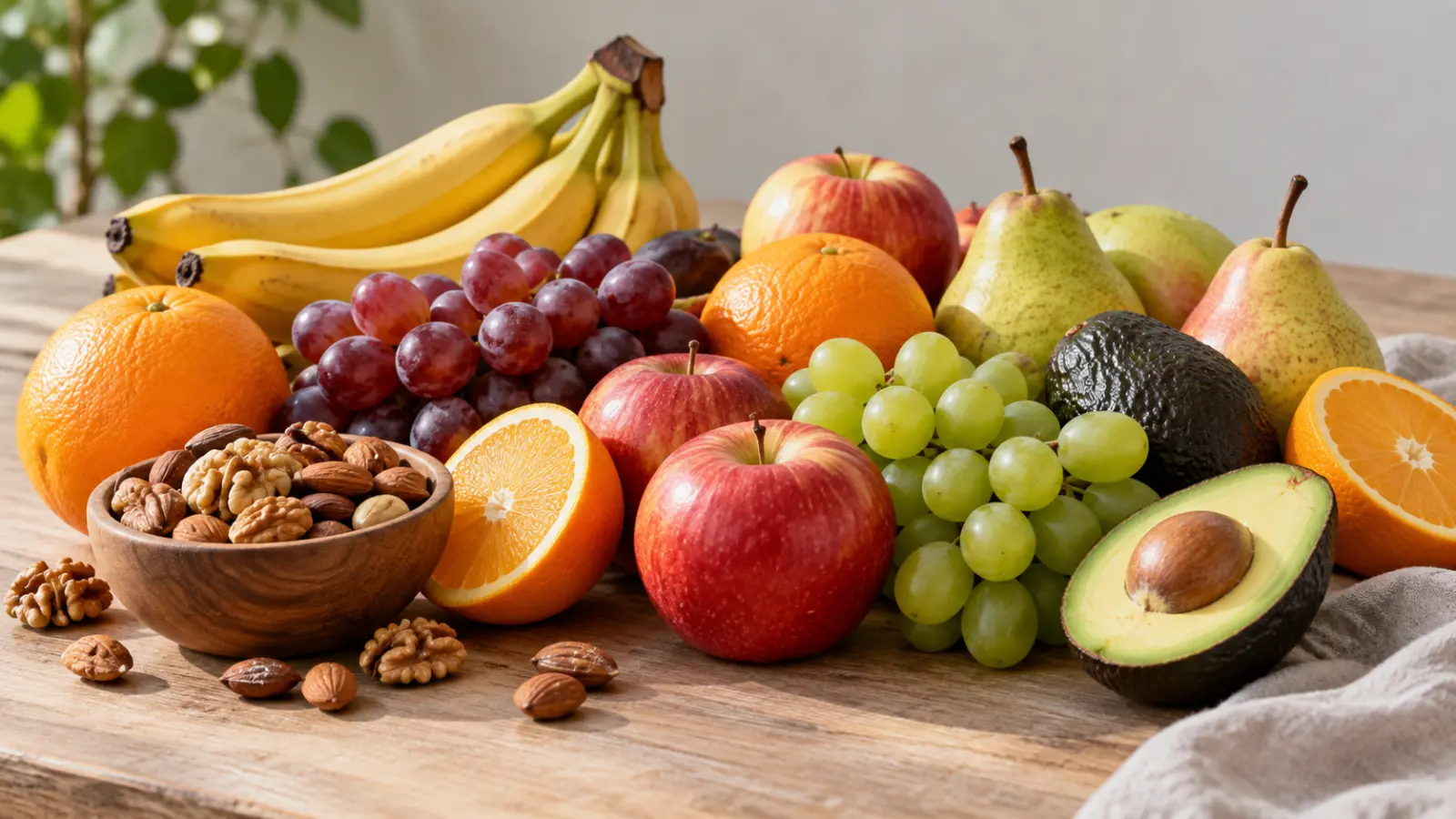
What the 1971 study was trying to measure
Meyer and colleagues investigated whether a mainly fruit diet supplemented with nuts affected glucose handling, insulin secretion, plasma lipids and proteins. Published in the South African Medical Journal, the biochemical paper accompanied a report on physiological and nutritional observations. Historical racial labels distinguished groups with different follow-up schedules but are outdated today.
How the testing was organized
Participants underwent oral glucose testing before and during the intervention. Blood samples were collected fasting and at 30, 60, 90 and 120 minutes after a 50 g glucose load. One group was reassessed after 12 and 24 weeks, the other after 6 and 12 weeks. A woman habitually consuming a similar diet provided an additional comparison rather than a matched control.
Biochemical outcomes
Researchers measured glucose, insulin, cholesterol, triglycerides, phospholipids, β-lipoproteins and plasma proteins. Dietary fat supplied 36.7% and 37.6% of energy in the intervention groups and 45% in the habitual fruit-diet participant. Nuts and avocado therefore made this substantially different from a fruit-only or very-low-fat diet.
Glucose tolerance changed less than some insulin measures
Neither intervention group showed a significant change in glucose tolerance. Fasting glucose increased significantly after 12 or 24 weeks in the group historically described as Bantu but remained unchanged in the white group.
Insulin responses declined significantly in most participants in the first group, whereas the second group showed mixed results. Limited statistical detail restricts interpretation of these differences.
Lipids and plasma proteins showed time-dependent shifts
Total plasma lipids decreased significantly in both groups after 12 weeks and remained lower at 24 weeks in the longer-followed group.
Cholesterol declined significantly at 24 weeks in one group and at 6 weeks in the other, although the latter difference disappeared by 12 weeks. Triglycerides declined initially in the longer-followed group but later tended to increase in four participants as avocado availability changed. Albumin and globulin also shifted, particularly among participants with unusual baseline values.
Measure | What the source reports |
Glucose tolerance | No significant change reported in either intervention group |
Fasting glucose | Significantly higher after 12 or 24 weeks in one group; not significantly changed in the other |
Insulin | Fell significantly in most of the longer-followed group; mixed changes in the other group |
Total plasma lipid | Fell significantly in both groups after 12 weeks |
Cholesterol | Lower at 24 weeks in one group and at 6 weeks in the other; the 12-week difference in the latter was not significant |
Triglycerides | Lower at 12 weeks in one group, with later rebound tendency in four participants; no significant change in the other |
Plasma proteins | Albumin and globulin shifted over time, with patterns differing by baseline status and group |
The findings describe short-term biochemical responses, not evidence of nutritional completeness or clinical superiority..
Why the evidence remains limited
Small samples, differing follow-up schedules and simultaneous dietary changes limit interpretation. The investigators also suggested that hospitalization and inactivity could explain elevated baseline lipids in one group. Biochemical changes alone cannot demonstrate long-term health benefits or safety.
Frequently asked questions
Did the 1971 fruit diet improve glucose tolerance?
No significant improvement in glucose tolerance was reported in either group. Fasting glucose increased in one group, while insulin responses varied. The small samples and limited statistical reporting prevent conclusions about improved glycaemic control. The findings describe biochemical responses to one dietary intervention rather than evidence supporting its general use.
Was the diet made only of fruit?
No. The intervention combined fruit with nuts and substantial avocado consumption. Changes in avocado availability were considered when interpreting triglyceride results. Dietary fat contributed more than one-third of energy in both intervention groups, making the regimen substantially different from an exclusively fruit-based or very-low-fat diet.
Did cholesterol fall during the study?
Cholesterol decreased significantly after 24 weeks in one group and after 6 weeks in the other. However, the second group's reduction was no longer significant at 12 weeks. These inconsistent findings do not establish that the diet reliably lowers cholesterol or produces lasting cardiovascular benefits in larger populations.
Does this study show that fruitarian diets are safe long term?
No. Follow-up lasted weeks rather than years, and the small groups did not provide evidence of long-term nutritional adequacy. Restrictive plant-based diets may require careful attention to vitamin B12, vitamin D, iodine, calcium, iron and zinc. The study cannot establish the long-term safety of predominantly fruit-based diets.
How should the study be viewed today?
The experiment offers historical observations about glucose, insulin, lipids and plasma proteins during an unusual dietary intervention. Modern research generally supports whole fruit within varied dietary patterns, without establishing fruit-dominant diets as superior. Its findings remain relevant to nutrition history but should not be generalized into dietary recommendations.
Sources
- Meyer BJ, de Bruin EJ, Du Plessis DG, van der Merwe M, Meyer AC. “Some biochemical effects of a mainly fruit diet in man.” South African Medical Journal. 1971;45(10):253–261. PMID 5573330.
- Meyer BJ, van der Merwe M, Du Plessis DG, de Bruin EJ, Meyer AC. “Some physiological effects of a mainly fruit diet in man.” South African Medical Journal. 1971;45(8):191–195. PMID 4928686.
- World Health Organization. “Healthy diet.” Updated 2026.
- Aune D, Giovannucci E, Boffetta P, et al. “Fruit and vegetable intake and the risk of cardiovascular disease, total cancer and all-cause mortality.” International Journal of Epidemiology. 2017;46(3):1029–1056. doi:10.1093/ije/dyw319.
- Halvorsen RE, Elvestad M, Molin M, Aune D. “Fruit and vegetable consumption and the risk of type 2 diabetes: a systematic review and dose–response meta-analysis of prospective studies.” BMJ Nutrition, Prevention & Health. 2021;4(2):519–531. doi:10.1136/bmjnph-2020-000218.
- Guyenet SJ. “Impact of Whole, Fresh Fruit Consumption on Energy Intake and Adiposity: A Systematic Review.” Frontiers in Nutrition. 2019;6:66. doi:10.3389/fnut.2019.00066.
- Neufingerl N, Eilander A. “Nutrient Intake and Status in Adults Consuming Plant-Based Diets Compared to Meat-Eaters: A Systematic Review.” Nutrients. 2022;14(1):29. doi:10.3390/nu14010029.
Related

How Sensory-Specific Satiation Shapes Appetite and Food Intake

Dietary Fat and Serum Cholesterol: Hegsted Study Findings

DDT in Human Fat and Breast Milk: What Early Biomonitoring Found

Herbal Medicine Monographs: What Commission E Still Teaches