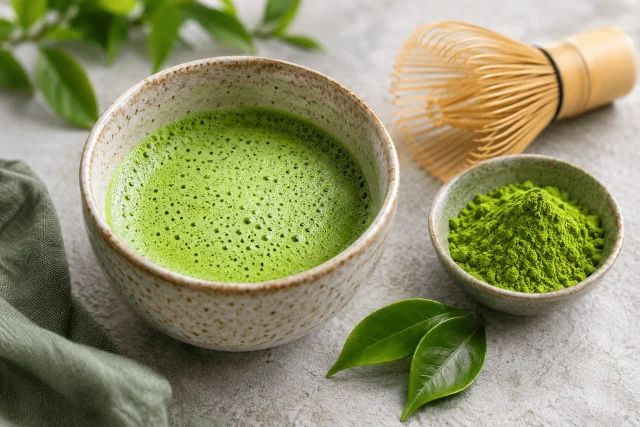
Green tea benefits and which catechin claims hold up in studies
Some controlled studies link green tea with modest changes in LDL cholesterol and fasting glucose, but the evidence does not show that it prevents cancer or reduces cardiovascular events. Catechins can be quantified both in brewed tea and in the bloodstream, yet those measurements do not by themselves prove disease prevention from regular green tea consumption.
Different types of evidence often lead to different conclusions about green tea because they examine separate endpoints, including catechin chemistry, blood biomarkers, body weight, cancer outcomes and liver safety. Brewed tea and concentrated extracts also need to be assessed separately, since the products, exposure levels and study outcomes are not the same.

Evidence last checked 17 Nov 2026 · 14 min
What green tea benefits are attributed to its compounds
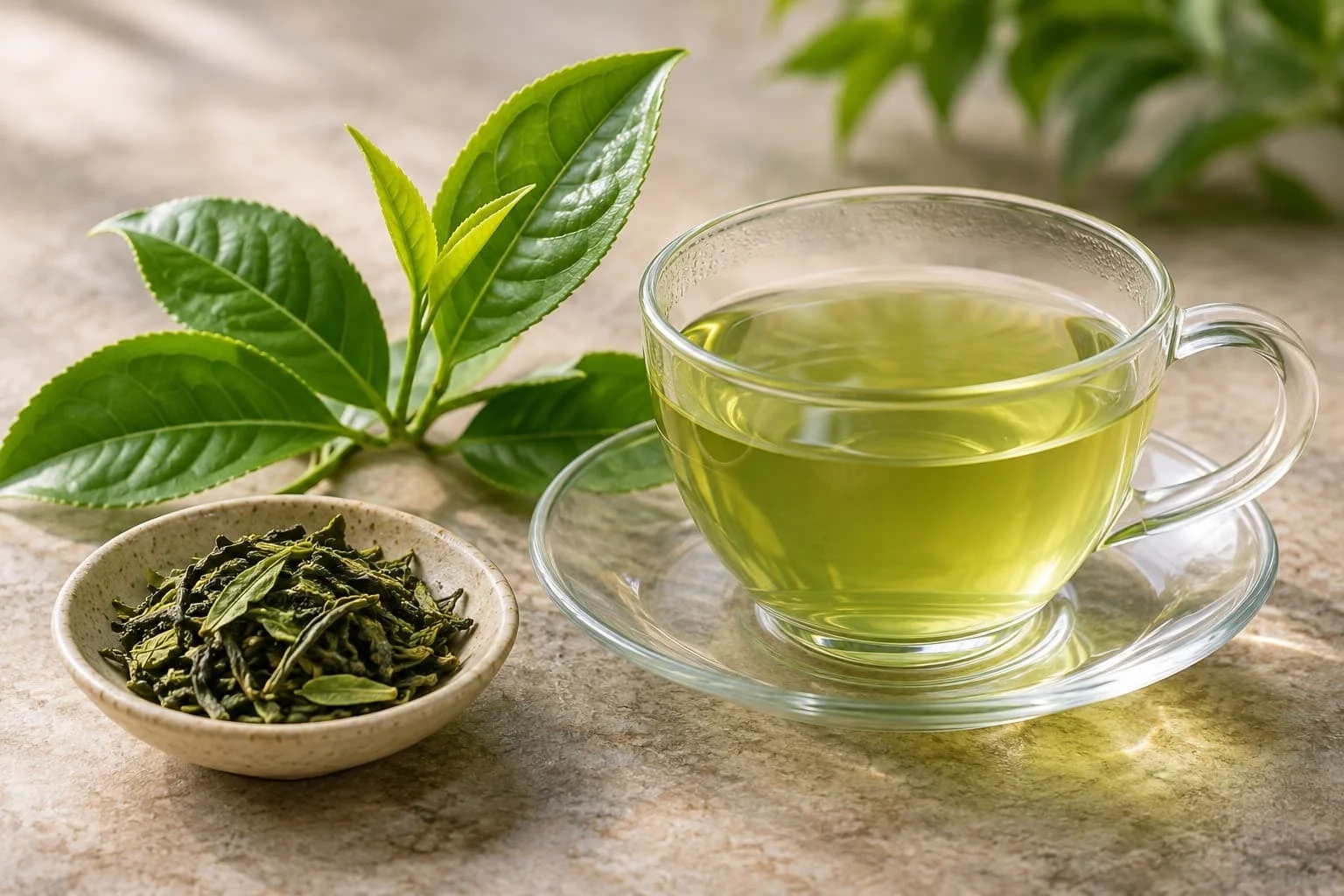
Green tea is made from Camellia sinensis leaves that are processed without fermentation, which helps preserve more of their polyphenolic compounds (EFSA ANS Panel, 2018). In research reviews, Hartley and colleagues assessed cardiovascular risk markers and found no trials that reported cardiovascular events, while Jurgens focused on body-weight studies and Filippini reviewed the evidence on cancer outcomes (Hartley et al., 2013; Jurgens et al., 2012; Filippini et al., 2020).
Green tea compared with other teas
Green, black and oolong tea all come from Camellia sinensis (Filippini et al., 2020), but green tea is processed without fermentation, which reduces oxidation of its polyphenolic compounds (EFSA ANS Panel, 2018). A clinical comparison requires people consuming defined tea products over an interval long enough to capture the outcome in question.
Hartley and colleagues reviewed green and black tea interventions for cardiovascular prevention in 2013. Their Cochrane review included seven green tea trials and four black tea trials, with substantial variation in the form of tea examined. These interventions recorded cardiovascular risk factors. No included trial reported a cardiovascular event.
The wider setting of tea production is described in research on tea cultivation and processing. For the health question, the EFSA panel identified variability related to plant variety, growing conditions, season, leaf age and manufacturing. A controlled comparison needs to describe its preparation.
Catechins, EGCG and caffeine
In its 2018 assessment, the EFSA ANS Panel listed epicatechin, epicatechin gallate, epigallocatechin and epigallocatechin gallate among the main catechins found in green tea. EGCG is one member of that group. Green tea leaves also contain caffeine, classified in the assessment as the main purine alkaloid. Studies of EGCG supplements therefore test a narrower preparation than the complete drink.
EFSA reported EGCG concentrations of 1,600–20,320 mg/100 g in dried leaves and 2.3–203 mg/100 g in green tea infusions. These figures describe ranges measured across analysed samples rather than a standard amount present in every cup. The panel identified tea quantity, water quantity, brewing temperature, time and agitation as influences on infusion composition.
EGCG has attracted attention because laboratory studies suggest catechins can interfere with cancer-cell proliferation (Filippini et al., 2020). It does not give the incidence of cancer among people drinking tea. Clinical research has to test that separate outcome, with the product and comparison clearly specified.
How green tea catechins and EGCG act in the body
The chemical profile of a tea infusion is measurable, but an ingested catechin must be considered separately from the concentration later detected in blood or urine. Fung and colleagues (2013) investigated these measurements in a controlled human experiment. Its outcome was catechin metabolism. The study did not measure prevention of cardiovascular disease or cancer.
Antioxidant activity in laboratory studies
Catechins have demonstrated antioxidant activity in laboratory research, and experiments have suggested possible inhibition of cancer-cell proliferation (Filippini et al., 2020). Cancer incidence and cancer mortality are different endpoints that require evidence in humans. The Cochrane cancer review found that human study results were inconsistent across cancer sites and study designs.
An antioxidant description therefore says something about a molecule's chemical behaviour. It does not specify how much reaches a particular tissue after drinking tea. The distinction also appears in research on chocolate polyphenols and LDL oxidation, where a biochemical measurement is separate from clinical disease outcomes. For green tea, the EFSA assessment records uncertainty about absorption from infusions as they cool.
The botanical and laboratory accounts also explain why different claims require different tests. An experiment with isolated EGCG cannot establish the response to an infusion containing several catechins and caffeine. EFSA documented caffeine alongside the catechins in green tea leaves. The whole drink and the isolated ingredient are related exposures, but they are not interchangeable interventions.
Absorption and biological availability
Fung and colleagues enrolled sixteen healthy volunteers in a placebo-controlled investigation of catechin profiles after green tea exposure in 2013. They examined total and free catechins, including blood and urine measurements after single and repeated intake. This design tested the presence and handling of catechins in the body. It was not a trial of long-term clinical benefit.
After seven days of regular green tea intake, Fung and colleagues found fasting plasma EGCG at 80 versus 15 nmol/l at baseline and ECG at 120 versus 40 nmol/l, with ≥ 90% of both in conjugated forms. Their results describe those volunteers and the tested preparation. They do not provide a clinical outcome associated with the measured concentration.
Fung and colleagues reported rapid post-ingestion conjugation and urinary loss of epigallocatechin and epicatechin, with negligible renal loss for EGCG and ECG. During repeated intake, the pattern measured in fasting plasma differed from the initial acute response. A single number for the EGCG content of a cup cannot describe this entire process.
Preparation adds another uncertainty before absorption begins. EFSA reported that catechins can precipitate when infusions cool, complicating estimates of the amount available for absorption. The panel also identified differences in temperature, brewing time and leaf-to-water quantities as determinants of infusion composition. Laboratory concentration and circulating concentration answer distinct questions.
What green tea studies show about heart health and cholesterol
Studies of heart health ask whether tea changes blood lipids and whether people experience cardiovascular events. Hartley and colleagues found no trials reporting cardiovascular events in their 2013 review. Xu and colleagues measured LDL cholesterol changes across randomised trials in 2020. The endpoints differ in both their measurement and clinical meaning.
LDL cholesterol and blood pressure
Xu and colleagues analysed thirty-one randomised controlled trials involving 3,321 participants in a 2020 review of green tea and blood lipids. Compared with controls, the pooled weighted mean difference was −4.55 mg/dL for LDL cholesterol, with a 95% confidence interval from −6.31 to −2.80 mg/dL. Total cholesterol also decreased by −4.66 mg/dL, with a 95% confidence interval from −6.36 to −2.96 mg/dL.
The lipid profile did not change consistently across measurements. Xu and colleagues found no change in HDL cholesterol, and the triglyceride result was not statistically significant. The review's authors requested longer trials and more diverse study populations. A blood-test result after a controlled intervention cannot establish how that difference affects disease incidence over time.
A separate 2020 review by Igho-Osagie and colleagues pooled 14 randomised trials with 798 participants receiving green tea, black tea or placebo. In those short-term trials, the pooled effects on total cholesterol, LDL, HDL, triglycerides and blood pressure were not statistically significant. The authors rated certainty low to moderate because sample sizes and statistical power were limited.
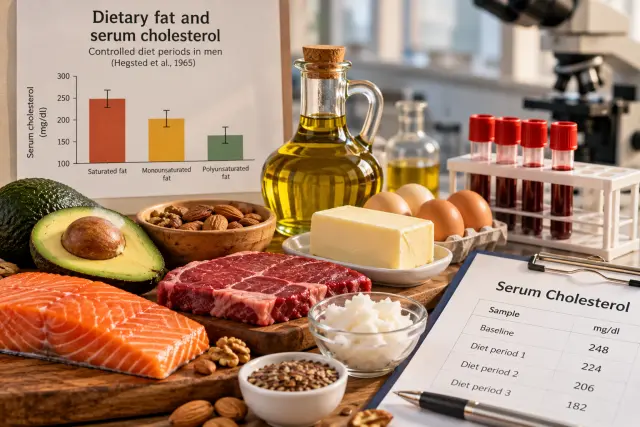
A historical perspective on the measurement of dietary lipids appears in the Hegsted study of dietary fat and serum cholesterol. For green tea, the relevant measured endpoint in Xu and colleagues' synthesis was circulating cholesterol. It cannot be substituted for deaths, heart attacks or strokes. Hartley's Cochrane review reported no cardiovascular events in its included trials.
Cardiovascular events in cohort studies
Kuriyama and colleagues (2006) followed the Ohsaki cohort in Japan, including 40,530 adults aged 40–79 years without previous stroke, coronary heart disease or cancer at entry. Higher green tea consumption was inversely associated with all-cause and cardiovascular mortality. This was a prospective observational study. It could record an association without establishing that green tea caused the difference.
Tang and colleagues pooled eighteen prospective cohort studies in a 2015 meta-analysis. For the highest versus lowest categories of green tea consumption, the summary relative risk for cardiovascular mortality was 0·67, with a 95% confidence interval from 0·46 to 0·96. The corresponding result for black tea was 0·88, with a 95% confidence interval from 0·77 to 1·01. Cohort comparisons cannot isolate catechins from other characteristics of tea drinkers.
Selected clinical trials and reviews
Hartley's 2013 Cochrane review identified 11 randomised trials with 821 participants, but no study reported actual cardiovascular events. Some pooled risk-factor differences favoured green tea. Those findings were unstable in sensitivity analyses and relied on small numbers of studies for each outcome. The review therefore did not establish prevention of cardiovascular disease.
Results can differ even between reviews of randomised trials. Xu and colleagues found statistically significant LDL reductions in a synthesis specific to green tea, whereas Igho-Osagie and colleagues found no statistically significant lipid or blood-pressure effects across short-term green and black tea trials. Their study selections and intervention definitions differed. A single figure for the health benefit of green tea would conceal those distinctions.
Study | Evidence examined | Endpoint | Reported result |
Hartley et al., 2013 | 11 RCTs; 821 participants | Cardiovascular events | None reported in included trials. |
Xu et al., 2020 | Thirty-one RCTs; 3,321 participants | LDL cholesterol | −4.55 mg/dL, 95% CI −6.31 to −2.80. |
Igho-Osagie et al., 2020 | 14 RCTs; 798 participants | Blood lipids and pressure | No statistically significant pooled effects. |
Kuriyama et al., 2006 | Cohort of 40,530 Japanese adults | Cardiovascular mortality | Inverse association with green tea intake. |
Tang et al., 2015 | Prospective cohort meta-analysis | Cardiovascular mortality | Green tea RR 0·67, 95% CI 0·46 to 0·96. |
What green tea research finds on weight and blood sugar
Weight and blood-glucose studies have tested green tea preparations under different intervention conditions. The outcomes are also distinct: body mass, fasting glucose, fasting insulin and HbA1c cannot be combined into a single measure of metabolic health. Jurgens and colleagues reviewed weight trials, while Xu and colleagues analysed glycaemic outcomes. Their results answered separate clinical questions.
Weight loss trials
Jurgens and colleagues (2012) examined fifteen weight-loss studies and three weight-maintenance studies in a Cochrane review. The interventions compared a green tea preparation with a control in overweight or obese adults. Weight loss was small and statistically non-significant. The reviewers judged its size unlikely to be clinically important and found no statistically significant effect on maintaining weight loss.
Jurgens and colleagues found no statistically significant effect in six trials conducted outside Japan: the pooled weight-loss mean difference was −0.04 kg, with a 95% confidence interval from −0.5 to 0.4 kg. The confidence interval includes no effect. It provides no basis for treating the drink as a demonstrated weight-loss intervention.
Preparations differed between the trials in the Cochrane review (Jurgens et al., 2012). A green tea preparation tested for body weight need not represent the composition of a brewed cup, and the review enrolled people with overweight or obesity rather than an unselected population.
Glucose and metabolic outcomes
In a glycaemic review published in 2020, Xu and colleagues pooled twenty-seven randomised trials involving 2,194 participants. Their estimated change in fasting blood glucose was −1.44 mg/dL, with a 95% confidence interval from −2.26 to −0.62 mg/dL. Fasting insulin and HbA1c results were not statistically significant. The review called for longer trials to assess glycaemic control.
Saadh and colleagues assessed trials of supplemental EGCG in a 2025 systematic review. Their meta-analysis reported a statistically significant but modest absolute reduction in HbA1c of 0.18 percentage points (95% CI for the mean difference: −0.35 to −0.02 percentage points). The effect on fasting insulin was not statistically significant. The authors cautioned that the observed changes might not be clinically meaningful for many populations.
EGCG supplementation is a specific intervention, and Saadh and colleagues' findings cannot be assigned to ordinary brewed green tea without evidence that both the tested exposure and the outcomes are comparable. The glycaemic reviews address measured blood markers. Saadh and colleagues did not establish that drinking green tea prevents diabetes.
What green tea and catechin studies show about cancer risk
Cancer claims are often based on the biological activity of catechins or on associations between tea drinking and disease. Filippini and colleagues (2020) reviewed both experimental and observational human evidence for cancer prevention. Their findings varied across cancer outcomes. The review did not establish a consistent reduction in overall cancer risk from green tea consumption.
Findings in cells and animal models
Laboratory experiments have suggested that catechins may inhibit cancer-cell proliferation (Filippini et al., 2020). This mechanism is a question about cells in experimental conditions. A change in proliferation cannot be read as a measured reduction in cancer cases among tea drinkers. The distinction is central to evaluating claims made for EGCG.
Human studies of cancer incidence
Filippini and colleagues included 142 completed studies in their Cochrane update, comprising 11 experimental and 131 nonexperimental investigations. Evidence for an effect on overall cancer risk or individual cancer sites was limited and inconsistent. A result from one cancer site cannot establish prevention across all cancers.
Filippini and colleagues found no statistically significant association with cancer-related mortality across eight studies and 504,366 participants. The pooled relative risk was 0.99, with a 95% confidence interval from 0.91 to 1.07, and the result was not statistically significant. The certainty was low. Cancer incidence is a separate endpoint.
Tang and colleagues reported a green tea cancer-mortality relative risk of 1·06 for the highest versus lowest consumption categories, with a 95% confidence interval from 0·98 to 1·15; the association was not statistically significant. Kuriyama and colleagues (2006) also found no reduction in cancer mortality in the Ohsaki cohort.
A related difficulty in interpreting preventive claims appears in research on selenium and cancer prevention. For green tea itself, Filippini and colleagues' conclusions remained limited by inconsistent findings from experimental and nonexperimental studies. Promising laboratory activity is compatible with uncertain human outcomes. Only the latter can answer a claim about cancer prevention.
What risks differ between green tea drinks and extracts
Green tea as a traditionally prepared infusion and green tea extract as a concentrated supplement are distinct safety contexts. The EFSA ANS Panel considered traditional infusions generally safe while reporting liver concerns in supplement trials, and Yu and colleagues measured liver enzymes during a randomised extract intervention. Their results concern supplements, not an ordinary cup of brewed tea.
Caffeine and tolerability
Caffeine occurs naturally in green tea leaves. The EFSA assessment identified it as the main purine alkaloid of the leaf. That fact establishes the presence of a stimulant compound, without establishing a uniform caffeine content for every prepared drink. Variation in the quantity of leaves and infusion conditions also affects the components extracted.
EFSA described traditional green tea infusions as generally safe using its presumption-of-safety assessment. The panel nevertheless recorded rare cases of liver injury after infusion consumption, considered most likely to involve an idiosyncratic response. This rare-event qualification belongs to the infusion evidence. It does not turn the supplement trial results into an incidence estimate for the beverage.
Liver injury and medicine interactions
The EFSA ANS Panel (2018) concluded that green tea supplements providing 800 mg or more of EGCG per day were associated with statistically significant increases in serum transaminases compared with controls in intervention trials. However, EFSA could not establish a safe dose for green tea extracts, and liver injury had also been reported with a specific extract providing 375 mg EGCG per day. Those blood markers are used to investigate liver injury. The assessment distinguished this evidence from the general safety conclusion for traditionally prepared infusions.
In the United States, Yu and colleagues (2017) analysed liver outcomes in a randomised intervention involving 1,021 women with normal liver enzymes at baseline. In the green tea extract group, alanine aminotransferase (ALT) increased from baseline by 5.4 U/L (95% CI 3.6 to 7.1 U/L).
This increase was significantly greater than the change observed in the placebo group (P < 0.001). This result was statistically significant. It describes the tested extract, population and biochemical outcome.
Yu and colleagues also reported that 26 women (5.1%) in the green tea extract arm developed liver-function abnormalities classified as grade 2 or higher during the intervention. Enzyme levels returned to normal after stopping the extract and rose again after repeated exposure in some cases. It does not supply a comparable rate for brewed tea.
Medicine-interaction claims require their own evidence. The reviewed safety sources establish caffeine content, variable infusion chemistry and liver findings for particular catechin preparations (EFSA ANS Panel, 2018; Yu et al., 2017). They do not quantify interactions with named medicines in the evidence presented here. No universal interaction risk can be inferred from the liver-enzyme studies.
What is proven about green tea benefits and what is not
Chemical composition is established more securely than disease prevention. The EFSA ANS Panel identified several distinct catechins and documented wide differences in EGCG concentrations across leaves and infusions, while Fung and colleagues reported different catechin patterns in human plasma following green tea exposure. Their physiological measurements did not test clinical disease outcomes.
Blood-marker evidence is mixed. Xu and colleagues found lower LDL cholesterol in their synthesis of randomised trials, while Igho-Osagie and colleagues reported no statistically significant pooled effects on blood lipids or pressure in a different short-term trial set. A separate Xu synthesis found a small fasting-glucose reduction but no statistically significant effect on HbA1c or fasting insulin. These are laboratory outcomes, not evidence of fewer cardiovascular events.
Weight and cancer claims have weaker support. Jurgens and colleagues (2012) found a small, statistically non-significant weight change, unlikely to matter clinically. Filippini and colleagues described the human cancer-prevention findings as inconsistent. Tang and colleagues reported no statistically significant association between green tea intake and cancer mortality.
Green tea trials report changes in selected blood markers, but have not established cancer or cardiovascular-event prevention from the drink.
Safety evidence needs the same separation by preparation. EFSA considered traditional infusions generally safe while recognising rare liver injury reports, and its supplement assessment identified liver enzyme increases at certain exposures. Yu and colleagues also observed liver enzyme increases in a randomised green tea extract trial. Neither study assigns those extract findings to every brewed cup.
Frequently asked questions
Is green tea healthier than black tea?
Both are made from Camellia sinensis, but green tea is processed without fermentation (Filippini et al., 2020; EFSA ANS Panel, 2018). Hartley's review compared trials involving both varieties and found no studies reporting cardiovascular events. Their relative long-term health effects therefore cannot be determined from those trials. The preparations and endpoints need separate comparison.
Does decaffeinated green tea contain antioxidants?
Green tea catechins and caffeine are distinct compounds identified by the EFSA ANS Panel. A decaffeinated label alone does not quantify catechin content. Infusion chemistry depends on leaf composition and brewing conditions, and EFSA found wide differences in measured EGCG concentrations. Evidence on a particular decaffeinated product would require chemical analysis of that product.
Can green tea improve concentration?
Green tea leaves naturally contain caffeine, as documented by the EFSA ANS Panel. Xu and colleagues analysed blood lipids and glycaemic markers, while Jurgens and colleagues assessed weight; these studies did not measure concentration or attention (Xu et al., 2020; Jurgens et al., 2012). Their findings therefore cannot establish an attention benefit from a brewed cup.
Does brewing change the amount of catechins?
Yes. The EFSA ANS Panel identified tea quantity, water quantity, brewing temperature, time and agitation as factors affecting infusion composition. It also documented widely differing EGCG concentrations in analysed green tea infusions. Cooling can cause catechin precipitation, creating further uncertainty about absorption. A tea name alone does not specify catechin exposure.
Do green tea extract studies apply to brewed tea?
Not automatically: EFSA distinguished traditional infusions from supplement exposures when reviewing liver safety. In a randomised trial, Yu and colleagues observed increased liver enzymes among women assigned green tea extract. The studied product and population define that result, which does not establish an equivalent risk from a traditionally prepared infusion.
Sources
- EFSA ANS Panel. Scientific opinion on the safety of green tea catechins. EFSA Journal. 2018;16(4):e05239. DOI 10.2903/j.efsa.2018.5239.
- Hartley L, Flowers N, Holmes J, et al. Green and black tea for the primary prevention of cardiovascular disease. Cochrane Database of Systematic Reviews. 2013;(6):CD009934. DOI 10.1002/14651858.CD009934.pub2.
- Xu R, Yang K, Li S, Dai M, Chen G. Effect of green tea consumption on blood lipids: a systematic review and meta-analysis of randomized controlled trials. Nutrition Journal. 2020;19:48. DOI 10.1186/s12937-020-00557-5.
- Igho-Osagie E, Cara K, Wang D, et al. Short-Term Tea Consumption Is Not Associated with a Reduction in Blood Lipids or Pressure: A Systematic Review and Meta-Analysis of Randomized Controlled Trials. Journal of Nutrition. 2020;150(12):3269–3279. DOI 10.1093/jn/nxaa295.
- Kuriyama S, Shimazu T, Ohmori K, et al. Green tea consumption and mortality due to cardiovascular disease, cancer, and all causes in Japan: the Ohsaki study. JAMA. 2006;296(10):1255–1265. DOI 10.1001/jama.296.10.1255.
- Tang J, Zheng JS, Fang L, Jin Y, Cai W, Li D. Tea consumption and mortality of all cancers, CVD and all causes: a meta-analysis of eighteen prospective cohort studies. British Journal of Nutrition. 2015;114(5):673–683. DOI 10.1017/S0007114515002329.
- Jurgens TM, Whelan AM, Killian L, Doucette S, Kirk S, Foy E. Green tea for weight loss and weight maintenance in overweight or obese adults. Cochrane Database of Systematic Reviews. 2012;(12):CD008650. DOI 10.1002/14651858.CD008650.pub2.
- Xu R, Bai Y, Yang K, Chen G. Effects of green tea consumption on glycemic control: a systematic review and meta-analysis of randomized controlled trials. Nutrition & Metabolism. 2020;17:56. DOI 10.1186/s12986-020-00469-5.
- Filippini T, Malavolti M, Borrelli F, et al. Green tea (Camellia sinensis) for the prevention of cancer. Cochrane Database of Systematic Reviews. 2020;(3):CD005004. DOI 10.1002/14651858.CD005004.pub3.
- Yu Z, Samavat H, Dostal AM, et al. Effect of Green Tea Supplements on Liver Enzyme Elevation: Results from a Randomized Intervention Study in the United States. Cancer Prevention Research. 2017;10(10):571–579. DOI 10.1158/1940-6207.CAPR-17-0160.
- Saadh MJ, Gataa IS, Hussam AS, et al. Effect of Epigallocatechin Gallate on Glycemic Index: A Systematic Review and Meta-Analysis of Randomized Controlled Trials. Clinical Therapeutics. 2025;47(10):925–934. DOI 10.1016/j.clinthera.2025.07.015.
- Fung ST, Ho CK, Choi SW, Chung WY, Benzie IFF. Comparison of catechin profiles in human plasma and urine after single dosing and regular intake of green tea (Camellia sinensis). British Journal of Nutrition. 2013;109(12):2199–2207. DOI 10.1017/S0007114512004370.

Emily T. Lawson — author
Emily T. Lawson is a nutrition writer with a background in public health nutrition and food science. Her work focuses on turning nutrition research and food-composition information into clear guidance for general readers, with particular attention to nutrient...
This article is for general information and is not medical advice. It was reviewed for accuracy by a qualified clinician; decisions about your health should be made with your own doctor.
Related
Coffee, Cocoa and Tea: Cultivation, Management and Production
Chocolate Polyphenols and LDL Oxidation: Antioxidant Effects
Dietary Fat and Serum Cholesterol: Hegsted Study Findings

Selenium and cancer prevention: what the evidence shows

What kombucha is and what is actually in the fizzy fermented tea
Whole grains and what the bran and germ add that refined flour loses
Probiotic foods and which fermented foods still carry live cultures