Why Are Children Hit Harder by Pollution? The Evidence Since 2005
Children take in more air, food and water than adults for their weight while their bodies are still developing, and WHO attributes 1.7 million under-five deaths in 2012 to the environment (World Health Organization, n.d.). Exposure in the womb and in early childhood can have lasting effects, and toddlers’ hand-to-mouth habits add to their intake (US Environmental Protection Agency, 2026a). Since 2005, the US blood lead benchmark and WHO’s air quality guidelines have been tightened sharply (Ruckart et al., 2021; World Health Organization, 2021). A 2005 textbook chapter by Galvez, Forman and Landrigan had already set out these reasons and the laws they prompted (Galvez et al., 2005).
Below, we explain why children’s bodies and behaviour raise their exposure, how large the global toll is and what has changed since 2005 for lead, air pollution, chlorpyrifos and bisphenol A. We do not cover PFAS, heat, wildfire smoke or microplastics. What is known about the original chapter is summarised in Cabdirect archive record 20063176847.

Evidence last checked 21 Jul 2026 · 9 min
Why Are Children More Vulnerable to Pollution Than Adults?
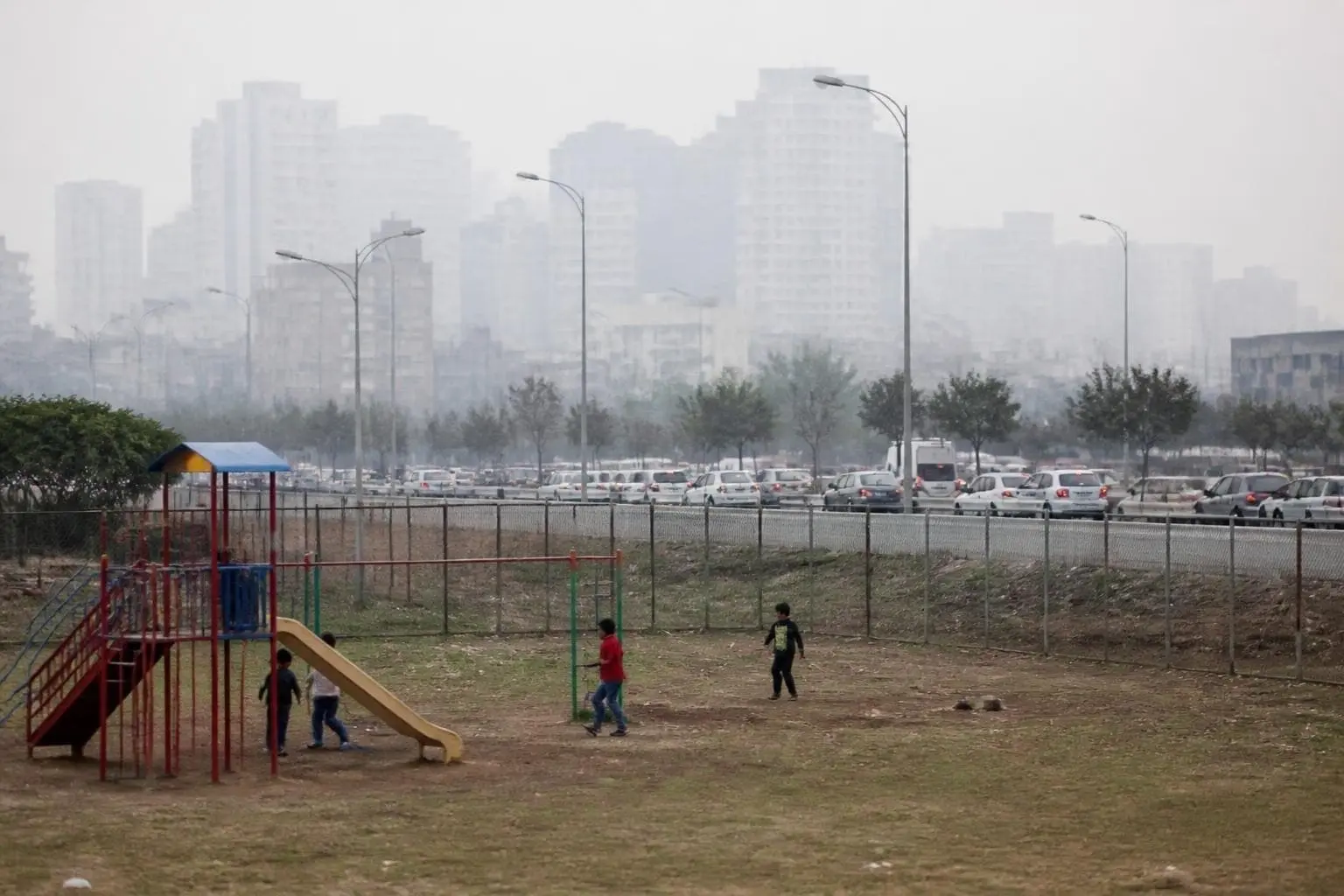
Children are more vulnerable mainly because they take in more of their surroundings for their size while their bodies are still being built. Relative to body weight, WHO says, children breathe more air, eat more food and drink more water than adults do (World Health Organization, n.d.). The US Environmental Protection Agency (EPA) adds that this can raise their exposure to pollutants (US Environmental Protection Agency, 2026a).
Timing matters too. WHO describes the central nervous, immune, reproductive and digestive systems as still developing in childhood, and warns that toxic exposures at certain early stages can cause irreversible damage (World Health Organization, n.d.). EPA calls these periods critical windows of susceptibility. They run from fetal development through early childhood, so exposure in pregnancy can have lifelong effects on the child (US Environmental Protection Agency, 2026a).
Behaviour in the toddler years
Behaviour adds another route. EPA notes that toddlers spend much of their time close to the ground and often put their hands and objects in their mouths. Its example is lead from deteriorating lead-based paint and household dust in homes built before 1978 (US Environmental Protection Agency, 2026a).
An idea already established by 2005
None of this was new in 2005. A year earlier Landrigan, the chapter’s last-named author, had made the point in a review with three colleagues. They wrote that “infants and children are not little adults” and described them as uniquely vulnerable to environmental toxicants (Landrigan et al., 2004).
The chapter by Maida Galvez, Joel Forman and Landrigan then appeared in Howard Frumkin’s 36-chapter textbook Environmental Health: From Global to Local (Galvez et al., 2005). It traced the field to poisoning outbreaks such as Minamata, where methylmercury harmed children exposed in the womb, and noted that only 43% of high-volume chemicals had been tested for toxicity (Galvez et al., 2005).
Children’s environmental health is less about exotic poisons than about ordinary air, dust, water and food, taken in by bodies that are still being built.
How Many Children Does Pollution Harm?
Environmental risks, pollution among them, are linked to hundreds of thousands to millions of child deaths a year, depending on what is counted: by WHO’s estimate, the environment accounted for 1.7 million deaths of children under five in 2012 (World Health Organization, n.d.).
WHO’s 2006 assessment reported more than 4 million environmentally caused deaths of children each year, but because the 2012 figure counts only children under five, the two are not a like-for-like trend (World Health Organization, 2006).
Air pollution alone accounts for a large share of the toll. The State of Global Air 2024 report, produced by the Health Effects Institute with UNICEF, linked more than 700,000 deaths of children under five in 2021 to air pollution. That was 15% of all under-five deaths worldwide, within 8.1 million air pollution deaths at all ages (Health Effects Institute, 2024).
Lead is usually counted by how many children carry it in their blood: UNICEF and Pure Earth estimated in 2020 that up to 800 million children had blood lead levels at or above 5 µg/dL (UNICEF & Pure Earth, 2020).
Table 1. Selected estimates of the environmental toll on children
Estimate and source | Group and year | Figure |
Environmentally caused deaths (World Health Organization, 2006) | Children, per year | More than 4 million |
Deaths attributable to the environment (World Health Organization, n.d.) | Under five, 2012 | 1.7 million |
Deaths linked to air pollution (Health Effects Institute, 2024) | Under five, 2021 | More than 700,000 (15% of under-five deaths) |
Blood lead at or above 5 µg/dL (UNICEF & Pure Earth, 2020) | Children, 2020 estimate | Up to 800 million (about 1 in 3) |
What Has Changed for Lead Since 2005?
The thresholds used to flag children with raised blood lead have fallen, and CDC states that no safe blood lead level exists. In 1991 CDC set a level of concern of 10 µg/dL. It replaced this with a reference value of 5 µg/dL in 2012 and lowered it to 3.5 µg/dL in 2021 (Ruckart et al., 2021). When the 2005 chapter was published, the US benchmark was therefore still 10 µg/dL.
A statistical marker, not a safe limit
The 3.5 µg/dL value is population-based: it marks the 97.5th percentile of blood lead among US children aged 1 to 5 in survey data from 2015 to 2018, and the CDC report stresses that it is not a toxicity threshold (Ruckart et al., 2021).
England’s threshold since 2021
England halved its threshold in the same year. Since 5 July 2021, the UK Health Security Agency (UKHSA) has used 0.24 µmol/L, equivalent to 5 µg/dL, for children under 16. That figure serves as both the surveillance case definition and the threshold for public health action, replacing 0.48 µmol/L (10 µg/dL). In 2024, 247 cases were reported to its surveillance system, 9% more than the 226 recorded in 2023 (UK Health Security Agency, 2025).
Table 2. Blood lead thresholds used for children in the US and England
Agency and measure | Earlier value | Current value |
CDC (US): level of concern, then blood lead reference value | 10 µg/dL (1991); 5 µg/dL (2012) | 3.5 µg/dL (2021) (Ruckart et al., 2021) |
UKHSA (England): case definition and public health action threshold, under-16s | 10 µg/dL (0.48 µmol/L) | 5 µg/dL (0.24 µmol/L), since 5 July 2021 (UK Health Security Agency, 2025) |
Can Cleaner Air Protect Children’s Lungs?
Evidence from London suggests that it can. The CHILL study followed 3,414 children aged 6 to 9 in London and in Luton, a comparison town, to assess the impact of London’s Ultra Low Emission Zone (ULEZ) on lung growth. Lung function was measured as FEV1, the volume of air a child can forcibly breathe out in one second. Its growth was 10 mL a year greater in London than in Luton, at 233 against 223 mL a year (Wood et al., 2026).
After four years, the mean FEV1 of London children had caught up with that of Luton children. The share of London children with clinically impaired lung function fell from 14% to 9%, against a fall from 9% to 7% in Luton. The authors report an association and write that it suggests earlier deficits in lung development were restored (Wood et al., 2026).
Tighter guidelines since 2021
In 2021 WHO revised its air quality guidelines, lowering almost all of the 2005 levels. The annual guideline for fine particles (PM2.5) was halved from 10 to 5 µg/m³, and the annual guideline for nitrogen dioxide fell from 40 to 10 µg/m³ (World Health Organization, 2021).
The Ella Adoo Kissi-Debrah inquest
In London, an inquest brought air pollution into a coroner’s findings. The inquest into the death of Ella Adoo Kissi-Debrah, who had severe asthma, concluded in December 2020 that she “died of asthma contributed to by exposure to excessive air pollution”. Air pollution exposure was recorded as part of the medical cause of death (Barlow, 2021).
Table 3. WHO air quality guideline levels, 2005 and 2021
Pollutant and averaging time | 2005 guideline (µg/m³) | 2021 guideline (µg/m³) |
PM2.5, annual mean | 10 | 5 |
PM2.5, 24-hour | 25 | 15 |
PM10, annual mean | 20 | 15 |
PM10, 24-hour | 50 | 45 |
Nitrogen dioxide, annual mean | 40 | 10 |
Nitrogen dioxide, 24-hour | No guideline | 25 |
What Has Happened to Chlorpyrifos and Bisphenol A?
Both have been restricted since 2005, and on the pesticide chlorpyrifos the European Union has gone further than the United States. In January 2020 the European Commission decided not to renew its approval. It cited possible genotoxicity, seen in several laboratory and animal studies, and developmental neurotoxicity. Member states had to withdraw authorisations by 16 February 2020, and any grace periods ended by 16 April 2020 (European Commission, 2020).
A slower route in the United States
In the US, EPA revoked all tolerances for chlorpyrifos residues on food in 2021, a court vacated that rule in 2023, and EPA proposed a narrower revocation in December 2024 (US Environmental Protection Agency, 2026b).
Use has narrowed anyway. Under cancellation orders, since 1 July 2025 chlorpyrifos may legally be used on only 11 US food and feed crops, in certain states. Some non-agricultural, non-food uses remain and are still under EPA review (US Environmental Protection Agency, 2026b).
Bisphenol A in food-contact materials
For bisphenol A (BPA), the turning point in Europe was a 2023 re-evaluation by the European Food Safety Authority (EFSA). As the EU’s 2024 regulation records, EFSA set a tolerable daily intake of 0.2 nanograms per kilogram of body weight. That is 20,000 times lower than the temporary value of 4 micrograms per kilogram which EFSA had set in 2015 (European Commission, 2024).
The Commission then banned BPA in most food-contact materials, under a regulation in force since 20 January 2025. Single-use articles made with BPA could be placed on the market until 20 July 2026, and some used to preserve fruit, vegetables or fishery products until 20 January 2028 (European Commission, 2024).
How Strong Is the Evidence?
The case that children are more exposed and more easily harmed rests on well-understood physiology and on observational studies, not on trials, and the global death tolls are estimates of deaths attributable to exposures, not counts of individual deaths (World Health Organization, n.d.; Health Effects Institute, 2024).
The CHILL study is large, with 3,414 children recruited and followed for four years, but it compares only two places. London children started with FEV1 38 mL below Luton’s, and the year-four figures on impaired lung function rest on fewer than half of the children first measured. Its result is therefore an association, as the authors say, rather than a demonstration that the ULEZ alone caused the gain (Wood et al., 2026).
Regulatory decisions follow a precautionary logic rather than a demand for certainty. The EU declined to renew chlorpyrifos partly because a genotoxic potential “cannot be excluded” on the available data (European Commission, 2020). Such decisions show how regulators weigh evidence; they are not themselves new findings about children’s health.
The 2005 chapter is a textbook overview rather than a study, so it is not graded here (Galvez et al., 2005). The rest of the evidence is consistent across agencies and sources, but it is largely observational, and the evidence on the article’s central question, why children are hit harder by pollution, is rated moderate.
Frequently asked questions
Why do children take in more pollution than adults?
Because they are growing, children take in more air, food and water for each kilogram of body weight than adults do, and hand-to-mouth activity can mean they swallow more contaminated dust and soil (World Health Organization, n.d.; US Environmental Protection Agency, 2026a). Their nervous, immune and reproductive systems are still developing (World Health Organization, n.d.).
What blood lead level is too high for a child?
CDC says no safe blood lead level exists. Its reference value of 3.5 µg/dL is a statistical marker for the most exposed 2.5% of US children aged 1 to 5, not a safety limit (Ruckart et al., 2021). In England, UKHSA uses 5 µg/dL as its threshold for public health action in children under 16 (UK Health Security Agency, 2025).
What did the Ella Adoo Kissi-Debrah inquest conclude?
The inquest, which ended in December 2020, found that she died of asthma to which exposure to excessive air pollution contributed, and air pollution was recorded in the medical cause of death. The coroner later warned that UK particulate limits were far above WHO guidelines (Barlow, 2021).
Is chlorpyrifos still used?
Not in the European Union, where its approval was not renewed in 2020 (European Commission, 2020). In the US it may be used on 11 food and feed crops in certain states, and residue tolerances stay in place until EPA issues a final rule on its December 2024 proposal (US Environmental Protection Agency, 2026b).
When did children’s environmental health become a field?
Its roots lie in poisoning outbreaks such as Minamata, where methylmercury harmed children exposed in the womb (Galvez et al., 2005). By 2004 a review stated that “infants and children are not little adults” (Landrigan et al., 2004), and a 2005 textbook chapter set out why children are more exposed and the laws this prompted (Galvez et al., 2005).
Sources
- Galvez, M. P., Forman, J., & Landrigan, P. J. (2005). Children. In H. Frumkin (Ed.), Environmental Health: From Global to Local (pp. 805–845). Jossey-Bass. – Cabdirect archive record 20063176847
- World Health Organization. (n.d.). Children’s environmental health [Health topic].
- US Environmental Protection Agency. (2026). Children’s unique vulnerabilities to environmental hazards.
- Landrigan, P. J., Kimmel, C. A., Correa, A., & Eskenazi, B. (2004). Children’s health and the environment: Public health issues and challenges for risk assessment. Environmental Health Perspectives, 112(2), 257–265.
- World Health Organization. (2006). Preventing disease through healthy environments: Towards an estimate of the environmental burden of disease.
- Health Effects Institute. (2024). State of Global Air 2024.
- Ruckart, P. Z., Jones, R. L., Courtney, J. G., LeBlanc, T. T., Jackson, W., Karwowski, M. P., Cheng, P.-Y., Allwood, P., Svendsen, E. R., & Breysse, P. N. (2021). Update of the blood lead reference value – United States, 2021. MMWR Morbidity and Mortality Weekly Report, 70(43), 1509–1512.
- UK Health Security Agency. (2025). Lead Exposure in Children Surveillance System (LEICSS) annual report, 2025. GOV.UK.
- UNICEF & Pure Earth. (2020). The toxic truth: Children’s exposure to lead pollution undermines a generation of future potential. UNICEF.
- World Health Organization. (2021). WHO global air quality guidelines: Particulate matter (PM2.5 and PM10), ozone, nitrogen dioxide, sulfur dioxide and carbon monoxide.
- Barlow, P. (2021). Regulation 28: Report to prevent future deaths – Ella Adoo Kissi-Debrah (Ref. 2021-0113). Courts and Tribunals Judiciary.
- Wood, H. E., Hajmohammadi, H., Dove, R. E., Scales, J., Tsocheva, I., Chavda, J., Kalsi, H. S., Cross, L., Colligan, G., Sartori, L., Mitchell, J. E., Moon, J., Lie, E., Petrovic, K., Keating, M., Le, J., Day, B., Keighley, A., Crichlow, C., . . . Griffiths, C. J. (2026). Impact of the Ultra Low Emission Zone on lung function growth in children in London, UK: A prospective parallel cohort study. The Lancet Public Health, 11(10), e733–e743.
- European Commission. (2020). Commission Implementing Regulation (EU) 2020/18 of 10 January 2020 concerning the non-renewal of the approval of the active substance chlorpyrifos, in accordance with Regulation (EC) No 1107/2009 of the European Parliament and of the Council concerning the placing of plant protection products on the market, and amending the Annex to Commission Implementing Regulation (EU) No 540/2011. Official Journal of the European Union, L 7, 14.
- US Environmental Protection Agency. (2026). Chlorpyrifos.
- European Commission. (2024). Commission Regulation (EU) 2024/3190 of 19 December 2024 on the use of bisphenol A (BPA) and other bisphenols and bisphenol derivatives with harmonised classification for specific hazardous properties in certain materials and articles intended to come into contact with food, amending Regulation (EU) No 10/2011 and repealing Regulation (EU) 2018/213. Official Journal of the European Union, L series.

Mara Kenwick — author
Mara Kenwick is a health science writer with academic training in biomedical science and public health. She completed a BSc in Biomedical Science before an MPH focused on epidemiology, prevention and the interpretation of population-health evidence. Her early...
This article is for general information and is not medical advice. It was reviewed for accuracy by a qualified clinician; decisions about your health should be made with your own doctor.
Related
Vitamin B6 for mastalgia: what the clinical trial found

Pregnancy-Associated Osteoporosis: Fractures, Causes and Care
How exercise affects self-concept and well-being in midlife
How RSV spreads: lessons from a 1981 transmission study

Polio vaccines in 1960: what the debate got right and wrong

Partner Violence and Condom Use in HIV-Discordant Couples