Pregnancy-Associated Osteoporosis: Fractures, Causes and Care
Pregnancy- and lactation-associated osteoporosis (PLO) is a rare condition in which fragility fractures, usually of the vertebrae, occur during late pregnancy or the postpartum and breastfeeding period. Nordin and Roper's 1955 report described four young women with back pain and vertebral compression fractures and helped establish the syndrome as distinct from osteomalacia.
Current evidence still comes mainly from case reports, case series and observational cohorts rather than randomised trials. This explainer revisits the original four cases, explains normal maternal bone changes, outlines current diagnostic thinking and summarises what is known - and still uncertain - about recovery, recurrence and treatment.

Evidence last checked 28 Sep 2026 · 9 min
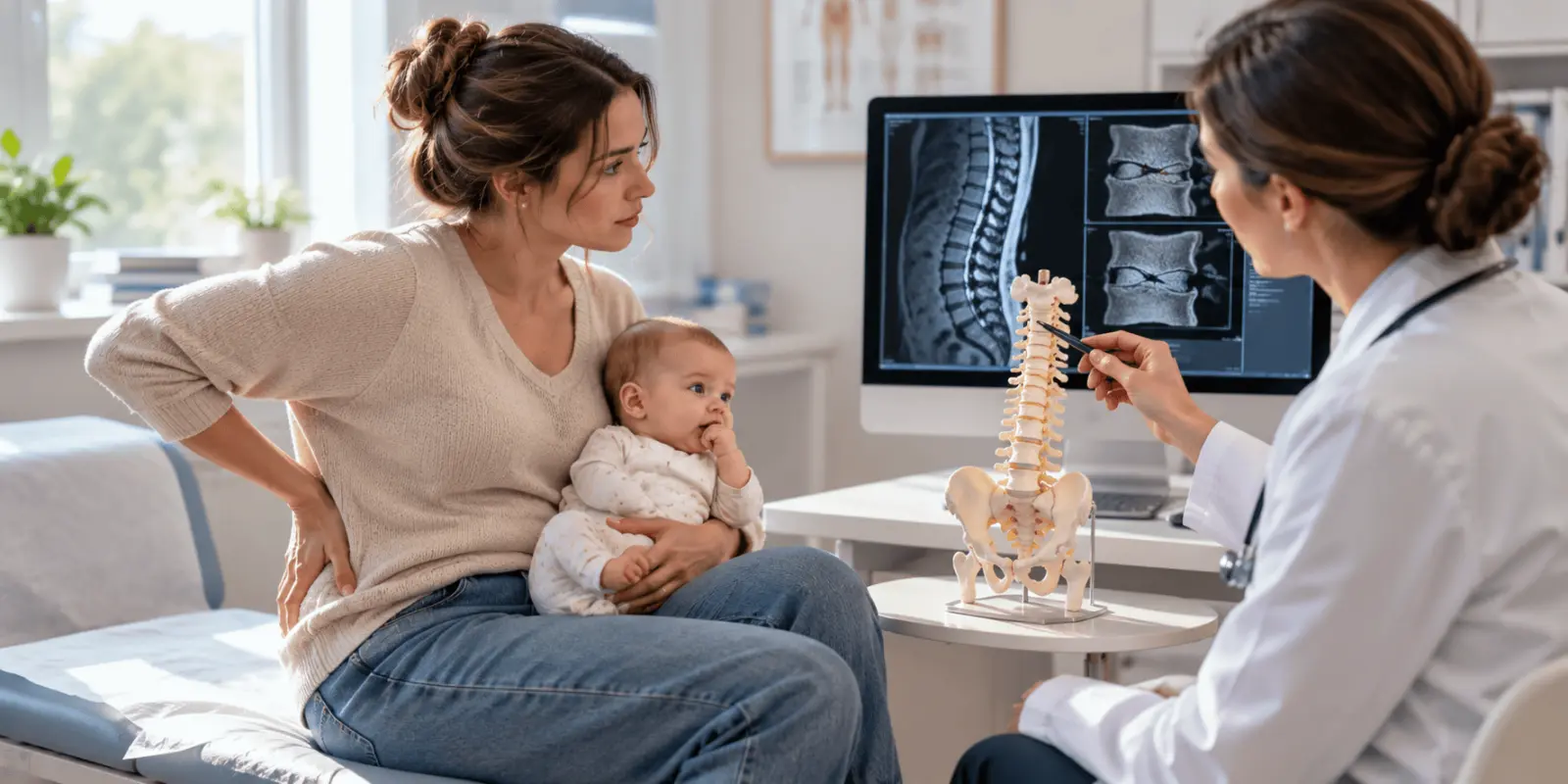
The 1955 report identified a distinct postpartum fracture pattern
Nordin and Roper described four young women who developed backache and vertebral compression fractures during pregnancy or soon after delivery. The report stated that there was no evidence of inadequate calcium or vitamin D intake and that biochemical and radiographic findings supported osteoporosis rather than osteomalacia.
The authors suggested increased adrenocortical activity during pregnancy as a possible cause, but that was a hypothesis rather than a demonstrated mechanism. Recovery appeared spontaneous in the small series, although two women received testosterone and oestrogens and one received methyl androstenediol. Those historical treatments are not a basis for current care.
The modern term is pregnancy- and lactation-associated osteoporosis
Today the syndrome is usually called pregnancy- and lactation-associated osteoporosis because presentation may occur during the last trimester, shortly after birth or during breastfeeding. Separating pregnancy from lactation too sharply can be artificial: normal skeletal adaptations begin during pregnancy and bone loss is typically greater during lactation.
Most pregnancies do not cause osteoporosis. Pregnancy and breastfeeding normally alter calcium and bone metabolism, and bone mineral density usually recovers after weaning. PLO appears to occur when those physiological demands interact with unusually low skeletal reserve, genetic susceptibility, secondary risk factors or an exaggerated response to normal reproductive bone turnover.
Pregnancy normally changes bone metabolism; PLO is the rare situation in which those changes are accompanied by fragility fractures.
Back pain is common after pregnancy, but fracture pain deserves attention
Back pain is frequent during and after pregnancy, which makes PLO easy to miss. In the 2021 systematic review of PLO with vertebral fractures, 91.5% of reported back pain began in the last three months of pregnancy or the first three months after delivery. Because the literature was assembled from published cases, this percentage describes reported PLO cases rather than the general pregnant population.
Clinical concern rises when pain is severe, persistent, sudden in onset, associated with loss of height or kyphosis, or is disproportionate to expected postpartum musculoskeletal discomfort. Imaging can identify vertebral compression fractures, while bone-density testing and laboratory evaluation help characterise skeletal status and exclude alternative causes.
Vertebral fractures are usually multiple
The 2021 systematic review included 65 publications with 338 cases of PLO-associated vertebral fractures. The most frequently involved levels were L2, L1 and T12, and the mean number of fractured vertebrae was 4.4 per patient. These figures illustrate how different PLO is from a single traumatic compression fracture.
A French multicentre cohort of 52 women similarly found a mean of 3.8 vertebral fractures. Ten women fractured during the last trimester, while 36 fractured at delivery or within the first two postpartum months. These cohorts come from specialist referral populations, so they describe severe recognised cases rather than population risk.
What major studies add to the picture
Study | Design / sample | Main finding | Important limitation |
Nordin & Roper, 1955 | Case series; 4 women | Post-pregnancy vertebral compression fractures identified as osteoporosis rather than osteomalacia | Very small historical series; proposed mechanism was speculative |
Laroche et al., 2017 | Retrospective multicentre cohort; 52 women | Mean 3.8 vertebral fractures; many patients had pre-existing or pregnancy-related risk factors | Referral cohort, not population incidence |
Kyvernitakis et al., 2018 | Prospective follow-up; 107 women | 26 women reported a subsequent fracture over median 6-year follow-up | Single specialist centre; severe cases overrepresented |
Qian et al., 2021 | Systematic review; 338 vertebral-fracture cases | Back pain clustered in late pregnancy/early postpartum; multiple thoracolumbar fractures common | Included evidence was almost entirely case reports and case series |
Issa et al., 2026 | Systematic review; 17 papers from 12 original articles | Vertebral fractures remained the dominant presentation; recurrence in later pregnancies varied across cohorts | Limited prospective controlled data and heterogeneous case definitions |
Normal pregnancy and lactation require major calcium transfers
During pregnancy, fetal skeletal mineralisation increases maternal calcium demand, especially later in gestation. The maternal body adapts through changes in intestinal calcium absorption and hormone regulation. During lactation, calcium is transferred into breast milk, and maternal bone resorption normally increases to help meet that demand.
These changes are usually reversible. Endotext notes that most skeletal loss associated with lactation is recovered after weaning. Population-based follow-up studies also do not show that parity or breastfeeding inevitably produces long-term fragility fractures. PLO is therefore an uncommon complication, not an expected consequence of motherhood.
Why PLO occurs in some women remains uncertain
No single cause explains all cases. Reported associations include low body mass index, family history of osteoporosis, previous low bone density or fractures, reduced adolescent physical activity, vitamin D deficiency, heparin or glucocorticoid exposure, and genetic variants affecting bone formation pathways such as LRP5 and WNT1.
Some women have no obvious pre-existing risk factor. That variability is one reason modern reviews describe PLO as a syndrome rather than a disease with one proven mechanism. The 1955 hypothesis of increased adrenocortical activity has not become the accepted explanation.
A family history can be an important clue
The 2026 systematic review reported that around one third of women with PLO had a family history of osteoporosis. This does not prove a single inherited cause, but it supports the idea that baseline skeletal vulnerability may interact with the temporary stresses of pregnancy and lactation.
Diagnosis requires ruling out other causes of bone fragility
A modern assessment does not stop after finding a low bone density. Clinicians review fracture history, medications, nutritional factors, endocrine disorders and other conditions that can cause secondary osteoporosis. Laboratory testing is used to evaluate calcium-phosphate metabolism and other potential contributors, while imaging defines the fracture pattern.
This step matters because young women can fracture for reasons unrelated to pregnancy. PLO is a diagnosis made in context: the timing of fractures, absence or presence of secondary causes, skeletal imaging and clinical history all contribute.
Treatment evidence is much weaker than the diagnostic evidence
Supportive management generally includes adequate calcium and vitamin D, pain control and strategies to reduce further skeletal stress while fractures heal. Current guidance also considers whether breastfeeding should be stopped or shortened in women with established PLO, because lactation is a period of active maternal bone loss.
Pharmacological treatment is more complicated. Bisphosphonates, teriparatide and other osteoporosis medicines have been reported in case series, but there are no large randomised trials establishing one best therapy for young women with PLO. Drug persistence in bone, future pregnancy plans and potential fetal exposure are important considerations.
More bone-density gain does not automatically prove a better long-term treatment
A 2023 systematic review and meta-analysis found larger lumbar-spine and femoral-neck BMD gains with teriparatide than calcium and vitamin D in the limited comparative data available. However, only two interventional studies could be meta-analysed, and the authors concluded that heterogeneity and weak comparative evidence prevented firm conclusions about the optimal treatment.
Recovery can be substantial even without potent osteoporosis drugs
An important feature of PLO is the capacity for skeletal recovery after pregnancy and weaning. Endotext summarises case series in which substantial increases in bone density occurred after breastfeeding-associated fractures, reflecting both treatment and the normal post-weaning restoration of bone.
This spontaneous recovery complicates interpretation of drug studies. If bone density rises after weaning regardless of treatment, an uncontrolled case series can overestimate the effect of a medication. That is why comparative trials are especially important and why the current evidence level remains limited.
Subsequent fracture risk is real but not inevitable
In the German prospective cohort of 107 women with PLO, 26 reported a subsequent fracture during a median six years of follow-up. Thirty women had a further pregnancy and six of those women reported another fracture. These data show that recurrence can occur, but they come from a specialist referral population and should not be converted into a universal individual risk.
The 2026 systematic review found that reported fracture recurrence in subsequent pregnancies ranged from 7% to 28% across included cohorts. Variation between studies likely reflects differences in case selection, follow-up, treatment and baseline risk.
Long-term impact goes beyond bone-density numbers
Multiple vertebral fractures can affect pain, height, mobility, mental health and the ability to care for an infant. In Hadji et al.'s 2019 long-term study of 20 women with PLO, physical and mental health were markedly impaired early after diagnosis but improved over follow-up. The reported average time to return to employment was 3.3 years.
This quality-of-life burden is one reason persistent severe postpartum back pain should not be dismissed automatically as routine musculoskeletal discomfort. Early recognition may reduce diagnostic delay and allow fracture protection, pain management and bone-health assessment to begin sooner.
What the 1955 paper got right - and what has changed
Nordin and Roper correctly recognised that vertebral compression fractures occurring around pregnancy could represent osteoporosis rather than osteomalacia. Their four cases became an early description of a syndrome that is now documented in hundreds of published patients.
What changed is the explanation. The field no longer relies on one proposed hormonal cause, and treatment is not based on the sex-hormone regimens used in some of the original cases. Current practice treats PLO as a rare, multifactorial bone-fragility syndrome requiring exclusion of secondary causes and individualised management.
The historical report is therefore most useful as an early clinical description rather than as a treatment template. It identified the characteristic combination of pregnancy-associated back pain, vertebral compression fractures and osteoporosis, but later evidence has shown that presentation, recovery and recurrence vary substantially between patients. Modern assessment also places greater emphasis on excluding secondary causes and on balancing maternal bone recovery, future pregnancy plans and the limited evidence for drug treatment.
Key points for interpreting PLO evidence:
- published cohorts are usually drawn from specialist centres and overrepresent severe fracture cases;
- normal pregnancy and lactation cause temporary skeletal changes, but most women do not develop fragility fractures;
- vertebral fractures are the most common presentation, often involving several thoracolumbar levels;
- bone density can recover substantially after weaning, which complicates uncontrolled treatment comparisons;
- future-pregnancy counselling and medication decisions should be individualised because recurrence and treatment evidence remain uncertain.
Taken together, the evidence supports viewing PLO as a rare, multifactorial condition that requires careful diagnosis and individualised management rather than a single-cause explanation or standard treatment pathway.
Frequently asked questions
What is pregnancy- and lactation-associated osteoporosis?
Pregnancy- and lactation-associated osteoporosis is a rare bone-fragility syndrome in which fractures occur during late pregnancy or the postpartum and breastfeeding period. Vertebral fractures are most common and are often multiple. The condition is distinct from the temporary bone-density changes that occur normally in pregnancy and lactation.
When should postpartum back pain raise concern for a fracture?
Back pain is common after pregnancy, but severe, persistent or sudden pain deserves assessment, especially when it limits movement, causes height loss or is accompanied by spinal deformity. Published PLO cases cluster in late pregnancy and the first postpartum months, but symptoms alone cannot confirm a vertebral fracture.
Does breastfeeding cause osteoporosis?
Breastfeeding normally causes temporary maternal bone loss because calcium is transferred into breast milk, but this is usually recovered after weaning. Most women do not develop osteoporosis or fragility fractures. PLO appears to require additional susceptibility or risk factors rather than representing a normal consequence of breastfeeding.
What causes pregnancy-associated osteoporosis?
There is no single proven cause. Reported risk factors include low body mass index, family history, pre-existing low bone density, vitamin D deficiency, some medications and genetic variants affecting bone biology. Some women have no obvious risk factor, which is why PLO is considered a multifactorial syndrome.
How is PLO treated?
Management is individualised. It usually includes fracture care, pain control, adequate calcium and vitamin D, evaluation for secondary osteoporosis and discussion of breastfeeding. Osteoporosis medicines may be considered in selected patients, but comparative treatment evidence is limited and future pregnancy plans influence the choice and timing of therapy.
Sources
- Nordin BEC, Roper A. Post-pregnancy osteoporosis; a syndrome? Lancet. 1955;268(6861):431–434. doi:10.1016/S0140-6736(55)90214-2.
- Qian Y, Wang L, Yu L, Huang W. Pregnancy- and lactation-associated osteoporosis with vertebral fractures: a systematic review. BMC Musculoskeletal Disorders. 2021;22:926. doi:10.1186/s12891-021-04776-7.
- Issa Z, Saad R, Lama Y, Ammar S, Akiki V, Kovacs CS, El-Hajj Fuleihan G, Chakhtoura M. Pregnancy and Lactation Associated Osteoporosis: A Systematic Review. Calcified Tissue International. 2026;117(1):42. doi:10.1007/s00223-026-01499-6.
- Gak N, Abbara A, Dhillo WS, Keen R, Comninos AN. Current and future perspectives on pregnancy and lactation-associated osteoporosis. Frontiers in Endocrinology. 2024;15. PMID 39703866.
- Scioscia MF, Zanchetta MB. Recent Insights into Pregnancy and Lactation-Associated Osteoporosis (PLO). International Journal of Women's Health. 2023;15:1227–1238. doi:10.2147/IJWH.S366254.
- Kyvernitakis I, Reuter TC, Hellmeyer L, Hars O, Hadji P. Subsequent fracture risk of women with pregnancy and lactation-associated osteoporosis after a median of 6 years of follow-up. Osteoporosis International. 2018;29(1):135–142. doi:10.1007/s00198-017-4239-1.
- Laroche M, Talibart M, Cormier C, Roux C, Guggenbuhl P, Degboe Y. Pregnancy-related fractures: a retrospective study of a French cohort of 52 patients and review of the literature. Osteoporosis International. 2017;28:3135–3142. PMID 28879474.
- Panahi N, et al. Comparative Effectiveness of Therapeutic Interventions in Pregnancy and Lactation-Associated Osteoporosis: A Systematic Review and Meta-analysis. Journal of Clinical Endocrinology & Metabolism. 2023. PMID 37708365.
- Hadji P, et al. Pregnancy- and lactation-associated osteoporosis: A position statement of the IAPM, IOF, ECTS, ESCEO, IMS, and EMAS. International Journal of Gynecology & Obstetrics. 2026. doi:10.1002/ijgo.71203.
- Kovacs CS. Calcium and Phosphate Metabolism and Related Disorders During Pregnancy and Lactation. Endotext. NCBI Bookshelf. Updated 2024.
- Hadji P, et al. Long-term outcome of patients with pregnancy and lactation-associated osteoporosis (PLO) with a particular focus on quality of life. Clinical Rheumatology. 2019. PMID 31468224.

Elias Norford — author,editor
Elias trained in biomedical science before completing postgraduate study in epidemiology, where he developed a particular interest in study design, population risk, disease surveillance and the interpretation of health data. He later moved into non-clinical re...
This article is for general information and is not medical advice. It was reviewed for accuracy by a qualified clinician; decisions about your health should be made with your own doctor.
Related

Vitamin B6 for mastalgia: what the clinical trial found

Why Are Children Hit Harder by Pollution? The Evidence Since 2005

How exercise affects self-concept and well-being in midlife
How RSV spreads: lessons from a 1981 transmission study

Polio vaccines in 1960: what the debate got right and wrong
Partner Violence and Condom Use in HIV-Discordant Couples