Feeling Fit and Enjoying Exercise: A 2002 Study of Women
In a 2002 survey of 261 female undergraduates taking university physical activity classes, those who felt physically capable reported more intrinsic motivation for exercise (Boyd et al., 2002). According to the indexed abstract, perceived physical condition contributed most to that link, with perceived sport competence, strength and a focus on mastering the activity contributing moderately (Boyd et al., 2002). A focus on outperforming others added nothing significant (Boyd et al., 2002). Because the women answered one set of questionnaires, the study shows an association, not which came first (Boyd et al., 2002).
Below, we explain what the study measured, what later reviews of physical self-perception, goal orientations and enjoyment add, and whether comparing yourself with others spoils an exercise class. We also set the findings against current activity guidelines and the activity gap between women and men. We do not cover exercise prescribed for medical conditions. The original study is summarised in Cabdirect archive record 20023132742.

Evidence last checked 14 Sep 2026 · 9 min
What Did the 2002 Study Find?
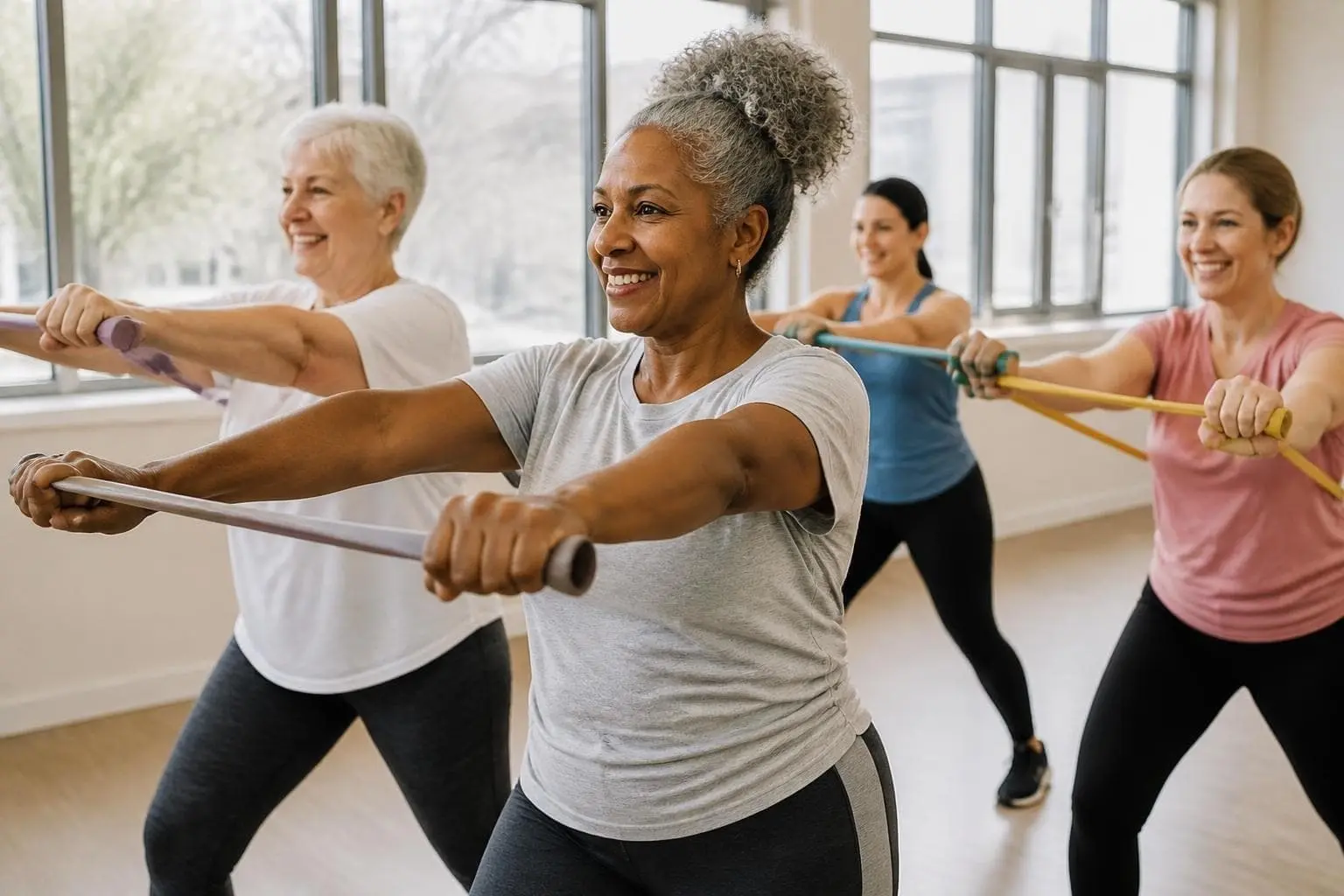
According to its indexed abstract, the study linked high ratings of physical condition, sport competence and strength, and a habit of judging success by personal progress, with more intrinsic motivation for exercise (Boyd et al., 2002). Michael Boyd, Carol Weinmann and Zenong Yin published it in the March 2002 issue of the Journal of Sport Behavior (Boyd et al., 2002). They gave self-report questionnaires to 261 female undergraduates enrolled in university physical activity classes (Boyd et al., 2002).
The questionnaires covered how the women saw themselves physically, their goal orientations for exercise and several indices of intrinsic motivation (Boyd et al., 2002). Intrinsic motivation means doing something for the interest and enjoyment it brings, rather than for a reward. Goal orientations describe how people judge success. A task orientation judges it by effort and personal improvement, while an ego orientation judges it by outperforming others.
One pattern, four contributors
The authors analysed the data with canonical correlation (Boyd et al., 2002), a method that looks for the combination of predictors that best tracks a combination of outcomes. According to the database abstract, one significant and meaningful pair of such combinations emerged (Boyd et al., 2002). Perceived physical condition loaded most heavily on it, and perceived sport competence, perceived strength and a task orientation contributed moderately, all in the positive direction (Boyd et al., 2002).
Ego orientation did not contribute significantly, and the abstract presents perceived physical competence and a task orientation as robust correlates of the women’s intrinsic motivation (Boyd et al., 2002).
The findings describe female undergraduates in university classes, surveyed before the paper appeared in March 2002 (Boyd et al., 2002). They say nothing directly about men, or about women who exercise alone or outside a class.
Does Feeling Fit Come Before or After Being Active?
The evidence runs both ways, and the 2002 study cannot settle the order because it measured self-perceptions and motivation at the same time (Boyd et al., 2002). What later research does show is that feeling capable and being active go together. A 2014 meta-analysis of 64 studies in children and adolescents found that perceived competence (r = 0.30) and perceived fitness (r = 0.26) had the strongest associations with physical activity (Babic et al., 2014).
General physical self-concept came close behind (r = 0.25), while perceived appearance had the weakest link (r = 0.12) (Babic et al., 2014).
Studies that followed people over time
Two studies that measured people more than once reached different answers. In 2,786 students surveyed early and late in one school year, earlier self-concept and earlier exercise each influenced the other later (Marsh et al., 2006).
A 2020 study followed 1,767 Australian adolescents over three waves and measured their activity objectively rather than by questionnaire (Garn et al., 2020). After controlling for body mass index and sex, only one direction held: moderate-to-vigorous activity predicted later physical self-concept, but self-concept did not predict later activity (Garn et al., 2020). Both studies involved school students, not women at university (Marsh et al., 2006; Garn et al., 2020).
For the 2002 findings, the arrow could point either way, and the studies that followed people over time suggest that being active can itself build the sense of being capable (Marsh et al., 2006; Garn et al., 2020).
Does Comparing Yourself With Others Spoil Exercise?
The evidence does not show that comparing yourself with others spoils exercise, but a focus on personal improvement is more consistently linked with enjoyment than a focus on beating others (Biddle et al., 2003; Lochbaum et al., 2020). In the 2002 study, a task orientation contributed to the pattern linked with intrinsic motivation, while an ego orientation did not contribute significantly (Boyd et al., 2002). That is not the same as showing that women keen to top the class enjoyed it less.
A measure can add nothing to a combined statistical pattern and still correlate with intrinsic motivation on its own. The individual correlations between ego orientation and intrinsic motivation remain unknown (Boyd et al., 2002), so the available evidence neither shows that competitive women enjoyed classes less nor rules it out. The distinction matters because a 2016 TIME article cites the study for the stronger claim, as our archive record explains.
What reviews of goal orientations show
A 2003 systematic review of 98 studies, with 21,076 participants, linked a task orientation with more positive affect and higher perceived competence, and warned that the studies were cross-sectional and biased towards young people (Biddle et al., 2003).
A 2020 meta-analysis of 116 studies and 43,133 participants in sport, physical education and leisure activity pointed the same way (Lochbaum et al., 2020). Mastery-approach goals, which aim at learning and improving, had the most meaningful links with outcomes: intrinsic motivation (corrected r = 0.52), relative autonomy (0.47) and positive affect (0.42) (Lochbaum et al., 2020). Most samples (92.7%) had a mean age under 30 (Lochbaum et al., 2020).
The climate a class creates
A class also signals what counts as success. In a 2013 survey of 213 female college students in aerobics classes, those who saw their class as caring and task-involving reported more interest and enjoyment and less pressure (Brown & Fry, 2013).
Feeling capable and chasing your own progress travel with enjoyment; the case that rivalry ruins a class rests on much thinner evidence.
Does Enjoying Exercise Help People Keep Going?
Probably, though much of the evidence is correlational (Rhodes et al., 2009). A 2012 review of 66 studies found autonomous motivation consistently related to exercise, with intrinsic motivation tending to predict long-term adherence better (Teixeira et al., 2012).
A 2009 meta-analysis of 102 studies in adults found that enjoyment and related judgements correlated with physical activity at a summary r of 0.42, while experimental results were more mixed (Rhodes et al., 2009).
Evidence that looks forward in time
Prospective data are rarer: among 448 low-active adults in an activity trial, enjoyment at the start and at six months predicted activity at 12 months better than self-efficacy did (Lewis et al., 2016).
Population data show the same association. In England’s Active Lives survey for 2024–25, 80.9% of adults who strongly agreed that they find sport enjoyable were active, against 58.2% of those who did not strongly agree (Sport England, 2026). Inactivity was 12.2% and 28.9% respectively (Sport England, 2026). This is a snapshot, so it cannot show whether enjoyment drives activity or activity breeds enjoyment.
How Active Are Women Today?
Women remain less active than men, both worldwide and in England (Sport England, 2026; Strain et al., 2024). WHO’s 2020 guidelines set 150–300 minutes of moderate or 75–150 minutes of vigorous aerobic activity a week for adults aged 18–64 (World Health Organization, 2020).
A pooled analysis of 507 surveys from 163 countries estimated that 31.3% of adults worldwide were insufficiently active in 2022: 33.8% of women and 28.7% of men (Strain et al., 2024).
In England’s Active Lives survey, 62.2% of women and 67.3% of men aged 16 and over were active in the year to mid-November 2025, a gap of 5.1 percentage points that has not narrowed since 2015–16 (Sport England, 2026).
Table 1. Physical activity and enjoyment of sport in women and men: latest global and England figures
Measure | Women | Men |
Insufficiently active, adults worldwide, 2022 (Strain et al., 2024) | 33.8% | 28.7% |
Active (150+ minutes a week), England, Nov 2024–25 (Sport England, 2026) | 62.2% | 67.3% |
Inactive (under 30 minutes a week), England, Nov 2024–25 (Sport England, 2026) | 26.0% | 23.1% |
Meet the muscle-strengthening guideline, England, Nov 2024–25 (Sport England, 2026) | 41% | 49% |
Strongly agree “I find sport enjoyable and satisfying”, England, Nov 2023–24 (Sport England, 2026) | 26.0% | 38.2% |
Same statement, England, Nov 2024–25 (Sport England, 2026) | 29.0% | 41.8% |
Women are also less likely to say they enjoy sport: in 2024–25, 29.0% of women and 41.8% of men strongly agreed that they find it enjoyable, and the gap was similar a year earlier (Sport England, 2026).
How Strong Is the Evidence?
The evidence that feeling physically capable and a focus on personal improvement go with enjoying exercise is consistent but mostly correlational. The 2002 study was a one-time survey of 261 female undergraduates (Boyd et al., 2002), the reviews that agree with it drew mainly on young people (Biddle et al., 2003; Lochbaum et al., 2020), and longitudinal studies disagree on the direction (Marsh et al., 2006; Garn et al., 2020). The evidence on the central question is therefore rated limited.
Table 2. What later reviews found about self-perception, goals, motivation and activity
Review (topic) | Evidence base | Main finding |
Biddle et al., 2003 (goal orientations) | 98 studies, 21,076 participants | Task orientation linked to more positive and less negative affect; ego orientation to ability beliefs and status motives; both to perceived competence |
Lochbaum et al., 2020 (achievement goals) | 116 studies, 43,133 participants | Mastery-approach goals and intrinsic motivation, corrected r = 0.52 |
Babic et al., 2014 (physical self-concept in youth) | 64 studies | Perceived competence r = 0.30 and perceived fitness r = 0.26 with physical activity |
Rhodes et al., 2009 (enjoyment and related judgements in adults) | 102 studies (85 correlational samples) | Summary r = 0.42 with physical activity |
Teixeira et al., 2012 (self-determination theory and exercise) | 66 studies | Autonomous motivation consistently linked with exercise; intrinsic motivation tended to predict long-term adherence |
Ntoumanis et al., 2021 (self-determination theory interventions) | 73 experimental studies | Modest, varied effects on motivation and health behaviour |
Trials of interventions based on self-determination theory come from health behaviour in general rather than from exercise classes: a 2021 meta-analysis of 73 experimental studies found small-to-medium, widely varying changes in motivation and behaviour (Ntoumanis et al., 2021).
The comparison question is the weakest link, because the 2002 abstract reports only that ego orientation added nothing significant (Boyd et al., 2002). A trial randomising women’s classes to competitive or mastery-focused instruction would be needed to show a direct effect on enjoyment.
Frequently asked questions
What is intrinsic motivation for exercise?
It means exercising because the activity itself is interesting or enjoyable, not for a reward or out of pressure. In a 2012 review of 66 studies, it tended to predict long-term adherence more strongly than exercising for valued outcomes, which was more closely tied to starting (Teixeira et al., 2012).
Do women enjoy exercise less than men?
Surveys suggest they enjoy sport less: in England in 2024–25, 29.0% of women and 41.8% of men strongly agreed that they find sport enjoyable (Sport England, 2026). The 2002 study surveyed only 261 female undergraduates (Boyd et al., 2002), and worldwide women are about five percentage points more likely than men to be insufficiently active (Strain et al., 2024).
Is it bad to be competitive in an exercise class?
The evidence does not say so. In the 2002 study, an ego orientation (judging success by beating others) added nothing significant to the pattern linked with intrinsic motivation (Boyd et al., 2002). A 2003 review tied a task focus to more positive affect, and ego orientation to status motives but also to higher perceived competence (Biddle et al., 2003).
Does being active make you feel fitter and more capable?
It appears to. When 1,767 Australian adolescents were followed over three waves, objectively measured activity predicted later physical self-concept, while self-concept did not predict later activity (Garn et al., 2020). A study of 2,786 school physical education students found influence in both directions (Marsh et al., 2006). Neither study followed adult women.
How much activity do adults need each week?
WHO’s 2020 guidelines advise adults aged 18–64 to do at least 150–300 minutes of moderate aerobic activity a week, 75–150 of vigorous activity or a mix, plus muscle-strengthening work on two or more days (World Health Organization, 2020). This is a strong recommendation based on moderate-certainty evidence (World Health Organization, 2020).
Sources
- Boyd, M., Weinmann, C., & Yin, Z. (2002). The relationship of physical self-perceptions and goal orientations to intrinsic motivation for exercise. Journal of Sport Behavior, 25(1), 1–18. – Cabdirect archive record 20023132742
- Babic, M. J., Morgan, P. J., Plotnikoff, R. C., Lonsdale, C., White, R. L., & Lubans, D. R. (2014). Physical activity and physical self-concept in youth: Systematic review and meta-analysis. Sports Medicine, 44(11), 1589–1601.
- Marsh, H. W., Papaioannou, A., & Theodorakis, Y. (2006). Causal ordering of physical self-concept and exercise behavior: Reciprocal effects model and the influence of physical education teachers. Health Psychology, 25(3), 316–328.
- Garn, A. C., Morin, A. J. S., White, R. L., Owen, K. B., Donley, W., & Lonsdale, C. (2020). Moderate-to-vigorous physical activity as a predictor of changes in physical self-concept in adolescents. Health Psychology, 39(3), 190–198.
- Biddle, S., Wang, C. K. J., Kavussanu, M., & Spray, C. (2003). Correlates of achievement goal orientations in physical activity: A systematic review of research. European Journal of Sport Science, 3(5), 1–20.
- Lochbaum, M., Zanatta, T., & Kazak, Z. (2020). The 2 × 2 achievement goals in sport and physical activity contexts: A meta-analytic test of context, gender, culture, and socioeconomic status differences and analysis of motivations, regulations, affect, effort, and physical activity correlates. European Journal of Investigation in Health, Psychology and Education, 10(1), 173–205.
- Brown, T. C., & Fry, M. D. (2013). Association between females’ perceptions of college aerobic class motivational climates and their responses. Women & Health, 53(8), 843–857.
- Teixeira, P. J., Carraça, E. V., Markland, D., Silva, M. N., & Ryan, R. M. (2012). Exercise, physical activity, and self-determination theory: A systematic review. International Journal of Behavioral Nutrition and Physical Activity, 9, 78.
- Rhodes, R. E., Fiala, B., & Conner, M. (2009). A review and meta-analysis of affective judgments and physical activity in adult populations. Annals of Behavioral Medicine, 38(3), 180–204.
- Lewis, B. A., Williams, D. M., Frayeh, A., & Marcus, B. H. (2016). Self-efficacy versus perceived enjoyment as predictors of physical activity behaviour. Psychology & Health, 31(4), 456–469.
- Sport England. (2026). Active Lives Adult Survey November 2024-25 report. Sport England.
- Ntoumanis, N., Ng, J. Y. Y., Prestwich, A., Quested, E., Hancox, J. E., Thøgersen-Ntoumani, C., Deci, E. L., Ryan, R. M., Lonsdale, C., & Williams, G. C. (2021). A meta-analysis of self-determination theory-informed intervention studies in the health domain: Effects on motivation, health behavior, physical, and psychological health. Health Psychology Review, 15(2), 214–244.
- World Health Organization. (2020). WHO guidelines on physical activity and sedentary behaviour. World Health Organization.
- Strain, T., Flaxman, S., Guthold, R., Semenova, E., Cowan, M., Riley, L. M., Bull, F. C., Stevens, G. A., & Country Data Author Group. (2024). National, regional, and global trends in insufficient physical activity among adults from 2000 to 2022: A pooled analysis of 507 population-based surveys with 5·7 million participants. The Lancet Global Health, 12(8), e1232–e1243.

Tomas Verren — author
Tomas Verren has a background in biomedical sciences and population health, with academic training in human biology, epidemiology, study design and the interpretation of health data. After completing his postgraduate training, he moved into research communicat...
This article is for general information and is not medical advice. It was reviewed for accuracy by a qualified clinician; decisions about your health should be made with your own doctor.
Related
How exercise affects self-concept and well-being in midlife
How self-talk patterns relate to competitive anxiety in sport

Selenium and cancer prevention: what the evidence shows

How RSV spreads: lessons from a 1981 transmission study

Vitamin B6 for mastalgia: what the clinical trial found

Polio vaccines in 1960: what the debate got right and wrong