How exercise affects self-concept and well-being in midlife
Physical exercise can improve how middle-aged adults perceive their physical abilities and can support aspects of well-being, but the size and specificity of those benefits depend on what exercise is compared with and which psychological outcome is measured. A six-month field study published in 2000 found clearer gains against a wait-list control than against active comparison programs, a pattern that cautions against treating every improvement over time as an exercise-specific effect.
Later research places the 2000 findings within a broader evidence base on physical self-concept, self-esteem and subjective well-being. Physical self-perceptions are distinct from global self-esteem, while experimental findings need to be interpreted differently from observational associations. Together, the evidence suggests that exercise can support psychological functioning, but its effects vary across outcomes and it should not be treated as a stand-alone solution for every mental-health concern.
Evidence last checked 29 Sep 2026 · 10 min
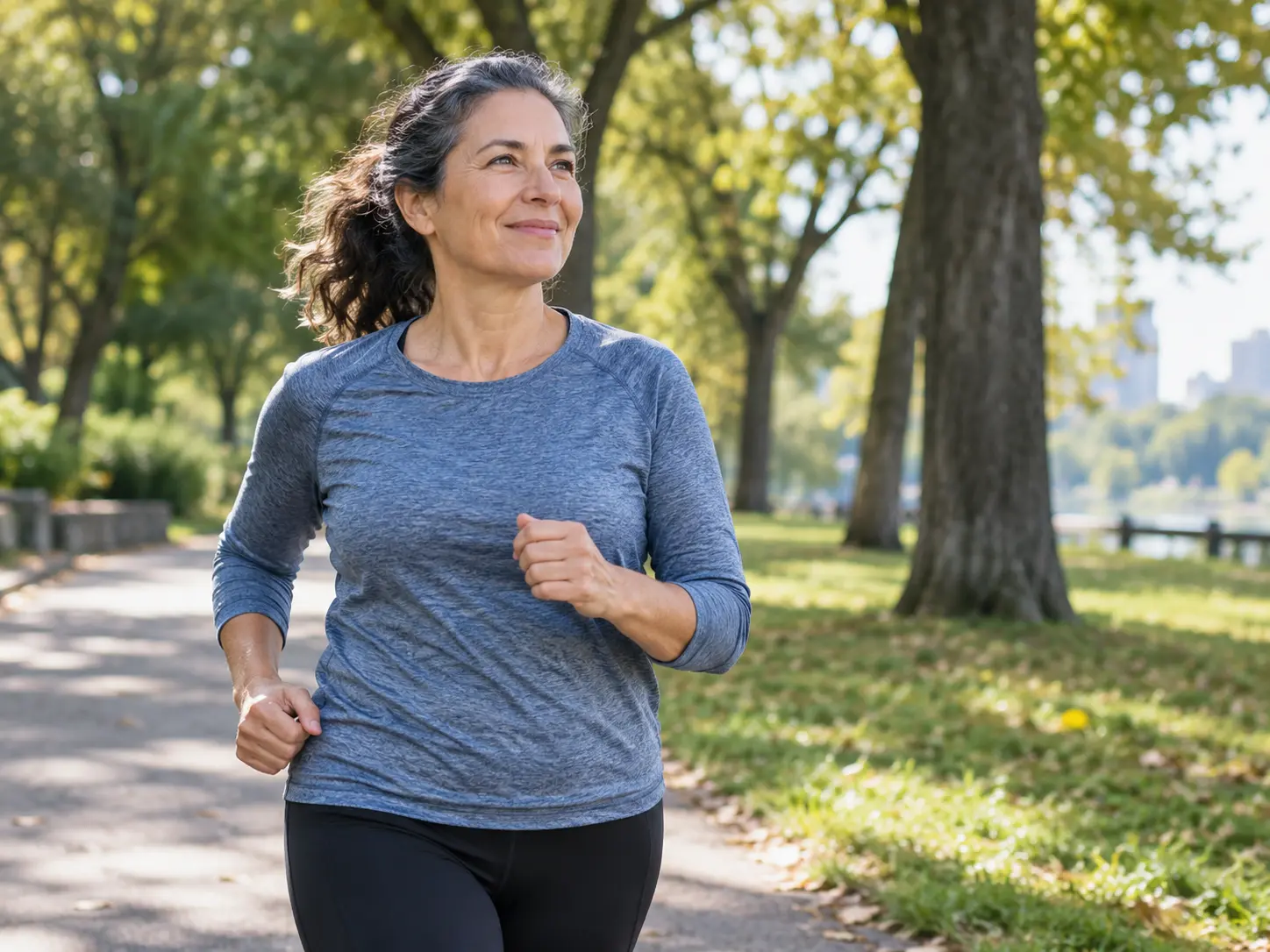
Self-concept and well-being are related, but they are not the same thing
Self-concept is the collection of beliefs people hold about themselves. In exercise research, the most responsive part is often physical self-concept: perceptions of fitness, strength, sport competence, body-related confidence and physical capability. Global self-esteem is broader. It reflects overall self-evaluation and is influenced by relationships, work, health, identity, finances and many other areas of life, so it may change less readily after a single exercise program.
Well-being is also a broad label. Studies may measure positive affect, life satisfaction, anxiety, psychosomatic complaints or self-rated well-being. Two studies can therefore both ask whether exercise improves “well-being” while assessing quite different outcomes. This matters when interpreting the evidence: a reduction in physical complaints is not the same result as an increase in life satisfaction, and a better physical self-concept does not automatically imply a large change in global self-esteem.
The distinction is consistent with long-standing exercise psychology models. The Exercise and Self-Esteem Model proposes that exercise experiences can first change more specific perceptions such as physical competence and physical self-worth, with possible effects on broader self-esteem occurring further up a hierarchy of self-evaluations. That framework helps explain why exercise studies often find the clearest psychological changes in domains closest to the activity itself.
What the six-month field experiments found
Alfermann and Stoll examined middle-aged adults in two field experiments lasting six months. Participants were randomly assigned to exercise or comparison conditions. The researchers measured physical self-concept, self-esteem and subjective well-being, including trait anxiety and psychosomatic complaints. The two experiments are informative because their control groups were different, allowing a closer look at whether improvement reflected exercise itself or the broader effects of joining a structured program.
Experiment 1: exercise versus waiting list
In the first experiment, 24 women and men completed an exercise program and were compared with a wait-list control group of 13 people. The program combined endurance, strength, coordination and flexibility work in weekly supervised sessions. After six months, the exercisers showed significant improvement in physical self-concept and reported fewer psychosomatic complaints than the wait-list group. These results are consistent with the idea that regular, structured activity can change how people evaluate their physical functioning.
The study was small, however, and the comparison group received no parallel supervised activity during the same period. That leaves open several explanations beyond the physiological effects of exercise: participants had an instructor, a scheduled activity, expectations of benefit, repeated social contact and opportunities to experience mastery. All of those factors can influence self-perception or well-being.
Experiment 2: exercise versus attention-control programs
The second experiment used a more demanding comparison. Fifty-seven adults participated in six-month running or mixed-sports programs, while 36 people in attention-control conditions took part in relaxation or back-training programs. Outcomes were assessed before the programs, after six months and again six months later. Across several measures, improvements over time were seen in more than just the exercise groups, and motor performance also improved across groups.
That result does not mean exercise was ineffective. It means the active control conditions also contained ingredients that could be helpful: structured participation, professional attention, skill practice, social contact and a reason to focus on health. The authors concluded that exercise was one strategy for improving mental health, not the only strategy. For an explainer about exercise and self-concept, that is arguably the study's most important lesson.
Exercise may change self-concept most when people can see, feel and sustain gains in what their bodies can do.
Later research supports an association, but causality varies by study
A 2009 study of 248 adults aged 31 to 49 in the Basque Country found that people who described themselves as more physically active also reported more positive physical self-concept. Women who were more active reported more positive perceptions of physical ability, condition, strength and overall physical self-concept; active men scored more positively on physical ability, condition and physical self-concept. People reporting activity more than three times per week also tended to rate several physical self-perceptions more positively.
That evidence is useful because the population is directly relevant to midlife, but the design was cross-sectional. It cannot establish whether activity improved self-concept, whether people with more positive physical self-perceptions were more likely to be active, or whether both were influenced by a third factor such as health, social support or prior sport experience.
Randomized evidence from older adults points in a compatible direction. In a six-month home-based trial involving 307 low-active adults with a mean age of 71, a flexibility, toning and balance program improved physical self-worth and perceived physical condition relative to an attention-control condition, with assessments continuing to 12 months. The population was older than the midlife group considered here, so the trial strengthens the general plausibility of exercise-related changes in physical self-evaluation without proving that the same effect size applies to middle-aged adults.
Well-being evidence is broader than the self-concept literature
The research base is larger when the outcome is well-being rather than self-concept. A 2021 meta-analysis of healthy participants across age groups found a small positive overall relationship between physical activity and subjective well-being (standardized effect d = 0.36, 95% CI 0.30 to 0.42). The association was stronger for positive affect than for cognitive well-being and was not evident for negative affect in that analysis. The mix of experimental, quasi-experimental and correlational studies means the pooled estimate summarizes several kinds of evidence rather than one uniform causal effect.
A 2020 systematic review prepared from reviews, meta-analyses and pooled analyses concluded that strong evidence supported improvements in quality of life and well-being from physical activity in adults and older adults compared with minimal or no-treatment controls. More recent large syntheses also show that exercise can reduce symptoms of depression and anxiety across many populations. Those outcomes are related to well-being, but they are clinically distinct from self-concept and should not be used as if they were direct measurements of the same construct.
Middle-aged samples also show supportive evidence. A randomized trial in men at elevated cardiovascular risk examined health counseling and exercise training and included self-rated health and well-being as outcomes. Observational studies in middle-aged adults from South Korea and China have found positive associations between exercise participation or adherence and subjective well-being. These results are consistent with a benefit, but observational pathways can run in both directions: people who feel better may also be more able or motivated to exercise.
Selected evidence at a glance
Evidence | Population and design | Time frame | Main finding | Key limitation |
Alfermann and Stoll, 2000 | 2 randomized field experiments; middle-aged adults | 6 months | Physical self-concept improved versus wait-list; active-control study showed improvement was not exercise-specific across all outcomes | Small samples; different controls across experiments |
Esnaola & Zulaika, 2009 | 248 adults aged 31–49; cross-sectional | Current activity patterns | More active adults reported more positive physical self-concept on several dimensions | Association cannot establish direction of causality |
Awick et al., 2017 | 307 low-active older adults; randomized trial | 6 months plus 12-month assessment | Home-based exercise improved physical self-worth and perceived physical condition relative to attention control | Older population; not a direct midlife estimate |
Buecker et al., 2021 | Meta-analysis of healthy participants across ages | Multiple study durations | Small positive overall association with subjective well-being, d = 0.36 | Heterogeneous designs and well-being measures |
Wang et al., 2026 | 411 completers aged 45–75; longitudinal observational study | 12 months | Exercise adherence associated with later subjective well-being; identity and positive emotion were statistical mediators | Observational; does not prove causal mediation |
Why exercise could affect how people see themselves
Several mechanisms can operate at the same time. None requires assuming that exercise simply “boosts confidence” in a uniform way. The most plausible pathways are specific and behavioral:
- Mastery and competence: completing a session, learning a movement or improving endurance gives direct evidence of capability.
- Physical feedback: changes in stamina, strength, mobility or coordination can alter perceptions of what the body can do.
- Self-efficacy: repeated successful experiences can increase confidence in the ability to plan and maintain activity.
- Identity and routine: sustained participation can make being an active person part of self-definition rather than an occasional task.
- Social context: group exercise can add encouragement, belonging and shared achievement, while supervised programs also provide attention and structure.
What a realistic psychological benefit looks like
Psychological change from exercise is usually more specific than the idea of simply becoming a more confident person. Someone may notice that stairs feel easier, that a planned session is no longer intimidating, or that they can complete a distance or resistance level that previously felt out of reach. Those experiences can shift physical self-concept because they provide repeated evidence about capability. A person can gain that benefit even if body weight changes little or not at all.
Well-being can also improve without every mood state changing in the same direction. Meta-analytic work suggests physical activity is more consistently related to positive affect and quality-of-life measures than to every component of negative affect. That pattern is important in midlife, when exercise may coexist with work pressure, caregiving, sleep disruption, chronic symptoms or other sources of stress. A useful outcome may be greater energy, a stronger sense of competence or better daily functioning rather than a complete absence of distress.
What type and amount of activity makes sense
There is no evidence that one special form of exercise is uniquely required to improve self-concept or well-being. The older and newer studies include mixed exercise, running, walking, flexibility, balance and other structured programs. A sensible program is therefore one that can be performed safely, repeated consistently and progressed enough for the person to experience competence or improved function.
For general health, World Health Organization guidance for adults recommends 150 to 300 minutes of moderate-intensity aerobic activity per week, or 75 to 150 minutes of vigorous activity, or an equivalent combination. Muscle-strengthening activity involving major muscle groups is recommended on two or more days per week. These are public-health targets, not a proven psychological “dose” for self-concept. Someone starting from inactivity can still gain health benefits from smaller amounts and increase gradually.
For psychological outcomes, adherence may matter as much as the nominal program. A routine that is excessively difficult, painful or incompatible with work and family responsibilities is unlikely to provide repeated mastery experiences. Conversely, a modest plan that becomes sustainable can generate consistent feedback about capability. In practice, choosing activities that fit preference, access and physical capacity may be more important than chasing a particular exercise label.
How to read the evidence without overclaiming
The direct evidence for physical self-concept in middle-aged adults is promising but not large. The foundational 2000 experiments had small samples, and later midlife work includes observational designs. Stronger evidence exists for broader outcomes such as quality of life, depression and anxiety, but those findings cannot simply be relabeled as proof about self-concept. Age also matters: results from older adults help show that psychological change remains possible later in life, but they do not perfectly represent people in their 40s or 50s.
Control groups are another major issue. Exercise often looks more effective when compared with no program than when compared with an active intervention that provides attention, social contact or relaxation. The second Alfermann and Stoll experiment demonstrates this directly. An improvement within an exercise group is therefore not enough to establish that exercise caused the whole change.
The most defensible conclusion is narrower: regular exercise can support physical self-perceptions and some dimensions of well-being in midlife, and broader evidence indicates meaningful mental-health benefits from physical activity. The effect is not guaranteed, is not identical across outcomes, and is shaped by the program, the comparison condition and the person taking part. Exercise can be part of a mental-health strategy, but persistent distress, depression, anxiety or medically unexplained symptoms may require assessment and treatment beyond an exercise plan.
Frequently asked questions
Does exercise improve self-esteem in middle-aged adults?
Exercise can improve physical self-concept, especially perceptions of fitness, competence and physical capability. Evidence for changes in global self-esteem is less direct and more variable. Midlife studies are promising but not extensive, so it is more accurate to say exercise can support self-evaluation rather than guaranteeing a broad rise in self-esteem.
How long does exercise take to affect self-concept or well-being?
There is no established psychological minimum. The key field experiments discussed here ran for six months, while other programs and reviews include shorter and longer periods. Changes may appear as people accumulate mastery experiences and improved function. A sustainable routine is more informative than expecting a fixed number of weeks to work for everyone.
Is aerobic exercise better than strength training for well-being?
Current evidence does not support one universally superior exercise mode for self-concept or well-being. Studies have reported benefits with aerobic, mixed, strength, flexibility and balance-based programs. The best choice is generally an activity that is safe, accessible and repeatable enough to produce regular participation and a sense of competence or progress.
Can exercise replace mental-health treatment?
Exercise can support mental health and broader evidence shows reductions in depression and anxiety symptoms, but it is not a substitute for assessment or treatment when symptoms are persistent, severe or impair daily life. Exercise can be one component of care alongside psychological, social or medical support depending on the person's needs.
What is a reasonable starting point for an inactive adult?
Public-health guidance emphasizes that some activity is better than none and that inactive adults can start with small amounts before gradually increasing frequency, intensity and duration. For general health, the longer-term target is 150–300 minutes of moderate aerobic activity per week plus muscle-strengthening work on at least two days.
Sources
- Alfermann and Stoll. Effects of physical exercise on self-concept and well-being. International Journal of Sport Psychology. 2000;31(1):47–65.
- Esnaola I, Zulaika LM. Physical activity and physical self-concept in a sample of middle-age Basque adults. Perceptual and Motor Skills. 2009;108(2):479–490.
- Sonstroem RJ, Morgan WP. Exercise and self-esteem: rationale and model. Medicine & Science in Sports & Exercise. 1989;21(3):329–337.
- Awick EA, Ehlers DI, Fanning J, et al. Effects of a home-based DVD-delivered physical activity program on self-esteem in older adults: results from a randomized controlled trial. Psychosomatic Medicine. 2017;79(1):71–80.
- Engberg E, Liira H, Kukkonen-Harjula K, et al. The effects of health counseling and exercise training on self-rated health and well-being in middle-aged men: a randomized trial. Journal of Sports Medicine and Physical Fitness. 2017;57(6):916–922.
- You S, Shin K. Relationships among exercise beliefs, physical exercise, and subjective well-being: evidence from Korean middle-aged adults. Health Care for Women International. 2017;38(12):1263–1274.
- Buecker S, Simacek T, Ingwersen B, Terwiel S, Simonsmeier BA. Physical activity and subjective well-being in healthy individuals: a meta-analytic review. Health Psychology Review. 2021;15(4):574–592.
- Marquez DX, Aguiñaga S, Vásquez PM, et al. A systematic review of physical activity and quality of life and well-being. Translational Behavioral Medicine. 2020;10(5):1098–1109.
- Mijalković S, Stojanović S, Lilić A, et al. The effects of physical activity on self-esteem in older adults: a systematic review. Frontiers in Public Health. 2025;13:1595087.
- Munro NR, et al. Effect of exercise on depression and anxiety symptoms: systematic umbrella review with meta-meta-analysis. British Journal of Sports Medicine. 2026.
- Wang J, Jia H, Wang H. Effects of exercise adherence on subjective wellbeing in middle-aged and older adults: a three-wave longitudinal chain mediation study. Frontiers in Psychology. 2026;17:1923252.
- World Health Organization. WHO guidelines on physical activity and sedentary behaviour. Geneva: World Health Organization; 2020.

Mara Kenwick — author
Mara Kenwick is a health science writer with academic training in biomedical science and public health. She completed a BSc in Biomedical Science before an MPH focused on epidemiology, prevention and the interpretation of population-health evidence. Her early...
This article is for general information and is not medical advice. It was reviewed for accuracy by a qualified clinician; decisions about your health should be made with your own doctor.
Related

How self-talk patterns relate to competitive anxiety in sport
Feeling Fit and Enjoying Exercise: A 2002 Study of Women

Selenium and cancer prevention: what the evidence shows

How RSV spreads: lessons from a 1981 transmission study

Vitamin B6 for mastalgia: what the clinical trial found

Polio vaccines in 1960: what the debate got right and wrong