Interstitial cystitis and why the bladder hurts without an infection
Interstitial cystitis, known too as bladder pain syndrome, is best described as long-lasting bladder pain with negative routine urine cultures, and its likely sources are a damaged lining, overreactive nerves and, in one subtype, true inflammation of the bladder tissue (Hanno et al., 2011; Akiyama, 2021; Lim et al., 2024). In a large US survey, 2.70% to 6.53% of women had matching symptoms, depending on the definition used (Berry et al., 2011). In the survey, just 9.7% of women reported having been given this diagnosis (Berry et al., 2011).
The article explains what the condition is, how often it occurs, which symptoms are typical and what researchers think causes the pain. It then compares it with a bladder infection, describes how the diagnosis is reached and summarises what treatment studies measured, before separating established findings from open questions. The account draws on clinical guidelines, population surveys, tissue studies, a randomised trial and reviews.

Evidence last checked 19 Nov 2026 · 12 min
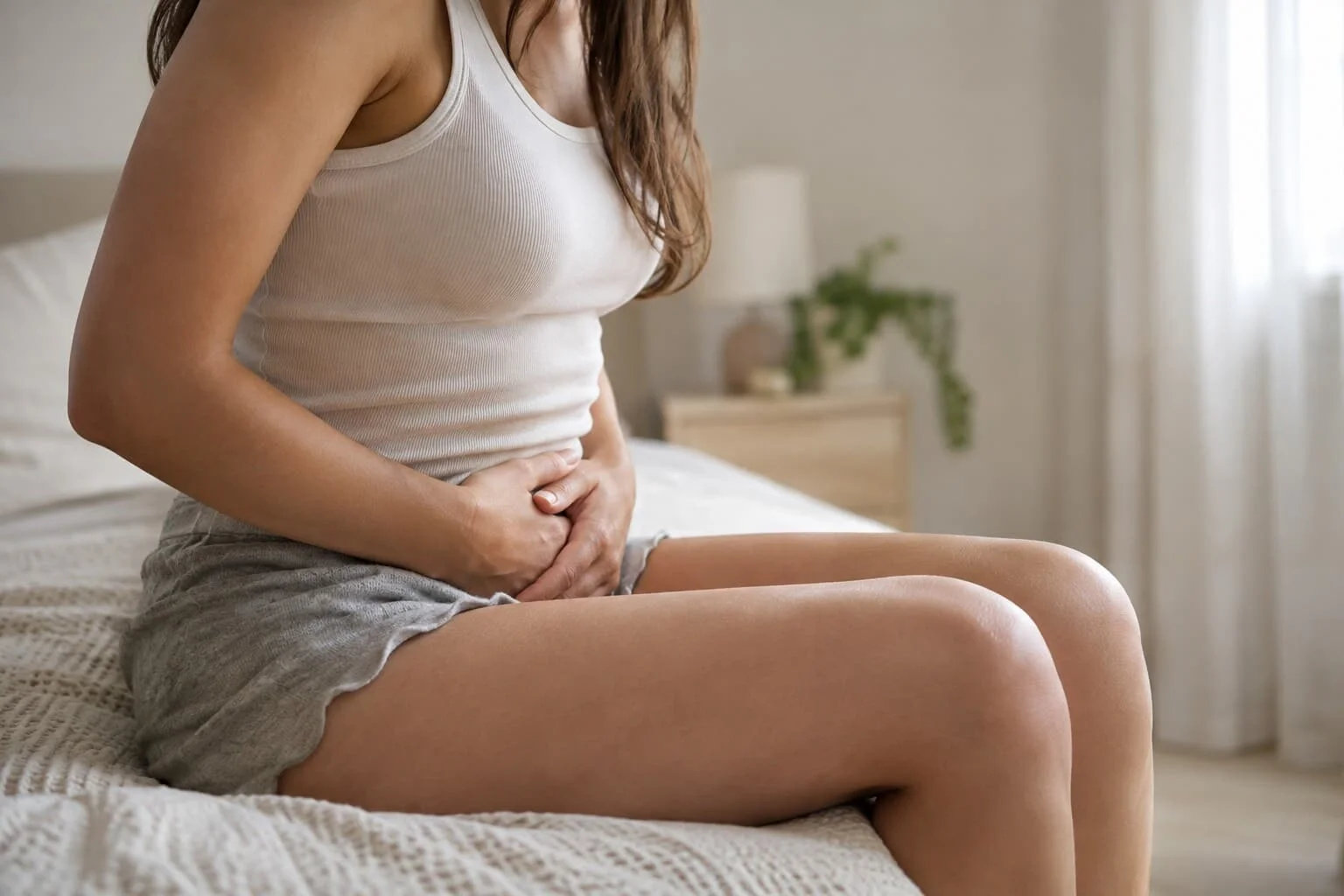
What interstitial cystitis is
The 2011 guideline of the American Urological Association describes the condition as an unpleasant feeling of pressure, discomfort or pain that seems to come from the bladder, with urinary symptoms lasting longer than six weeks, once infection and other causes have been ruled out (Hanno et al., 2011). The panel called the naming controversial and used interstitial cystitis and bladder pain syndrome interchangeably (Hanno et al., 2011).
Definitions and the name bladder pain syndrome
A European expert society, ESSIC, argued in 2008 that the name interstitial cystitis had become misleading and proposed bladder pain syndrome instead (van de Merwe et al., 2008). Its criteria require long-standing pelvic pain, pressure or discomfort that the patient links to the bladder, together with a further urinary complaint, for instance a constant urge to go or frequent voiding (van de Merwe et al., 2008). Conditions that could explain the same symptoms have to be excluded (van de Merwe et al., 2008). The proposal also asked clinicians to consider symptoms in other organs and emotional or sexual effects (van de Merwe et al., 2008).
Hunner lesions and other subtypes
One 2021 review argues that the label covers several distinct disorders rather than one (Akiyama, 2021). The Hunner type shows reddish lesions at cystoscopy and proven chronic inflammation beneath the lining, with stronger local immune activity and loss of surface cells (Akiyama, 2021). Cases lacking Hunner lesions show little sign of disease in the bladder itself and are linked instead to abnormal nerve signalling and pain sensitisation in the brain and spinal cord (Akiyama, 2021). In one review, bladder tissue from people without Hunner lesions had gene activity much like that of normal bladders (Akiyama, 2021).
Hunner lesions are uncommon. StatPearls puts them at 5% to 10% of cases, and people who have them are typically older and have more severe bladder symptoms and a smaller bladder capacity (Lim et al., 2024; Akiyama, 2021).
How common interstitial cystitis is
Definitions matter. One review reports prevalence ranging from roughly 52 to 500 per 100,000 women, against 8 to 41 per 100,000 men (Davis et al., 2014). Symptom surveys give far higher figures: in RICE, a RAND survey of US households, 6.53% of women met a broad definition while 2.70% met a strict one (Berry et al., 2011). No single definition combined high sensitivity with high specificity, the latter judged against other bladder and pelvic pain conditions (Berry et al., 2011).
Men are affected too. The same research group found 4.2% and 1.9% of men with matching symptoms, which suggests it may be underdiagnosed among men (Suskind et al., 2013). The male definitions had not been validated, and the response rate was 36% (Suskind et al., 2013). Most studies show women outnumbering men by 5:1 or more (Berry et al., 2011).
In the women's survey, prevalence on the strict definition peaked at 3.41% between 50 and 59 years (Berry et al., 2011). The researchers stress that symptoms were self-reported rather than confirmed by examination (Berry et al., 2011).
Interstitial cystitis symptoms and how they change
Symptoms usually combine bladder pain with frequent urination and night-time waking to urinate (Jhang and Kuo, 2016). Not everyone describes pain: many patients speak of pressure and may deny pain altogether (Hanno et al., 2011).
Pain linked to bladder filling
Pain, which patients may also call pressure or discomfort, defines the condition (Hanno et al., 2011). It typically builds while the bladder fills, then eases for a while after urination, which drives frequent trips to the toilet by day and by night (Lim et al., 2024). Relief after voiding is usually partial, and leaking urine is not part of the usual picture (Lim et al., 2024).
Some people also notice a burning feeling on urination or pain during sex (Lim et al., 2024). More than 70% of affected men report sexual dysfunction (Lim et al., 2024).
Urgency, frequency and flares
Frequent urination is almost universal, reported by 92% of patients in one population, but it does not set this condition apart from other bladder disorders (Hanno et al., 2011). People with interstitial cystitis tend to urinate to avoid or relieve pain, whereas people with an overactive bladder urinate to avoid leaking (Hanno et al., 2011). One study found a median of two years before frequency, urgency and pain had all appeared (Hanno et al., 2011). Symptoms tend to flare and settle, and full remission is rare (Lim et al., 2024).
Milder cases may show only frequency and urgency without obvious pain (Jhang and Kuo, 2016). Over a long course, many people become anxious or depressed or sleep poorly (Lim et al., 2024). Among women with symptoms drawn from the general population, 34.8% screened positive for probable depression and 51.9% for recent panic attacks, which are screening results rather than confirmed diagnoses (Watkins et al., 2011).
Overlap with other pain conditions
Interstitial cystitis often occurs alongside other long-term pain disorders: in the MAPP research network, 38% of 424 people with urological chronic pelvic pain also reported fibromyalgia, chronic fatigue syndrome or irritable bowel syndrome (Krieger et al., 2015). The sample combined men and women and came from referral centres, so it may not reflect less selected patients (Krieger et al., 2015). Participants with such overlap had more severe urinary symptoms and more depression and anxiety (Krieger et al., 2015). Why these syndromes travel together is unclear (Krieger et al., 2015).
People with interstitial cystitis are much more likely than the general population to have lupus (Lim et al., 2024). Close links are also reported with Sjogren syndrome, Hashimoto's thyroiditis and rheumatoid arthritis, conditions described in an article on autoimmune disease (Lim et al., 2024).
What causes interstitial cystitis and why it hurts without infection
The cause remains poorly understood and probably involves several factors (Lim et al., 2024). Proposed mechanisms include a faulty bladder lining, mast cell activation, nerve-driven inflammation, autoimmunity and hidden infection, and no single explanation fits every patient (Jhang and Kuo, 2016).
The bladder lining and its protective layer
The lining is the first suspect. It produces glycosaminoglycans, a surface coating that keeps irritants in urine away from the tissue below (Lim et al., 2024). Biopsies from patients show lower levels of this coating and lost tight junctions between cells, which researchers describe as a leaky urothelium (Lim et al., 2024). Thinning or loss of the surface layer is the finding seen most often in tissue, and through a leaky barrier substances such as potassium may reach nerves and muscle and provoke pain (Jhang and Kuo, 2016).
Nerves, mast cells and pain sensitisation
Nerves appear to amplify the problem. An acute irritation such as a bacterial infection can raise the activity of sensory nerves and leave them more sensitive in the long term (Jhang and Kuo, 2016). Repeated nerve stimulation can then change how the spinal cord handles pain signals, especially in people without Hunner lesions (Akiyama, 2021). Some patients also show increased grey matter in brain regions that process pain (Lim et al., 2024).
Mast cells, immune cells that release inflammatory chemicals, have long been regarded as a typical feature of the bladder tissue, although newer evidence questions their importance (Akiyama, 2021). StatPearls reports chronic stress in more than 50% of patients and links it to the onset and worsening of symptoms, a relationship drawn from observation rather than trials (Lim et al., 2024). Nerve irritation is also at the centre of piriformis syndrome and the sciatic nerve, covered in a related article.
Bacteria and the urinary microbiome
Infection has been tested as a cause. Urine was long assumed to be sterile, but gene sequencing shows that it contains many bacteria even without infection (Bhide et al., 2020). Two small studies, with 23 patients against 18 controls and 21 against 20, found no significant gap between the urinary bacteria of affected and unaffected women, and the authors conclude that these bacteria seem not to drive the disease (Bhide et al., 2020). In a randomised trial of antibiotics, 20% of treated patients reported 50% or greater improvement against 16% on placebo, a difference that was not significant (Hanno et al., 2011).
Interstitial cystitis vs UTI and how the diagnosis is made
Unlike a bladder infection, interstitial cystitis requires symptoms that persist for 6 weeks or longer, with negative cultures and nothing else to explain them (Lim et al., 2024). Because doctors reach it only by excluding other causes, it is often made late or confused with other problems (Lim et al., 2024). Diagnosis is often slow. The guideline panel describes frequent misdiagnosis, underdiagnosis and delay (Hanno et al., 2011).
Why urine cultures stay negative
The basic work-up is a urinalysis plus a culture (Hanno et al., 2011). The guideline notes that a culture can pick up small numbers of bacteria that a dipstick or microscope would miss, even when the urinalysis is negative (Hanno et al., 2011). In interstitial cystitis the culture is negative by definition (Lim et al., 2024). Women with strict-definition symptoms in the RICE survey had seen 3.5 doctors on average, and infection was among the diagnoses they most often received (Berry et al., 2011).
One of the RICE screening criteria was that bladder symptoms had not resolved after antibiotic treatment (Watkins et al., 2011). Just 40.4% had consulted a urologist (Berry et al., 2011). Bacterial infections behave differently, as a related article on how staph infections start on the skin and reach the blood shows.
Cystoscopy and ruling out other conditions
According to the guideline, cystoscopy and urodynamic tests are not needed in uncomplicated cases and are kept for uncertain ones, a statement based on expert opinion (Hanno et al., 2011). A Hunner lesion is the one cystoscopic finding that reliably points to the diagnosis (Hanno et al., 2011). Small bleeding points called glomerulations can also appear in people without symptoms (Hanno et al., 2011). Tissue samples show no finding specific to the condition (Lim et al., 2024).
The potassium sensitivity test, once used to probe the leaky lining, is not recommended by the guideline because it is neither sensitive nor specific enough to change decisions (Hanno et al., 2011). No validated urine or blood biomarker exists yet (Jhang and Kuo, 2016; Akiyama, 2021).
What treatment research has found
Most treatments benefit only some patients, and nobody can tell in advance which ones. For this reason, most statements in the treatment part of the guideline are graded as options (Hanno et al., 2011).
How guidelines rate the evidence
Placebo responses complicate the picture, and in the 2011 guideline the evidence for each oral medicine was rated grade B or grade C (Hanno et al., 2011). The guideline's evidence base began with 86 treatment articles, a 2022 update added 53 more studies, and the 2022 amendment dropped the earlier ranking of treatments from first-line to sixth-line (Clemens et al., 2022). It stresses an individual approach based on each patient's characteristics and recognises subgroups within the condition (Clemens et al., 2022).
No single treatment helps the majority (Hanno et al., 2011). StatPearls likewise states that for most people no therapy offers a cure or lasting relief (Lim et al., 2024). Symptoms can also resolve spontaneously or return unexpectedly regardless of treatment (Lim et al., 2024).
Safety findings from treatment studies
The only oral medicine with US Food and Drug Administration approval for the condition is pentosan polysulfate, and studies of its benefit conflict (Lim et al., 2024). In a placebo-controlled trial of 368 adults, it showed no effect over placebo, while 40.7% of the placebo group improved by at least 30% (Nickel et al., 2015). It was stopped early (Nickel et al., 2015). Since 2018, eye specialists have linked prolonged use of the drug to a progressive disease of the retina, a finding later supported by several large studies that an ophthalmology chapter reviews in detail (Margines et al., 2024).
The risk appears to rise with the duration and cumulative amount of use (Margines et al., 2024; Lim et al., 2024). Reported prevalence among users sits between 0.7% and 3.4% in insurance claims studies and from 16.5% to 23.1% in screening studies, which may overestimate it (Margines et al., 2024). Reversibility is uncertain: one chapter calls the damage irreversible, the other generally not reversible, though stopping the drug may help slow or reverse it (Lim et al., 2024; Margines et al., 2024). The 2022 guideline amendment added a statement on this possible adverse event (Clemens et al., 2022).
What is established about interstitial cystitis and what remains uncertain
Several points are well supported. Interstitial cystitis is chronic bladder pain with negative urine cultures, Hunner lesions mark a distinct inflammatory subtype, and symptoms often overlap with other long-term pain disorders (Lim et al., 2024; Akiyama, 2021; Krieger et al., 2015). Population surveys show that many people with matching symptoms have never received the diagnosis (Berry et al., 2011).
Measure | Group studied | Result |
Women meeting symptom definitions | US national survey | 2.70% to 6.53% |
Men meeting symptom definitions | US survey of men | 1.9% to 4.2% |
Women with symptoms who had the diagnosis | US national survey | 9.7% |
Other chronic pain syndromes present | 424 people with pelvic pain | 38% |
Probable depression on screening | Women with symptoms | 34.8% |
Responders in the placebo group | 48 of 118 placebo patients in a 368-person trial | 40.7% |
Note: the rows come from population surveys, a referral-centre cohort and one randomised trial (Berry et al., 2011; Suskind et al., 2013; Krieger et al., 2015; Watkins et al., 2011; Nickel et al., 2015). They describe groups under study conditions and cannot predict the course for any one person.
Interstitial cystitis is best understood as bladder pain without infection that probably has more than one cause, from inflammation in the Hunner subtype to oversensitive nerves in the rest (Akiyama, 2021; Jhang and Kuo, 2016).
Much remains uncertain. The cause, exact diagnosis and true frequency remain unclear (Patnaik et al., 2017). There is no gold-standard test, and a clinically useful urinary biomarker has yet to be found (Patnaik et al., 2017; Lim et al., 2024). The link with depression and anxiety comes from cross-sectional data, and the direction of the relationship is unknown (Watkins et al., 2011).
The women's RICE survey was funded by the US National Institute of Diabetes and Digestive and Kidney Diseases, whose staff took part in design and analysis (Berry et al., 2011). The 2011 guideline committee was funded by the American Urological Association (Hanno et al., 2011).
Frequently asked questions
Can men get interstitial cystitis?
Yes. A RAND survey estimated that 1.9% to 4.2% of US men have matching symptoms, which approaches the figures found in women (Suskind et al., 2013). In men the condition is often labelled chronic prostatitis or overactive bladder instead, which can delay the diagnosis (Lim et al., 2024).
Is interstitial cystitis an autoimmune disease?
Not proven. Autoimmunity is one of the proposed mechanisms (Jhang and Kuo, 2016). People with the condition are more likely to have lupus and are closely linked with Sjogren syndrome (Lim et al., 2024). The autoimmune idea remains one of several competing explanations, none of which fits every patient (Jhang and Kuo, 2016).
Do certain foods make symptoms worse?
Some people report it. The guideline cites earlier research in which pain that worsened with specific foods or drinks was one of the features of a sensitive case definition (Hanno et al., 2011). This describes a pattern in symptom reports and does not show which foods matter or for whom (Hanno et al., 2011).
Is there a single test that confirms interstitial cystitis?
No. Cystoscopic findings are non-specific and no objective test confirms the diagnosis, so it rests on the symptoms patients report (Berry et al., 2011). Tests mainly exclude other causes, and a Hunner lesion is the only consistent cystoscopic finding that leads to the diagnosis (Hanno et al., 2011).
Does interstitial cystitis last for life?
It is usually long-lasting. Symptoms fluctuate in severity but rarely resolve completely, according to the RICE researchers (Berry et al., 2011). A clinical reference describes the condition as very stable, with symptoms often unchanged for up to 9 years, although spontaneous resolution can occur (Lim et al., 2024).
Sources
- Patnaik SS, Laganà AS, Vitale SG, Butticè S, Noventa M, Gizzo S, Valenti G, Rapisarda AMC, La Rosa VL, Magno C, Triolo O, Dandolu V. Etiology, pathophysiology and biomarkers of interstitial cystitis/painful bladder syndrome. Archives of Gynecology and Obstetrics. 2017;295(6):1341–1359. DOI 10.1007/s00404-017-4364-2.
- Jhang JF, Kuo HC. Pathomechanism of interstitial cystitis/bladder pain syndrome and mapping the heterogeneity of disease. International Neurourology Journal. 2016;20(Suppl 2):S95–S104. DOI 10.5213/inj.1632712.356.
- Davis NF, Brady CM, Creagh T. Interstitial cystitis/painful bladder syndrome: epidemiology, pathophysiology and evidence-based treatment options. European Journal of Obstetrics, Gynecology and Reproductive Biology. 2014;175:30–37. DOI 10.1016/j.ejogrb.2013.12.041.
- Hanno PM, Burks DA, Clemens JQ, Dmochowski RR, Erickson D, FitzGerald MP, Forrest JB, Gordon B, Gray M, Mayer RD, Newman D, Nyberg L, Payne CK, Wesselmann U, Faraday MM. AUA guideline for the diagnosis and treatment of interstitial cystitis/bladder pain syndrome. Journal of Urology. 2011;185(6):2162–2170. DOI 10.1016/j.juro.2011.03.064.
- Clemens JQ, Erickson DR, Varela NP, Lai HH. Diagnosis and treatment of interstitial cystitis/bladder pain syndrome. Journal of Urology. 2022;208(1):34–42. DOI 10.1097/JU.0000000000002756.
- van de Merwe JP, Nordling J, Bouchelouche P, Bouchelouche K, Cervigni M, Daha LK, Elneil S, Fall M, Hohlbrugger G, Irwin P, Mortensen S, van Ophoven A, Osborne JL, Peeker R, Richter B, Riedl C, Sairanen J, Tinzl M, Wyndaele JJ. Diagnostic criteria, classification, and nomenclature for painful bladder syndrome/interstitial cystitis: an ESSIC proposal. European Urology. 2008;53(1):60–67. DOI 10.1016/j.eururo.2007.09.019.
- Lim Y, Leslie SW, O'Rourke S. Interstitial Cystitis/Bladder Pain Syndrome. In: StatPearls. Treasure Island (FL): StatPearls Publishing; 2024 (updated 7 October 2024). NCBI Bookshelf NBK570588.
- Berry SH, Elliott MN, Suttorp M, Bogart LM, Stoto MA, Eggers P, Nyberg L, Clemens JQ. Prevalence of symptoms of bladder pain syndrome/interstitial cystitis among adult females in the United States. Journal of Urology. 2011;186(2):540–544. DOI 10.1016/j.juro.2011.03.132.
- Suskind AM, Berry SH, Ewing BA, Elliott MN, Suttorp MJ, Clemens JQ. The prevalence and overlap of interstitial cystitis/bladder pain syndrome and chronic prostatitis/chronic pelvic pain syndrome in men: results of the RAND Interstitial Cystitis Epidemiology male study. Journal of Urology. 2013;189(1):141–145. DOI 10.1016/j.juro.2012.08.088.
- Krieger JN, Stephens AJ, Landis JR, Clemens JQ, Kreder K, Lai HH, Afari N, Rodriguez L, Schaeffer A, Mackey S, Andriole GL, Williams DA. Relationship between chronic nonurological associated somatic syndromes and symptom severity in urological chronic pelvic pain syndromes: baseline evaluation of the MAPP study. Journal of Urology. 2015;193(4):1254–1262. DOI 10.1016/j.juro.2014.10.086.
- Akiyama Y. Biomarkers in interstitial cystitis/bladder pain syndrome with and without Hunner lesion: a review and future perspectives. Diagnostics. 2021;11(12):2238. DOI 10.3390/diagnostics11122238.
- Bhide A, Tailor V, Khullar V. Interstitial cystitis/bladder pain syndrome and recurrent urinary tract infection and the potential role of the urinary microbiome. Post Reproductive Health. 2020;26(2):87–90. DOI 10.1177/2053369120936426.
- Watkins KE, Eberhart N, Hilton L, Suttorp MJ, Hepner KA, Clemens JQ, Berry SH. Depressive disorders and panic attacks in women with bladder pain syndrome/interstitial cystitis: a population-based sample. General Hospital Psychiatry. 2011;33(2):143–149. DOI 10.1016/j.genhosppsych.2011.01.004.
- Nickel JC, Herschorn S, Whitmore KE, Forrest JB, Hu P, Friedman AJ, Baseman AS. Pentosan polysulfate sodium for treatment of interstitial cystitis/bladder pain syndrome: insights from a randomized, double-blind, placebo controlled study. Journal of Urology. 2015;193(3):857–862. DOI 10.1016/j.juro.2014.09.036.
- Margines JB, Tripathy K, Hobbs SD. Pentosan Polysulfate Maculopathy. In: StatPearls. Treasure Island (FL): StatPearls Publishing; 2024 (updated 1 March 2024). NCBI Bookshelf NBK589706.

Ellen Marsh — author
Ellen writes Health & Medicine explainers for Cabdirect, with a focus on public health, disease prevention and the interpretation of medical research for general readers. Her academic background combines biomedical sciences with postgraduate study in populatio...
This article is for general information and is not medical advice. It was reviewed for accuracy by a qualified clinician; decisions about your health should be made with your own doctor.
Related

Piriformis syndrome and how a hip muscle irritates the sciatic nerve
What autoimmune disease is and why the immune system attacks the body
How staph infections start on the skin and reach the blood

Hyperemesis gravidarum and why some pregnancies bring severe vomiting
Gestational diabetes and why pregnancy changes how the body uses insulin
Ectopic pregnancy explained, from causes to early warning signs

Perimenopause symptoms and the hormone changes behind them