The Seven Countries Study: Diet and Heart Deaths in 1980
The Seven Countries Study found that groups of men eating more saturated fat, and with higher average blood cholesterol, had more coronary deaths (Pett et al., 2017; Blackburn, 2012). It followed 12,763 middle-aged men in 16 cohorts across seven countries (Kromhout et al., 2018). Its 1980 book was the 10-year follow-up report (Keys et al., 1980; Pett et al., 2017). Men in Crete got about 40% of calories from fat and Japanese cohorts about 10%, yet both had very low coronary rates (Pett et al., 2017). These links compare group averages, so they cannot show cause (Keys et al., 1986).
Below, we explain how the study was run, what published descriptions say the 1980 book found and what it could not show. We then follow the 15- and 50-year reports and the long dispute between critics and defenders. The original study is summarised in Cabdirect archive record 19841460563.
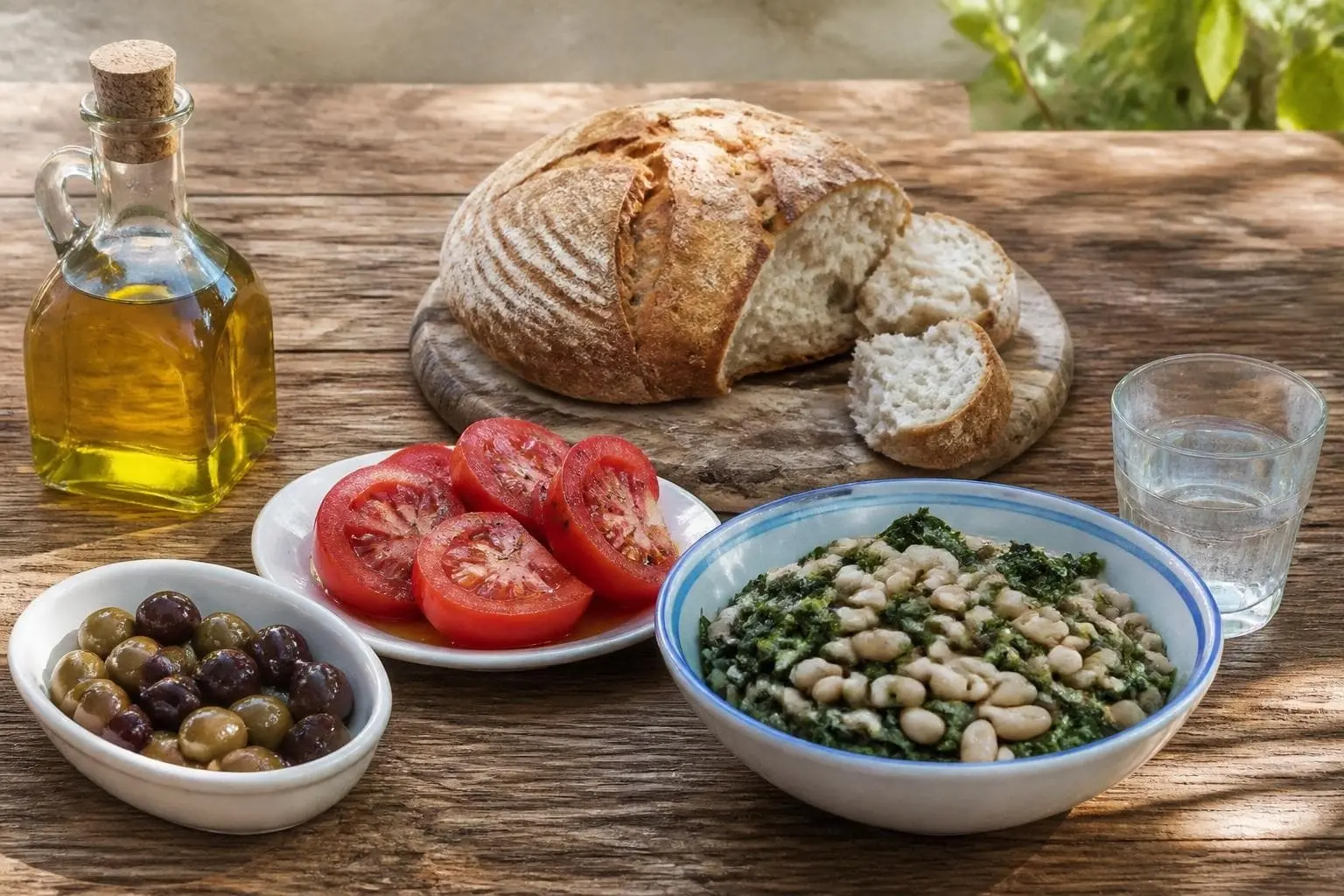
What Was the Seven Countries Study?
The Seven Countries Study was a long-term comparison of diet, risk factors and heart disease in 16 groups of middle-aged men in seven countries (Pett et al., 2017; Blackburn, 2012). Ancel Keys led it and coordinated it from Minnesota. Its own investigators describe it as the first study to examine these links systematically across contrasting populations (Blackburn, 2012).
Sources date its start between 1957 and the 1960s, reflecting a 1957 pilot in Nicotera, Italy, and baseline examinations staggered over several years (Blackburn, 2012; Pett et al., 2017; Kromhout et al., 2018).
Who took part
The study enrolled 12,763 men aged 40–59 in the United States, Italy, Greece, Yugoslavia, the Netherlands, Finland and Japan (Pett et al., 2017; Kromhout et al., 2018). Women were left out because cardiovascular disease in women was rare worldwide in the 1950s (Blackburn, 2012). Eleven cohorts lived in rural villages, where men mostly farmed, fished or worked in logging (Pett et al., 2017; Blackburn, 2012).
Standard methods in every centre
Every centre used the same measurements and diagnostic criteria, with field teams trained centrally (Blackburn, 2012). Data were coded blind and analysed centrally (Blackburn, 2012). Most cohorts were examined again after 5 and 10 years, and deaths were followed for decades afterwards (Pett et al., 2017; Blackburn, 2012).
Three book-length analyses came out of the study, in 1966, 1970 and 1980 (Pett et al., 2017). The 1980 volume, published by Harvard University Press as a Commonwealth Fund Book, is the 10-year follow-up report (Keys et al., 1980; Pett et al., 2017).
What Did the 1980 Report Find?
A 2017 white paper says the 10-year report tied coronary death rates to saturated fat and blood cholesterol across whole cohorts (Pett et al., 2017).
According to the 2017 white paper, average saturated-fat intake, measured as a share of energy, was associated with each cohort’s coronary rate, while total fat was not (Pett et al., 2017). The contrast between Greece and Japan made the point. In the white paper’s figures, Crete got about 40% of calories from fat and Corfu about 33%, against about 10% in Japan, yet all had very low coronary rates (Pett et al., 2017).
The report also looked at sugar. Sucrose intake was associated with coronary disease, but that link vanished once saturated fat was in the model, while saturated fat stayed significant after adjusting for sugar (Pett et al., 2017). In these cohorts saturated-fat and sugar intakes were themselves correlated, which made the two hard to separate (Pett et al., 2017).
The investigators’ own summary of the whole study calls high mean blood cholesterol and saturated-fat intake “a major and apparently necessary factor” in how much atherosclerotic disease a population suffers, and notes that populations getting less than 10% of energy from saturated fat had little coronary disease, whatever their total fat intake (Blackburn, 2012).
What Could the Study Not Show?
The study could not show that saturated fat causes heart disease, because its diet findings compare cohort averages (Pett et al., 2017; Kromhout et al., 2018). A correlation across 16 groups can also reflect other differences between the places where those men lived. The 1986 follow-up paper stated plainly that it claimed no causal relationships (Keys et al., 1986).
Descriptions of the 1980 analysis also point to gaps. Dietary saturated fat lost statistical significance once serum cholesterol was added to the model, which the white paper reads as a sign that serum cholesterol mediated the diet link (Pett et al., 2017). The report found relative weight inversely related to the death rate in all cohorts, and it gave little attention to foods, body mass index or smoking in relation to deaths from all causes (Pett et al., 2017). The white paper puts that down to limited statistical power or logistical problems (Pett et al., 2017).
Keys and his colleagues also concluded in 1980 that there was probably a threshold of average cholesterol below which risk might not rise (Pett et al., 2017). Later large studies found that risk rises continuously with cholesterol, with no such floor (Pett et al., 2017).
The sample also limits how far the results travel. Only men aged 40–59 took part, most of them from rural communities of the 1950s and 1960s (Blackburn, 2012). Diet was surveyed at baseline only, and only in a subsample of each cohort (Kromhout et al., 2018). Results from these men may not carry over to women, younger adults or modern urban diets.
The olive oil result belongs to a later publication. Cohorts using olive oil as their main fat had low death rates in a 1986 paper on 15-year deaths, not in the 1980 book (Keys et al., 1986).
What Did Later Follow-Ups Find?
Later reports on the same men kept finding strong links between cohort cholesterol and coronary death. At 15 years, 2,289 of 11,579 men who had been free of cardiovascular disease at entry had died, 618 of them from coronary heart disease (Keys et al., 1984). Across 15 cohorts, mean serum cholesterol and blood pressure accounted for three-quarters of the variance in coronary death rates (Keys et al., 1984). The 1984 paper added that cholesterol tended to matter less in the last five years of follow-up (Keys et al., 1984).
A 1986 paper on diet and the same 15-year deaths looked at types of fat. Death rates rose with the share of energy from saturated fat and fell with the share from monounsaturated fat (Keys et al., 1986). Differences in monounsaturated fat were almost entirely differences in oleic acid, and cohorts whose main fat was olive oil had low death rates (Keys et al., 1986).
Fifty years on
By the 50-year analyses, 97% of the men in cohorts with that much follow-up had died (Kromhout et al., 2018). Coronary death rates differed 6.7-fold between cohorts. They correlated positively with average intake of hard fat, sweet products, animal foods, saturated fat and sucrose, with coefficients of 0.68 to 0.92 (Kromhout et al., 2018). They correlated inversely with vegetable foods, starch and a Mediterranean diet score, and naturally occurring sugars showed no positive link (Kromhout et al., 2018).
Cholesterol held its place for decades. Across 10 pooled cohorts, baseline cholesterol correlated with 50-year coronary mortality at R = 0.97 at cohort level (Menotti et al., 2020). For individual men the link stayed fairly stable for at least 40 years after a single measurement, although it weakened later and turned negative in the final decade (Menotti et al., 2020).
Why Do Critics and Defenders Still Argue About It?
The study sits at the centre of a long dispute over whether Keys chose his countries to fit his hypothesis. Much of that charge rests on a graph that did not come from the Seven Countries Study (Pett et al., 2017). Keys had published a six-country comparison of national data in 1953, and in 1957 Yerushalmy and Hilleboe answered it with data from 22 countries (Pett et al., 2017). Their reply came out almost a year before the first Seven Countries cohorts were examined (Pett et al., 2017).
Two further charges concern France and Crete. According to the white paper, France was not excluded: French researchers attended the pilot in Nicotera but decided not to take part (Pett et al., 2017). Critics have also said that Greek diet records were distorted by Lent fasting. The defence is that diet was sampled in several seasons, including Lent, and that the tables for the two Greek cohorts showed no meaningful change in energy or macronutrients (Pett et al., 2017).
Sugar is the third battleground. Some critics say Keys ignored it, but the 1980 report did test sucrose, and its link faded after adjusting for saturated fat (Pett et al., 2017). Later cohort-level analyses found coronary mortality correlated with both sucrose and saturated fat, so the two remain hard to pull apart in these data (Kromhout et al., 2018).
It also matters who is answering the critics. The most detailed defence, the 2017 white paper, was reviewed by Seven Countries investigators, and the Minnesota history is signed by Henry Blackburn, a co-author of the 1980 book, so neither is a neutral referee (Pett et al., 2017; Blackburn, 2012).
How Has the Picture of Heart Disease Changed Since?
Cardiovascular disease still kills on a vast scale, but the evidence behind Keys’s cholesterol idea is now far broader. WHO estimates that 19.8 million people died of cardiovascular diseases in 2022, about 32% of all deaths, and 85% of those deaths were from heart attack and stroke (World Health Organization, 2025).
The cholesterol side of the hypothesis now rests on genetics and trials as well as cohorts. A 2017 European Atherosclerosis Society consensus drew on more than 200 cohort studies, Mendelian randomisation studies and randomised trials with more than 2 million participants (Ference et al., 2017). It concluded that LDL cholesterol causes atherosclerotic cardiovascular disease (Ference et al., 2017).
Trials of a Mediterranean diet
Trials have also tested the eating pattern the study made famous. In the PREDIMED trial of 7,447 Spanish adults at high cardiovascular risk, Mediterranean diets with extra-virgin olive oil or nuts had fewer cardiovascular events than a reduced-fat control diet (Estruch et al., 2018). The hazard ratios were 0.69 and 0.72 (Estruch et al., 2018). The trial was republished in 2018, with revised analyses, after departures from random assignment were found at some sites (Estruch et al., 2018).
The Seven Countries Study is best read as a map of where heart disease was common and where it was rare, not as a trial of what any one person should eat.
Taken together, current evidence gives firmer support to the study’s point about blood cholesterol than to its specific diet correlations (World Health Organization, 2023; Hooper et al., 2020; Ference et al., 2017). The debate over saturated fat now turns on what replaces it and on how much certainty the trials allow, questions that cohort averages from the 1960s could not answer (World Health Organization, 2023; Hooper et al., 2020).
Frequently asked questions
Who ran the Seven Countries Study?
Ancel Keys led it from Minnesota with investigators from national centres in the seven countries, and 15 of them co-wrote the 1980 book (Keys et al., 1980; Blackburn, 2012). Field teams were trained centrally and used the same methods everywhere (Blackburn, 2012). The study enrolled 12,763 men aged 40–59 in 16 cohorts (Kromhout et al., 2018).
Does the Seven Countries Study show that saturated fat causes heart disease?
No. It showed that cohorts with higher average saturated-fat intake and blood cholesterol had more coronary deaths, a comparison of group averages (Pett et al., 2017). Such correlations cannot establish cause, as the 1986 diet paper said (Keys et al., 1986). Stronger causal evidence on LDL cholesterol comes from genetic studies and trials (Ference et al., 2017).
Why did Crete and Japan have so little heart disease?
Both had very low coronary rates despite very different fat intakes, about 40% of calories in Crete against about 10% in the Japanese cohorts (Pett et al., 2017). The investigators note that populations getting under 10% of energy from saturated fat had little coronary disease, and suggest there may be other protective factors in both places (Blackburn, 2012).
Was France left out of the Seven Countries Study on purpose?
According to the 2017 white paper defending the study, no. A French representative attended the pilot study in Nicotera, Italy, but French researchers then decided not to join (Pett et al., 2017). The same paper argues that invoking the later “French paradox” against the study is an anachronism (Pett et al., 2017).
How much saturated fat does WHO recommend?
WHO’s 2023 guideline advises adults and children to reduce saturated fat to 10% of total energy, preferably replacing it with polyunsaturated fat (World Health Organization, 2023). In 2019 the UK’s nutrition advisory committee kept about 10% of energy as the ceiling for the population average from age five (Scientific Advisory Committee on Nutrition, 2019).
Sources
- Keys, A., Aravanis, C., Blackburn, H., Buzina, R., Djordjevic, B. S., Dontas, A. S., Fidanza, F., Karvonen, M. J., Kimura, N., Menotti, A., Mohacek, I., Nedeljkovic, S., Puddu, V., Punsar, S., Taylor, H. L., & van Buchem, F. S. P. (1980). Seven Countries: A Multivariate Analysis of Death and Coronary Heart Disease. Harvard University Press. – Cabdirect archive record 19841460563
- Pett, K. D., Kahn, J., Willett, W. C., & Katz, D. L. (2017). Ancel Keys and the Seven Countries Study: An evidence-based response to revisionist histories [White paper]. True Health Initiative.
- Blackburn, H. (2012). Seven Countries Study. In Heart Attack Prevention: A History of CVD Epidemiology. University of Minnesota School of Public Health.
- Keys, A., Menotti, A., Aravanis, C., Blackburn, H., Djordevic, B. S., Buzina, R., Dontas, A. S., Fidanza, F., Karvonen, M. J., Kimura, N., et al. (1984). The seven countries study: 2,289 deaths in 15 years. Preventive Medicine, 13(2), 141–154.
- Keys, A., Menotti, A., Karvonen, M. J., Aravanis, C., Blackburn, H., Buzina, R., Djordjevic, B. S., Dontas, A. S., Fidanza, F., Keys, M. H., et al. (1986). The diet and 15-year death rate in the seven countries study. American Journal of Epidemiology, 124(6), 903–915.
- Kromhout, D., Menotti, A., Alberti-Fidanza, A., Puddu, P. E., Hollman, P., Kafatos, A., Tolonen, H., Adachi, H., & Jacobs, D. R., Jr. (2018). Comparative ecologic relationships of saturated fat, sucrose, food groups, and a Mediterranean food pattern score to 50-year coronary heart disease mortality rates among 16 cohorts of the Seven Countries Study. European Journal of Clinical Nutrition, 72(8), 1103–1110.
- Menotti, A., Puddu, P. E., Adachi, H., Tolonen, H., & Kafatos, A. (2020). Association of serum cholesterol with coronary heart disease mortality during 50-year follow-up in ten cohorts of the seven countries study. Nutrition, Metabolism and Cardiovascular Diseases, 30(8), 1337–1346.
- World Health Organization. (2023). Saturated fatty acid and trans-fatty acid intake for adults and children: WHO guideline. World Health Organization.
- Hooper, L., Martin, N., Jimoh, O. F., Kirk, C., Foster, E., & Abdelhamid, A. S. (2020). Reduction in saturated fat intake for cardiovascular disease. Cochrane Database of Systematic Reviews, 2020(8), CD011737.
- Scientific Advisory Committee on Nutrition. (2019). Saturated fats and health. Public Health England.
- Ference, B. A., Ginsberg, H. N., Graham, I., Ray, K. K., Packard, C. J., Bruckert, E., et al. (2017). Low-density lipoproteins cause atherosclerotic cardiovascular disease. 1. Evidence from genetic, epidemiologic, and clinical studies. A consensus statement from the European Atherosclerosis Society Consensus Panel. European Heart Journal, 38(32), 2459–2472.
- Estruch, R., Ros, E., Salas-Salvadó, J., Covas, M. I., Corella, D., Arós, F., et al. (2018). Primary prevention of cardiovascular disease with a Mediterranean diet supplemented with extra-virgin olive oil or nuts. New England Journal of Medicine, 378(25), e34.
- World Health Organization. (2025). Cardiovascular diseases (CVDs) [Fact sheet].

Marcus Reed — author
Marcus Reed writes with an editorial focus on statistics and quantitative research, including effect sizes, regression models, uncertainty, associations and the numerical results reported in scientific studies. At Cabdirect, Marcus covers quantitative findings...
Related

The 1989 Molecular Cloning Manual: Why Labs Still Cite It

Animals, Fungi and Protozoa: How a 1998 Idea Held Up

Why Homes Get Cheaper Further Out: Alonso’s 1964 Model

Conservation Biology: Ecological Principles and Insularization

Gluconeogenesis From Glycine and Serine in the Rat

Secondary metabolites in tuberculosis: the 2010 review