Animals, Fungi and Protozoa: How a 1998 Idea Held Up
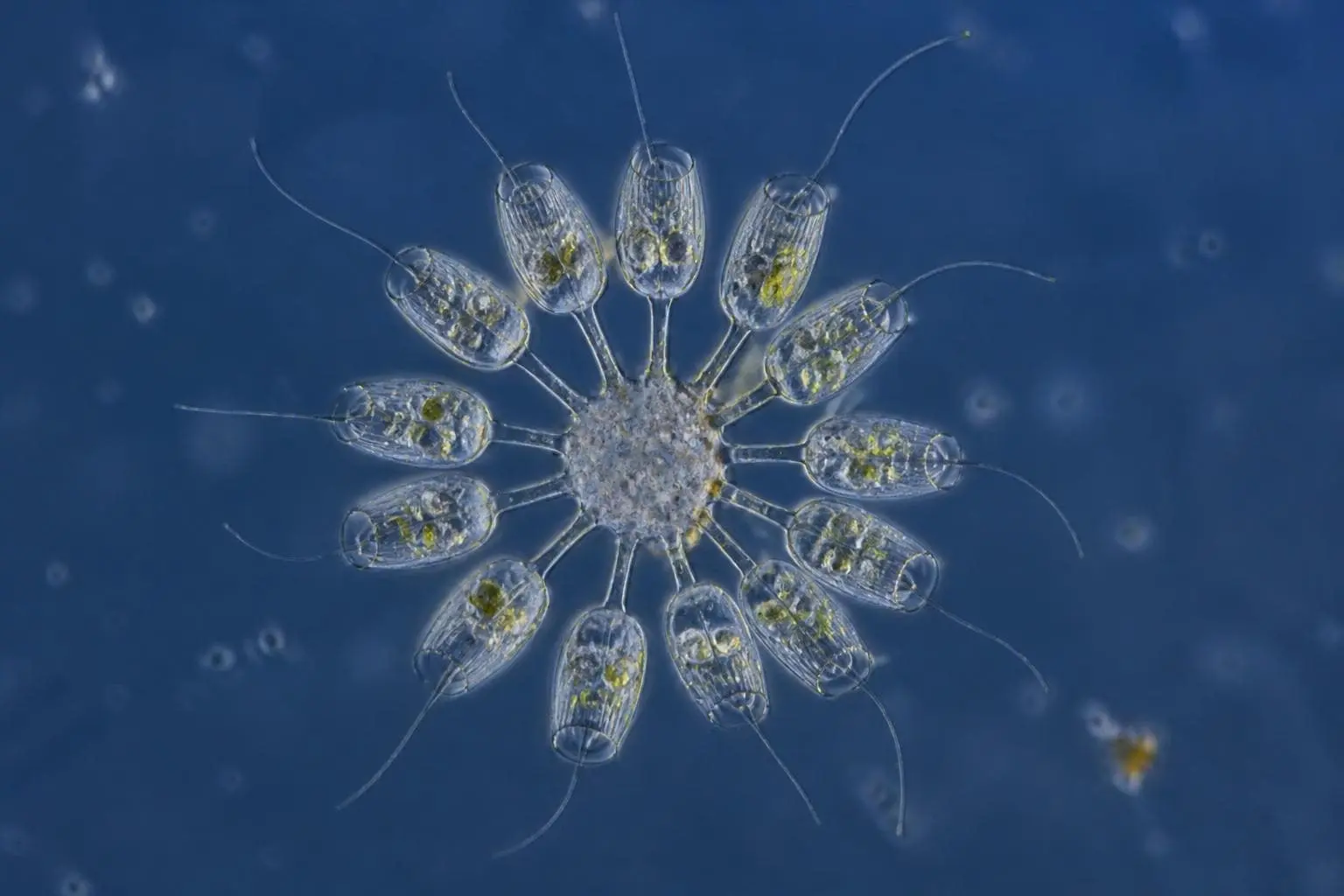
The 1998 idea held up in part: animals and fungi both descend from single-celled protists, but from two different lineages (Shalchian-Tabrizi et al., 2008; Ruggiero et al., 2015). In 1998 Thomas Cavalier-Smith tied such protists to the origin of animals and fungi in a chapter on the protozoan phylum Neomonada (Cavalier-Smith, 1998a). Two ideas cited to it still stand: choanoflagellates as the closest relatives of animals, and the name Ichthyosporea (Fredricks et al., 2000; Shalchian-Tabrizi et al., 2008; Ros-Rocher et al., 2021). Neomonada itself, however, was broken up by 2002 (Cavalier-Smith, 2002).
Below, we set out what the chapter proposed and which parts later research kept or discarded. We then look at the protists now placed nearest to animals and to fungi, at what their genomes show about the roots of multicellularity and at why kingdom Protozoa survives mainly in catalogues. We do not try to settle open questions such as where the root of the eukaryote tree lies. The original study is summarised in Cabdirect archive record 19990802611.
What Did Cavalier-Smith Propose in 1998?
Cavalier-Smith described a broad protozoan phylum, Neomonada, that in his view held lineages related to animals and fungi, and he gave the name Ichthyosporea to a group of aquatic parasites (Cavalier-Smith, 1998b; Fredricks et al., 2000). His chapter filled pages 375–407 of Evolutionary Relationships Among Protozoa, a Systematics Association volume published in London in 1998 (Cavalier-Smith, 1998a).
The best guide is his companion paper of the same year, which set out a revised six-kingdom system of life and lists the chapter among its references. There Neomonada sits in kingdom Protozoa with three subphyla: Apusozoa, Isomita and Choanozoa. He called the phylum a broad paraphyletic assemblage, in which some lineages were closer to one of the higher kingdoms than to each other (Cavalier-Smith, 1998b).
Choanoflagellates, sponges and parasites
Choanozoa, the subphylum that matters most for animal origins, gathered very different organisms. The companion paper lists the choanoflagellate Monosiga together with Corallochytrium and Psorospermium, and, citing the chapter, adds the fonticulid social amoebae and the parasitic Ichthyosporea (Cavalier-Smith, 1998b). A 2008 study co-written by Cavalier-Smith cites the chapter for the traditional view that choanoflagellates are the lineage closest to animals, and for a scenario in which sponges arose from choanoflagellate-like ancestors (Shalchian-Tabrizi et al., 2008).
Table 1. Members of Neomonada in Cavalier-Smith’s 1998 system and where they are placed now
Group in 1998 | Members named in 1998 | Placement today |
Subphylum Apusozoa | Apusomonas, Ancyromonas, Jakoba, Reclinomonas, Ebria (Cavalier-Smith, 1998b) | Apusomonads sit beside the opisthokonts in Obazoa; Ancyromonas, Jakoba and Ebria fall in other groups (Adl et al., 2019) |
Choanozoa: choanoflagellates | Monosiga (Cavalier-Smith, 1998b) | Sister group of animals (Ros-Rocher et al., 2021) |
Choanozoa: Corallochytrium | Corallochytrium (Cavalier-Smith, 1998b) | In Holozoa; its exact branch is disputed (Adl et al., 2019) |
Choanozoa: Ichthyosporea | Aquatic parasites once treated as fungi, such as Psorospermium (Cavalier-Smith, 1998b; Fredricks et al., 2000) | Holozoan class near the base of the animal branch (Ros-Rocher et al., 2021; Shabardina et al., 2024) |
Choanozoa: fonticulids | Fonticula, a social amoeba (Cavalier-Smith, 1998b; Shalchian-Tabrizi et al., 2008) | With Nuclearia, on the fungal branch (Nucletmycea) (Adl et al., 2019; Brown et al., 2009) |
What became of Neomonada
The phylum did not last, and its author took it apart himself. In his 2002 classification Apusozoa became a phylum of its own and Neomonada was no longer mentioned (Cavalier-Smith, 2002). Phylogenomic studies later placed the apusomonads with the breviates beside the opisthokonts, in a clade called Obazoa (Adl et al., 2019; Burki et al., 2020). The name Choanozoa survived with a new meaning: the 2019 consensus classification applies it to choanoflagellates plus animals, not to the 1998 protist assemblage (Adl et al., 2019).
Which Single-Celled Organisms Are Closest to Animals?
Choanoflagellates are the closest living relatives of animals, followed by the filastereans, with the ichthyosporeans further out, according to a 2021 review (Ros-Rocher et al., 2021). With animals, these protists form Holozoa, which the 2019 consensus classification lists as Filasterea, Ichthyosporea, Corallochytrium, Syssomonas, choanoflagellates and animals. Holozoa and the fungal branch, called Nucletmycea or Holomycota, are robust sister groups within the opisthokonts (Adl et al., 2019).
Much of this order comes from phylogenomics. In 2008 a 78-protein analysis, whose authors included Cavalier-Smith, created the class Filasterea and placed it as sister to animals plus choanoflagellates, with Ichthyosporea outside that group (Shalchian-Tabrizi et al., 2008).
The finer order is less settled. Pluriformea, a lineage named only in 2017, joins Corallochytrium with Syssomonas (Adl et al., 2019). In the 2021 review it branches between Filasterea and Ichthyosporea, and the review warns that holozoan trees are sensitive to which species are sampled (Ros-Rocher et al., 2021). Either way, Corallochytrium, which the 1998 scheme had already put beside the choanoflagellates, stays on the animal side (Cavalier-Smith, 1998b; Adl et al., 2019).
Table 2. The closest single-celled relatives of animals, from nearest outward
Group | Examples | Position relative to animals |
Choanoflagellates | Monosiga brevicollis | Sister group of animals (Ros-Rocher et al., 2021; King et al., 2008) |
Filasterea | Ministeria, Capsaspora, Pigoraptor | Sister to choanoflagellates plus animals (Shalchian-Tabrizi et al., 2008; Adl et al., 2019; Ros-Rocher et al., 2021) |
Pluriformea | Corallochytrium, Syssomonas | Between Filasterea and Ichthyosporea in one analysis; disputed (Adl et al., 2019; Ros-Rocher et al., 2021) |
Ichthyosporea | Sphaeroforma, Ichthyophonus, Rhinosporidium | Sister to the rest of Holozoa in the 2021 review; debated (Ros-Rocher et al., 2021; Shabardina et al., 2024) |
Which Protists Are Closest to Fungi?
On the fungal side the closest known relatives are the aphelids, which are parasites of algae (Shalchian-Tabrizi et al., 2008; Torruella et al., 2018). Nucleariids and the slime mould Fonticula form a separate lineage on the same fungal branch. In the 2019 classification the fungal branch, Nucletmycea or Holomycota, consists of Fungi, a group called Opisthosporidia, nucleariids and Fonticula (Adl et al., 2019; Brown et al., 2009).
The name Nucletmycea comes from a 2009 study of five nuclear genes. It found that Fonticula alba, whose cells aggregate into fruiting bodies, is sister to Nuclearia, and that the pair is sister to fungi. The study indicates that Fonticula’s form of multicellularity evolved separately from that of animals and of fungi (Brown et al., 2009).
How Cavalier-Smith’s placements fared
Here his placements look mixed. Citing the chapter, the companion paper put fonticulids within Choanozoa and saw “no reason whatever” to group them with fungi (Cavalier-Smith, 1998b). That was a statement about kingdoms rather than about closeness on the tree, and the 2015 Catalogue of Life classification still keeps fonticulids together with the nucleariids (Ruggiero et al., 2015).
A later placement fared worse. In 2008 a paper co-written by Cavalier-Smith put the aphelids in the parasitic Ichthyosporea, on the animal branch (Shalchian-Tabrizi et al., 2008). A 2018 transcriptome study instead found the aphelid Paraphelidium to be the closest relative of fungi. It suggests that fungi evolved from complex aphelid-like ancestors that fed by engulfing prey, then lost that habit and turned to absorbing nutrients (Torruella et al., 2018).
What Became of Ichthyosporea?
The name Ichthyosporea is arguably the chapter’s most lasting contribution: it is still used for a class of mostly parasitic protists near the base of the animal branch (Adl et al., 2019; Shabardina et al., 2024). A 2000 paper on the human pathogen Rhinosporidium seeberi credited this chapter with proposing the name for a growing group of aquatic parasites. The group had been known as DRIPs, after Dermocystidium, the rosette agent, Ichthyophonus and Psorospermium (Fredricks et al., 2000).
For a time specialists used another name, Mesomycetozoea, but it was confused with the unrelated Mycetozoa, so Cavalier-Smith’s term came back into general use. By a 2024 count the class has at least 30 groups and 50 described species in the NCBI taxonomy database (Shabardina et al., 2024), although a 2021 review put it at around 40 species (Ros-Rocher et al., 2021).
Parasites of fish, amphibians and people
Most members are parasites of animals, while some, such as Sphaeroforma, live freely on organic matter (Adl et al., 2019). The order Dermocystida mostly infects fish and amphibians, but Rhinosporidium seeberi infects birds and mammals, including humans (Shabardina et al., 2024). In people it causes rhinosporidiosis, a disease concentrated in the tropics, above all in southern India and Sri Lanka. The 2000 paper reported that treatment was surgical and that about 10% of patients relapsed (Fredricks et al., 2000).
A classification can be wrong about its boxes and still right about which organisms deserve a closer look.
What Do Protist Genomes Reveal About the First Animals?
They show that much of the molecular kit animals use to build bodies existed before animals did (Ros-Rocher et al., 2021). The genome of the choanoflagellate Monosiga brevicollis, about 41.6 million base pairs with roughly 9,200 genes, holds at least 23 genes with cadherin domains (King et al., 2008). In animals, cadherins mediate contacts between cells (Ros-Rocher et al., 2021).
The same genome encodes about 120 tyrosine kinase domains, used in cell signalling, whereas the yeast Saccharomyces cerevisiae has none. It carries integrin-alpha domains but no integrin-beta domains, so it lacks a complete integrin, the molecule that links animal cells to the matrix around them (Ros-Rocher et al., 2021; King et al., 2008).
Other relatives fill gaps: the filasterean Ministeria carries genes with Notch, tyrosine kinase and cadherin domains (Shalchian-Tabrizi et al., 2008), while pathways such as Wnt and TGF-beta are absent from these protists (Ros-Rocher et al., 2021).
An ichthyosporean that builds a cell layer
Ichthyosporeans add a developmental angle. In Sphaeroforma arctica, newly formed cells line the edge of a multinucleate cell as a tight, epithelium-like layer before they are released. The 2024 review compares this layer with some invertebrate embryos, both in shape and in how it forms (Shabardina et al., 2024).
When the lines parted
Dating these events is far less certain. The 2021 review places the last common ancestor of animals more than 600 million years ago (Ros-Rocher et al., 2021), and one 2011 clock study put the split of the animal and fungal lines at roughly 1.2 to 1.5 billion years ago (Parfrey et al., 2011).
Is Kingdom Protozoa Still Used?
Yes, mainly in catalogues of names, while the protist specialists’ consensus classification avoids it. The Catalogue of Life’s 2015 higher classification kept a kingdom Protozoa within a seven-kingdom system for all living organisms. Its authors stated that Protozoa is paraphyletic and that animals, fungi, plants and Chromista all evolved from it. It also placed microsporidia and rozellids in Protozoa (Ruggiero et al., 2015).
WoRMS also still treats Protozoa as an accepted kingdom and files Ichthyosporea under it, while still listing aphelids within that class, against the molecular evidence that places them beside the fungi (Torruella et al., 2018; World Register of Marine Species, n.d.).
The 2019 consensus classification deliberately uses no formal ranks, so it has no kingdoms at all; it divides eukaryotes into two “domains”, Amorphea and Diaphoretickes (Adl et al., 2019). A 2020 review notes that the opisthokonts remain a robust clade inside these supergroups (Burki et al., 2020).
Seen against that picture, the 1998 chapter belongs to a period when ranks carried much of the argument. Its phylum has gone, but the organisms it pointed to, from choanoflagellates to the ichthyosporean parasites, remain central to work on the origin of animals (Ros-Rocher et al., 2021; Shabardina et al., 2024).
Frequently asked questions
What are the closest living relatives of animals?
Choanoflagellates. A 2021 review places them as the sister group of animals, with filastereans such as Capsaspora and Ministeria next and ichthyosporeans further out (Ros-Rocher et al., 2021). The choanoflagellate Monosiga brevicollis carries at least 23 cadherin-domain genes, a sign that parts of the animal toolkit predate animals (King et al., 2008).
Did animals evolve from fungi, or fungi from animals?
Neither. Animals and fungi sit on two sister branches of the opisthokonts, Holozoa and Holomycota, and each arose from its own single-celled ancestors (Shalchian-Tabrizi et al., 2008; Adl et al., 2019). One 2011 clock study placed their last common ancestor roughly 1.2 to 1.5 billion years ago, as a spread of estimates (Parfrey et al., 2011).
What was Neomonada?
It was a protozoan phylum in Cavalier-Smith’s classifications of the late 1990s. In 1998 it held three subphyla, Apusozoa, Isomita and Choanozoa, and its author called it a broad paraphyletic assemblage (Cavalier-Smith, 1998b). By 2002 his own classification no longer used it (Cavalier-Smith, 2002).
What is Ichthyosporea?
It is a class of mostly parasitic protists near the base of the animal branch, with at least 50 described species by a 2024 count (Shabardina et al., 2024). The name was proposed in 1998 (Cavalier-Smith, 1998b; Fredricks et al., 2000). Members include Rhinosporidium seeberi, which infects people, and the free-living Sphaeroforma (Adl et al., 2019).
Is Protozoa still a kingdom?
In some catalogues. The Catalogue of Life’s 2015 classification keeps it while calling it paraphyletic, and WoRMS still lists it as an accepted kingdom (Ruggiero et al., 2015; World Register of Marine Species, n.d.). The protist specialists’ 2019 consensus classification uses no ranks at all, so it has no kingdom Protozoa (Adl et al., 2019).
Sources
- Cavalier-Smith, T. (1998). Neomonada and the origin of animals and fungi. In G. H. Coombs, K. Vickerman, M. A. Sleigh, & A. Warren (Eds.), Evolutionary relationships among protozoa (Systematics Association Special Volume 56, pp. 375–407). Chapman & Hall. – Cabdirect archive record 19990802611
- Cavalier-Smith, T. (1998). A revised six-kingdom system of life. Biological Reviews, 73(3), 203–266.
- Fredricks, D. N., Jolley, J. A., Lepp, P. W., Kosek, J. C., & Relman, D. A. (2000). Rhinosporidium seeberi: A human pathogen from a novel group of aquatic protistan parasites. Emerging Infectious Diseases, 6(3), 273–282.
- Shalchian-Tabrizi, K., Minge, M. A., Espelund, M., Orr, R., Ruden, T., Jakobsen, K. S., & Cavalier-Smith, T. (2008). Multigene phylogeny of Choanozoa and the origin of animals. PLoS ONE, 3(5), e2098.
- Cavalier-Smith, T. (2002). The phagotrophic origin of eukaryotes and phylogenetic classification of Protozoa. International Journal of Systematic and Evolutionary Microbiology, 52(2), 297–354.
- Adl, S. M., Bass, D., Lane, C. E., Lukeš, J., Schoch, C. L., Smirnov, A., Agatha, S., Berney, C., Brown, M. W., Burki, F., Cárdenas, P., Čepička, I., Chistyakova, L., del Campo, J., Dunthorn, M., Edvardsen, B., Eglit, Y., Guillou, L., Hampl, V., . . . Zhang, Q. (2019). Revisions to the classification, nomenclature, and diversity of eukaryotes. Journal of Eukaryotic Microbiology, 66(1), 4–119.
- Burki, F., Roger, A. J., Brown, M. W., & Simpson, A. G. B. (2020). The new tree of eukaryotes. Trends in Ecology & Evolution, 35(1), 43–55.
- Ros-Rocher, N., Pérez-Posada, A., Leger, M. M., & Ruiz-Trillo, I. (2021). The origin of animals: An ancestral reconstruction of the unicellular-to-multicellular transition. Open Biology, 11(2), 200359.
- Brown, M. W., Spiegel, F. W., & Silberman, J. D. (2009). Phylogeny of the “forgotten” cellular slime mold, Fonticula alba, reveals a key evolutionary branch within Opisthokonta. Molecular Biology and Evolution, 26(12), 2699–2709.
- Torruella, G., Grau-Bové, X., Moreira, D., Karpov, S. A., Burns, J. A., Sebé-Pedrós, A., Völcker, E., & López-García, P. (2018). Global transcriptome analysis of the aphelid Paraphelidium tribonemae supports the phagotrophic origin of fungi. Communications Biology, 1, 231.
- Shabardina, V., Dharamshi, J. E., Ara, P. S., Antó, M., Bascón, F. J., Suga, H., Marshall, W., Scazzocchio, C., Casacuberta, E., & Ruiz-Trillo, I. (2024). Ichthyosporea: A window into the origin of animals. Communications Biology, 7, 915.
- King, N., Westbrook, M. J., Young, S. L., Kuo, A., Abedin, M., Chapman, J., Fairclough, S., Hellsten, U., Isogai, Y., Letunic, I., Marr, M., Pincus, D., Putnam, N., Rokas, A., Wright, K. J., Zuzow, R., Dirks, W., Good, M., Goodstein, D., . . . Rokhsar, D. (2008). The genome of the choanoflagellate Monosiga brevicollis and the origin of metazoans. Nature, 451(7180), 783–788.
- Parfrey, L. W., Lahr, D. J. G., Knoll, A. H., & Katz, L. A. (2011). Estimating the timing of early eukaryotic diversification with multigene molecular clocks. Proceedings of the National Academy of Sciences, 108(33), 13624–13629.
- Ruggiero, M. A., Gordon, D. P., Orrell, T. M., Bailly, N., Bourgoin, T., Brusca, R. C., Cavalier-Smith, T., Guiry, M. D., & Kirk, P. M. (2015). A higher level classification of all living organisms. PLOS ONE, 10(4), e0119248.
- World Register of Marine Species. (n.d.). Ichthyosporea Cavalier-Smith, 1998 (AphiaID 391862). Retrieved 25 September 2026.

Adrian Foster — author
Adrian Foster writes with an editorial focus on experimental science, laboratory research, controlled comparisons, measurement techniques and the role of replication in evaluating scientific findings. At CAB Direct, Adrian covers experiments, laboratory method...
Related
The 1989 Molecular Cloning Manual: Why Labs Still Cite It
The Seven Countries Study: Diet and Heart Deaths in 1980

Why Homes Get Cheaper Further Out: Alonso’s 1964 Model
Conservation Biology: Ecological Principles and Insularization
Gluconeogenesis From Glycine and Serine in the Rat
Secondary metabolites in tuberculosis: the 2010 review