Armadillo infection and the rise of leprosy research
A 1971 experiment in a nine-banded armadillo showed that material containing Mycobacterium leprae could produce a progressive, lepromatoid infection with heavy bacterial multiplication, skin lesions and bacilli in cutaneous nerves. The result did not by itself establish every feature of a modern animal model, but it supplied unusually persuasive evidence that the species could support extensive infection by an organism then exceptionally difficult to study in the laboratory.
This article reconstructs what the early report actually showed, why that mattered for leprosy research, how later work strengthened the armadillo model, and where the limits of the original experiment remain important. It also separates the laboratory-model story from the later discovery of naturally infected wild armadillos, a related but distinct public-health question.
Evidence last checked 29 Sep 2026 · 10 min
Why leprosy research needed a better animal host
Leprosy, or Hansen disease, is a chronic infection caused mainly by Mycobacterium leprae, an obligate intracellular pathogen that grows slowly and resists routine cultivation on artificial media. This made reproducible laboratory experiments difficult. By the 1960s, the mouse foot-pad system allowed limited bacterial multiplication and helped assess viability and drug susceptibility, but yielded few organisms and did not reproduce the full distribution of human disease.
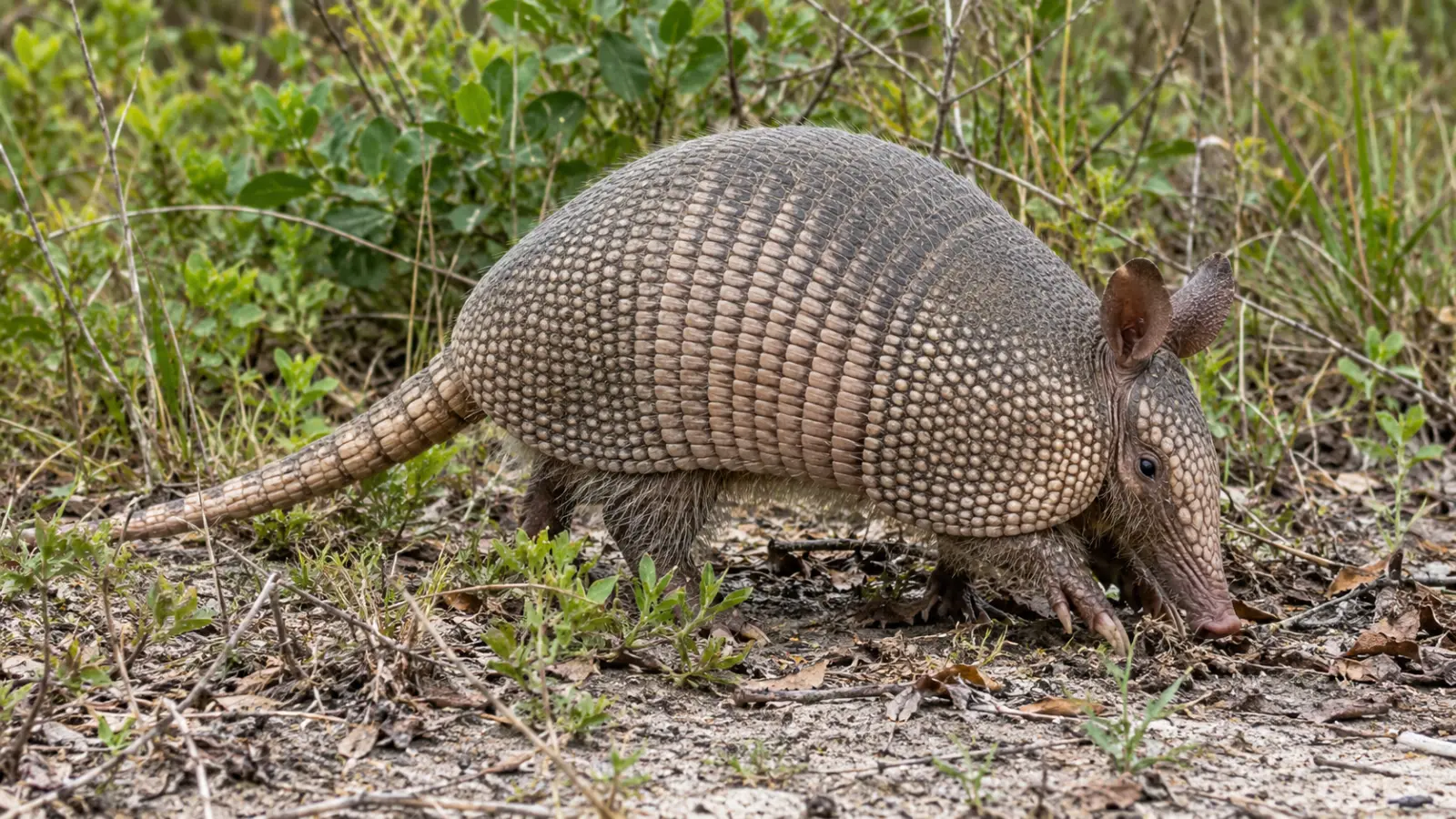
The nine-banded armadillo, Dasypus novemcinctus, attracted attention because of its relatively low body temperature. M. leprae favors cooler tissues, particularly the skin and peripheral nerves, making the species a promising experimental host. The 1971 report by Nora Veldin provided evidence of susceptibility and substantial bacterial multiplication, moving the hypothesis toward an observed infection.
Because the study preceded modern genomic methods, investigators relied on staining, morphology, culture behavior and pathology to characterize the organisms. Later molecular techniques improved identification, while subsequent successful infections strengthened the original findings and established their lasting scientific importance.
What the 1971 armadillo experiment showed
A delayed but progressive infection
The researchers experimentally inoculated a nine-banded armadillo with material containing M. leprae obtained from an untreated person with lepromatous leprosy. According to the report summarized in the archive record, a lepromatoid infection became apparent roughly 14 months later. That long interval is consistent with the slow biology of the organism and is a reminder that the experiment was not a rapid challenge model.
At the inoculation sites, the investigators reported a greater than 1,000-fold increase in acid-fast bacteria. Acid-fast staining is not, by itself, species identification: several mycobacteria can retain the stain. The authors therefore considered other features as well, including the failure of the organisms to grow on standard mycobacterial culture media and tissue appearances regarded as characteristic of M. leprae infection at the time.
One particularly important observation was that large numbers of acid-fast bacilli were found in a skin site away from the original inoculation area even though the skin looked normal externally. That suggested dissemination beyond the place where the inoculum had been deposited. The inoculated skin itself developed extensive nodular lesions containing intracellular bacilli and typical lepra cells, and bacilli were also seen in cutaneous nerves.
What those observations meant
Finding in the 1971 report | What was observed | Interpretive value |
Time course | Lepromatoid infection about 14 months after inoculation | Showed slow but progressive experimental infection |
Bacterial multiplication | More than 1,000-fold increase in acid-fast bacteria at inoculation sites | Argued against simple persistence of the original inoculum |
Culture behavior | Organisms did not grow on standard mycobacterial media | Consistent with a defining laboratory difficulty of M. leprae |
Distant skin | Large numbers of acid-fast bacteria in externally normal skin away from inoculation | Supported dissemination beyond the inoculation site |
Skin pathology | Nodular lesions with intracellular bacilli and typical lepra cells | Resembled lepromatous tissue pathology |
Nerves | Bacilli observed in cutaneous nerves | Made the host especially relevant to a disease defined by peripheral nerve involvement |
Taken together, the findings addressed several barriers that had limited earlier animal systems. They indicated not merely persistence of the inoculum but substantial multiplication; they showed tissue pathology rather than an isolated microbiological signal; and they placed bacilli in nerves, a central target of human leprosy. The distant-skin finding also pointed toward systemic spread rather than a strictly local response.
The paper nevertheless remained an early report centered on a single experimentally infected animal. The associated mouse foot-pad experiments were described as too preliminary for definitive evaluation. The authors' interpretation was therefore forward-looking: the armadillo appeared promising as a model for future work, but the first experiment was a starting point that required replication and broader pathological study.
The 1971 result mattered because it showed multiplication, dissemination and nerve involvement in the same experimental host—not because one animal could settle every question about leprosy.
Why one infected armadillo changed the research landscape
A useful M. leprae model needed to provide viable bacilli in quantities sufficient for biochemical, immunological and molecular research. Subsequent experiments showed that susceptible armadillos could develop disseminated infections with high bacterial burdens, making them an important laboratory source of organisms when axenic culture remained unavailable. Unlike the mouse foot-pad system, armadillos could develop extensive tissue involvement. A 1974 Science report described severe lepromatous leprosy in eight of twenty inoculated armadillos after approximately 3–3.5 years, confirming that susceptibility extended beyond the original animal.
The model also became valuable for investigating peripheral neuropathy, a major cause of sensory loss and disability in human leprosy. Infected armadillos can develop extensive nerve involvement, allowing researchers to examine affected tissues that would be difficult or unethical to collect repeatedly from patients. Combined with large bacterial yields and systemic disease, this advantage explains the model's continuing importance.
What later research added to the early model
Replication and pathology
The immediate question after the first report was reproducibility. The 1972 post-mortem study by Nora Veldin described bacteriological and histopathological findings from lepromatoid disease in the armadillo in greater detail. The later 1974 report expanded the number of affected animals. These studies shifted the evidence from an intriguing single case toward a repeatable experimental phenomenon, while also revealing that not every inoculated animal responded identically.
Modern work has further shown that the armadillo model can reproduce a range of host responses and can be used to study dissemination, immune reactions and nerve damage. It is not a perfect miniature of human disease, and experimental route, dose and individual susceptibility all matter. But its value lies in reproducing several biologically important features in one intact animal rather than in matching every clinical detail.
A source of bacilli for molecular research
The impact also became molecular. When the M. leprae genome was reported in 2001, the sequenced strain was derived through an armadillo source. Genome analysis revealed extensive gene decay and a small set of functional genes relative to Mycobacterium tuberculosis, findings that helped explain the pathogen's restricted metabolism and dependence on host cells. The armadillo did not cause those discoveries, but the ability to propagate bacilli in vivo helped make sufficient biological material available for work that would have been far harder otherwise.
The same practical advantage supported antigen discovery, immunology, diagnostic development and experimental treatment studies. Reviews of the field repeatedly describe armadillos as a key in vivo propagation system precisely because durable, routine growth of M. leprae in cell-free culture has still not been achieved.
What the original experiment could not prove
Historical importance should not be confused with methodological completeness. By current standards, the 1971 report has clear limits that affect how confidently individual findings can be generalized. These limits do not erase the observation; they define the question that later studies had to answer.
- The core report described one experimentally infected armadillo, so it could not estimate how often infection would occur across animals or identify predictors of susceptibility.
- Acid-fast staining and failure to grow on routine media were important evidence in 1971, but the study predated modern molecular assays that can identify M. leprae with far greater specificity.
- The approximately 14-month interval demonstrated slow progression, but a single timeline could not define a typical incubation period or the full range of disease courses in armadillos.
- The report showed nerve-associated bacilli and lepromatoid pathology, but it did not establish that every neurological mechanism or clinical outcome in humans is reproduced in the animal.
- Some associated mouse foot-pad work was explicitly preliminary, so it should not be treated as a completed cross-model validation experiment.
Later studies addressed many of these gaps by adding animals, performing post-mortem surveys, using improved microbiological methods and examining nerves and systemic tissues in more detail. The strongest historical claim is therefore not that the 1971 paper alone proved the armadillo to be the definitive model, but that it supplied the first compelling experimental demonstration that launched a productive line of research.
Laboratory model and wild reservoir are different questions
The laboratory-model story is sometimes blended with a later discovery: free-ranging armadillos in parts of the Americas can acquire natural M. leprae infection. Those are related facts, but they answer different scientific questions. Experimental susceptibility asks whether a controlled inoculation can produce infection and disease. Reservoir research asks how infection persists in wild populations and whether transmission can occur between animals and people.
Evidence accumulated after the experimental work showed naturally infected armadillos in the southern United States and other parts of the Americas. Genetic and epidemiological studies have linked some human infections to strains circulating in armadillos. Public-health guidance, however, does not treat ordinary casual proximity to an armadillo as a major route of leprosy transmission. The U.S. Centers for Disease Control and Prevention states that the risk is very low, while human-to-human spread is generally associated with prolonged, close exposure to an untreated infected person.
Keeping those questions separate prevents two common errors. The 1971 experiment did not show that wild armadillos were already a reservoir, and today's zoonotic evidence should not be projected backward as if it were part of the original experiment. Conversely, the existence of natural infection does not diminish the model's laboratory significance; it adds a second role for the species in leprosy research.
Why the model still matters—and what has changed
Leprosy remains a contemporary infectious disease, not only a historical subject. The World Health Organization describes it as a chronic disease that primarily affects the skin and peripheral nerves and is curable with multidrug therapy. Early treatment is important because nerve damage can become permanent. Current research therefore has practical reasons to investigate pathogen biology, host immunity, nerve injury and transmission even though effective treatment exists.
At the same time, the scientific standards surrounding animal research have changed substantially since 1971. Modern studies are expected to justify animal use, define endpoints, report methods transparently and minimize harm. Investigators also have genomic, molecular and imaging tools that the early researchers did not possess. The armadillo model is now one tool among several, including mouse systems, cultured cells and molecular approaches, each suited to different questions.
The persistent difficulty of cultivating M. leprae outside living hosts remains a major reason animal systems retain value. A 2025 review of cultivation research concluded that durable axenic growth still had not been achieved. That continuity makes the 1971 experiment unusually instructive: it solved a technical bottleneck not by changing the bacterium, but by finding a host in which its demanding biology could be studied.
How to read the 1971 study today
The most useful way to read the paper is as a foundational observation whose importance was validated by what followed. The original armadillo developed a delayed, heavy, disseminated lepromatoid infection after experimental exposure. The researchers documented a large rise in acid-fast organisms, characteristic lesions, intracellular bacilli, organisms in cutaneous nerves and bacilli at a distant skin site. Those findings gave the field a reason to invest in a new host species.
The following years supplied the replication, pathology and scale that the first report could not. Over decades, the model contributed to the production of bacilli, studies of neuropathy and immune responses, and molecular work on M. leprae. Its historical significance therefore rests on a chain of evidence: a striking first experiment, confirmatory studies and continuing utility for questions that remain difficult to answer in other systems.
That chain also shows why cautious language matters in science. A single experiment can be transformative without being conclusive. The armadillo became an early model for leprosy research not because the first animal answered every question, but because it opened a reproducible experimental route to a pathogen that had resisted the laboratory methods used for most other bacteria.
Frequently asked questions
Why was the nine-banded armadillo considered for leprosy research?
Researchers needed an animal that could support Mycobacterium leprae, which does not grow on routine artificial media. Nine-banded armadillos have relatively low body temperatures, and the bacterium favors cooler tissues. The 1971 experiment then supplied direct evidence that this species could sustain heavy, progressive infection rather than merely carry the inoculum.
What did the 1971 experiment actually find?
About 14 months after inoculation, the armadillo developed lepromatoid disease. Investigators reported a more than 1,000-fold increase in acid-fast bacteria at inoculation sites, nodular skin lesions with intracellular bacilli and lepra cells, organisms in cutaneous nerves, and heavy bacterial presence at a distant skin site that still appeared normal.
Did one armadillo prove the model was reliable?
No. The first report was an important demonstration of susceptibility, but one animal could not establish reproducibility or the frequency of disease. Follow-up studies in the 1970s examined additional armadillos and broader pathology. Later work confirmed that susceptible animals can develop disseminated infection and extensive nerve involvement, strengthening the model over time.
Why could researchers not simply grow Mycobacterium leprae in the laboratory?
M. leprae is an obligate intracellular bacterium with a highly reduced genome and unusual metabolic dependence on host cells. Routine cell-free culture methods have repeatedly failed to produce durable growth. Animal systems such as mouse foot pads and armadillos therefore became essential for propagating viable bacilli and answering questions about infection biology.
Does the armadillo model mean armadillos commonly transmit leprosy to people?
No. Laboratory susceptibility and natural transmission are separate issues. Some wild armadillos in parts of the Americas carry M. leprae, and zoonotic transmission has been documented, but public-health guidance describes the individual risk as very low. Most leprosy transmission is associated with prolonged close exposure to an untreated infected person.
Sources
- Nora Veldin. Attempts to establish the armadillo (Dasypus novemcinctus Linn.) as a model for the study of leprosy. I. Report of lepromatoid leprosy in an experimentally infected armadillo. International Journal of Leprosy and Other Mycobacterial Diseases. 1971;39(3):693–702.
- Kirchheimer WF, Storrs EE, Binford CH. Attempts to establish the armadillo as a model for the study of leprosy. II. Histopathologic and bacteriologic post-mortem findings in lepromatoid leprosy in the armadillo. International Journal of Leprosy and Other Mycobacterial Diseases. 1972;40(3):229–242.
- Storrs EE, Walsh GP, Burchfield HP, Binford CH. Leprosy in the armadillo: new model for biomedical research. Science. 1974;183(4127):851–852.
- Scollard DM, Adams LB, Gillis TP, Krahenbuhl JL, Truman RW, Williams DL. The continuing challenges of leprosy. Clinical Microbiology Reviews. 2006;19(2):338–381.
- Truman RW, Ebenezer GJ, Pena MT, et al. The armadillo as a model for peripheral neuropathy in leprosy. ILAR Journal. 2014;54(3):304–314.
- Balamayooran G, Pena M, Sharma R, Truman RW. The armadillo as an animal model and reservoir host for Mycobacterium leprae. Clinics in Dermatology. 2015;33(1):108–115.
- Oliveira IVPM, Deps PD, Antunes JMAP. Armadillos and leprosy: from infection to biological model. Revista do Instituto de Medicina Tropical de São Paulo. 2019;61:e44.
- Cole ST, Eiglmeier K, Parkhill J, et al. Massive gene decay in the leprosy bacillus. Nature. 2001;409:1007–1011.
- World Health Organization. Leprosy. Fact sheet. Updated 23 January 2026.
- U.S. Centers for Disease Control and Prevention. About Leprosy (Hansen's Disease). Accessed 29 September 2026.
- Gotor-Rivera A, Gutiérrez-Casado N, Acosta-Soto L. Silence on the plate: revisiting the enigma of Mycobacterium leprae cultivation. Frontiers in Microbiology. 2025;16:1708557.

Nora Veldin — author
Nora Veldin is a health science writer with academic training in biomedical science and public health. After completing a BSc in Biomedical Science, she undertook an MPH focused on epidemiology, population health and the interpretation of health evidence. Her...
This article is for general information and is not medical advice. It was reviewed for accuracy by a qualified clinician; decisions about your health should be made with your own doctor.
Related
Chest disease diagnosis: radiologic signs and differentials

Selenium and cancer prevention: what the evidence shows

Human blood groups and population genetics in Mourant’s atlas