How Accurate Are Self-Reported Recreation Participation Rates?
Self-reported recreation participation can differ from recorded activity because respondents must reconstruct how often they participated. A 1983 research note by D. R. Chase and G. C. Godbey examined this issue in two club settings in central Pennsylvania, first with tennis members and then with swimming-club members.
The findings contribute to research on recall error and behavioral-frequency questions. They highlight the importance of survey design and independent validation rather than suggesting self-reports are always unreliable.

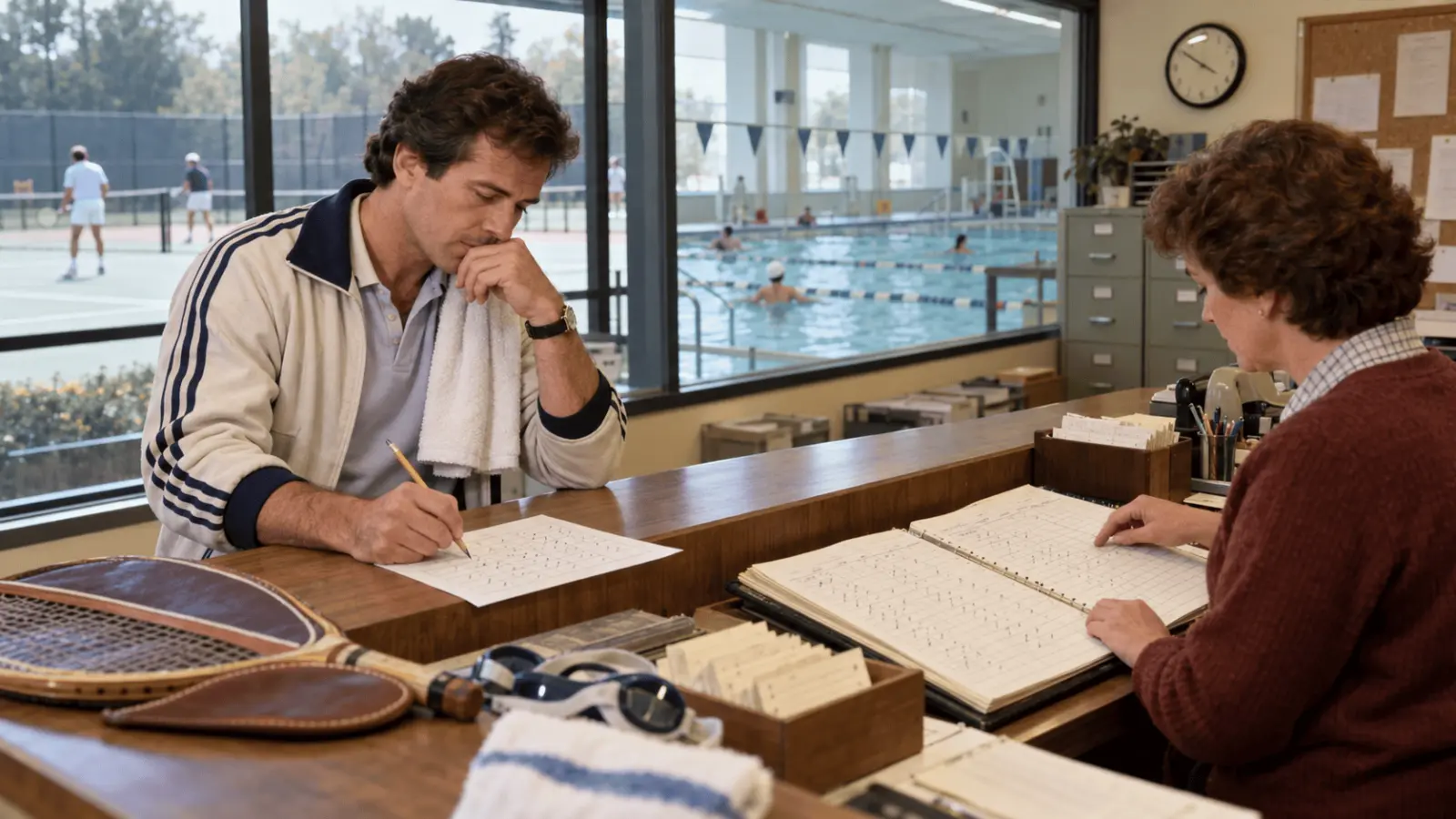
Why self-reported participation is a measurement problem
Participation surveys ask people to report how frequently they performed an activity during a past period. Responses depend on memory, question interpretation and how respondents estimate frequency. These processes can introduce errors even when questionnaires are administered consistently.
The 1983 research note by D. R. Chase and G. C. Godbey examined whether respondents accurately recalled participation when external records were available. Such comparisons help identify discrepancies between reported and documented behavior.
What the 1983 research note tested
The research examined two recreation-club settings in central Pennsylvania. The first study, conducted in spring 1981, investigated tennis-club members' recall of playing frequency. A second study in spring 1982 replicated the approach with swimming-club members.
Club settings allowed researchers to investigate reported participation alongside independent attendance information.
Study | Timing | Participants/activity | Question examined |
Study 1 | Spring 1981 | Tennis club members, central Pennsylvania | Accuracy of recalled frequency of tennis play |
Study 2 | Spring 1982 | Members of a local swimming club, central Pennsylvania | Replication of the recall-accuracy question for swimming participation |
How later research fits the same measurement question
A related 1984 paper by David R. Chase and Munehiko Harada reported substantial overestimation of recreation participation. Most reported frequency estimates, except very small values, ended in 0 or 5. The study also found mixed results when self-reports predicted actual swimming participation.
These findings demonstrate the importance of recall accuracy but belong to a separate investigation. They should not be treated as numerical results from the 1983 note.
Evidence from recreation and fisheries surveys
Later recreation research also compared retrospective responses with diaries or records. Connelly and Brown's 1995 Lake Ontario study found that anglers overestimated fishing days by 44–45% on a 12-month recall questionnaire after adjustment for changes in fishing activity.
A 2018 fisheries study by Andrews, Papacostas and Foster compared one- and two-month reference periods. It examined telescoping, when events are assigned to the wrong period, and omission, when events are forgotten. The study found no significant differences between its main two-month survey estimates and experimental alternatives, although a bounded multiple-period approach showed potential to reduce bias in one-month estimates. Together, these findings indicate that recall errors depend on activity, reference period and survey design.
What this means for survey design
The 1983 study highlights an important question: whether reported participation reflects remembered events, estimated habits or rounded frequencies. Self-report remains useful, but its accuracy should be assessed when participation counts influence research conclusions.
- Practical safeguards include:
- Use shorter, clearly defined reference periods where feasible.
- Compare survey responses with diaries, attendance logs or independent records.
- Include memory cues or bounded questions when appropriate.
- Pilot-test whether respondents recall events, estimate typical rates or round their answers.
- Distinguish self-reported estimates from objectively recorded participation.
These measures can improve interpretation, although none guarantees error-free reporting..
Key limitations when interpreting the 1983 study
The research involved tennis and swimming club members in central Pennsylvania during the early 1980s. Its findings cannot automatically be generalized to other activities, populations or modern survey methods.
The two club settings provided opportunities to examine recall accuracy, but the results do not establish a universal level or direction of reporting error. Later methodological studies offer broader evidence that memory, response strategies and reference periods influence behavioral-frequency estimates.
Frequently asked questions
Are self-reported participation rates always inaccurate?
Not necessarily. Accuracy varies by behavior, reference period, survey design and respondent. Self-reports can provide useful information, but comparing them with independent records helps identify overestimation, omissions and timing errors.
Why can people misremember how often they participated?
People may forget events, estimate their usual participation rate, round numbers or assign activities to the wrong period. The strategies used to answer frequency questions can influence accuracy.
Did the 1983 study prove recreation surveys are unreliable?
No. It examined recall accuracy among tennis and swimming club members. Its findings highlight potential measurement errors but do not establish that all recreation surveys are unreliable.
How accurate are self-reported tennis and swimming participation records?
Accuracy can vary with memory, reporting methods and the reference period. The 1983 study examined tennis and swimming club members using participation records for comparison. Its findings cannot establish accuracy for every recreation activity or population.
How can modern surveys reduce recall error?
Researchers can use shorter reference periods, memory cues, participation diaries and administrative records. Validation samples and cognitive testing help identify reporting problems, although no method eliminates every source of error.
Sources
- Chase DR, Godbey GC. The accuracy of self-reported participation rates. Leisure Studies. 1983;2(2):231-235.
- Chase DR, Harada M. Response Error in Self-Reported Recreation Participation. Journal of Leisure Research. 1984;16(4):322-329.
- Sudman S, Bradburn NM. Effects of Time and Memory Factors on Response in Surveys. Journal of the American Statistical Association. 1973;68(344):805-815.
- Bradburn NM, Rips LJ, Shevell SK. Answering autobiographical questions: the impact of memory and inference on surveys. Science. 1987;236(4798):157-161.
- Blair E, Burton S. Cognitive Processes Used by Survey Respondents to Answer Behavioral Frequency Questions. Journal of Consumer Research. 1987;14(2):280-288.
- Burton S, Blair E. Task Conditions, Response Formulation Processes, and Response Accuracy for Behavioral Frequency Questions in Surveys. Public Opinion Quarterly. 1991;55(1):50-79.
- Chu A, Eisenhower D, Hay M, Morganstein D, Neter J, Waksberg J. Measuring the Recall Error in Self-Reported Fishing and Hunting Activities. Journal of Official Statistics. 1992;8(1):19-39.
- Menon G. The Effects of Accessibility of Information in Memory on Judgments of Behavioral Frequencies. Journal of Consumer Research. 1993;20(3):431-440.
- Connelly NA, Brown TL. Use of Angler Diaries to Examine Biases Associated with 12-Month Recall on Mail Questionnaires. Transactions of the American Fisheries Society. 1995;124(3):413-422.
- Schwarz N, Oyserman D. Asking Questions About Behavior: Cognition, Communication, and Questionnaire Construction. American Journal of Evaluation. 2001;22(2):127-160.
- Andrews WR, Papacostas KJ, Foster J. A Comparison of Recall Error in Recreational Fisheries Surveys with One- and Two-Month Reference Periods. North American Journal of Fisheries Management. 2018;38(6):1284-1298.
Related

Chinese tourism research: questionnaire barriers in Kanas

Balkan Pine Growth in Bulgaria: A 2010 Growth Model
Self-Rated Health and Education: Findings from 69 Countries

Rapid Detection Methods for Genetically Modified Agricultural Products
Equine Anatomy and Clinical Examination in the 2010 Third Edition
Athletes accused of sexual assault: arrests and convictions