How omega-3 fatty acids EPA, DHA and ALA differ and why it matters
Omega-3 fatty acids are polyunsaturated fats whose forms ALA, EPA and DHA differ in carbon-chain length, dietary origin and metabolism. ALA must come from food, while the body can make EPA and DHA from it to a limited extent (NIH ODS, 2025). Clinical claims depend on the individual fatty acid.
The comparison follows fatty acids from plant and marine foods through conversion and cellular functions, then separates evidence about cardiovascular events, pregnancy outcomes and childhood cognition. Human tracer experiments, randomised clinical trials, systematic reviews and official nutrition guidance provide different kinds of evidence. Each measures an outcome with its own population and boundaries.

Evidence last checked 16 Nov 2026 · 14 min
What omega-3 fatty acids are and how they work
Omega-3 identifies a position in a fatty-acid chain. The defining carbon double bond lies three carbons from the methyl end, according to the NIH Office of Dietary Supplements (2025). The distinction is chemical. ALA, EPA and DHA belong to that family despite differing in chain length and number of double bonds.
A dietary fat can enter several metabolic destinations. NIH guidance describes omega-3 molecules within membrane phospholipids and as substrates for signalling compounds called eicosanoids (NIH ODS, 2025). Their presence in a membrane establishes a structural function, whereas the production of a signalling molecule identifies a metabolic pathway. Neither measurement directly establishes prevention of a particular disease (Abdelhamid et al., 2020).
Omega-3 chemical structure
The three named fats have different molecular descriptions. ALA is C18:3n-3, EPA is C20:5n-3 and DHA is C22:6n-3 (NIH ODS, 2025). The figures encode carbon-chain length, the number of double bonds and the omega family. ALA is the shorter molecule.
Baker and colleagues (2016) describe ALA as a substrate for synthesising EPA, docosapentaenoic acid and DHA. The intervening compound, usually shortened to DPA, appears in metabolic studies even though discussions of omega-3 nutrition often concentrate on ALA, EPA and DHA (Burdge and Wootton, 2002). Their connected pathway explains why measurements of one fatty acid cannot be substituted for measurements of another.
Cell membranes and signalling
DHA is concentrated in the retina and brain, where membrane phospholipids contain omega-3 fatty acids (NIH ODS, 2025). DHA also occurs in sperm. These anatomical distributions establish where the molecules are found. A tissue's chemical composition cannot, by itself, establish a response to supplementation.
Omega-3 and omega-6 fats also contribute to eicosanoids, molecules involved in cardiovascular, immune, pulmonary and endocrine signalling (NIH ODS, 2025). EPA and DHA enter this biological context alongside fatty acids of other families. The actions of such metabolites depend on their chemical precursor, making the shared omega-3 label a starting description rather than an account of identical physiological action (Baker et al., 2016).
How EPA, DHA and ALA differ in the body
Dietary necessity distinguishes these omega-3 fats. ALA is an essential fatty acid, meaning that humans must obtain it from the diet (NIH ODS, 2025; Baker et al., 2016). EPA and DHA can arise from the metabolism of ALA, although measured conversion is limited.
The terms also have different implications for research. A study of plant-derived ALA assesses a precursor that can be metabolised, while a study of EPA and DHA measures fats already farther along the pathway (Baker et al., 2016). Changes in blood EPA after exposure to a plant fatty acid therefore cannot be assumed to measure an equivalent change in DHA.
ALA as an essential fatty acid
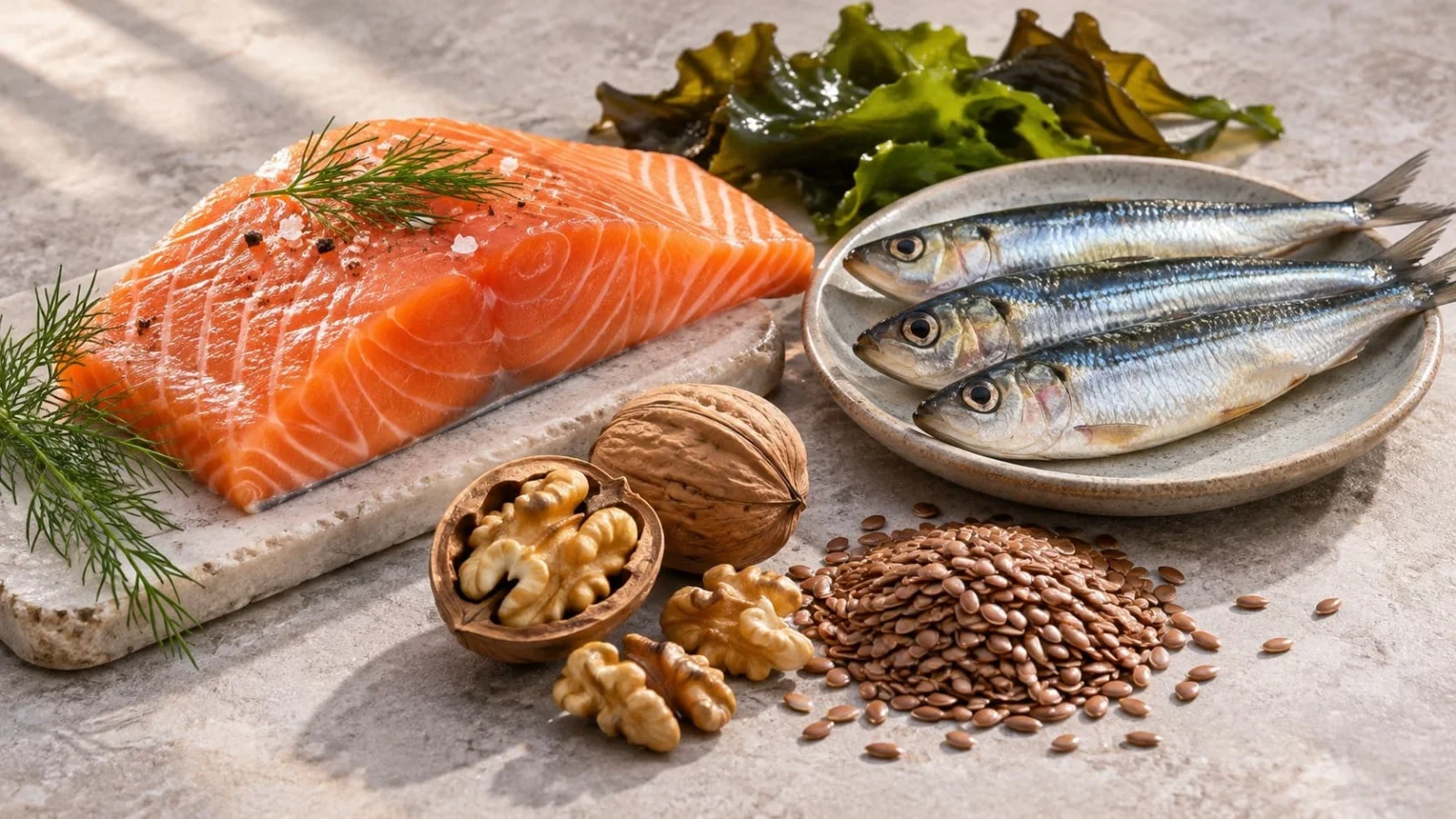
ALA occurs in flaxseed, soybean and canola oils, as well as chia seeds and walnuts (NIH ODS, 2025). Only ALA has an established dietary requirement. Plant foods can therefore supply an omega-3 fatty acid without containing the same amounts or forms as oily fish (Baker et al., 2016).
Baker et al. (2016) examined ALA and stearidonic acid (SDA). Their review found SDA more readily converted to EPA, but conversion of both precursors to DHA remained limited in most humans. The finding concerns metabolic conversion, not a demonstrated equivalence between plant sources and marine omega-3 interventions in clinical trials (Abdelhamid et al., 2020).
EPA and DHA as long-chain fatty acids
EPA contains 20 carbon atoms and DHA contains 22, as classified by the NIH (2025). Both originate in marine microalgae. The distinction between receiving a long-chain fat directly and producing it from ALA lies in the amount and form reaching the body (Baker et al., 2016).
In clinical research, the distinction persists even when the outcome is cardiovascular disease. A 2021 meta-analysis by Khan and colleagues separated EPA monotherapy from combined EPA and DHA preparations. The pooled comparisons favoured EPA alone on selected cardiovascular outcomes, but those comparisons involved different interventions rather than a direct trial that exchanged pure EPA for pure DHA in otherwise identical groups.
The reason for naming each fat precisely is biochemical and evidential. DHA-rich neural membranes, EPA-focused cardiovascular interventions and ALA conversion studies describe different endpoints (NIH ODS, 2025; Khan et al., 2021; Baker et al., 2016). Blood fatty-acid measurements cannot stand in for clinical outcomes.
How ALA conversion to longer-chain fats works
ALA conversion involves desaturation and elongation, processes that modify the fatty-acid chain. An isotope-tracer study in young men identified the liver as the probable main site of those reactions, with some evidence for intestinal-cell involvement (Burdge, Jones and Wootton, 2002). The NIH also locates conversion primarily in the liver.
The conversion pathway supplies EPA before the later formation of DHA, but the body's handling of intermediates complicates the interpretation of a single conversion percentage (NIH ODS, 2025; Baker et al., 2016). Newly made fatty acids distribute across distinct blood lipid pools (Burdge and Wootton, 2002). A number reported from a tracer experiment therefore describes that experiment's measured conversion, not a universal yield from every plant food.
Conversion pathways
Burdge and Wootton (2002) traced ALA in women over 21 days. The study estimated net fractional interconversion of 21% to EPA, 6% to DPA and 9% to DHA. Those figures describe the study population and the authors' tracer-based estimates, and cannot be assigned to men or to every person eating seeds.
A related investigation by Burdge, Jones and Wootton (2002) traced ALA after a mixed meal in six young men. Its time-course observations pointed to the liver as the principal site of conversion and also suggested some contribution by enterocytes, the cells lining the intestine. That design described the fate of a labelled precursor under study conditions.
Factors affecting conversion
Sex-related differences appear in the human literature. Baker and colleagues (2016) identified differences between men and women in conversion to DHA, while the women's tracer experiment produced measurable labelled DHA (Burdge and Wootton, 2002). The distinct findings make it unsafe to give one percentage for all adults. The study in men and the study in women also observed different people rather than comparing sexes within one randomised protocol (Burdge, Jones and Wootton, 2002).
The review by Baker et al. (2016) reports that SDA offers a more direct route to raised EPA than ALA, although DHA synthesis remains limited. That pathway does not guarantee DHA synthesis. The NIH describes ALA conversion as limited in its summary of human fatty-acid metabolism (2025).
Conversion has no fixed substitution rate. The measured plasma appearance of a labelled fatty acid, the total amount in tissues and a clinical outcome are separate observations. Human tracer findings address conversion, whereas clinical trials measure other outcomes (Burdge and Wootton, 2002).
Where omega-3 fatty acids occur in food
Their food sources differ substantially. Flaxseed oil, soybean oil, canola oil, chia seeds and walnuts provide ALA, while seafood is the principal dietary source of EPA and DHA (NIH ODS, 2025; Baker et al., 2016). Fatty-acid identity matters.
ALA-rich foods do not supply preformed DHA. The biological route linking the two exists, but the conversion is constrained (NIH ODS, 2025). Whether EPA or DHA is measured in a blood sample also depends on the precursor and the stage of metabolism (Baker et al., 2016).
Plant oils, nuts and seeds
Plant sources provide several distinct food matrices. The NIH lists ALA in oils from flaxseed, soybean and canola, as well as chia seeds and walnuts (NIH ODS, 2025). An oil and a whole seed can contain the same named fatty acid while remaining different foods. The present biochemical evidence identifies ALA as their relevant omega-3 form, without establishing an identical effect on a specific clinical endpoint (Baker et al., 2016).
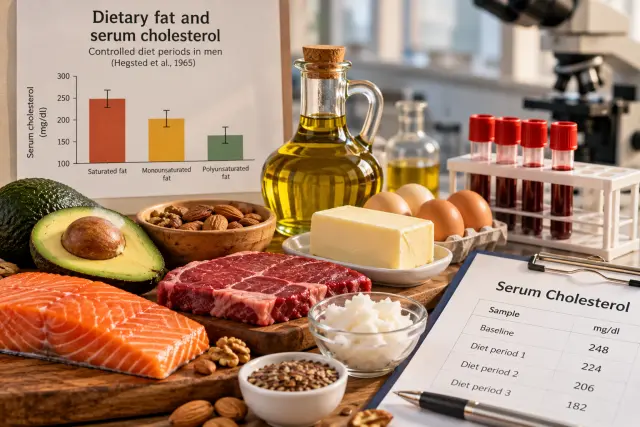
The distinction also applies to broader discussions of dietary fat and blood markers. Cabdirect's [account of dietary fat and serum cholesterol](/nutrition/dietary-fat-and-serum-cholesterol-the-1965-hegsted-study) considers another historical line of nutrition research; the omega-3 clinical evidence instead depends on trials that specify their particular intervention (Khan et al., 2021; Bhatt et al., 2019). The nutritional category alone does not identify a trial endpoint.
Fish, seafood and algae
The NIH lists salmon, sardines, herring, mackerel and tuna among fish containing relatively high levels of long-chain omega-3 fats (2025). Leaner fish such as cod and tilapia, as well as shellfish, contain lower levels in the guidance. Omega-3 content varies across fish species.
EPA and DHA originate in microalgae (NIH ODS, 2025). Algal and fish-derived products can therefore contain preformed long-chain omega-3 fats, a different nutritional starting point from an ALA-rich plant oil (Baker et al., 2016). That shared marine origin does not establish that every product contains the same EPA-to-DHA balance or produces the same clinical effect (Khan et al., 2021).
Fish omega-3 content varies (NIH ODS, 2025). A menu description such as oily fish names a category but does not provide a laboratory measurement of EPA or DHA. Researchers evaluating blood status or disease endpoints must still specify the exposure actually studied (Khan et al., 2021).
What omega-3 research shows about heart and brain health
Cardiovascular research tests clinical events that membrane biology alone cannot predict. In 2020, Abdelhamid and colleagues synthesised 86 randomised trials involving 162,796 participants, covering increased long-chain omega-3 or ALA exposure. Their Cochrane review found little or no effect of increased EPA and DHA on deaths or cardiovascular events, while triglycerides fell in pooled comparisons. A lipid change does not prove fewer heart attacks.
The [Seven Countries Study of diet and heart deaths](/research/seven-countries-study-research) describes a separate tradition of dietary epidemiology. Randomised trials test named preparations against controls. A dietary cohort cannot isolate the effect of a named trial preparation (Abdelhamid et al., 2020).
Cardiovascular trials and reviews
Khan and colleagues (2021) examined 38 randomised trials in a meta-analysis of EPA-only and combined EPA+DHA interventions. Their dataset contained 149,051 participants and associated omega-3 interventions with a cardiovascular mortality rate ratio of 0.93; results differed between the two formulation groups. This pooled estimate and the Cochrane review answer related questions but differ in how trials and outcomes are combined (Abdelhamid et al., 2020; Khan et al., 2021).
The VITAL study offers a trial-level contrast. Manson and colleagues (2019) randomised 25,871 participants; major cardiovascular events occurred in 386 omega-3 and 419 placebo recipients over a median 5.3 years, with no statistically significant group difference. The hazard ratio was 0.92, with a 95% confidence interval of 0.80 to 1.06, a result that was not statistically significant. The same intervention did not significantly lower the trial's incidence of invasive cancer.
REDUCE-IT tested a purified EPA-based prescription product in statin-treated participants with raised triglycerides. Bhatt and colleagues (2019) enrolled 8179 patients and recorded a primary cardiovascular event in 17.2% of the EPA-product group versus 22.0% of the placebo group. The reported hazard ratio was 0.75, with a 95% confidence interval of 0.68 to 0.83. The result is trial-specific.
STRENGTH reached a different result with a combined EPA+DHA formulation. In a randomised study reported by Nicholls and colleagues (2020), the primary event occurred in 12.0% of those given omega-3 versus 12.2% of the corn-oil group, with no statistically significant difference. The hazard ratio of 0.99, with a 95% confidence interval of 0.90 to 1.09, was not statistically significant. The STRENGTH non-significant result concerned a combined formulation, rather than REDUCE-IT's purified EPA product (Bhatt et al., 2019).
Brain development and pregnancy
DHA occurs in brain and retinal membranes, according to NIH guidance (2025). Trials involving pregnancy examine a different question: whether increasing long-chain omega-3 exposure changes birth or childhood outcomes. Both were assessed (Middleton et al., 2018).
Middleton and colleagues (2018) assessed 70 randomised trials involving 19,927 pregnant women. Compared with control conditions, long-chain omega-3 interventions reduced preterm and very preterm birth.
However, prolonged gestation beyond 42 weeks was probably more frequent in the omega-3 groups (2.6% versus 1.6%; RR 1.61, 95% CI 1.11–2.33). Few differences emerged for child development and growth (Middleton et al., 2018). The birth-timing finding does not demonstrate a later cognitive effect.
One longer follow-up makes that boundary concrete. Gould and colleagues (2017) assessed children after randomised prenatal DHA supplementation; mean IQ at seven years showed no statistically significant difference between groups. Direct tests of language, academic functioning and executive functioning showed no significant group differences, apart from slightly higher perceptual-reasoning scores in the DHA group.
However, parents of children in the DHA group reported more behavioural difficulties (9.71 versus 8.63) and executive dysfunction (54.89 versus 52.54). The authors cautioned that differences in secondary outcomes could be chance findings because of the large number of comparisons (Gould et al., 2017).
Selected human study findings
Study | Sample and outcome | Measured result | Scope |
Manson et al., 2019 | 25,871 participants; major cardiovascular events | Hazard ratio 0.92; 95% CI 0.80 to 1.06 | No significant primary difference |
Bhatt et al., 2019 | 8179 patients; cardiovascular event composite | EPA product 17.2%; placebo 22.0% | Statin-treated high-risk patients |
Nicholls et al., 2020 | 13,078 patients; cardiovascular event composite | EPA+DHA 12.0%; corn oil 12.2% | No significant primary difference |
Middleton et al., 2018 | 70 trials; 19,927 pregnant women | Preterm and very preterm birth reduced | Long-chain omega-3 interventions |
Gould et al., 2017 | Children at seven years; IQ | No significant group difference | Prenatal DHA trial follow-up |
What omega-3 supplements can and cannot do
Omega-3 products differ in composition. Fish oil contains EPA and DHA, while plant-derived ALA is a precursor that undergoes limited conversion (NIH ODS, 2025; Baker et al., 2016). A combined EPA+DHA preparation produced no significant primary-event difference in STRENGTH, unlike REDUCE-IT's purified EPA preparation (Bhatt et al., 2019; Nicholls et al., 2020).
The distinction between a laboratory or food-composition finding and a measured clinical effect also arises in studies of dietary fat and cholesterol. The comparator defines the trial question. An observed triglyceride change and an observed cardiovascular event are separate endpoints (Abdelhamid et al., 2020).
Foods, supplements and study comparisons
The Cochrane cardiovascular review included dietary and supplemental sources of long-chain omega-3 and ALA, but most long-chain interventions used capsules (Abdelhamid et al., 2020). That mixture is a limit on how directly pooled supplement results describe ordinary meals. Fish and trial preparations have different measured compositions (NIH ODS, 2025).
REDUCE-IT and STRENGTH cannot be collapsed into a verdict for every bottle labelled fish oil. The former tested a purified EPA intervention and reported fewer composite cardiovascular events; the latter tested EPA+DHA against corn oil and found no significant difference (Bhatt et al., 2019; Nicholls et al., 2020). Results are trial-specific.
The contrasting results cannot be attributed to EPA-versus-EPA+DHA composition alone, because the trials also differed in participant characteristics and placebo comparators. REDUCE-IT used mineral oil as its placebo, whereas STRENGTH used corn oil. Whether the mineral-oil comparator affected the magnitude of the benefit observed in REDUCE-IT remains debated (NIH ODS, 2025; Bhatt et al., 2019; Nicholls et al., 2020).
Outcomes differ by endpoint. Khan et al. (2021) reported favourable rate ratios for selected cardiovascular outcomes, alongside an increased incidence of atrial fibrillation across omega-3 trials. A cardiovascular label thus covers outcomes moving in different directions within the same evidence synthesis.
Adverse effects and evidence gaps
The NIH lists unpleasant taste, heartburn, nausea and gastrointestinal discomfort among reported adverse effects of omega-3 supplements (2025). In STRENGTH, gastrointestinal adverse events occurred in 24.7% of the omega-3 group versus 14.7% of the corn-oil group (Nicholls et al., 2020). They do not describe every food.
REDUCE-IT found hospital admissions for atrial fibrillation or flutter in 3.1% of its EPA-product group and 2.1% of its placebo group (Bhatt et al., 2019). Its reported serious bleeding proportions were 2.7% and 2.1%, respectively, with a non-significant comparison. The pooled analysis by Khan et al. (2021) also linked omega-3 interventions with increased atrial fibrillation incidence and found a bleeding signal for EPA monotherapy.
Clinical effectiveness and tolerability therefore require their own outcome measurements. Manson et al. (2019) found no significant invasive-cancer benefit, although the purified EPA trial assessed cardiovascular events (Bhatt et al., 2019).
What is proven about omega-3 fatty acids and what is not
ALA, EPA and DHA are chemically distinct members of one fatty-acid family. ALA is required from the diet; the body can convert some of it to EPA and DHA, but the pathway is limited (NIH ODS, 2025; Baker et al., 2016). NIH guidance describes DHA in neural and retinal membranes, while Khan et al. (2021) examined EPA and DHA in cardiovascular trials.
An omega-3 chemical classification does not establish one clinical effect for ALA, EPA, DHA or every preparation containing them.
Evidence for cardiovascular prevention differs by trial design and formulation. The Cochrane synthesis found little or no effect on major cardiovascular outcomes, whereas the meta-analysis by Khan and colleagues (2021) reported reductions on selected endpoints, particularly in its EPA-only subgroup (Abdelhamid et al., 2020). REDUCE-IT reported fewer events with a purified EPA product, while STRENGTH reported no significant difference with EPA+DHA (Bhatt et al., 2019; Nicholls et al., 2020).
Pregnancy evidence also distinguishes clinical outcomes. The review by Middleton et al. (2018) found fewer preterm births with long-chain omega-3 interventions; follow-up data from Gould et al. (2017) found no significant average IQ difference at seven years after prenatal DHA supplementation. Birth timing and childhood cognition are separately measured outcomes.
Limits remain for simple claims about ALA-rich foods and long-chain DHA status. The study in women reported conversion percentages, the men's study tracked a different group, and Baker's human review identified constrained DHA synthesis (Burdge and Wootton, 2002; Burdge, Jones and Wootton, 2002; Baker et al., 2016). Direct comparisons of EPA and DHA with matched outcomes are still needed to separate formulation effects from population and study-design differences (Khan et al., 2021).
Frequently asked questions
Can omega-3 fatty acids come entirely from plant foods?
Plant oils, walnuts, chia seeds and flaxseed contain ALA, an essential omega-3 fatty acid (NIH ODS, 2025). Humans can convert some ALA into EPA and DHA, but conversion is limited and differs between people (Baker et al., 2016). Plant ALA intake therefore cannot be equated with an identical supply of preformed DHA.
Is fish oil the same as omega-3?
No. Fish oil is a marine source of EPA and DHA; omega-3 also names ALA from plant foods (NIH ODS, 2025). Clinical preparations differ: REDUCE-IT studied purified EPA, while STRENGTH found no significant primary-event difference with EPA+DHA (Bhatt et al., 2019; Nicholls et al., 2020). These trials do not establish a uniform effect for every oil preparation.
Does grass-fed beef contain omega-3 fatty acids?
Beef can contain omega-3 fats, but the NIH describes it as a very low source. Its 2025 fact sheet reports somewhat higher omega-3 content, mainly ALA, in grass-fed than grain-fed beef. Beef therefore differs from fish as a source of EPA and DHA, with the latter originating in marine microalgae (NIH ODS, 2025).
Is eating oily fish safe during pregnancy?
Fish provides EPA and DHA, but mercury concentrations vary by species (NIH ODS, 2025). NIH identifies salmon and sardines among lower-mercury seafood. The pregnancy review found fewer preterm births with long-chain omega-3 interventions (Middleton et al., 2018). That trial finding does not establish identical contaminant risks for all oily fish.
Are EPA and DHA equally effective?
EPA and DHA differ in molecular structure (NIH ODS, 2025). Khan et al. (2021) reported greater cardiovascular risk reductions in EPA-only than combined EPA+DHA subgroups. REDUCE-IT found fewer events using EPA, whereas STRENGTH found no significant difference using EPA+DHA (Bhatt et al., 2019; Nicholls et al., 2020). Neither comparison directly ranks isolated DHA against EPA.
Sources
- National Institutes of Health, Office of Dietary Supplements. Omega-3 Fatty Acids: Health Professional Fact Sheet. 22 August 2025. https://ods.od.nih.gov/factsheets/omega3fattyacids-healthprofessional/
- Baker EJ, Miles EA, Burdge GC, Yaqoob P, Calder PC. Metabolism and functional effects of plant-derived omega-3 fatty acids in humans. Progress in Lipid Research. 2016;64:30–56. DOI 10.1016/j.plipres.2016.07.002.
- Burdge GC, Wootton SA. Conversion of alpha-linolenic acid to eicosapentaenoic, docosapentaenoic and docosahexaenoic acids in young women. British Journal of Nutrition. 2002;88(4):411–420. DOI 10.1079/BJN2002689.
- Burdge GC, Jones AE, Wootton SA. Eicosapentaenoic and docosapentaenoic acids are the principal products of alpha-linolenic acid metabolism in young men. British Journal of Nutrition. 2002;88(4):355–363. DOI 10.1079/BJN2002662.
- Abdelhamid AS, Brown TJ, Brainard JS, et al. Omega-3 fatty acids for the primary and secondary prevention of cardiovascular disease. Cochrane Database of Systematic Reviews. 2020;(3):CD003177. DOI 10.1002/14651858.CD003177.pub5.
- Khan SU, Lone AN, Khan MS, et al. Effect of omega-3 fatty acids on cardiovascular outcomes: A systematic review and meta-analysis. EClinicalMedicine. 2021;38:100997. DOI 10.1016/j.eclinm.2021.100997.
- Manson JE, Cook NR, Lee IM, et al. Marine n-3 Fatty Acids and Prevention of Cardiovascular Disease and Cancer. New England Journal of Medicine. 2019;380(1):23–32. DOI 10.1056/NEJMoa1811403.
- Bhatt DL, Steg PG, Miller M, et al. Cardiovascular Risk Reduction with Icosapent Ethyl for Hypertriglyceridemia. New England Journal of Medicine. 2019;380(1):11–22. DOI 10.1056/NEJMoa1812792.
- Nicholls SJ, Lincoff AM, Garcia M, et al. Effect of High-Dose Omega-3 Fatty Acids vs Corn Oil on Major Adverse Cardiovascular Events in Patients at High Cardiovascular Risk: The STRENGTH Randomized Clinical Trial. JAMA. 2020;324(22):2268–2280. DOI 10.1001/jama.2020.22258.
- Middleton P, Gomersall JC, Gould JF, et al. Omega-3 fatty acid addition during pregnancy. Cochrane Database of Systematic Reviews. 2018;(11):CD003402. DOI 10.1002/14651858.CD003402.pub3.
- Gould JF, Treyvaud K, Yelland LN, et al. Seven-Year Follow-up of Children Born to Women in a Randomized Trial of Prenatal DHA Supplementation. JAMA. 2017;317(11):1173–1175. DOI 10.1001/jama.2016.21303.

Daniel K. Reynolds — author
Daniel K. Reynolds is an independent nutrition writer with academic training in nutritional sciences and food science. His background combines nutrition research literacy with food-composition analysis and public-facing science communication. He focuses on how...
This article is for general information and is not medical advice. It was reviewed for accuracy by a qualified clinician; decisions about your health should be made with your own doctor.
Related
Dietary Fat and Serum Cholesterol: Hegsted Study Findings

The Seven Countries Study: Diet and Heart Deaths in 1980

Mainly fruit diet study: biochemical effects in 1971

Pregnancy-Associated Osteoporosis: Fractures, Causes and Care

Magnesium for sleep and what the research really shows

Vitamin K and why your body needs it for healthy bones

Iron rich foods and how to get more from your diet