Glyphosate’s Rise to Top Weedkiller: A 1997 Account
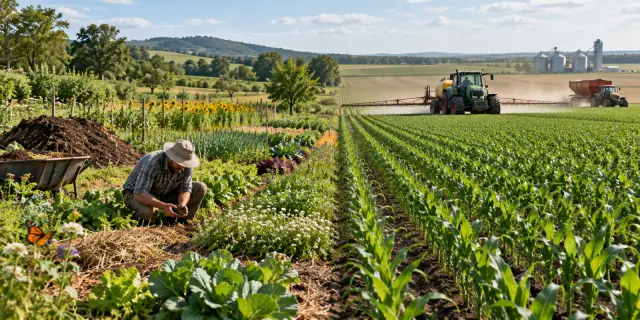
Glyphosate became what IARC calls probably the most heavily used herbicide in the world after 1996, when crops engineered to tolerate it reached farms (International Agency for Research on Cancer, 2017). Benbrook estimates that total global use rose more than 12-fold between 1995 and 2014, to about 826 million kg (Benbrook, 2016). Its target enzyme is absent from mammalian cells (International Agency for Research on Cancer, 2017). A 1997 monograph led by John Franz, the Monsanto chemist who found its herbicidal activity, caught it at that turning point, but its lead author had spent 36 years at the herbicide’s maker (Franz et al., 1997; National Inventors Hall of Fame, 2026).
Below, we explain how glyphosate works, why its use surged after the book appeared, how weeds adapted and why agencies and courts still disagree over its safety. We do not summarise the book’s chapters, which are not openly available, and we give no advice on using herbicides. The original study is summarised in Cabdirect archive record 19972301931.
What Is the 1997 Glyphosate Monograph?
It is a 653-page review of a single herbicide, published by the American Chemical Society in 1997 as ACS Monograph 189 (Franz et al., 1997). The authors were John Franz, Michael Mao and James Sikorski. Besides xv pages of front matter, the volume carries eight pages of plates, a bibliography and an index (Franz et al., 1997).
Franz is the reason the book carries weight. He joined Monsanto in 1955, discovered the glyphosate class of herbicides in 1970 and retired in 1991, six years before the book came out; the National Inventors Hall of Fame inducted him in 2007 (National Inventors Hall of Fame, 2026).
Franz found a use for the molecule rather than the molecule itself. IARC notes that glyphosate was first synthesised in 1950 as a possible pharmaceutical, and its herbicidal activity emerged only when it was made again and tested in 1970 (International Agency for Research on Cancer, 2017).
The publisher presents the book as a comprehensive review of the herbicide’s history and properties, chemistry and biology, formulation and technology, enzymology and structure–activity relationships (Franz et al., 1997). It adds syntheses of hundreds of analogues and derivatives and an account of how glyphosate acts on its target enzyme (Franz et al., 1997). The same description praises the herbicide’s environmental properties, soil inactivity and low toxicity (Franz et al., 1997). Those are the publisher’s words about a book led by the chemist who found its herbicidal use, not an independent assessment.
How Does Glyphosate Kill Plants?
Glyphosate kills plants by blocking EPSP synthase, an enzyme of the shikimate pathway that plants use to make aromatic amino acids (International Agency for Research on Cancer, 2017). According to IARC, it competitively inhibits this enzyme, which is not present in mammalian cells (International Agency for Research on Cancer, 2017).
The target was pinned down in 1980, a decade after the herbicidal effect was found. Steinrücken and Amrhein reported that year that glyphosate is a potent inhibitor of 5-enolpyruvylshikimic acid-3-phosphate synthase, the enzyme’s full name (Steinrücken & Amrhein, 1980). Writing in 2008, Duke and Powles noted that glyphosate is the only herbicide that targets this enzyme (Duke & Powles, 2008).
What the monograph covers
The 1997 book builds on that biochemistry. Its publisher says it clarifies the molecular mode of action on EPSP synthase and also covers uptake and transport in plants, metabolism in soil and plants, and formulation (Franz et al., 1997). The blurb opens by calling glyphosate a popular post-emergent herbicide for perennial weeds (Franz et al., 1997).
From a laboratory find to a global product
Commercial sales began in 1974, when the isopropylamine, sodium and ammonium salts were introduced; a trimesium salt followed in Spain in 1989 (International Agency for Research on Cancer, 2017). Duke and Powles later wrote that glyphosate grew into the world’s dominant herbicide after that 1974 launch (Duke & Powles, 2008). By 2010 it was registered in at least 130 countries, and more than 750 products containing it were reportedly on sale in the USA alone (International Agency for Research on Cancer, 2017).
An enzyme missing from mammalian cells gives glyphosate a clear biochemical difference between its effect on plants and on people (International Agency for Research on Cancer, 2017). That difference is not a safety verdict in itself. Regulators still assess residues in food, wildlife and cancer data separately, and their conclusions differ, as later sections show (European Commission, 2023; European Food Safety Authority, 2023).
Why Did Glyphosate Use Surge After 1997?
Duke and Powles judged glyphosate-resistant crops perhaps the most important reason for the herbicide’s success, alongside a sharp fall in its price once it became a generic compound (Duke & Powles, 2008). IARC dates the first glyphosate-tolerant genetically modified crops to 1996 (International Agency for Research on Cancer, 2017). It says the original patent protection expired outside the USA in 1991 and within the USA in 2000 (International Agency for Research on Cancer, 2017).
Herbicide-tolerant seed then spread quickly across American farms. The share of US soybean acres planted with it rose from 17% in 1997 to 68% in 2001 and reached 96% in 2024 (Economic Research Service, US Department of Agriculture, 2025). In 2025 herbicide-tolerant varieties covered 93% of upland cotton, and the figure for maize is about 92% (Economic Research Service, US Department of Agriculture, 2025).
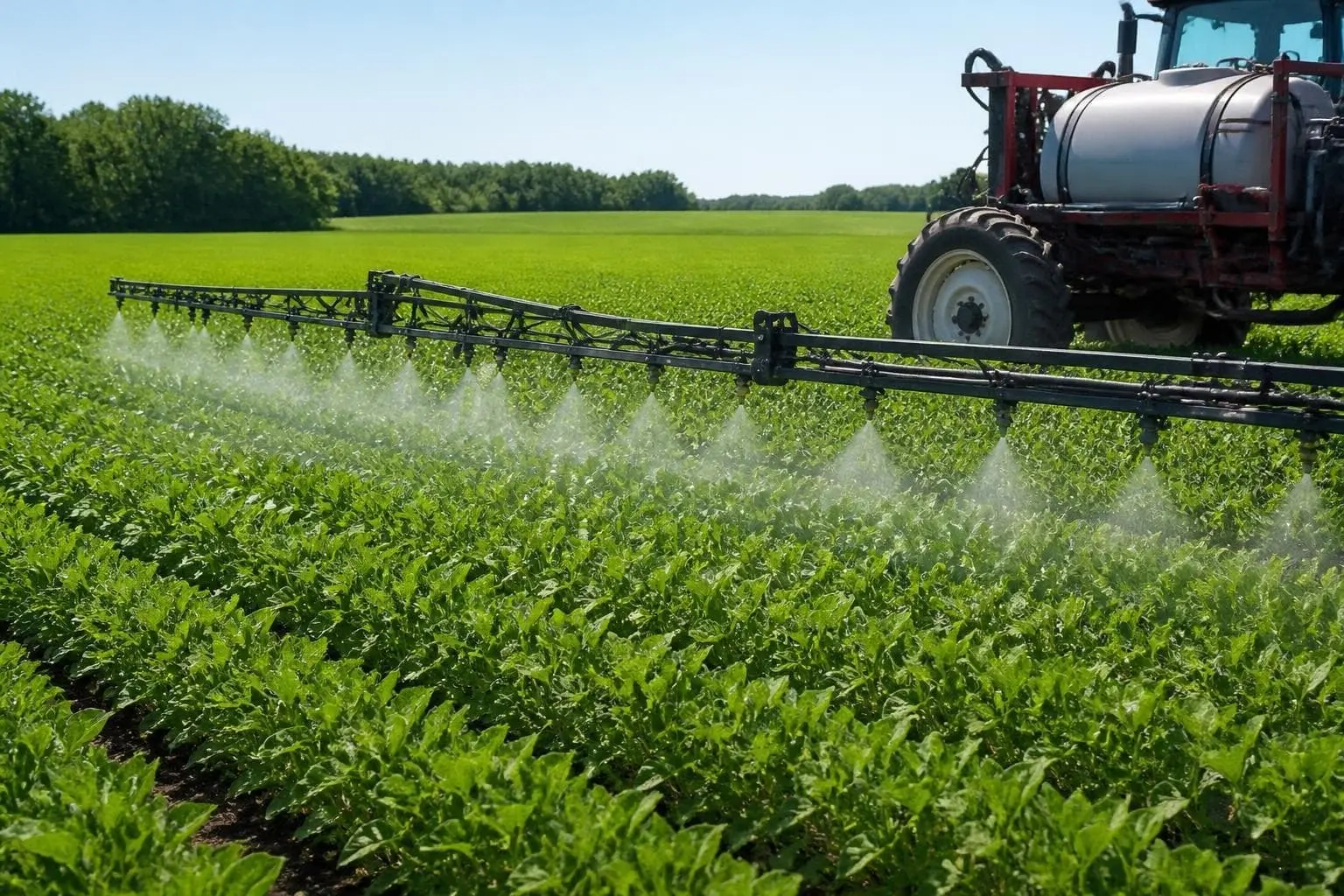
An analysis by Benbrook estimated that total global glyphosate use rose more than 12-fold, from about 67 million kg in 1995 to 826 million kg in 2014 (Benbrook, 2016). Agricultural use alone rose 14.6-fold over the same years. By 2012, genetically engineered herbicide-tolerant crops accounted for 56% of global agricultural use (Benbrook, 2016). In the United States, agricultural use grew roughly 300-fold between 1974 and 2014 (Benbrook, 2016).
These numbers need care: Benbrook built the global series from industry production figures, treats parts of it as projections and disclosed funding from organic food companies (Benbrook, 2016).
How Did Weeds Adapt to Glyphosate?
Weeds adapted by evolving resistance. As of September 2026, the International Herbicide-Resistant Weed Database lists 62 weed species resistant to inhibitors of EPSP synthase, the mode of action glyphosate uses (International Herbicide-Resistant Weed Database, 2026). The earliest entry in its table is rigid ryegrass (Lolium rigidum) from Victoria, Australia, in 1996 (International Herbicide-Resistant Weed Database, 2026).
That first report came a year before the monograph appeared (Franz et al., 1997; International Herbicide-Resistant Weed Database, 2026). The publisher’s description of the book dwells on chemistry, biology and environmental behaviour rather than on resistance (Franz et al., 1997). A decade later the picture looked different. Duke and Powles praised glyphosate as a virtually ideal herbicide but warned that its use was now threatened by resistant weeds (Duke & Powles, 2008).
Reading the resistance numbers
The count of 62 refers to species, not to individual cases in different countries or crops, and the database is live, so the total changes as new reports are confirmed (International Herbicide-Resistant Weed Database, 2026).
The farm context helps explain why the number matters. With 96% of US soybean acres planted to herbicide-tolerant seed in 2024, such varieties dominate the main US field crops, and they are bred to tolerate herbicides such as glyphosate, glufosinate and dicamba (Economic Research Service, US Department of Agriculture, 2025). Duke and Powles discussed glyphosate-resistant crops, introduced in 1996, alongside the threat that resistant weeds pose to the herbicide’s use (Duke & Powles, 2008).
Does Glyphosate Cause Cancer, and Why Do Agencies Disagree?
Agencies disagree. In 2015 IARC classified glyphosate as probably carcinogenic to humans (Group 2A), while the US EPA judged it not likely to be carcinogenic (International Agency for Research on Cancer, 2017; US Environmental Protection Agency, 2026). An EU risk committee found it does not meet the criteria for classification as a carcinogen (European Commission, 2023).
The IARC working group met in Lyon on 3–10 March 2015, and the full volume followed in 2017 (International Agency for Research on Cancer, 2017). It found limited evidence in humans, based on a positive association with non-Hodgkin lymphoma, and sufficient evidence in experimental animals (International Agency for Research on Cancer, 2017). It also judged the mechanistic evidence strong, including for genotoxicity and oxidative stress (International Agency for Research on Cancer, 2017).
EPA concluded in 2017 that glyphosate is not likely to be carcinogenic to humans and attributes the gap with IARC to differences in scope and method (US Environmental Protection Agency, 2026). In 2022 an appeals court vacated the human-health portion of its 2020 interim decision, and EPA withdrew that decision (US Environmental Protection Agency, 2026).
In Europe, the Committee for Risk Assessment of the European Chemicals Agency found in 2022 that glyphosate does not meet the criteria for classification as carcinogenic (European Commission, 2023), and EFSA reported in 2023 that it identified no critical areas of concern (European Food Safety Authority, 2023).
What Is Glyphosate’s Legal Status in 2026?
Glyphosate remains approved in the EU until 15 December 2033 under Implementing Regulation (EU) 2023/2660 (European Commission, 2023). Member States reached no qualified majority either way, in the standing committee or on appeal, so the Commission adopted the renewal itself (European Commission, 2023). Any application to renew beyond 2033 is due by 15 December 2030 (European Commission, 2026).
Conditions attached to the EU renewal
Only uses as a herbicide may be authorised, and spraying to desiccate crops before harvest is banned (European Commission, 2023). By default, professional field spraying needs an unsprayed in-field buffer strip of 5 to 10 m and nozzles that cut drift by at least 75% (European Commission, 2023). Equivalent measures may replace them, and they can be dropped when a product’s risk assessment shows no need (European Commission, 2023). The regulation also notes that indirect effects on biodiversity could not be excluded (European Commission, 2023).
Courts and settlements in the United States
The US Supreme Court decided Monsanto Co. v. Durnell on 25 June 2026 (Supreme Court of the United States, 2026). By seven votes to two, it held that federal pesticide law expressly preempts a state failure-to-warn claim that would require a cancer warning on Roundup’s label (Supreme Court of the United States, 2026). The case turned on labelling where EPA had not required such a warning, not on whether glyphosate causes cancer (Supreme Court of the United States, 2026).
Reuters reported that Bayer faces about 65,000 claims from people who say they developed cancer after using Roundup, which Bayer denies, and has proposed a $7.25 billion class settlement in a Missouri state court (Knauth, 2026).
How Should the 1997 Book Be Read Today?
The book is best read as a technical record of glyphosate’s chemistry and biochemistry at a turning point, led by a scientist from the company behind Roundup (Franz et al., 1997; National Inventors Hall of Fame, 2026; Supreme Court of the United States, 2026). Its technical core, as the publisher describes it, is synthesis, structure–activity work on hundreds of analogues, formulation and the target enzyme (Franz et al., 1997).
The biochemistry at its centre has lasted. EPSP synthase, identified as glyphosate’s target in 1980, is still the enzyme IARC named as its target in 2015 (Steinrücken & Amrhein, 1980; International Agency for Research on Cancer, 2017). For readers interested in how herbicides are designed, the book’s subject matter remains relevant (Franz et al., 1997; Duke & Powles, 2008). It was also written three years before the original US patent protection on glyphosate expired, in 2000 (International Agency for Research on Cancer, 2017).
A monograph led by the man who found glyphosate’s weedkilling power captures how the molecule works, but was written before its success showed its costs.
Its framing has aged less well. The publisher’s praise of low toxicity and soil inactivity came before IARC’s 2015 classification and before EFSA’s first-tier assessment flagged a high long-term risk to mammals in many representative uses (Franz et al., 1997; International Agency for Research on Cancer, 2017; European Food Safety Authority, 2023). It also came before resistance spread to 62 species and before the EU tied renewal to buffer strips and a desiccation ban (International Herbicide-Resistant Weed Database, 2026; European Commission, 2023).
Readers should also weigh who wrote it: Franz spent his career at Monsanto (National Inventors Hall of Fame, 2026). For the current science, the regulatory documents cited here are the better starting point (European Commission, 2023; European Food Safety Authority, 2023; US Environmental Protection Agency, 2026).
Frequently asked questions
Who wrote Glyphosate: A Unique Global Herbicide?
The 1997 book was written by John Franz, Michael Mao and James Sikorski and published by the American Chemical Society as Monograph 189 (Franz et al., 1997). Franz, a Monsanto chemist from 1955 to 1991, discovered glyphosate’s herbicidal activity in 1970 (National Inventors Hall of Fame, 2026). The co-authors’ employers at the time are not given in the catalogue record.
Why does glyphosate harm plants but not work the same way in mammals?
Its target, EPSP synthase, is an enzyme in the pathway plants use to build aromatic amino acids, and IARC notes that it is not present in mammalian cells (International Agency for Research on Cancer, 2017). That difference concerns the primary target only; regulators still assess toxicity, residues and wildlife risk separately (European Food Safety Authority, 2023).
When was the first glyphosate-resistant weed found?
The International Herbicide-Resistant Weed Database lists rigid ryegrass from Victoria, Australia, in 1996 as its earliest case, and by September 2026 the list had grown to 62 species (International Herbicide-Resistant Weed Database, 2026). Duke and Powles warned in 2008 that resistant weeds threatened a virtually ideal herbicide (Duke & Powles, 2008).
Does IARC say glyphosate causes cancer?
IARC classed glyphosate in 2015 as probably carcinogenic to humans, Group 2A, citing limited human evidence for non-Hodgkin lymphoma and sufficient evidence in animals (International Agency for Research on Cancer, 2017). EPA and the EU’s chemicals risk committee reached different conclusions, and EPA’s updated assessment is due in late 2026 (European Commission, 2023; US Environmental Protection Agency, 2026).
Is glyphosate still allowed in the EU?
Yes. The EU renewed its approval in November 2023, running from 16 December 2023 to 15 December 2033 (European Commission, 2023). The renewal permits only herbicide uses, bans pre-harvest desiccation and by default requires buffer strips and drift-reducing nozzles (European Commission, 2023). Any further renewal must be applied for by December 2030, the Commission says (European Commission, 2026).
Sources
- Franz, J. E., Mao, M. K., & Sikorski, J. A. (1997). Glyphosate: a unique global herbicide (ACS Monograph 189). American Chemical Society. – Cabdirect archive record 19972301931
- National Inventors Hall of Fame. (2026). John E. Franz: Glyphosate herbicide.
- Steinrücken, H. C., & Amrhein, N. (1980). The herbicide glyphosate is a potent inhibitor of 5-enolpyruvylshikimic acid-3-phosphate synthase. Biochemical and Biophysical Research Communications, 94(4), 1207–1212.
- Duke, S. O., & Powles, S. B. (2008). Glyphosate: a once-in-a-century herbicide. Pest Management Science, 64(4), 319–325.
- International Agency for Research on Cancer. (2017). Some organophosphate insecticides and herbicides. IARC Monographs on the Evaluation of Carcinogenic Risks to Humans, Volume 112.
- Benbrook, C. M. (2016). Trends in glyphosate herbicide use in the United States and globally. Environmental Sciences Europe, 28, 3.
- Economic Research Service, US Department of Agriculture. (2025). Adoption of genetically engineered crops in the United States: Recent trends in GE adoption.
- International Herbicide-Resistant Weed Database. (2026). List of herbicide resistant weeds by herbicide mode of action: inhibition of enolpyruvyl shikimate phosphate synthase (HRAC Group 9).
- European Commission. (2023). Commission Implementing Regulation (EU) 2023/2660 of 28 November 2023 renewing the approval of the active substance glyphosate. Official Journal of the European Union.
- European Food Safety Authority. (2023). Peer review of the pesticide risk assessment of the active substance glyphosate. EFSA Journal, 21(7), e08164.
- European Commission. (2026). Glyphosate. Food Safety.
- US Environmental Protection Agency. (2026). Glyphosate.
- Supreme Court of the United States. (2026). Monsanto Co. v. Durnell, No. 24-1068, 609 U.S. 371 (preliminary print).
- Knauth, D. (2026, September 13). Bayer faces pivotal test of $7.25-billion Roundup settlement in Missouri court. Reuters, via Jefferson City News Tribune.

Tobias Mardle — author
Tobias Mardle is an author with a background in agricultural engineering. A graduate in Agricultural Engineering, his earlier work focused on explaining farm machinery, guidance systems and the use of field data to growers and agricultural advisers. At Cabdire...
Related
Hevea brasiliensis breeding: from crosses to field trials
Why Punjab Farmers Burn Stubble and What Fire Counts Show
How fertiliser types affect rice yield and soil under SRI
How Much Can New Woodland Cut UK Emissions? What the Models Show
Calendula, crotalaria and oats for root-knot nematodes in naranjilla
Why breadfruit mealybug control failed to last on Pacific atolls