Protein Quality of Amaranth Grain
J. P. Senft’s 1980 report examined the nutritional quality of amaranth grain protein at a time when amaranth was receiving renewed attention as a food crop. The work focused on protein quality rather than the later detailed comparisons of seed colour, mineral composition and processing reported in other amaranth studies.
Amaranth attracted nutritional interest because its amino-acid balance differed from that of common cereal grains. This article is most useful for readers tracing the early evidence on grain-amaranth protein; it focuses on Senft’s 1980 findings and their later research context, not current dietary recommendations or a complete assessment of amaranth nutrition.
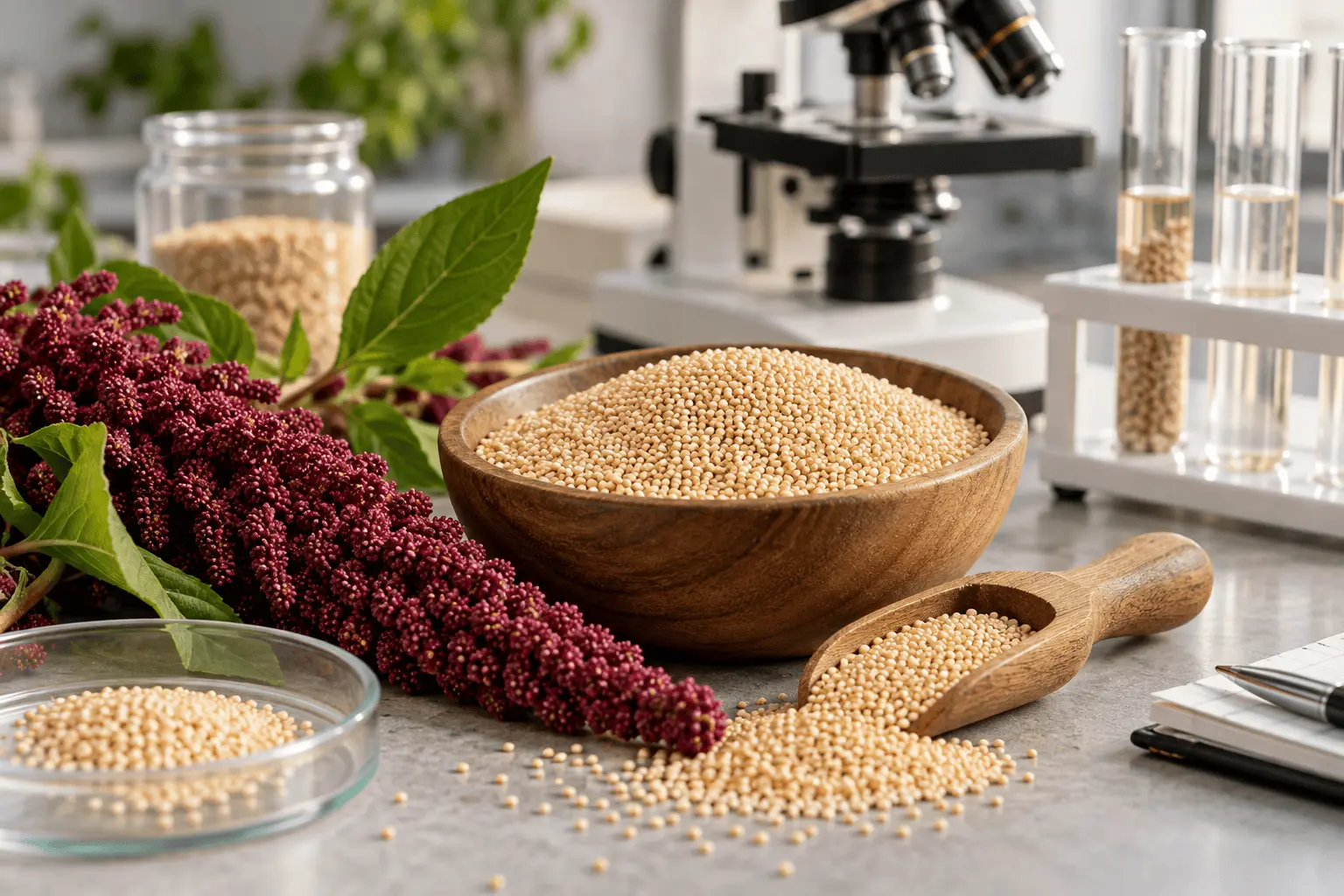
How the Study Framed Amaranth Protein Quality
Senft approached grain amaranth as a potential source of dietary protein at a time when the crop was being reconsidered for wider cultivation and food use. The central nutritional question was not simply how much protein the grain contained, but how well its essential amino-acid pattern could meet human nutritional requirements.
This distinction matters because two grains with similar total protein concentrations can differ substantially in protein quality. If one essential amino acid is present in a relatively low proportion, it can limit the nutritional use of the other amino acids. Senft therefore discussed amaranth in terms of both protein concentration and amino-acid balance.
The report also placed amaranth beside other food grains. This comparative framework showed why amaranth attracted attention: its principal amino-acid limitation differed from the lysine limitation characteristic of several major cereals.
Why Amino-Acid Balance Mattered
Essential amino acids must be supplied by the diet, so their relative proportions are a major component of protein-quality assessment. Grain proteins can contain substantial total protein while still providing an uneven essential-amino-acid pattern.
Senft’s comparison identified leucine as the principal limiting amino acid in amaranth. Threonine, isoleucine and valine were also below the reference levels used for comparison, while the overall amino-acid profile remained nutritionally valuable.
The importance of this pattern becomes clearer when amaranth is compared with conventional cereals. Barley, corn, oats and wheat were characterized primarily by lysine limitation in the comparative material, whereas amaranth’s first limitation was leucine.
Table 1. Protein-quality characteristics associated with the report
Characteristic | Interpretation |
Protein quality | Evaluated as a central nutritional property of grain amaranth |
Essential amino acids | Amino-acid balance was used to judge nutritional quality |
Limiting amino acids | Leucine, threonine, isoleucine and valine were identified in later literature discussing Senft’s findings |
Comparison with cereals | Amaranth was considered nutritionally distinctive from common cereal grains |
Food potential | Protein quality supported interest in amaranth as a food crop and as a complement to cereal-based diets |
Table note: The comparisons reflect historical assessments of protein quality and should not be interpreted as current dietary reference values.
What the Relative Protein Score Shows
In the comparative table, amaranth was listed at about 15% protein with a relative protein score of 67. This placed it above corn, wheat, barley and oats in the same comparison, although below buckwheat and soybeans.
The score should be interpreted as a comparative protein-quality measure within the framework used at the time. It does not mean that 67% of amaranth protein is absorbed, nor does it represent a modern clinical measure of protein utilization.
Its value in the report is comparative: it illustrates that the amino-acid balance of amaranth was considered stronger than that of several common cereals even though leucine remained limiting.
Amaranth Differed From Cereals Limited Mainly by Lysine
One of the most notable features of the comparison is the difference in limiting amino acids. Corn, wheat, barley and oats were identified with lysine as the limiting amino acid, while amaranth was limited first by leucine.
That difference supported interest in combining plant foods with complementary amino-acid patterns. A grain that is relatively stronger in amino acids that limit another grain can improve the balance of a mixed diet, although the nutritional result depends on the proportions and composition of the foods used.
The report therefore helped position amaranth not only as an alternative grain but also as a potential complement to cereal-based foods.
Leucine Was the First Limiting Amino Acid
Leucine was identified as the first limiting amino acid in the historical protein-quality comparison. This finding distinguished amaranth from several common cereals in which lysine was the principal limiting amino acid. The comparison focused on nutritional differences among grain proteins rather than the broader effects of cultivar variation, processing methods or biological utilization.
Subsequent research on amaranth protein also discussed threonine, isoleucine and valine as potentially limiting amino acids, depending on the reference pattern used. These observations show that the favorable reputation of amaranth protein did not mean that its essential-amino-acid profile was nutritionally complete under every assessment method.
The appropriate interpretation is therefore comparative rather than absolute: amaranth showed a useful protein profile, but its quality was still constrained by particular essential amino acids.
Table 2. Main protein-quality findings associated with Senft’s report
Measure | Finding |
Approximate grain protein | 15% |
First limiting amino acid | Leucine |
Other amino acids discussed as relatively low | Threonine, isoleucine and valine |
Relative protein score | 67 |
Comparative position | Higher score than corn, wheat, barley and oats in the reported comparison |
Nutritional significance | Different limiting-amino-acid pattern from many common cereals |
Why Total Protein Alone Could Not Describe Nutritional Value
The comparison demonstrates why protein percentage and protein quality are separate nutritional questions. Amaranth and oats were both listed at about 15% protein, yet their limiting amino acids and relative protein scores differed.
Likewise, wheat was listed at about 14% protein but had a lower relative protein score in the comparison. These differences reflect amino-acid balance rather than simply the amount of protein present in the grain.
For this reason, the report’s contribution lies in treating amaranth protein as a nutritional system with specific strengths and limitations instead of relying on a single composition number. This broader perspective highlights the importance of evaluating amino acid balance, protein digestibility and overall nutritional value together when assessing amaranth as a potential food source.
How the Findings Supported Interest in Grain Amaranth
During the late 1970s and early 1980s, grain amaranth was being reconsidered as an underused crop with potential food and agricultural value. Protein quality was one of the characteristics that made the crop attractive to researchers.
Senft’s comparison suggested that amaranth could occupy a useful nutritional position among grains. Its protein concentration was relatively high in the comparative table, and its amino-acid limitation differed from the lysine limitation of several major cereals.
These characteristics helped motivate later research on different amaranth species and cultivars, the effects of food processing on protein quality, nutrient digestibility and the potential use of amaranth in mixed foods. Subsequent studies also explored how its nutritional properties could contribute to more diverse and balanced diets.
What Later Research Added to the Early Protein-Quality Picture
Research following Senft’s work broadened the understanding of amaranth protein quality. Studies examined different species and cultivars, measured amino-acid composition and digestibility, and investigated how processing influenced the nutritional characteristics of the grain.
These investigations showed that protein quality can vary with plant material, processing conditions and the methods used for nutritional assessment. Digestibility, amino-acid balance and biological utilization therefore became important alongside total protein concentration when evaluating amaranth as a food crop.
Together, this research established a broader nutritional picture of grain amaranth. Its protein profile remained an important advantage, while differences among varieties and processing methods demonstrated that nutritional quality could not be represented by a single value.
Where the Evidence Stands
Senft’s publication is an early conference-era contribution to grain-amaranth nutrition research. Its strongest documented contribution is the comparison of amaranth protein quality with that of other grains and the identification of leucine as the principal limiting amino acid.
The historical relative protein score provides a useful picture of how amaranth was evaluated at the time, but it should not be treated as a modern clinical endpoint or as a complete measure of dietary protein utilization. Protein-quality assessment methods and reference patterns have continued to develop since the report was published.
Later studies expanded the evidence by examining protein digestibility, biological utilization, genetic variation among amaranth species and cultivars, processing methods and practical food applications. This research provided a more comprehensive understanding of amaranth protein quality than was available in the original 1980 assessment. It also helped clarify how differences in grain composition, preparation techniques and nutritional availability could influence the value of amaranth in human diets.
Scope and Limitations of the 1980 Protein Study
Senft’s 1980 work focused primarily on the protein quality and amino-acid profile of grain amaranth. The comparison highlighted the nutritional significance of essential amino acids and showed how amaranth differed from several conventional cereal grains. Particular attention was given to the balance of amino acids, which plays an important role in determining the nutritional value of dietary proteins. These findings helped establish a foundation for further research into amaranth as an alternative grain crop with potential applications in human nutrition.
The study provided an early framework for evaluating amaranth as a potential source of dietary protein. Its scope was narrower than that of later nutritional research, which examined additional factors such as digestibility, processing effects, cultivar variation and the use of amaranth in different food products. For this reason, the findings are most useful as an early assessment of amaranth protein quality rather than a complete evaluation of its nutritional properties. Subsequent research expanded this foundation by applying additional analytical methods and examining a wider range of nutritional characteristics.
The Topic Today
Amaranth is now commonly described as a pseudocereal with a comparatively favorable protein profile. Modern research considers amino-acid composition together with digestibility, processing, food formulation and differences among species and cultivars.
The 1980 report remains relevant as an early contribution to this research trajectory. It highlighted the importance of evaluating protein quality rather than relying only on total protein concentration and showed that amaranth’s limiting-amino-acid pattern differed from that of several common cereals.
Current nutritional evaluation is based on a much larger body of evidence, so the historical protein score should be read in context. Senft’s report is most useful for understanding why grain amaranth attracted nutritional interest and how protein quality became a central theme in subsequent research.
What the Study Contributes to Nutrition Research
The report helped establish a clear nutritional rationale for further investigation of grain amaranth. It showed that a relatively high protein concentration alone was not the crop’s only point of interest; the balance of essential amino acids also distinguished it from familiar cereal grains.
By identifying leucine as the principal limitation and comparing amaranth with grains limited mainly by lysine, the work provided a framework for thinking about complementary plant proteins. This became relevant to later studies of mixed foods and grain combinations.
Its historical contribution is therefore both specific and limited: it strengthened the case for studying amaranth protein while leaving many questions about digestibility, processing, cultivar variation and human dietary use to later research.
Practical takeaway: Senft’s 1980 report showed that amaranth protein differed from common cereals, with leucine as its first limiting amino acid. The historical protein score is useful for comparison but should not be treated as a modern measure of dietary protein adequacy.
Frequently asked questions
What did Senft’s 1980 report examine?
The report focused on the protein quality of grain amaranth and its nutritional characteristics. It formed part of early research into the crop’s potential as a food source. Its main relevance lies in evaluating amaranth as a source of dietary protein and examining how its amino-acid composition compares with conventional cereal grains.
Why was amaranth protein considered nutritionally interesting?
Amaranth has an essential-amino-acid pattern that differs from those of common cereal grains. This created interest in its potential to complement cereal-based foods and improve the diversity of plant protein sources. Protein quality therefore became a central topic in early amaranth research, particularly when comparing the nutritional strengths and limitations of different grains.
Did the report establish modern dietary recommendations?
No. It was an early investigation of grain-amaranth protein quality rather than a comprehensive assessment of human dietary requirements. Modern dietary conclusions require a broader body of nutritional research, including evidence on protein digestibility, amino-acid availability and the effects of food processing. The findings provide historical context but should not be treated as independent dietary recommendations.
What was the main limiting amino acid in amaranth protein?
Leucine was identified as the principal limiting amino acid in Senft’s comparison. This pattern differed from several common cereal grains, where lysine was the primary limitation. The distinction contributed to interest in amaranth as a complementary source of plant protein, particularly in mixed foods combining grains with different essential-amino-acid profiles.
Sources
- Senft, J. P. (1980). Protein quality of amaranth grain. In Proceedings of the Second Amaranth Conference (pp. 43–47). Rodale Press, Emmaus, Pennsylvania.
- Senft, J. P. (1980). Protein quality of amaranth grain. Rodale Research Report 80-3. Rodale Press, Emmaus, Pennsylvania. 14 pp.
- Saunders, R. M., & Becker, R. (1984). Amaranthus: A potential food and feed resource. Advances in Cereal Science and Technology, 6, 357–396.
- Bressani, R., Elias, L. G., & Garcia-Soto, A. (1989). Limiting amino acids in raw and processed amaranth grain protein from biological tests. Plant Foods for Human Nutrition, 39(3), 223–234.
- Bressani, R. (1988). Amaranth: The nutritive value and potential uses of the grain and byproducts. Food and Nutrition Bulletin, 10(2).
- Bressani, R., González, J. M., Zúñiga, J., Breuner, M., & Elías, L. G. (1987). Yield, selected chemical composition and nutritive value of 14 selections of amaranth grain representing four species. Journal of the Science of Food and Agriculture, 38, 347–356.
- Venskutonis, P. R., & Kraujalis, P. (2013). Nutritional components of amaranth seeds and vegetables: A review on composition, properties, and uses. Comprehensive Reviews in Food Science and Food Safety, 12(4), 381–412.
- Becker, R., Wheeler, E. L., Lorenz, K., Stafford, A. E., Grosjean, O. K., Betschart, A. A., & Saunders, R. M. (1981). A compositional study of amaranth grain. Journal of Food Science, 46(4), 1175–1180.

Maya Hartwell — author
Maya writes environment and plant science explainers, with an editorial focus on biodiversity, ecosystems, water quality, environmental pollution, plant biology, invasive plants, natural materials and the use of biological resources in environmental technologi...
Related

Travel in Later Life: What an Eight-Person Study Found

Adult Literacy Classes in Kenya: What a 1980s Study Found

China cruise tourism: growth and changing passenger behaviour

Tradition, Modernity and Tourism in Swaziland: Social Effects

Sydney and Melbourne: Divergent Sporting Cultures
Tackling Climate Change Through Livestock: Emissions and Mitigation