How hormones time seasonal reproduction in temperate-zone birds
Temperate-zone birds time seasonal reproduction by converting changing day length into neuroendocrine signals that activate the hypothalamic–pituitary–gonadal axis and coordinate breeding behaviour, gonadal growth, ovulation and egg laying. The same seasonal system must later reduce reproductive activity, while other hormones help shift some species from laying toward incubation and parental behaviour.
A 1980 review by Wingfield and Farner brought together evidence from domestic fowl, ducks, Japanese quail and turkeys, including hormonal control of sexual behaviour, ovulation, oviposition and broodiness. Later research clarified the mechanisms of photoperiod sensing, thyroid-hormone signalling, GnRH and GnIH regulation, prolactin, and the differences between species and reproductive stages.
The seasonal problem birds have to solve
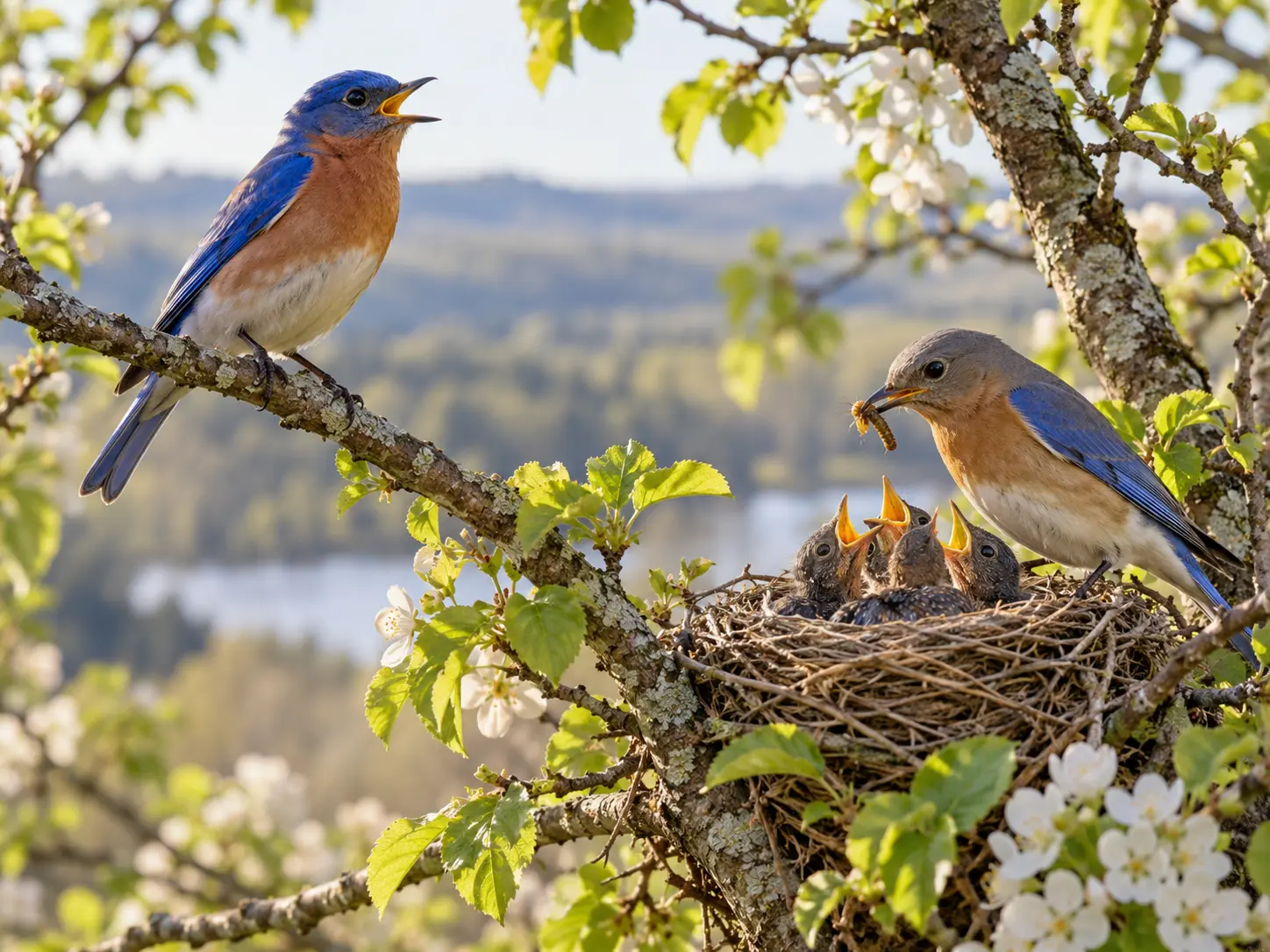
For a bird living at temperate latitudes, successful breeding depends on more than producing eggs or sperm. Courtship, territory defence, nest building, gonadal growth, ovulation, incubation and the feeding of young all require energy, and the optimal timing for each activity may differ. Day length is especially useful because it changes predictably with the seasons and remains relatively stable despite short periods of unusually cold or warm weather. Birds can therefore use photoperiod as an advance seasonal signal, beginning endocrine preparation before food availability for nestlings reaches its seasonal peak.
The 1980 review by Wingfield and Farner is important in this history because it presented seasonal reproduction as an endocrine coordination process rather than the effect of a single hormone. The review covers domestic fowl, duck, Japanese quail and turkey and examines sexual behaviour, ovulation, oviposition and broodiness as processes under hormonal control. Research on avian reproductive endocrinology has since developed a detailed understanding of the molecular and physiological mechanisms involved in seasonal timing. Studies across poultry and wild birds also demonstrate how reproductive systems can vary between species while following common principles of hormonal and environmental regulation.
From day length to reproductive activation
The central pathway is the hypothalamic–pituitary–gonadal, or HPG, axis. When seasonal information is interpreted as favourable for reproduction, hypothalamic neurons increase reproductive signalling, the pituitary releases the gonadotropins luteinizing hormone (LH) and follicle-stimulating hormone (FSH), and the gonads respond with gametogenesis and steroid-hormone production. Testosterone, estradiol and progesterone then act on reproductive tissues and feed back to the brain and pituitary. This architecture links seasonal timing to both physiology and behaviour rather than treating courtship, gonadal development and egg production as separate systems.
Deep-brain light detection and circadian timing
Birds are unusual among the best-studied vertebrates because the eyes are not the only route by which light can affect seasonal reproduction. Work across several species supports photoreception within the brain, where light-sensitive molecules and circadian timing mechanisms help measure whether light occurs during a photoinducible phase of the day. This “external coincidence” framework explains how the same number of light hours can carry different seasonal meaning depending on when the light falls relative to an internal daily rhythm.
Thyroid signalling, GnRH and gonadotropins
Japanese quail became a key model for the molecular bridge between long days and reproductive activation. Experiments showed that long-day stimulation induces thyrotropin, or TSHβ, in the pars tuberalis of the pituitary region. Downstream changes in deiodinase enzymes alter local thyroid-hormone availability in the mediobasal hypothalamus. This local thyroid signal is associated with structural and functional changes around GnRH nerve terminals, helping create conditions in which GnRH can drive pituitary gonadotropin secretion.
GnRH is therefore a major activating signal, but the system also contains inhibitory control. Gonadotropin-inhibitory hormone (GnIH) can reduce gonadotropin secretion and reproductive motivation in some seasonal contexts. Its contribution is not identical across all birds or all stages, and it should not be described as a simple off switch. Instead, GnRH, GnIH, thyroid signalling, sex-steroid feedback and other neuromodulators form a regulatory network whose balance changes as birds enter, maintain and leave reproductive condition.
Seasonal breeding is best understood as coordinated endocrine timing: the same environmental clock must align physiology, behaviour and parental investment.
How endocrine timing controls different reproductive tasks
Once the reproductive axis is active, different behaviours and reproductive processes depend on partly overlapping hormonal signals. This matters because “breeding condition” is not a single state. A male can show territorial or sexual behaviour while gonadal function is still changing; a female can move from follicle development to repeated ovulations and then, in some species or breeds, into incubation. The endocrine system therefore has to sequence several tasks while remaining responsive to environmental and social information.
Sexual behaviour and gonadal steroids
Sex steroids produced by active gonads are central to many seasonal changes in sexual behaviour. Testosterone and estradiol can alter motivation, display, aggression and neural circuits that support reproductive behaviour, while their concentrations are themselves controlled by upstream gonadotropins. Yet circulating steroids do not explain every behavioural transition. Social cues, prior experience, neural sensitivity to hormones and species-specific life histories can change how a given hormone concentration is translated into behaviour.
Ovulation and oviposition
In laying hens, ovulation depends on reciprocal signalling between the brain, pituitary and ovary. Developing follicles produce steroids, including progesterone, and the preovulatory rise in LH is a crucial event leading to ovulation. Classic neuroendocrine work also identified changes in neurotransmitter systems around this surge. After ovulation, the ovum passes through the oviduct while albumen, shell membranes and shell are added before oviposition. The daily egg cycle is therefore nested within the larger seasonal state that determines whether the reproductive tract is active at all.
Modern poultry reviews describe ovulation and oviposition as strongly entrained to daily light–dark rhythms as well as to endocrine feedback. In domestic chickens, oviposition typically occurs roughly a day after the preceding ovulation, and the next ovulation is timed within an endocrine “open period.” Those values are characteristics of studied laying systems, not a rule for every bird. Ducks, quail, turkeys and wild passerines differ in clutch pattern, laying interval and sensitivity to environmental cues.
Broodiness and prolactin
Broodiness marks a different reproductive phase: sustained nest attendance and incubation replace continued egg laying. In domestic hens and several other birds, prolactin rises around incubation and is closely associated with parental behaviour. Vasoactive intestinal peptide (VIP) in the hypothalamus can stimulate prolactin release, and older experiments linked prolactin, serotonin, dopamine and ovarian steroid signals to the transition between laying and incubation. The exact sequence differs among species and breeds.
It is safer to treat prolactin as part of a regulatory network than as a single “broodiness hormone.” Comparative work shows a strong relationship between prolactin and parental care, yet causal experiments are less numerous than correlations, and the timing of prolactin elevation varies. Some poultry lines have also been selected against broodiness, changing the relationship between endocrine state and behaviour. The seasonal reproductive system thus continues beyond fertilization and egg laying into the control of incubation and parental investment.
Reproductive component | Representative endocrine control | What the signal helps coordinate | Important caution |
Seasonal activation | Photoperiod, TSHβ/thyroid signalling, GnRH, LH and FSH | Gonadal growth and entry into reproductive condition | Pathway strength and timing vary among species |
Sexual behaviour | Sex steroids plus neural and social modulation | Courtship, display, aggression and mating motivation | Behaviour is not determined by one steroid concentration |
Ovulation | Follicular progesterone, GnRH-linked pituitary LH surge | Release of the mature ovum | Most mechanistic detail comes from poultry models |
Oviposition | Circadian timing, ovarian and oviductal endocrine coordination | Timing of egg passage and laying | Laying intervals differ by species and production line |
Broodiness | Prolactin, VIP and interacting neural signals | Incubation and reduced laying in broody birds | Prolactin association is strong but not uniformly causal |
Why quail, chickens, ducks, turkeys and wild birds do not behave identically
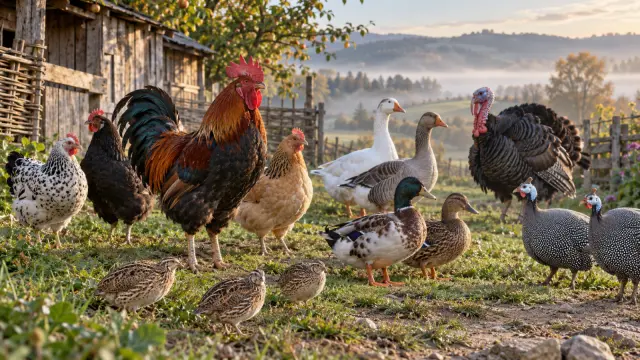
The birds included in the 1980 review are useful precisely because their reproductive systems expose different parts of the same general problem. Japanese quail show rapid, experimentally tractable responses to long photoperiods and became central to discovery of the TSH–thyroid–GnRH pathway. Domestic chickens provide detailed models of ovarian hierarchies, LH surges, egg formation and broodiness. Ducks and turkeys add different patterns of laying and incubation, while free-living temperate passerines show how photoperiodic preparation interacts with changing weather, food and social conditions.
Several practical differences should be kept in view:
- Domestication can alter seasonal sensitivity, so a poultry strain may not reproduce the response of its wild ancestor.
- Females and males can use the same seasonal cue but express different downstream physiology because ovaries, testes and reproductive behaviours are regulated differently.
- Long-day responses can differ in threshold, speed and termination; species vary in how strongly they become photorefractory.
- Supplementary cues such as food, temperature, rainfall and social stimulation can matter more once the photoperiodic system has placed a bird in a reproductively responsive state.
These differences are not exceptions to seasonal endocrine control; they are part of how that control evolves. A useful model therefore separates conserved architecture-the HPG axis, photoperiodic measurement and hormone feedback-from species-specific settings such as day-length thresholds, photorefractoriness, clutch strategy and parental behaviour.
How the breeding season shuts down
Seasonal reproduction must end as reliably as it begins. In many long-day temperate birds, prolonged exposure to long days eventually produces photorefractoriness: the reproductive system becomes less responsive even while day length remains long. Gonadal activity regresses, reproductive steroid output falls, and other seasonal programs such as molt can follow. Short days can later restore photosensitivity, allowing the system to respond again when photoperiod increases in the next annual cycle.
The mechanisms of termination are not simply the reverse of spring activation. Modern models distinguish relatively rapid photoinduction of GnRH release from slower processes that reduce GnRH synthesis or responsiveness across the season. Thyroid hormones are also involved in the development and resolution of photorefractoriness in some species. This helps explain why birds can stop breeding before days begin to shorten dramatically and why species with similar spring activation can have very different breeding-season lengths.
What the 1980 review established-and what later work added
The 1980 review captured a durable idea: seasonal reproduction is coordinated by hormones that connect environmental timing to behaviour and reproductive physiology. At that point, researchers already had strong evidence for photoperiodic control, pituitary gonadotropins, gonadal steroids and endocrine regulation of ovulation and broodiness. The review’s breadth across fowl, ducks, quail and turkeys also made clear that reproductive endocrinology had to account for more than gonadal size; it had to explain the sequence from sexual behaviour through laying and incubation.
What changed afterward was resolution. Molecular studies identified long-day induction of TSHβ and local thyroid-hormone metabolism in the mediobasal hypothalamus. Work on GnIH added a defined inhibitory neuropeptide to the seasonal network. Deep-brain photoreceptors and circadian gene regulation became experimentally tractable, while modern prolactin research clarified both its strong association with parental states and the remaining uncertainty about direct causal roles. These discoveries refine the 1980 framework rather than replacing it.
Limits of the evidence and how to interpret it
The evidence provides a strong basis for describing the broader physiological mechanisms that regulate seasonal reproduction in temperate-zone birds. Detailed interpretation of individual experiments depends on the species studied, experimental design, reproductive stage and environmental conditions. Japanese quail and domestic chickens are especially common in experimental research because they are well suited to controlled studies, but mechanisms identified in these models may vary among other temperate bird species.
Hormone concentrations are also strongly influenced by biological and environmental context. A correlation between prolactin and incubation, testosterone and display, or LH and ovulation does not by itself demonstrate that altering a single hormone is sufficient to produce the associated behaviour. Seasonal reproductive transitions arise through feedback among the brain, pituitary, gonads, peripheral tissues and environmental cues. Interpretation therefore depends on the species, reproductive stage, manipulated cue, measured hormone or gene, and whether the experiment examined causation or association.
Temperate-zone birds use endocrine timing systems to coordinate reproduction with seasonal environmental conditions, but these systems operate as interconnected networks rather than simple linear switches. Research since 1980 has expanded understanding of the molecular mechanisms, inhibitory pathways and physiological processes involved in reproductive activation, egg production, broodiness and seasonal shutdown. These mechanisms can be coordinated within the same endocrine framework while still showing substantial differences among species.
Frequently asked questions
Why is day length such an important breeding cue for temperate birds?
Day length changes predictably from year to year, so it can warn birds about the approaching season before temperature or food peaks. Photoperiodic systems convert that information into endocrine changes that prepare the gonads and behaviour. Local cues such as food, weather and social conditions can then fine-tune the final timing.
What hormones start seasonal reproduction in birds?
There is no single starter hormone. Photoperiodic signalling in the brain can alter local thyroid-hormone pathways and GnRH release. GnRH then promotes pituitary LH and FSH secretion, which activate the gonads and sex-steroid production. GnIH and other signals can oppose or modify this activation, depending on species and reproductive stage.
How does prolactin relate to broodiness?
Prolactin commonly rises around incubation and parental care, and hypothalamic VIP can stimulate prolactin release in poultry. However, the relationship is not identical in every bird, and correlation does not prove that prolactin alone causes broodiness. Neural, ovarian, environmental and genetic factors also influence whether a female stops laying and incubates.
Do findings from Japanese quail or chickens apply to all wild birds?
They reveal important mechanisms, but they are not universal templates. Japanese quail are especially useful for photoperiodic molecular studies, while chickens provide detailed models of ovulation and egg laying. Wild species can differ in day-length thresholds, photorefractoriness, clutch patterns and reliance on food, temperature or social cues, so direct extrapolation needs caution.
What is photorefractoriness in seasonal birds?
Photorefractoriness is a seasonal loss of reproductive responsiveness that can develop after prolonged exposure to stimulatory long days. It helps end breeding even before day length falls sharply. Gonadal activity then regresses, and exposure to short days can restore photosensitivity in many species, preparing the endocrine system for another annual reproductive cycle.
Sources
- Wingfield and Farner. Control of seasonal reproduction in temperate-zone birds. In: Reiter RJ, Follett BK, eds. Seasonal Reproduction in Higher Vertebrates. Progress in Reproductive Biology. 1980;5:62–101.
- Dawson A, King VM, Bentley GE, Ball GF. Photoperiodic Control of Seasonality in Birds. Journal of Biological Rhythms. 2001;16(4):365–380.
- Leska A, Dusza L. Seasonal changes in the hypothalamo-pituitary-gonadal axis in birds. Reproductive Biology. 2007;7(2):99–126.
- Nakao N, Ono H, Yamamura T, et al. Thyrotrophin in the pars tuberalis triggers photoperiodic response. Nature. 2008;452:317–322.
- Ubuka T, Bentley GE, Tsutsui K. Neuroendocrine regulation of gonadotropin secretion in seasonally breeding birds. Frontiers in Neuroscience. 2013;7:38.
- Dawson A. Annual gonadal cycles in birds: modeling the effects of photoperiod on seasonal changes in GnRH-1 secretion. Frontiers in Neuroendocrinology. 2015;37:52–64.
- Tamai TK, Yoshimura T. Molecular and Neuroendocrine Mechanisms of Avian Seasonal Reproduction. Advances in Experimental Medicine and Biology. 2017;1001:125–136.
- van der Klein SAS, Zuidhof MJ, Bédécarrats GY. Diurnal and seasonal dynamics affecting egg production in meat chickens: a review of mechanisms associated with reproductive dysregulation. Animal Reproduction Science. 2020;213:106257.
- Liddle TA, Stevenson TJ, Majumdar G. Photoperiodic regulation of avian physiology: From external coincidence to seasonal reproduction. Journal of Experimental Zoology Part A. 2022;337:890–901.
- Sharp PJ, MacNamee MC, Talbot RT, Sterling RJ, Hall TR. Aspects of the neuroendocrine control of ovulation and broodiness in the domestic hen. Journal of Experimental Zoology. 1984;232(3):475–483.
- Stewart C, Marshall CJ. Seasonality of prolactin in birds and mammals. Journal of Experimental Zoology Part A. 2022;337(9–10):919–938.
- Smiley KO. Prolactin and avian parental care: New insights and unanswered questions. Hormones and Behavior. 2019;111:114–130.

Rhys Penwarden — author
Rhys Penwarden is an Animal Science graduate with postgraduate training in Livestock Production. His previous work focused on preparing technical materials on feeding and herd management for dairy and beef farming operations. At Cabdirect, Rhys covers dairy an...
Related
How maternal investment and play relate to foal condition
Chicken cognition: learning, memory, social behaviour, navigation
American zoos: how cages gave way to habitat design
Behavioural Problems of Farm Animals: What the 1977 Review Covered
Animal Translocation Stress: Conservation Risks and Management
Mites That Ride Bark Beetles: Four Species Described in 2000