Teart Pastures in Somerset: Molybdenum and Cattle Scouring
Teart pastures made Somerset cows scour because their grass carried roughly 20 to 100 parts per million of molybdenum in its dry matter, and sheep on the same land scoured too (Ferguson et al., 1943). A team at Imperial Chemical Industries’ Jealott’s Hill Research Station described the cause and its prevention in a farmers’ bulletin usually dated 1940 (Ferguson et al., 1940). Further data followed in four journal papers in 1943 (Ferguson et al., 1943; Lewis, 1943a; Lewis, 1943b; Ferguson, 1943), the first of which reported that daily copper sulphate prevented and cured the scouring (Ferguson et al., 1943).
Below, we explain what teart land was, how the scouring was traced to molybdenum and why only some soils and grasses were affected. We then set those findings against the modern copper–molybdenum–sulphur explanation, soil maps of England and Wales, current diagnosis and the risk of feeding too much copper. We do not offer treatment plans for individual herds. The original study is summarised in Cabdirect archive record 19412200374.
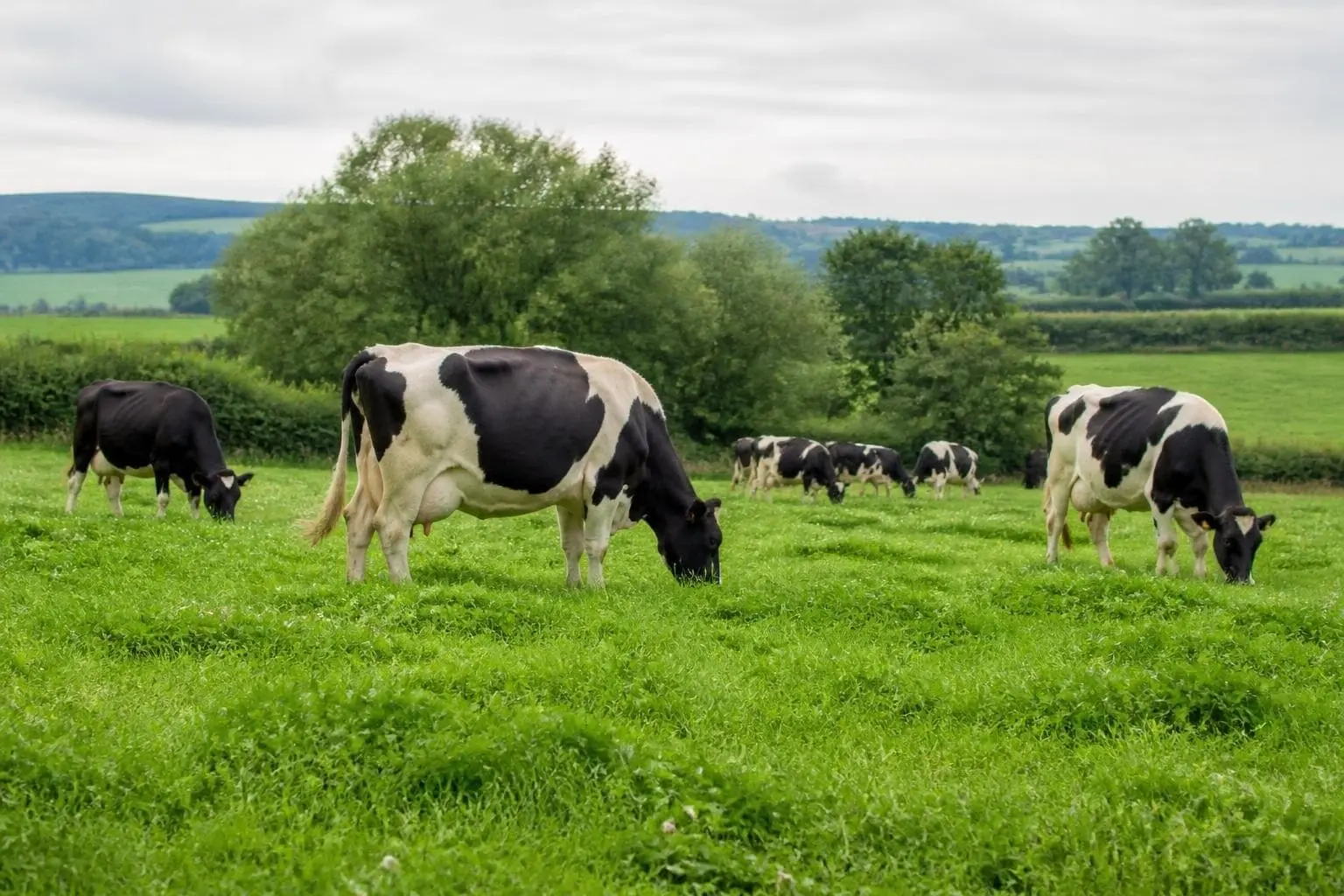
What Was Teart Land and Why Did It Matter?
Teart land was pasture in central Somerset on which grazing cattle and sheep scoured, and on which dairy herds could not be kept through the season without heavy losses (Ferguson et al., 1938; Ferguson et al., 1943). In a 1938 letter to Nature, the Jealott’s Hill team described a large area where cows could not graze from April to October (Ferguson et al., 1938). Their milk yields dropped fast, they lost condition markedly and some died (Ferguson et al., 1938). The disorder brought extreme diarrhoea, and farmers had known it for a very long time (Ferguson et al., 1938).
Milking cows suffered most visibly. Other cattle and sheep scoured on the same herbage, although they lost condition less obviously (Ferguson et al., 1938). The team put the affected area at about 8,100 ha (20,000 acres) (Ferguson et al., 1938). Local usage gave such fields the name teart (Ferguson et al., 1938).
A farmers’ bulletin from an ICI research station
The work came from the Jealott’s Hill Research Station of Imperial Chemical Industries at Bracknell in Berkshire (Ferguson et al., 1940). Its researchers Ferguson, Watson and Lewis wrote up the cause of teartness and its prevention for farmers as the station’s Bulletin No. 1 (Ferguson et al., 1940). A four-part series in The Journal of Agricultural Science followed in 1943 (Ferguson et al., 1943; Lewis, 1943a; Lewis, 1943b; Ferguson, 1943).
Ruling out the usual suspects
Before naming molybdenum, the team weighed the obvious explanations. Their 1938 letter said the available evidence seemed to rule out bacteria, parasites, the water supply or a particular herb (Ferguson et al., 1938). Instead it pointed to some constituent of the soil that the grass took up (Ferguson et al., 1938).
What Did the Jealott’s Hill Team Find?
The team found that the scouring was caused by molybdenum in the herbage, at roughly 20 to 100 parts per million of the dry matter (Ferguson et al., 1943). Copper sulphate, fed or given as a drench, both prevented the disorder and cured it (Ferguson et al., 1943).
In the study, the amount of copper sulphate was matched to how teart the land was, and the authors thought smaller amounts might do on mildly teart fields (Ferguson et al., 1943). This describes what was tested at Jealott’s Hill, not a modern treatment.
Checking that daily copper was safe
A follow-up paper asked whether copper could be given every day without harm. In the study, six dairy cows received copper sulphate daily for 10 to 18 weeks and stayed in perfect health (Ferguson, 1943). Their blood copper rose by 73% after 10 weeks and by 133% after 18 weeks (Ferguson, 1943).
The highest reading was 0.264 mg per 100 ml (2.64 mg/L), and Ferguson noted that this peak was similar to values recorded for normal oxen (Ferguson, 1943). Still, only six cows were followed, measured against their own starting levels (Ferguson, 1943). The result shows that the regime did no visible harm during the trial, not that it suited every herd (Ferguson, 1943).
Why Were Only Some Soils and Pastures Teart?
Teartness went with a particular kind of soil: in Lewis’s survey, teart soils formed from Lower Lias material, held about 0.002–0.010% molybdenum in the surface layer and were neutral or alkaline, often calcareous (Lewis, 1943a). That soil range in the study, 20–100 mg/kg, matches the herbage figure numerically, which makes the two easy to confuse (Ferguson et al., 1943; Lewis, 1943a). Molybdenum also increased with depth down the soil profile (Lewis, 1943a).
Not every Lower Lias soil was teart. Soils with an acid surface layer escaped even when rich in molybdenum, and low-molybdenum Lias soils covering a large area of Glamorgan were not teart either (Lewis, 1943a). Somerset soils on other rocks were generally low in molybdenum and free of teartness (Lewis, 1943a).
Clover, Yorkshire fog and older swards
Plant species also mattered. Clovers and Yorkshire fog absorbed far more molybdenum than other pasture plants (Lewis, 1943b). Yorkshire fog was only a minor part of teart swards, however, and other grasses often held enough molybdenum to cause scouring (Lewis, 1943b). Age counted too: newly sown grasses were low in molybdenum, and their content climbed as the sward got older (Lewis, 1943b).
What farmers were advised to do
Lewis’s advice followed from these results. Acidic nitrogen fertilisers reduced teartness by holding back clovers and by cutting how much molybdenum the grasses took up (Lewis, 1943b). He argued that regular sulphur dressings would acidify the soil and make molybdenum less available, but the paper’s summary states this as an expectation, not a measured result (Lewis, 1943b).
Lime and slag worked the other way. On acid soils with a fair amount of molybdenum they raised uptake by grasses and encouraged clover, so Lewis urged great caution in using them there (Lewis, 1943b).
How Does Molybdenum Strip Copper From Cattle?
Molybdenum harms cattle chiefly by locking up copper. In the rumen, molybdenum and sulphur combine to form thiomolybdates (Gould & Kendall, 2011). If there is too little copper in the rumen to capture them, they are absorbed and attach to copper in the animal’s own biological compounds (Gould & Kendall, 2011). Iron makes the problem worse without causing it (Gould & Kendall, 2011).
In 1938 the Jealott’s Hill team could not tell whether molybdenum acted directly or through a toxic product formed in the rumen (Thorndyke et al., 2021). Later work showed that dietary molybdenum lowers copper status, first in cattle and then in sheep, and that dietary sulphur greatly strengthens the effect (Thorndyke et al., 2021).
The size of the effect can be large. Diets with at least 0.33% sulphur and 5 mg/kg or more of molybdenum in dry matter can reduce copper absorption in cattle and sheep by about 60%, most likely through insoluble copper–molybdenum–sulphur complexes (Thorndyke et al., 2021).
A disputed milder form
In NADIS guidance, the vet Richard Laven separates two forms of molybdenum toxicity (Laven, 2004). The first, on teart pastures with about 20–100 mg/kg of molybdenum, he calls well recognised (Laven, 2004). Cattle there scour within days, and high doses of copper prevent it (Laven, 2004).
A second, low-level form, below about 5 mg/kg, is another matter. Laven calls it controversial, notes that thiomolybdate absorption through the rumen has only been shown when feed molybdenum exceeds copper, and thinks the idea has probably increased unnecessary copper use (Laven, 2004). Gould and Kendall, by contrast, treat thiomolybdate toxicity as a real condition that is often misleadingly labelled copper deficiency (Gould & Kendall, 2011).
Teart land taught farmers to read copper and molybdenum together, because the cure for one imbalance can easily become the cause of the next.
Where Are Molybdenum-Rich Soils Found Today?
The old teart country of Somerset still stands out on national soil maps (Rawlins et al., 2012). The Advanced Soil Geochemical Atlas of England and Wales records topsoil molybdenum of up to 37.5 mg/kg there, over Lower Lias black shales and mudstones of the Mercia Mudstone Group (Rawlins et al., 2012). The atlas names the Lower Lias shales as the most likely source and suggests that peaty soils may concentrate molybdenum further (Rawlins et al., 2012).
Typical levels across England and Wales are far lower: about 5,700 topsoil samples taken between 1978 and 1982 gave a median of 1.2 mg/kg (Rawlins et al., 2012). The maps show where geology favours high molybdenum, not how many farms have problems now.
Molybdenum problems in Ireland
Ireland has its own high-molybdenum ground, on black Namurian shales, Calp limestone, reclaimed sloblands and around Mace Head (Teagasc, n.d.). Teagasc reports problem herbage at roughly 2 to 25 mg/kg, clover at up to 50 mg/kg and levels of up to 100 mg/kg in the wet autumn of 1985 (Teagasc, n.d.). It still cites the 1943 Somerset papers as the classic research on teart land (Teagasc, n.d.).
How the 1940s pasture advice has aged
Sulphur-based treatments carry a catch. In an Irish field trial, 30 t/ha (about 12 t/acre) of gypsum, a sulphate rather than the soil-acidifying sulphur Lewis proposed (Lewis, 1943b), cut molybdenum in grass from 18 to 2 mg/kg (Teagasc, n.d.). Teagasc cautions, though, that the extra sulphur cattle then take in may worsen the effect of molybdenum on their copper status (Teagasc, n.d.).
How Do Vets Diagnose and Manage Molybdenum Problems Now?
Vets assess molybdenum problems through the herd’s copper status, using blood and liver tests and the response to copper supplements (Laven, 2004; Scott, 2009). NADIS guidance says secondary copper deficiency, driven by sulphur, iron and above all molybdenum in the rumen, is more common than a plain shortage of copper (Scott, 2009). It lists diarrhoea after turnout onto high-molybdenum teart pastures as a classic sign, alongside poor growth and a grey or brown discoloured coat (Scott, 2009).
Testing blood, liver and forage
Plasma copper suits the diagnosis of clinical disease but does not show the body’s reserves, and NADIS advises sampling a group of seven to ten cattle (Scott, 2009). Liver samples from at least six animals are best for judging reserves, and the herd’s response to supplementation is itself a key indicator (Scott, 2009). Blood caeruloplasmin is sometimes used as well, but it is not a validated test for molybdenum toxicity (Laven, 2004).
Forage analysis puts numbers on the risk, although the thresholds differ between sources. US studies quoted in a 2021 review link 10–20 mg/kg of molybdenum in forage dry matter to signs of toxicity, and a copper-to-molybdenum ratio of 2:1 or less to copper deficiency (Thorndyke et al., 2021).
Supplying copper, and the risk of too much
NADIS guidance, last reviewed in 2016, advises against giving cattle the sheep copper injection or imported injectable products (Scott, 2009). The options it describes are copper in feed and boluses: copper-oxide needle boluses release it over several months, and multi-mineral boluses over six to eight months (Scott, 2009).
Feed law also reflects the molybdenum risk. The 2018 EU copper regulation required feed for cattle after the start of rumination with less than 20 mg/kg of copper to warn that it may cause copper deficiency on pastures high in molybdenum or sulphur (European Commission, 2018). The regulation was revoked in England, Wales and Scotland from 1 April 2025 (European Commission, 2018).
Frequently asked questions
What does teart mean?
Teart is the local name for Somerset pastures on which cattle and sheep scoured, with milking cows losing yield and condition during the grazing season (Ferguson et al., 1938). The Jealott’s Hill team linked the problem to molybdenum in the grass, and to neutral or alkaline soils formed from Lower Lias material (Ferguson et al., 1943; Lewis, 1943a).
Is copper still the remedy for molybdenum scouring?
Copper is still used, but the daily copper sulphate given in the 1943 trials describes historical research, not advice (Ferguson et al., 1943). UK guidance describes in-feed copper, slow-release boluses and blood and liver tests (Scott, 2009). Laven warns that a disputed low-level molybdenum theory has probably led to unnecessary copper use (Laven, 2004).
Why are clover-rich pastures a problem on high-molybdenum soils?
Clovers absorb far more molybdenum than most grasses. In the 1943 Somerset figures reproduced by Teagasc, white clover held 85 mg/kg against 11 mg/kg for perennial ryegrass (Teagasc, n.d.). That is why 1940s advice favoured acidic nitrogen fertilisers, which hold clover back, and warned against careless liming (Lewis, 1943b).
Can cattle be given too much copper?
Yes. In a 2015 study of 510 cull cattle at one UK abattoir, more than a third of dairy animals had liver copper above the reference range, against 16.9% of beef breeds (Kendall et al., 2015). The 2018 EU regulation capped total copper in complete feed for ruminating cattle at 30 mg/kg, at 12% moisture (European Commission, 2018).
What links teart pastures to Wilson’s disease?
According to a 2025 review, cattle on teart land gave science its first look at how thiomolybdates act (Wu et al., 2025). Tetrathiomolybdate, the strongest copper binder among them, later became a copper-lowering drug candidate for Wilson’s disease (Gould & Kendall, 2011), with mixed trial results so far (Wu et al., 2025).
Sources
- Ferguson, W. S., Watson, S. J., & Lewis, A. H. (1940). The teart pastures of Somerset: The cause of teartness and its prevention (Jealott’s Hill Research Station Bulletin No. 1). Imperial Chemical Industries Ltd. – Cabdirect archive record 19412200374
- Ferguson, W. S., Lewis, A. H., & Watson, S. J. (1938). Action of molybdenum in nutrition of milking cattle. Nature, 141(3569), 553.
- Ferguson, W. S., Lewis, A. H., & Watson, S. J. (1943). The teart pastures of Somerset: I. The cause and cure of teartness. The Journal of Agricultural Science, 33(1), 44–51.
- Lewis, A. H. (1943). The teart pastures of Somerset: II. Relation between soil and teartness. The Journal of Agricultural Science, 33(1), 52–57.
- Lewis, A. H. (1943). The teart pastures of Somerset: III. Reducing the teartness of pasture herbage. The Journal of Agricultural Science, 33(1), 58–63.
- Ferguson, W. S. (1943). The teart pastures of Somerset. IV. The effect of continuous administration of copper sulphate to dairy cows. The Journal of Agricultural Science, 33(2), 116–118.
- Gould, L., & Kendall, N. R. (2011). Role of the rumen in copper and thiomolybdate absorption. Nutrition Research Reviews, 24(2), 176–182.
- Thorndyke, M. P., Guimaraes, O., Kistner, M. J., Wagner, J. J., & Engle, T. E. (2021). Influence of molybdenum in drinking water or feed on copper metabolism in cattle – A review. Animals, 11(7), 2083.
- Laven, R. (2004, reviewed 2018). Molybdenum Toxicity. NADIS.
- Scott, P. (2009, reviewed 2016). Trace Element Deficiency. NADIS.
- Kendall, N. R., Holmes-Pavord, H. R., Bone, P. A., Ander, E. L., & Young, S. D. (2015). Liver copper concentrations in cull cattle in the UK: are cattle being copper loaded? Veterinary Record, 177(19), 493.
- European Commission. (2018). Commission Implementing Regulation (EU) 2018/1039 of 23 July 2018 (copper compounds as feed additives for all animal species), Annex, text as at 31 December 2020. legislation.gov.uk. Revoked in England, Wales and Scotland from 1 April 2025; copper(II) sulphate pentahydrate (3b405) remains authorised in the Food Standards Agency’s register of feed additives for Great Britain (accessed 7 October 2026).
- Rawlins, B. G., McGrath, S. P., Scheib, A. J., Breward, N., Cave, M., Lister, T. R., Ingham, M., Gowing, C., & Carter, S. (2012). The advanced soil geochemical atlas of England and Wales. British Geological Survey.
- Teagasc. (n.d.). Molybdenum. Teagasc – Agriculture and Food Development Authority.
- Wu, Y., Alotaibi, K. S., Yu, K., Durham, T., Dal-Pizzol, F., Singer, M., & Dyson, A. (2025). Mechanisms, therapeutic uses, and developmental perspectives of redox-active thiomolybdates. Redox Biology, 86, 103846.
Rhys Penwarden — author
Rhys Penwarden is an Animal Science graduate with postgraduate training in Livestock Production. His previous work focused on preparing technical materials on feeding and herd management for dairy and beef farming operations. At Cabdirect, Rhys covers dairy an...
Related
Eastern Europe's native poultry genetic resources in 1996
Overstocking and Dairy Cows: Lessons from a 2012 Review

Hereditary dwarfism in beef cattle: genetics and calf outcomes
Mites That Ride Bark Beetles: Four Species Described in 2000
How maternal investment and play relate to foal condition
Army Ants: Social Predation, Nomadism and Tropical Ecology